

Manufacturing processes are quite complex, and the choice of a production method is directly related
Learn More →
In the era of the Fourth Industrial Revolution, precision CNC machined plastic parts have become an absolute game changer due to the record-high accuracy, consistency, and multiplicity of this technology. These devices are crucial for any of the spheres, from aircraft parts and other avionic systems, to medicine, as well as to maritime engineering. In doing so, they have taken over the task of enabling manufacturing to progress in ways inconceivable just a few years ago. Control machining of plastic materials is the subject we would like to touch upon in this article, where we shall discuss its aspects, applications, and how technology systems are developed. If you concern about matters of quality control, you’re an up and coming engineer or simply interested in a subject of enhancing the efficiency of current production in different industries, the content you are about to read is guaranteed to make sense through the examination of the use of Precision Control Machining in design which mainly focuses on talk on how its being used in laboratories and industrial sectors and what the future of the industry looks like. For a most efficient informative process today, it is important to master as much control over the subject as possible when getting cut, cut inside-out, and turned out.
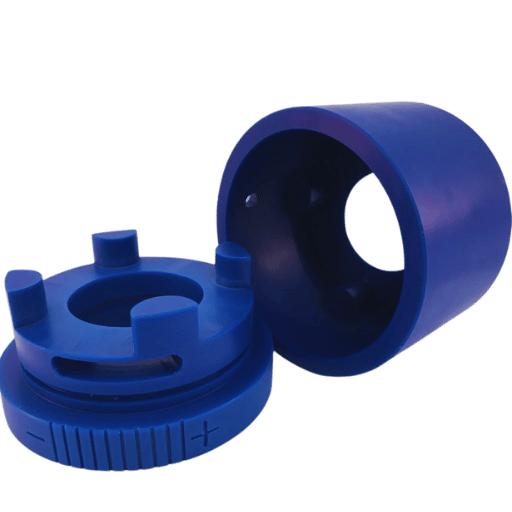
Among the various types of machine plastic elements are all sorts of products made from the material that somehow undergo precision machining work, such as milling, turning, and drilling. Because these components are more streamlined to meet the minutest of details, they can be easily machined and manufactured as parts made of plastic, using a less orthodox approach. In many aspects, they are employed as urgent need components wherever lightweight, chemically or mechanically stable substrates are required. It is possible that such parts will be utilized in implants for surgeries and even in space travel. Machinery, being part of any structure fulfilling any purpose in a given location, can be applied in the industries for which the machinery was intended. However, it is worth mentioning that in most of these industrial product classifications, many, if not all, product sectors involve the precision machining of these materials. Carving within allowed margins and the ability to achieve the desired class A finishes are both aspects where machined plastic parts shine.
Plastic fabrication is the process of using machinery and equipment to contract or expand plastic materials into refined shapes. Regular processes include, but are not limited to, CNC milling, turning, center drilling, and routing. CNC machining is known for its precision and, more importantly, repeatability since it can be used to control geometry and parameters very closely. These are applicable to a range of plastics such as ABS, polycarbonate, PTFE, and nylon to recognize various types of usage. However, the choice of processing relies on several factors, namely the nature of the material and the specific requirements of the end product. Custom manufacturing of plastic parts needs to be carried out precisely without any errors. High-quality results are conditioned by fitting the proper cutting tools and machine settings to the task without causing any thermal distortions of material.
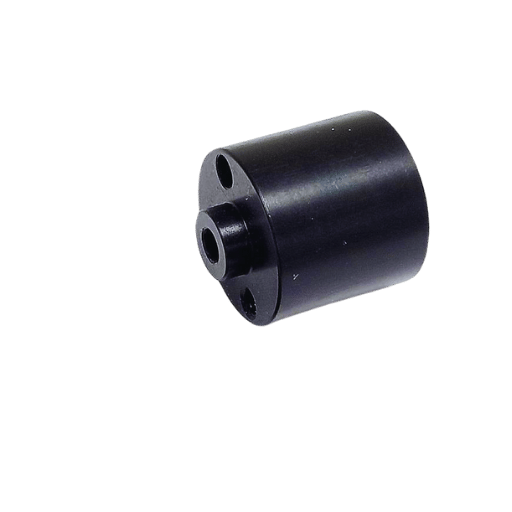
Machining tools are an important aspect, specifically in plastic CNC machining, due to their requirement of accuracy as well as repetition and high productivity during production. For example, end mills, drills, and other cutting tools are made for the purpose of machining plastic materials, bearing in mind the various properties of plastic materials to minimize heat and tool wear. Proper selection of tools and care while using them is important in enjoying precision cuts and colourless finishes, dimensions of which are very important to the success of the project.
Achieving precision is a must to guarantee that products form exactly as per the drawing and are working. In addition, it is necessary to ensure small tolerances as it reduces inter-part discrepancies and also strengthens the component life. Suppose production has to sustain precise fit with other components and systems. In that case, tolerances become even more important than quality aspects, especially in the aerospace, medical, and automotive industries, which do not allow any deviation in performance; even a slight deviation would cause a failure. Ensuring qualification tolerances guarantees that the operation meets the required specifications, enhances repeatability across the production runs, and prevents the incurrence of prohibitive costs during rework or due to defects usually associated with machine failure.

High Reliability and Precision
Scalability and Productivity
Characteristics of Materials
Lead Time Minimization
Affordability
Accuracy and Precision
Coverage of the process
Quality of the surface Finish
Difficult Shapes
Compatibility with the component materials
Quality assurance
Lack of Human Factor
Resistance in machinable plastics extends the strength and usability of manufactured products regardless of the use of these products in the presence of corrosion media. Polymers such as PEEK, PTFE, or HDPE are resistant to virtually all corrosives and thus can be employed in chemical or food industries, the healthcare sector, and other associated fields. Such effects also reduce downtime in service, as well as maintaining efficiency from machinery at expansion or even in extreme conditions. For this reason, chemical resistance in the engineering plastics is a must in order to increase the service life of plastic components inside their applications, such as high-speed ablative machining.

When playing back, a CNC lathe turns the workpiece for rotationally symmetrical parts as opposed to some more complex forms; conversely, for complex shaped parts on a CNC mill the cutting tool itself would rotate henceforth; The correct choice of CNC machine for plastic parts manufacturing is based on material characteristics, demand for accuracy and range of application.
Here is a concise comparison guide in tabular form:
|
Key Point |
CNC Lathe |
CNC Mill |
Plastic CNC |
|---|---|---|---|
|
Operation |
Rotates workpiece |
Rotates the cutting tool |
Subtractive process |
|
Shape |
Cylindrical, conical |
Complex geometries |
Customizable |
|
Precision |
High for simple parts |
High for intricate parts |
Tight tolerances |
|
Material |
Metals, plastics |
Metals, plastics |
ABS, PC, PEEK, etc. |
|
Cost |
Lower |
Higher |
Varies by material |
|
Speed |
Faster for simple cuts |
Slower for complex cuts |
Depends on design |
|
Application |
Shafts, screws |
Pockets, grooves |
Prototypes, end-use |
|
Selection |
Uniform shapes |
Intricate designs |
Material properties |
|
Durability |
Long-lasting |
Long-lasting |
Varies by plastic |
|
Heat Tolerance |
Moderate |
Moderate |
Material-dependent |
When you are taking into account specifications for precision machining, make sure you look at few core point for making sure the goals are achieved and the project is found appropriate.
If you start by looking at these elements in, then such an approach will ensure the reduction of error, effectiveness and predictability within the process of machining.
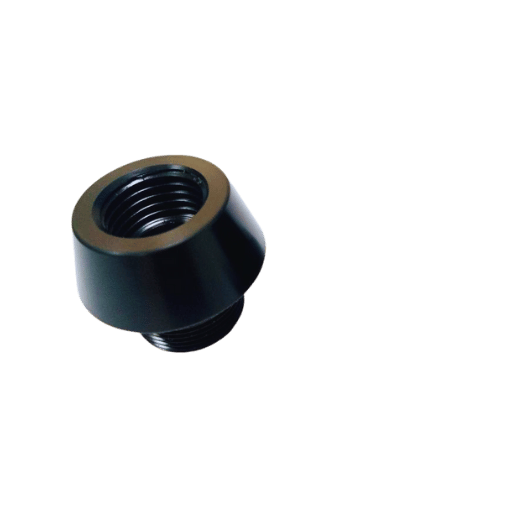
Upon visiting the Hopeful, we made quite a few interesting observations about the different kinds of changes that plastic CNC machining is undergoing presently. Hybrids and new tool path algorithms carry out precise setup and path planning tooling to fuel manufacturing precision and effectiveness. In contrast, the introduction of automation components and real-time feedback systems aids in advanced precision. Furthermore, more precise cutting tools and methods for particular thermoplastics have been developed to effect no material loss through better cutting accuracy. This, in turn, helps make work more effective and addresses the currently rising need for eco-friendly technology: Durability and superior precision machining methods.
Interesting predictions have been made about the future of the production of complex devices, user fixtures, and spares in the APS Generation. It is expected that changes in the manufacturing technology, the rapid spread of additive technologies, hybrid technologies, the construction of smart factories, and the issues of integrating them will significantly influence this process. Additive technologies will be the future in prototyping and contribute more freedom in design and less structural material consumption in the fabrication of forms of increasing complexity. This will be facilitated by combinations that integrate these methods. In addition, the directed role of Artificial Intelligence in the observation and maintenance of the session strategies underlying the incorporation of technology will also result in optimization and elimination of delays in production. In such a case, those industries manufacturing high-value and made-to-order components like aerospace, medical, electronics, and new systems firms will benefit.
In the evolving factory environment, machining operations have undergone radical modifications to enhance various aspects of production levels and quality levels and reduce the economic downturn. The machinery that performs machining operations has embraced sophisticated technologies like robotics and AI, which, first, boost the levels of productivity and, secondly, enable them to take on more intricate patterns more accurately. Sectors such as aviation, health services, and electronics fields exhibit decreased cycle time and reduced wastage of products in the process. Furthermore, the concepts of innovation, such as smart factories, have made it much easier to manage the maintenance of equipment by doing it when it is already seen that it is heading towards failure, thus reducing the time for downtime as well as increasing the acceptable rate of productivity. All these changes may be considered a necessity in preserving the value of investments in machines as they enhance and particularly customize these services in order to meet the increasing demand for custom designs.
A: Precision-machined plastic materials are plastic materials that have been fabricated using CNC machining technologies in order to attain accurate dimensions and very low dimensional tolerances. Such materials become a need in specific applications given the detailed and complicated designs they are meant to satisfy, hence, their necessity in providing the very best service that the machines can offer.
A: CNC plastic milling is one of the best machining techniques that one can have. It has its own unique advantages in terms of precision, ease of operation, repeatability and manipulating, and provides the ability to produce completely designed geometric shapes and additional features that are nearly impossible to achieve using the conventional plastic machining methodology.
A: As mentioned above, material selection is a significant aspect of CNC plastic machining as it has a bearing on the final finish and performance of machined pieces. Getting the best material that ensures the durability and robustness of the engineered parts it as intended, will be crucial in such cases.
A: Turning typically means that a space is defined on the machine, setting a material (in this case, a plastic) in motion, and the cutting tool from a particular point in space. Turning is the best method for the production of those silver-age parts, which are turned and milled at one time. In milling, the workpiece (held) and the tool (rotating) are both static. In turning, on the other hand, the workpiece is turned, and the stationary cutting tool is advanced. It is particularly effective for generating many shapes and surfaces within complex workpieces.
A: CNC Machine is involved in every field and plastics machined parts are core elements in automotive electronics and materials; all kinds of medical activities and industrial activities, in the manufacturing of such items as enclosures, prototypes, and gears. Other examples of plastics machined components are custom parts.
A: Superior services in this sector are explained by the aspects of responsible attention and actions, especially in relation to the handling of the final machined products. These services ensure that plastic parts and components are produced in a fashion that will make them durable for a long period of time.
A: A precision plastic machining company should be evaluated in regard to factors such as the length of time the company has been in business, and its experience, its prowess in plastic machining, the terms of plastic fabrication operations, the quality of services offered including availability of quality programs, and complex plastic part molding.
A: Generally, plastic components are made with higher precision, which means less material is wasted and less energy is used, which increases the effectiveness of production. This is because they make it easier to design complex parts with details that, in turn, enhance the performance of the part under normal operation.
A: In terms of the CNC plastic machining process, one of the roles that a machinist takes is programming manufacturing machines, tool setting, and materials preparation, and in addition, ascertaining that the final product is machined correctly in terms of accepting the desired levels of imperfections in the component.
A: CNC plays a role in the success of plastic manufacturing because it provides relatively consistent performance in machining plastic materials. If the machined parts are improperly assembled, the whole device’s so-called ‘muscle’ power is compromised. Hence, the designs should work to ensure the machined parts are used correctly during the final production of the product.

Manufacturing processes are quite complex, and the choice of a production method is directly related
Learn More →
There are two major manufacturing methods for producing plastic prototypes that most people find useful
Learn More →
As a person involved or interested in the design and production of plastic components, it
Learn More →