

Manufacturing processes are quite complex, and the choice of a production method is directly related
Learn More →
Manufacturing processes are quite complex, and the choice of a production method is directly related to costs and productivity improvements. One can rely on CNC machining or injection molding as these two are the most sought-out processes; however, the advantages of each of the processes are better suitable for a different type of project. But when will you ever speak of the way in which the two options keep worrying over which will do best in one case? What then can one do? Here is a cost comparison tool that will help. It is called CNC Machining vs Injection Molding Comparison Calculator. Parameters such as material consumption, scale of production, and start-up costs will also be covered. Between CNC machining and injection moulding, when you should choose one over the other will be explained. So go ahead and see how this calculator changes the cost-efficiency factor and gives some breathers in otherwise taxing work.
CNC Machining vs Injection Molding: CNC Machining and injection molding are two common techniques used today in manufacturing for rather different purposes. CNC Machining refers to the use of a computer operated machine that is able to carve out and shape materials to the finest of detail, hence it is perfect for constructing finely detailed prototypes as well as limited production batches. In contrast, injection molding is a process which is focused on the rapid manufacture of multiple identical parts by introducing molten material into a mold. These two techniques are geared towards meeting different objectives – CNC manufacturing has a great emphasis on adaptability and personalization whereas injection molding has a strength in producing goods for the masses. Volume, intricacy of the design, and material properties are the factors that influences which method should be used in your task.
Probably the most common and very efficient manufacturing process nowadays is CNC machining. Fabrication is done by the use of computers controlling the operating machinery and the cutting tools almost entirely. It is utilized for accurate and comprehensive cutting of various shapes out of materials like metals, or plastics, or composites. CNC machines are used in such industries as aerospace, vehicle production and medical services. That is because they have a characteristically low tolerance of deviation and discharge goods of a similar quality over and over again.
CNC Machining vs Injection Molding is due to its productivity and accuracy. It can significantly decrease the time taken in manufacturing and reduce the chances of making a mistake in firms where accuracy and reliability are nth degree. It is also flexible with different material types and geometrical shapes so that machines can be made to match every design different from another.
Of all the manufacturing processes made available to them, designers most often resort to injection molding when they seek to create numerous identical pieces, typically plastic objects, which are very precise in shape and size. The process consists of injecting plastic or other heated materials into a mold, filling the cavities by molding. Having been cooled down, the part is removed from the mold as a loop cycle and is ready for further use.
CNC Machining vs Injection Molding has pros and cons, but injection molding is highly favorable for bulk production costs. Automobiles, electronics – the list is endless for why this technique is so effective given the merit it delivers as far as the quality is concerned, allows for very complicated shapes and has a lot of options when it comes to the material, be it thermoplastic, making use of thermoset or even the powder of metal. By the same token, the innovations adopted in the creation of tools and the process itself have facilitated the procedure making it possible to achieve shorter operational times and a more flexible use as opposed to other techniques. Therefore, it proved to be useful in modern manufacturing because of its usefulness that injection molding involves and precision.
It is necessary to choose the appropriate manufacturing methodology so as to reconcile the trade-offs between costs, effectiveness and the quality outcome of the products. These considerations include the types of material, the design and structure of the good, as well as the number of items to be produced. Injection molding is appropriate when mass producing parts that require high precision and are relatively complicated while 3D printing stands out as a good method for prototyping and producing small quantities of intricate products. This includes costs and the time it would take to make tools, how easy it is to increase scale and operations and environmentally friendly processes. These components if properly assessed would ensure the use of the available resources, improving the manufacturing techniques which would assure both efficiency and the cost of the final products.
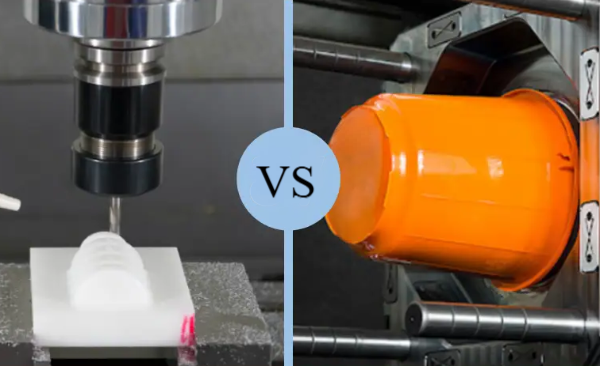
CNC Machining vs Injection Molding actually has other distinct differences such as manufacture, purpose, the substance to be molded, the number of patterns produced, timelines, how fast it can be done and the costs involved in order to start up, and an eco-friendly approach.
| Parameter | CNC Machining | Injection Molding |
|---|---|---|
| Method | Subtractive | Molding |
| Use Case | Prototypes | Mass Production |
| Materials | Metals, Plastics | Plastics Only |
| Volume | Low-Volume | High-Volume |
| Lead Time | Short | Long |
| Initial Costs | Low | High |
| Scalability | Limited | Excellent |
| Sustainability | Wastage | Efficient |
Numerous manufacturing methods exist, with CNC machining and injection molding being the most popular due to their specific functions and needs. While CNC machining also belongs to the subtractive manufacturing technologies, the part is mostly manufactured from a block of a solid material. It is an efficient methodology that can be utilized for very complex prototypes or small batches of customized products. Furthermore, it offers the flexibility of machining using different materials ranging from metals to plastics which makes it appealing to many industries that are detail-oriented.
Swapping this for injection molding processing techniques instead, which are especially good for mass manufacturing. The techniques include heating the plastic, such that, the soft plastic is injected in a die with a shaped hollow cavity in it and the same is done in a couple of seconds. Molds are quite expensive initially but become cheaper as more and more parts are made individually. As opposed to this, injections or compressed air molding does not waste materials and is well-suited for consumer projects in addition to medical devices due to its simplicity and effectiveness.
On the contrary, deciding whether CNC machining or injection moulding should take into consideration a few aspects such as the production quantity, material specification, required time to market and cost effectiveness. CNC operates with versatility and efficiency for building prototype or small quantity of components, whereas injection moulding is perfect for consistency and lower unit cost assuming repetitive manufacturing in to be expected.
CNC Machining vs Injection Molding is dependent on one’s choice of the eligible material’s capacity to be processed. CNC machining supports the machining of a wide variety of materials ranging from aluminum and steel to brass as well as plastics like ABS or PVC and also Acrylic. This goes a long way in offering versatility to the many industries and customized applications that are available today. On the other hand, injection molding is better with thermoplastics such as polypropylene, polyethylene, or even polycarbonate. They are meltable, mouldable, and can be returned to their solid state several times which is advantageous in bulk production. If the project requires the use of strong materials or the requirements of the product are high then CNC machining offers the highest range of materials. In contrast, the injection molding is tailored for producing a huge amount of identical plastic parts in terms of material consistency.
As for CNC Machining vs Injection Molding, the speeds and efficacy of each technique are quite divergent, and this is, for the most part, occasioned by the kind of the projects undertaken. It can support low to segmented production runs and in some cases fulfills more complex designs requiring printed patterns or models. There is an advantage that no molds are needed, so production can be commenced without the time-consuming setting up. Increasing orders at times and at a certain volume, CNC Machining may turn out to be a problem because of the non simultaneous method of manufacturing.
On the other hand, injection molding is flexible in favor of mass output production. Once molds are ready – which may demand a lot of time and money, this process becomes efficient and produces thousands, or even millions, of eligible identical parts within a time span that would be impossible with CNC machining. As far as the case of bulk manufacturing is concerned, injection molding comes with unmatched speed and economy. Thus, CNC machining is best suited for both customization and producing small quantities whereas injection molding is best applied in contexts that demand mass production whilst retaining uniformity throughout.
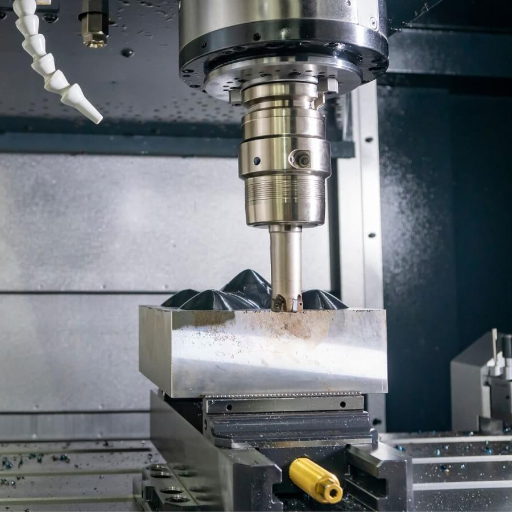
Precision and tolerances are crucial elements in manufacturing because they guarantee that parts meet their exact specifications and serve their intended purposes. Precision, on the other hand, quantifies the closeness to the design of the part, while tolerances refer to the acceptance limit variations of dimensions. Maintaining very tight tolerances is most important in components which are required to fit, interact, or perform very precisely, especially in the case of aerospace and medical device industries. CNC machining is able to achieve very high precision such that it is suitable for very complex and detailed parts where very tight tolerance is necessary. Injection moulding designs, on the other hand, offers unimodal dimensional tolerances in production of very many injection molded parts, but not as tight as the CNC machined components. Hence, the selection of method of manufacture will be dependent on the precision and tolerance demands of the project.
The CNC machining type is typically noted for its high levels of accuracy, with machines that can hold tolerances as tight as ±0.001 inches or better. The level of accuracy can change with certain other factors such as the type of the material, the calibration of the machine, tool quality, and the atmospheric conditions prevailing at the time. Proper maintenance and calibration of CNC equipment are needed to retain this very high degree of precision. For functions that require extraordinarily stringent tolerances, the latest CNC systems and techniques for specific machines are generally adopted.
Various considerations contribute to the achievement of precision in injection molding: mold designs, materials, machine settings. The optimum molds are constructed to close tolerances for precise part production, while material selection ensures minimum shrink and warpage, depending on the melt flow index (MFI) and other considerations. The accurate setting of temperature and pressures in a further stage of molding ensures perfect and lasting controls. Further control measures, such that most of the opportunities for variability are reduced when things are kept to strictly defined tolerance, affect the variation around the final product.
Injection molding, in contrast, offers broad application for short-run production in the event of designs with tight tolerances; however, the threshold precision may vary and is based on a range of factors such as part geometry, equipment, and the material selected. Determine the closest possible tolerances permissible while applying 40 or 60 classes of tolerances as per DIN 16742: 2014. Injection molders, accordingly, can achieve as low as ± 0.025mm.
Quite conversely, injection molding is more beneficial for high quantities, where sameness and speed are essential. In comparison with CNC machining, injection molded parts might have slightly less accurate tolerances, but these tolerances are adequate for most purposes, generally in the range of +/-0.005 to +/-0.010 per inch. Injection molding is also advanced in the sense that it makes use of various molds for different designs, which helps maintain uniformity across thousands of parts.
Depending upon the design complexity, production volume, and required tolerances, the decision on CNC machining over injection molding should be well-pronounced. CNC machining absolutely dominates in intricate prototypes or low-run parts with high-precision requirements. Nevertheless, injection molding wins unquestionably in large-scale production because it is cost-effective and repeatable. Both methods are appropriate alternatives with regards to striking the balance between precision and overall manufacturing practicality at different stages of the manufacturing process.
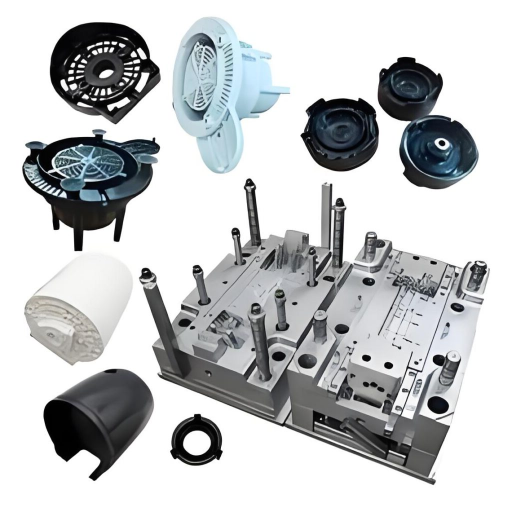
CNC machining is an ideal technology whenever precision, customisation, and tight tolerances are required, being the right solution to prototype, make low-to-medium volume runs, and create parts and components of traditionally complex geometries. CNC machining outperforms some other primary clearing machines in industries where high accuracy is most imperative—in industries like aerospace, medical services, automotive, and more. CNC machining further has the ability to handle a range of materials, from metals, plastics, to composites, making it a versatile option for various specific applications.
Ideal for mass producing identical components in such varied applications as consumer goods, packaging, medical devices, and automotive components, plastics injection molding really shines when intricate details, close tolerances, or complex shapes are needed. Injection molding further sustains the process of accelerating production cycles and lowering the per-unit cost during mass production.
It is vital that one considers applications of both this and injection molding, their strengths and weaknesses, so an individual would be able to prioritize a definite method for certain projects. CNC Machining is very versatile and excels in making low to medium volumes of products but likely would be used very well for product prototyping or custom, tight-tolerance components. CNC boasts of an extraordinary level of accuracy that accommodates a wider range of materials, like metals and plastics. It is, therefore, a suitable alternative for fields such as aerospace, healthcare, and general engineering, where an extremely high degree of precision is of paramount importance.
Injection molding, on the other hand, excels in scenarios of mass production because it provides large volumes of consistent parts at a very low unit cost. Especially beneficial for complex geometries with tight tolerances and repeatability when dealing with the production of significant numbers of plastic components, it can be found in many consumer, medical, and automotive fields of application-where the quotation of “scale and efficiency” echo very loudly.
Eventually, the decision between CNC machining and injection molding depends on production volume, material requirements, part complexity, and budget. CNC machining is the precursor in customization and low volumes, while injection molding is for cost-effective high-volume production and gets good results.
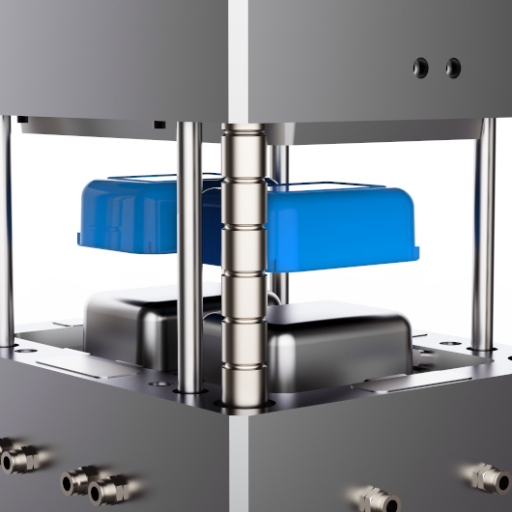
For small-scale production, precision, strict quality standards, and personalized parts, economic CNC machining is proposed. Finally, if injection molding is provided, the part price for bulk production can come out on top on economies.
| Parameter | CNC Machining | Injection Molding |
|---|---|---|
| Setup Cost | Low | High |
| Per-Part Cost | High | Low |
| Volume Suitability | Low | High |
| Precision | High | Moderate |
| Customization | High | Low |
| Lead Time | Short | Long |
| Material Waste | Moderate | Low |
| Tooling Cost | None | High |
| Consistency | Moderate | High |
When the setup cost for initial CNC machining versus that of the injection molding process is examined, CNC machining shows significantly lower investments. This happens because CNC machining as a process does not require molds to fabricate or peculiar hand tools, but utilizes previously existing tools that are programmed to shape materials. On the contrary, injection molding utilizes expensive custom molds necessitating huge total initial costs. However, it is usually justified to favor injection molding for mass production production purposes where the unit price of the specific molded part amortizes the capital investment over time.
In general, CNC machining is more expensive per unit than injection molding, especially when we consider large-scale production. This is owed to the fact that CNC machining deals with single pieces, thus adding to time/labor costs. Injection molding, on the other hand, is low-cost due to the production-line processes; once a mold has been made, many single units can be produced almost immediately. In itself, it is very expensive for small-run or exclusive-production parts; in comparison, injection molding can be very low cost for mass-scale manufacturing.
In mass production terms, injection molding is almost always the cost-effective option when compared to CNC machining. The advantage comes from the capability of quickly creating numerous same components after the tool is produced. The initial cost for the mold can be high. However, when the volume of the product increases the cost per part greatly decreases – hence injection molding is best suited for production at high volumes. On the other hand, CNC machining is less cost-effective at that large scale since there are preparations for work on the individual units, causing higher labor and time costs. At small runs or the customized part level, CNC machining could still have the upper hand, but when focusing on cost efficiency, injection molding is unquestionably the best for bulk manufacturing.
Review of 3D Printing VS Injection Molding VS CNC Machining Processes: Simulation and Fabrication: Provides a comparative analysis of CNC machining, injection molding, and 3D printing, focusing on process optimization and profitability.
Comparative Study of Rapid and Conventional Tooling for Plastics Injection Molding: Evaluates the performance of injection molding inserts produced through different manufacturing methods, offering insights into tooling and part quality.
Education in Plastics Manufacturing: Aluminum Mold Making and Injection Molding: Discusses the use of CNC milling for mold making and its application in injection molding, with a focus on educational and practical applications.

Manufacturing processes are quite complex, and the choice of a production method is directly related
Learn More →
There are two major manufacturing methods for producing plastic prototypes that most people find useful
Learn More →
As a person involved or interested in the design and production of plastic components, it
Learn More →