

Manufacturing processes are quite complex, and the choice of a production method is directly related
Learn More →
Single cutting is associated with getting cuts that are clean, precise, and properly executed. There is no doubt that cutting processes need to be done with great care and attention especially in manufacturing and construction industries. In this article, I aim to provide my audience with an appreciation of how single cutting is performed and its importance in achieving great results. When the right cutting tool is chosen not only is the quality of cuts made professional, but resource waste is minimized which translates to lower operational costs. In this document, I hope to define the terms and principles of single cutting, the tools employed, and the best practices in the field for the benefit of people who would want to refine their professional skills.
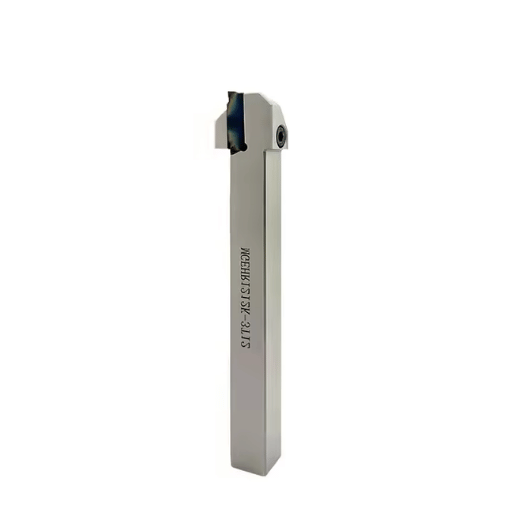
It is a cutting tool used in material removal techniques like turning, shaping, and planning. A Single Point Cutting Tool has one primary cutting edge and usually consists of a cutting part fabricated from carbide or high speed steel, and a shank which is used for mounting. It provides accurate, efficient machining because the cutting edge removes the material by shearing the surface in one single stroke. This tool was mainly used in lathes and other machining tools where precise and controlled operations are performed.
A single-point cutting tool consists of several parts that work together harmoniously to ensure efficient machining operations. These parts include:
Shank: The part that connects the cutting tool to the machine is called the holder. It acts as a support during machining, and its rigidity affects the tool’s overall rigidity.
Cutting Edge: The sharp edge that removes material by cutting through the workpiece. The area that performs the most machining action, surface finish and tolerances, is the most critical.
Face: The tool surface against which the workpiece contacts.
Flank: The area adjacent to the cutting edge is the flank. It acts as a space between the tool and work piece enabling cutting without restriction.
Tool Nose: It is the angle of the cutting edges which defines the influence when machining and assists in minimizing vibrations.
The performance of single-point cutting tools relies on important parameters. Below is an overview of fundamental technical data:
Rake Angle (α): An angle that has an effect on the flow of chip and the efficiency of cutting. Generally, 5° to 20° are the values of angles for different materials cut.
Clearance Angle (β): An angle for putting the tool away from the workpiece for a minimal contact with the tool and workpiece. Usually, 5° to 15° are common values.
Cutting Speed (Vc): The speed of the spindle or workpiece relative to the cutting edge.
Expressed in meters per minute (m/min) measure, ideal speeds differ according to work material and tool material.
Feed Rate (f): Surface speed of the tool with respect to the spindle. Influences surface finish and machining efficiency. Measurement is in mm/rev.
Depth of Cut (a): The vertical distance a tool penetrates into the material. Affects the volume of material removed and cutting force needed to eliminate the material.
The form of the cutting tool plays a significant role in its efficiency and effectiveness. Some of the significant features are:
Rake Angle: Impacts chip flow and cutting forces. A positive rake angle decreases cutting resistance; a negative rake angle increases tool strength when working with hard materials.
Relief Angle: Avoids excessive friction between the tool and the work piece enabling better performance.
Cutting Edge: The rate of instability and sloping precision of the edge affect the cutting sharpness and durability of the tool.
Meeting these parameters maximizes the rate at which a material is removed, surface quality is enhanced, and the life of the tool is prolonged.
Single-point cutting tools find their application in machining for shaping or cutting a workpiece to refine its geometry. Succeeding are the applications for single-point cutting tools in detail:
Commonly with lathes in the shaping of rotating cylindrical parts.
Straight turning, taper or conical turning, and profile turning.
Cut the faces of a workpiece that are perpendicular to the axis of rotation to be smooth and flat.
Maintains accurate size on the faces of a workpiece.
Enlarges or finishes existing holes in a workpiece component.
Used on both vertical boring machines and lathes.
Makes internal or external threads on cylindrical or conical surfaces.
This is done with a single-point thread cutting tool having a well-defined geometry.
Creates beveled edges on a workpiece for functional or aesthetic finishes.
Primarily used for parts which are to be assembled to other components.
Grooving tools make narrow channels on a workpiece.
Parting tools remove the finished parts from the larger component.
These are needed in precision machining. They are made for particular tasks so that machine parts can be made with a desired shape.
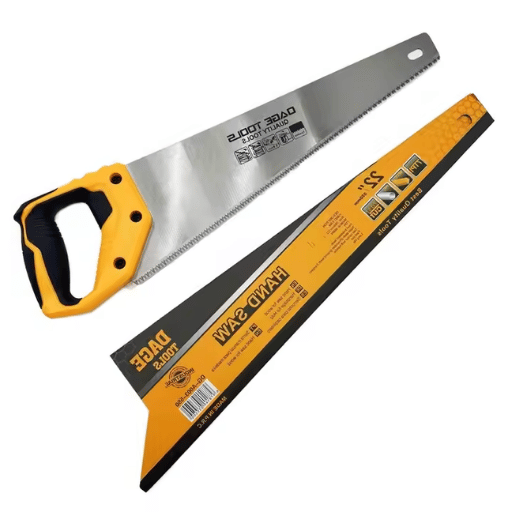
Single-point cutting tools have a single cutting edge and perform the functions of turning and boring and shaping. They perform this task by continuously removing the work piece with one edge of the tool in constant contact with the workpiece. This method is best suited for high speed and precision work because the design is relatively simple, making it easy to operate and maintain. Nevertheless, they tend to be inefficient timewise in executing machining processes when compared to multi-point tools.
Single-point tools are less complex than multi point tools such as drills, allows for use of multi cutters, and bridge broaches that have more than one cutting edge. Such tools achieve higher rates of output and are best suited for high speed or highly intricate machining processes. Single-point tools are ideal for large volume production, however, elaborate machinery and set up is often a requirement.
All-in-all single-point tools are chosen for highly intricate and precise tasks, while multi point tools are more simplistic and efficient.
Bringing to Fore Multi-Point Tools and Single Point Tools Pros and Cons.
It is imperative to consider the material type, accuracy levels, and production volume when selecting a cutting tool. Multi-point tools are more efficient and durable for large-scale work whereas single-point tools are best for detailed and fine work. To guarantee satisfactory performance while staying within budget restrictions, consider the costs versus benefits tradeoff. Also, remember that proper maintenance and calibration is fundamental to achieving the desired results.
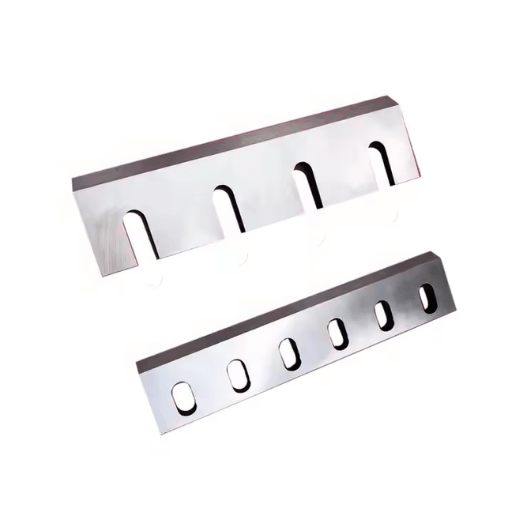
High Speed Steel (HSS):
Composition: Contains an alloy steel with tungsten, molybdenum, chromium , and Vanadium.
Applications: Has an all-around application for machining due to its toughness and wearability, as well as being used for drills and taps, and in milling.
Performance: Effective at cutting speeds of 50-1000 m/min, has a useful hardness range of about 600 degrees celsius.
Cemented Carbide:
Composition: A composite unit that bonds together tungsten carbide particiles with a metalic binder cobalt.
Applications: Frequently applied in machining and working with hard materials such as cast iron or stainless steel.
Performance: Able to achieve cutting speeds of 150 – 400 m/min and maintain a hardness of up to 1000 degrees celsius.
Ceramics:
Composition: Mainly consists of oxide alunimum or sillicon nitride.
Applications: Efficient at machining ultra hard materials with high speeds and offer great heat and wear resistand.
Performance: Brittle compared to carbide, better suited for less interrupted cuts, and optimal form high speed cutting at 800-1,000 m/min.
Cubic Boron Nitride (CBN):
Composition: A synthetic material aluminum oxide and silicon which is second in hardness only to diamond.
Applications: Perfect for machining ultra hard or abrasive materials like hardened steels and cast irons.
Performance: Superior wear resistant at 1200 degrees celsius while retaining cutting efficiency.
Polycrystalline Diamond (PCD):
Composition: Comprised of aggregated synthetic diamond particles.
Applications: Mainly utilizes non-ferrous metals, composites, and abrasive materials.
Performance: Exhibits the greatest wear resistance and thermal conductivity of all cutting tool material, though can be welded when cutting ferrous metals at elevated temperatures.
The attributes of the material that makes the cutting tools has a major impact on the tool wear and tool life. The tools constructed of carbide, cermet, and PCD materials have differences in their capacity to sustain mechanical wear, chemical corrosion, and thermal erosion during machining operations. Carbide tools are quite flexible and moderately resistant to wear, thus can be useful for many applications. In conditions that are thermally or abrasively aggressive, PCD tools are favorable because of their extreme hardness and good thermal conductivity, which leads to a long life of the tool with very little wear. On the other hand, cermet tools are good in finishing operations because they provide fine finish, but they are not very durable for rough work. The relationship between tool material properties and workpiece material properties is important to achieve desired results in machining efficiency, productivity, and cost.
The following is a comprehensive list of the materials used for cutting tools, their defining features, and applications:
Defining Features: High wear resistance, good toughness and is economical.
Applications: Used for softer materials that require milling, drilling and tapping to be done.
Defining Features: High resistance to wear, capable of withstanding high temperatures and is hard.
Applications: Useful in the machining of hard cast irons and ferrous and non-ferrous metals.
Defining Features: Brittle but possesses high levels of exceptional hardness and temperature resistance.
Applications: High-speed cutting of alloyed cast irons and heat resistant alloys.
Defining Features: Superior surface finish with a combination the toughness of metals and ceramics, but is not useful in heavy-duty cutting.
Applications: Forming tools when finishing hardened steel are best suited.
Defining Features: Possesses extreme hardiness , high levels of thermal conductivity and is resistant to abrasive wear.
Applications: Applied for cutting non-ferrous metals, composites, abrasive materials along with other elements.
Defining Features: Remarkable thermal stability and has the second highest level of hardness after diamonds.
Applications: High-speed machining of hardened steel and superalloys alongside hard turning.
Cutting Speed: Extremely high cutting speeds can result in too much heat being generated which leads to faster tool wear. One study shows that by increasing cutting speed by 15%, tool life can be reduced by up 50%.
Optimizing tool life and improving machining efficiency, particularly in high-precision manufacturing environments, relies on understanding and optimizing many different factors.
The wear-resistance of cutting tools can be improved through the use of advanced materials, for example through the use of polycrystalline cubic boron nitride (PCBN) or coated carbides. Tools bearing titanium aluminum nitride (TiAlN) coatings are well known to oxidize in high temperatures, making it easier for them to perform in hotter environments.
Adjusting specific parameters such as feed rate, cutting speed, and depth of cut can also reduce stress on the tool. Cutting speed, especially when dealing with specific materials, has been found to decrease wear by as much as 40% when operated at an optimal cutting speed.
Another way to reduce friction and lower the temperature in the cutting zone is through the use of minimum quantity lubrication (MQL) or high performance cutting fluids. In an eco-friendly and environmentally sustainable manner, cryogenic machining has emerged as an effective solution to extending tool life through the use of liquid nitrogen.
Timely regrinding and sharpening of tools enable the tools to be used longer and are less likely to fail. Automated systems that are capable of monitoring tools can provide constant real time data on how much the tool has worn down and can therefore assist in predictive maintenance.
Including newer technologies such as adaptive control systems decreases process disturbances through real time monitoring and modification of machining parameters. This helps reduce overloading of the tool and uneven wear and tear.
Incorporating these strategies allows manufacturers to achieve enhanced tool longevity, reduced operational expenditure, and superior precision output quality for machining operations.
Strategic monitoring of tool wear should be complemented by performance data collection and in-depth analysis. Research suggests that automated monitoring tools can decrease tool breakdowns by 30%, mostly through identifying harmful wear trends prior to extreme damage. An example is vibration analysis, an approach used where oscillation amplitude is measured. An increase of 10 to 15% in vibration is usually for worn out or imbalanced tools.
Another important method is thermal monitoring because cutting tools can degrade with extended high temperatures above 700°F (371°C). Integrated real time temperature sensors on machining equipment help operators reduce speed, feed rate, or coolant application to lessen damage. The sensors provide real-time feedback directly.
Wear detection using acoustic emission analysis has demonstrated high accuracy. The analysis can be carried out when high frequency sounds above some set limits are produced caused by an increase of friction and edge wear. These techniques enable manufacturers to optimize processes, minimize unproductive downtime, and optimize productivity.
Emphasizing accuracy in data gathering and interpretation is one way of ensuring successful implementation of predictive maintenance strategies.

Single cutting tool design is simple, which makes it easier to produce and maintain these tools.
Single cutting tools are cheaper than multi-point tools owing to their lower level of complexity.
Their level of accuracy and precision, especially when dealing with delicate or tiny parts, is unmatched.
Operational capacity for single cutting tools is lower in most cases, thus they are more efficient in terms of power consumption.
Sharpening these tools can easily be done, which increases the useful life of the tool.
Single cutting tools can be modified for different cutting functions such as turning, boring, and facing.
Single point cutting tools are not as efficient as multi point tools as they take much longer to remove a certain amount of material.
Overusing these tools results in faster wear and tear, thus needing constant replacement.
These tools are not appropriate for high speed machining processes because of heat buil up and lack of stability.
Single cutting tools might be ineffective when utilized to cut very hard or exotic materials.
Without proper supervision and frequent adjustment of the conditions of cutting, operators are likely to have problems.
Taking each advantage and disadvantage into account, it is upon the manufacturers to decide the efficiency of single tools for a specific machining task and production needs.
A specific set of parameters must be reviewed in depth for each evaluated single-point cutting tool to determine its efficiency in industrial applications. Here are the findings that analyzed data and provided criteria.
Material Removal Rate (MRR): Single-point cutting tools have a MRR range of 0.5 to 2.0 cubic inches per minute, respectively, with differences of the material, hardness, cutting speed, and feed rate. This is lower than the rate achieved by multi-point tools by a significant percentage.
Tool Wear Rate: The average wear rate experienced by single-point tools is in the range of 0.01 to 0.03 millimeters per minute with continual working time. This leads to a tool resharpening or replacement cycle after about 60 to 120 minutes of use in a high-friction zone.
Heat Generation: In highly dynamic operations, the temperature at the cutting edge may rise to between 700°F (370°C) and 1000°F (540°C). The increase of these temperatures tend to generate lower efficiencies in cutting, as well as faster rates of wear, unless proper cooling systems have been placed.
Recommended Applications: Made from aluminum or mild steel, single-point tools are best suited for softer materials. Added measures such as lower speeds, better coatings, or lubrication may be needed to sustain performance for harder alloys like titanium or tool steel.
Cost Efficiency As a single-point tool, its initial cost is low, but wear and tear may require replacement that will cost significantly in the long run Multi-point tools might better serve high output production runs.
Through these technical parameters, manufacturers will be able to make informed judgements on the viability of single-point cutting tools for specific machining tasks so that there will be no accuracy or cost-effectiveness issues pertaining to their operations.
Single-point cutting tools effectiveness is determined by specific technical metrics:
Material Removal Rate (MRR):
MRR is a product of the cutting speed, feed rate, and the depth of the cut. For example, the MRR for machining aluminum with a single-point tool is between 2 to 6 in³/min as long as the tool geometry and operational parameters is right.
Tool Wear Rates:
Under normal machining practices, single-point tool wear rates with mild steel is at 0.0008 inches/hour At this rate machining harder materials like titanium increases wear rates three times and demonstrates the need for better wear resistant coatings.
Surface Finish Quality:
Single-point tools achieve roughness of finish on surfaces of aluminum to be around 32 to 63 microinches Ra. Additional polishing or grinding is essential for ultra-precision finishes.
Tool Life Expectations:
The life of a tool varies depending on the material. When HSS tools are operationally used to cut aluminum, they can last as long 8 hours, but without proper cooling and coating, titanium machining can reduce that time to about 2 hours.
Cutting Force Analysis:
The cutting force changes with each material’s hardness. For instance:
Mild Steel (100 Brinell Hardness): ~1500N
Aluminum (70 Brinell Hardness): ~400N
Titanium (300 Brinell Hardness): ~2500N
These figures possess specific values that can be measured which can greatly help the manufacturer to make informed choices regarding which tools to use and how to optimize the processes for the particular tasks.
A: A single-point cutting tool is a cutting sharp edged tool utilized in activities such as turning, shaping, or planing. Single-point cutting tools can be defined as flexible instruments that fit lathe or mill machines, designed to scoop out a portion of a material’s surface in a single movement. Sharp tools are less flexible in structure which brings greater accuracy and Control around the working piece.
A: The side cutting edge angle is important because in every metal cutting procedure, there is a required optimization of the tool’s cutting qualities together with its operation’s overall efficiency. As a result of properly set side cutting edge angle, proper understanding of chip flow and increase of tool’s temperature contribute towards prolonging tool’s durability and working effectiveness.
A: A single sharp cutting edge tool allows for a severing procedure to be executed with precision in control. A tool with a sharp edge is effective in achieving the desired results with great accuracy. These tools are capable of producing a smooth surface while effectively managing excess material removal in a way that tool damage is unlikely to occur, which results in optimal accuracy being achieved.
A: Chip load is defined as the parameter of the material that is severed by the tool’s edge in a single stroke. It is a determining variable that should be taken into consideration when assessing the cutting productivity and the energy that is consumed on the process. Effective chip load management guarantees the best cutting scenarios, lowers tool erosion, and climbs the tool warmth to an acceptable level.
A: The end cutting edge is the contour of the tool which works on the work piece by cutting it during the machining process. The first penetration into the material is accomplished utilizing this edge and therefore, accounts for the quality of the cut. A well crafted end cutting edge will prevent cutting forces from accelerating smoothly and efficiently.
A: Effective tool cooling is vital when cutting performance is influenced by excessive tool thermal deformation. Poor surface finish and diminished tool life are caused by overheating. Using effective cooling and proper cutting parameters allows the tool to be cut efficiently, resulting in longer tool life.
A: The wide versatility of single-point cutting tools comes from being able to use them on different materials, ranging from operations such as turning to facing or threading. The design is simple with a single, sharp cutting edge, allowing them to be useful in different cutting conditions, both, roughing or finishing.
A: Side angled relief side clearance is essential to prevent interference by providing clearance between the workpiece and the tool edge. This side angle guarantees frictionless cutting action and enhanced overheating while maintaining the sharpness of the tool over time.
A: For example, milling cutters like the multi edge cutters operate with the edges working in unison. When the material is worked on simultaneously, it is removed faster and improves productivity all together when compared to tools with a single cutting edge such as a lathe. Lathes enable more precise and granular work. The decision of what tool to use is dependent on the cutting task at hand.
1. New support roller profile design for railway wheel re-profiling process by under-floor lathes with a single cutting tool
2. A Coupled Eulerian-Lagrangian Simulation and Tool Optimization for Belt Punching Process with a Single Cutting Edge
3. Experimental Study on the Cutting Process of Single Triticale Straws

Manufacturing processes are quite complex, and the choice of a production method is directly related
Learn More →
There are two major manufacturing methods for producing plastic prototypes that most people find useful
Learn More →
As a person involved or interested in the design and production of plastic components, it
Learn More →