

Manufacturing processes are quite complex, and the choice of a production method is directly related
Learn More →
As a person involved or interested in the design and production of plastic components, it is very essential that the concept of maintaining the durability and good quality is really understood. The major problem, however, is that inside forces which are induced during the molding or machining operation can weaken the mechanical strength of plastic parts within years. The concept of annealing is useful in this kind of situation because it will help heat and cool the material in a controlled manner which relieves stress and makes the plastic more durable. The content will focus on what annealing is, how to carry out best practices in stress removal, and practical steps in ensuring reliability of plastic parts. In case you are a specialist in the field or just want to understand how that includes the improvement of plastic performance, you will be able to find ways to enhance your processes in this article.

Annealing, among all other processes, has special significance in manufacturing because it minimizes the internal stresses present in plastic parts. These stresses are most often encountered when plastic is changed internally during molding or extrusion thereby weakening it and making it prone to warping or failing when excessive load is applied to it. Annealing incorporates heating of the plastic so that it is able to hold its shape and dimensions increasing its tougheness in the bargain. Such a process helps in assuring that the end product works as it is suppose to work especially in the development of products where precision is key and still require durability.
Annealing is a controlled thermal process in which plastic materials are heated and cooled in a manner that reduces the residual internal stresses and increases the strength of the material. It involves first heating the material very slowly to a certain temperature referred to as the annealing temperature for each distinct type of plastic. Most often, this temperature is kept lower than the melting point of the material to prevent it from deformation. When the required temperature has been achieved, the plastic is kept at this temperature for a specific period so as to ensure even redistribution of the internal stresses.
Once the material has gone through this stage, it is gradually cooled at controlled temperature rates to avoid introducing stresses that could affect its properties. The cooling stage is important because temperature fluctuations that are too fast can lead to the formation of cracks or misshaping of the material. The process of annealing reduces internal stresses in materials thus improving their mechanical ability, dimensional stability, and resistance to the environment which makes it an important process in the fabrication of high quality and strong plastic parts.
Annealing helps to remove the internal stresses developed during processing and subsequent production stresses in the plastics. Internal stresses are caused by differential cooling or withdrawal shaping or molding. If these stresses remain unchecked in the structure of the plastic, they may cause defects such as warpage, cracking or degradation in performance.
Annealing is the process in which parts are heated to specific temperatures and held for a specified time before being heated further to the melting point. While annealing plastic parts or other materials, the excessive internal tension is released as polymer chains relax. For instance, several recent research papers argue appropriately annealed plastic parts have almost no predisposition to the disabling effect of stresses by 40 percent, unlike their unannealed peers. In this way, ensuring that the material has the same mechanical behaviour and better geometrical stability in crucial cases where accuracy in the dimensions and leisure is expected.
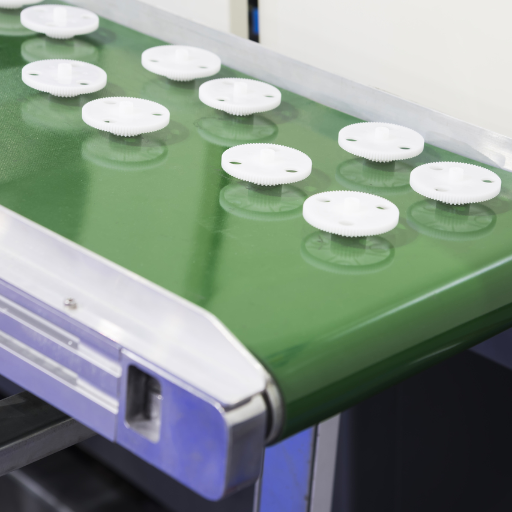
In order to give employers the ideal use of a stress reliew in plastic, there is need to correctly prepare and mount the industrial oven. First, ensure that the latter is set to the desired preheating temperature as prescribed by the manufacturer of the plastic concerned. This is needed to ensure an even heat distribution through out the annealing process. Position plastic parts on suitable heat trays with similar gaps to omissions that can cause blocking of the air. Set the temperature of the oven with external limits so that the temperature limits might not be exceeded because uneven heat leads to warping and destruction of stress in the wrong way.
Besides, it is worth applying thermocouples or other monitoring devices inside the oven to check the temperature and make sure that a big load is being baked. Such an approach will allow, apart from soaking the tension out of the plastic, enhancing the stability and durability of the product. Refer to the appropriate instructions or regard this as a general principle and refining the way for processing the specific types of plastic.
To successfully conduct an annealing process for stresses in plastic, preheat the oven to the necessary temperature that has been outlined for the particular plastic. Place the fans inside, creating even spacing between every piece, to ensure proper heat circulation. Keep the material at the temperature specified in the instructions for the time specified. Once the heating step is over, proceed to slow down the plastic to avoid deformation. It is important to cool down the parts as well as heat them up and achieve the best combination, so the recommended cooling rates should be adhered diligently. For maximum stress relief and stability of the structure, ensure temperature is maintained throughout the process with the use of appropriate equipment.

When it comes to annealing plastic parts, the molecular composition of plastic goes through a substantial change over time. Heat helps the polymer molecules to settle down and rearrange themselves in a stable manner, otherwise known as polymerization, removing the stresses which were inflicted during the process of manufacture. This reorganization increases the strength and the capability of the material which includes its durability and the capacity to withstand force without deforming among others. The process of cooling is install to make the structural changes to make the part to be more enhanced and less likely to warp or crack with time.
The effect of annealing on plastics depends on the category of the plastic. For example the annealing process for abs or polycarbonate prefabricated parts is basically aimed at stress relaxation and improvement of dimensional stability. They acquire resistance to breaking because of the internal stresses in these plastic. In contrast the application of process based therapy in materials like polyethylene or polypropylene contributes to the plastic re-organization and rearrangement of the existing crystal structures and size enhances of toughness or resistance to deformation. The degree to which annealing is applicable to plastics is different depending on the chemical structure of the plastic and its end use. However, in most cases, it helps to improve the quality and life of the material.
This is a technique to relieve internal stresses that are present in the parts due to various methods of manufacturing such as molding or extrusion. This type helps in avoiding the problem of warps, cracks and distortion during use.
This is typical of polyethylene and polypropylene. And such a treatment helps to increase the toughness of the material and dimensional stability by promoting growth and rearrangement of such crystalline structures.
This process is done after the thermoforming has being done to the plastic and it is directed to allow the plastic to attain a more stable quality. It increases the life of the material and limits the dimensional changes that could otherwise be caused by addition heat treatment or mechanical forces.
This is used in some cases for particular purposes to increase the strength of a given plastic in one or the other direction for instance films or fibers.
Every approach is customized according to the construction of the material as well as the desired use of the plastic product increases performance and dependability of the product.

It is significant to recognize the range of appropriate annealing temperatures before commencing heating treatment. Some examples are:
The standard operating procedure must also include the manufacturer’s instructions and guidelines, as well as the heat specifications of the material so that the annealing process steps that are significantly above such heat specifications are eliminated after annealing.
Typically, in estimating the duration of annealing plastic parts, it depends on the features of the particular plastic, thickness, and purpose. Usually thin section parts take less time for annealing while thicker ones need more time to ensure that the heat is evenly spread out. Annealing is generally undertaken between 1- 4 hours for most plastics but the specifics of the time scale should be the characteristic of the material used as provided by the manufacturer, that is, it should not be overlooked. The process should not be hurried, since internal stresses may be prevented, and the part retains its shape later through gradual heating and cooling.
To maximize the effectiveness of the sodium ion exchange process, it is important to properly monitor and adjust the process parameters at all times. The main parameters are temperature, time, and cooling rate that have to be adapted according to the type of plastic and its thickness. Adequate provision of thermocouples or IRTs allows the material temperature homogeneity history to be inspected based on the actual process state. Moreover, it is very important to follow the recommendations of the manufacturer especially in the case of plastics such as polycarbonate or acrylic rainwater harvesting tanks.
In the event that deviations from the set conditions are observed, corrective measures should be taken timely. For instance, if the temperature distribution is not uniform, one can consider either shifting the material in the oven or confirm that the equipment is still in calibration. Use of the new technology, programmable ovens with in-building data logging capabilities, offers accuracy and replicability. The costly approach also helps in avoiding defected products, helping in reducing internal residues and in the quality of annealed plastic parts.

Even though structuring plastic products in desired shape is not very complex, it is essentially important that these materials have strength and exhibit resistance to deformation in time. Annealing relieved these stresses and reduced the Warpage stress, many aircraft parts ever made are subject to linear dimensionality as some of them are quite complex in shape. This is important for highly precise applications where a slight change in dimensions affects the performance.
Many studies and analysis of various plastics support the notion that their retention of properties at changes in temperature, such as thermal stresses, increases with slow annealing. When molecular orientation is employed it leads to the formation of a homogeneous structure with stress free bonds, therefore the annealed polymer is more efficient in distributing local and time dependent stress in comparison to any other mechanical or thermal loading. Annealing is used in many industries such as aircraft, automobile, and medicine to help meet dimensional specifications and to enhance the life of components.
One of the major applications of annealing in this industry is in the production of various plastic items like engine or fuel system components. For example, annealing is required for polycarbonate headlight components to withstand the thermal stresses of temperature variations within the engine. Through this, the possibility of such hopes being short-lived becomes minimized.
Moreover, the aircraft sector makes use of the annealed polymers within another scope of its industry – interior and exteriors panels works e.g. cabin parts and insulation panels. In the aircraft construction, annealing plastic parts, which are made from high performance materials, such as PEEK is done to the attainment of higher dimensional stability and resistance to and mechanical forces during the flight. This has improved quality due to the safety factors being improved, and has also minimized the costs of wear and tear therefore satisfying the standards that such an industry has raised.
Annealing Plastic Parts for manufacturing processes are very important especially to industries engaged in the making of surgical instruments, hermits if and devices that can be implanted. Plastics such as PMMA which is used on lenses that are fixed inside the eyes, relations of which should change to allow for the lenses to be annealed, are used since they are clear and will not develop any defects that would effect borther damage to the lenses. There have been improvements in these techniques and patients have been provided with better and safer care.
Annealing plastic parts is crucial in order to prevent failure of the part by relieving internal stresses induced during manufacturing processes such as molding or machining. The temperature and cooling rates of the material should be controlled properly to remove distortions in the molecular structure of the material that could cause warpage, cracking, deformation, or premature failure. This is why the specific plastic used should be properly annealed to avoid localized weaknesses or premature failure of the product.
The Effect of High-Temperature Annealing Process on Crystallization Process of Polypropylene, Mechanical Properties, and Surface Quality of Plastic Parts: Explores the impact of annealing on the crystallization and mechanical properties of plastic parts, providing insights into best practices.
Effect of Stress Relief Annealing on Microstructure, Mechanical Properties, and Residual Stress: Discusses the role of stress relief annealing in improving material properties and reducing residual stress, applicable to plastic parts.
Effects of Annealing Temperature and Duration on Mechanical Properties of PLA Plastics Produced by 3D Printing: Examines how annealing parameters influence the mechanical properties of PLA plastics, offering practical insights for stress relief.
Plastics Processing Data Handbook: A comprehensive guide on plastics processing, including annealing techniques and best practices for improving product quality.
Plastic annealing may be defined as thermal treatment of polymers to relieve internal stress within the plastic object after molding. During the process, the temperature of the plastic component is undergoes a rise above room temperature and remains there for a period of time sufficient to promote stress relaxation as well as cooling afterwards back to room temperature. It may entail raising the temperature of a plastic above its glass transition temperature – for amorphous materials or to a specific temperature for parts made of semi-crystalline materials – so as to relax the molecular chains which in turn assists in the better dimensional control and also aids in minimizing stress that could otherwise result in warpage psoiling and early degradation.
Annealing forms part of most manufacturing processes, especially in injection molding and machining. Moulded parts after injection still have stress contained within them due to quick hardening of the material from its molten state. This is combated by heating the parts again, specific to the time and temperature, in the process called annealing. This will cut off, stabilize the internal stress of the plastic parts, give better chemical resistance and avoid fracture of any of the products in which the parts will be used.
Intermediate Annealing serves the purpose of stress removing a part that goes through multi-step manufacturing sequence or even secondary operations. Where for instance, the need to stress relieve a part arises due to high dimensional tolerances required or other operations such as machining, welding or further molding; that is in order to avoid cases of warpage or change in size after treatment stage.
Many factors like temperature and time are important and tighter which are driven by the polymer in question: one in as far as thermal treatment or annealing of a polymer is concerned depends on the glass transition temperature or melting temperature of the polymer. An amorphous polymer specifically shows annealing close or slightly below the glass transition temperature as the preferred practice. On the other hand, for semi-crystalline materials more than one temperature plus hold time is used during each anneal stage. Accurate temperatures and hold durations should be established analytically or through the datasheets of the material to product degradation and to release any stress respectively.
Anything that requires the highest dimensional accuracy, anything that is likely to stress crack and or practical components such as those used in furnace often do require annealing. Annealing Plastic Parts has an advantage for engineering plastics and some even injection molded components specifically these amorphous polymers and/or injection molded ones because one, it reduces residual stresses in molded products, second, the corrosion strength is enhanced and last the part load or exposure is delayed due to the failure of the part.

Manufacturing processes are quite complex, and the choice of a production method is directly related
Learn More →
There are two major manufacturing methods for producing plastic prototypes that most people find useful
Learn More →
As a person involved or interested in the design and production of plastic components, it
Learn More →