

Manufacturing processes are quite complex, and the choice of a production method is directly related
Learn More →
The 3D printing technology and CNC machining have combined, and this has come to redefine manufacturing because it presents a unique and excellent opportunity for manufacturing either new or enhancing existing parts and systems. There is no more “either CNC” or “3D printed” mentality. Now, products can use the perfect fit solutions that hybrid manufacturing offers. With a more flexible and ideal CNC and 3D components integration in the breech, it is possible to produce more efficient and non-replicated jigs, tools, and machine components. This paper approaches integrating the two technologies at the construction stage. It explores how synergistic relationships enhance system operation efficiency and improve product programming in the context of the most complex design objectives. You will find out how these emerging 3D printing and CNC machining strategies are remodeling the future of the fabrication industry, whether you are an engineer, a machinist, or just a person interested in advanced manufacturing.
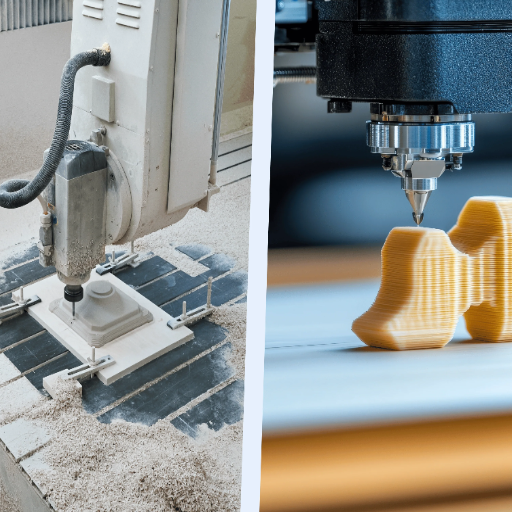
3D printing and CNC machining are different technologies that may come together in various situations to improve manufacturing processes. 3D printing is particularly apt for quick production of component prototypes and intricate designs, while CNC machining is invaluable in creating quality precision parts from numerous materials. With the proper integration, manufacturers can harness 3D printing to develop initial designs or delicate features and implement CNC machining to cut and polish volumes or improve designs and enhance treatments. Such an integrated approach leads to shortened duration for batch production operations, less scrap, and fabrication improvements, thereby making it highly efficient for both small-batch making and replication. Suffice it to say that, in this trend, the use of both together adds value and creates opportunities in manufacturing.
3D Printing, or “additive manufacturing” in official terms, is a ground-breaking technique in creating three-dimensional objects layer-by-layer, already using digital models. The process starts with preparing a digital 3D model based on what people call CAD software, or Computer-Aided Design. This digital file is designed to achieve the most desirable dimensions. The file is then turned into a format the printer can render, usually a .STL.OBJ format.
Fused Deposition Modeling (FDM), Stereolithography (SLA), and Selective Laser Sintering are the most prevalent technologies in 3D printing. Each technology has a specific use case, which revolves around the material and the precision requirements. FDM, for example, is primarily employed in creating prototypes and functional parts because of its ease of use and cost-effectiveness. On the other hand, SLA is appropriate for producing high-precision components with a glossy appearance.
Estimates indicate that the global 3D printing market, which is likely to soar, will be USD 15 billion in 2021. It may grow to USD 68.71 billion in 2030, at a compound annual growth rate (CAGR) of 18.1%. This growth is attributable to technological advances and expertise applicable in different industries, such as aerospace, automotive, consumer goods, and healthcare.
Significant benefits associated with 3D printing technologies are favorable time frames within which products are produced meaningfully by industry players, increased recycling technology by reducing raw materials, and the ability to create geometries that would be impossible for traditional technologies. For example, in the health sector, there are particular achievements in preparing such implants and prosthetics customized for specific patients. Meanwhile, light parts are being upgraded in the aerospace articles to enhance fuel utilization.
Awareness of the steps in the 3D printing process and the several applications it incorporates, alongside its advantages, brings about great potential. 3D printing is a field of imminent technological transformation, with ambitious plans such as using artificial intelligence (AI) and new materials. The design and making of products worldwide are expected to change for the better.
The gadgets that employ computer programming to control tools and machinery- Computer Numerical Control (CNC) – are particularly preferred in metalworking because, as far as machining is concerned, they provide accuracy, speed, and the repeatability of the process. Such machinery generally includes CNC machines (an acronym for Computer Numerically Controlled Machines), which are computerised controls used for cutting, machining, drilling, etc. of various materials. Given the virtually impossible precision and near impossibility of producing parts otherwise, it is necessary to offer CNC milling machines, for example, in such sectors as aerospace, automotive, medical devices, and everything involving the processing of materials and quality parts. By employing CNC machines, manufacturers and engineers can eliminate human errors, thus improving the equipment’s overall efficiency, especially in mass production cases, while maintaining high quality.
The conjunction between 3D printing and CNC milling allows for incredible design intricacies. 3D printing has good geometrical structures and the internal components, which are difficult, if possible, in other ways. In contrast, CNC milling takes on quite the adoration for obtuse and insidious details and finishes that require minute touch and variations. And when the two — or, more specifically, the three machining processes — are combined, they. It will offer the designer a unique opportunity that could not have been realized in the past.
3D printing offers many advantages, such as time and cost effectiveness when making only initial parts and final fixing with bench work using CNC. The technology allows to care for raw materials and reduce scrap in use, material surplus when prototyping is confined to the minimum, and it helps to check whether or not the part is good; Normally, it is high tolerance manufacturing assisted by CNC milling, turning, drilling, cutting etc. that is the final production step.
Marrying these technologies will advance the schedule for creating a prototype. Creating complicated parts with 3D printing and CNC machining is now possible. In this case, one operation after one more is faster than each operation done alone when the production or post-production time is counted.
3D printing, on the contrary, calculates the necessary amount of material to build a piece, causing much less waste. Furthermore, the CNC machining technique requires any alterations in the final dimensions. It provides high precision and thus helps save time and reduce scrap rate in the process.
3D printing does well with lighter material configurations, while CNC machining adds consistency to features with close tolerances and finishes better. Such a blend makes it possible for lightweight components to be constructed with no shortcomings in strength or function.
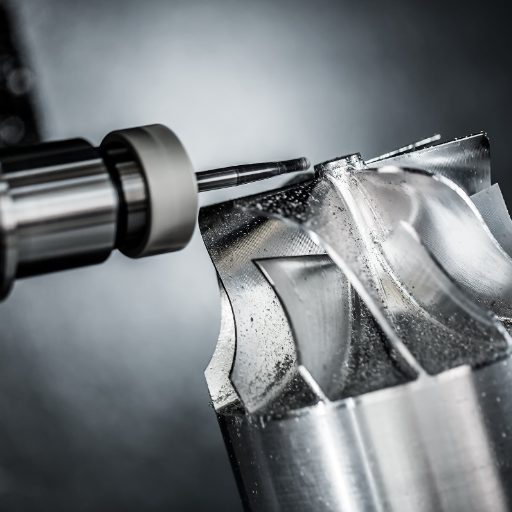
Preliminary components can be produced using 3D printing technology, reducing the possibility of material wastage in the value chain process. Materials are formed or attained by a single process, which, in the main, still saves both material loss and time wasted due to machining.
It is possible to build shapes with 3D printing that are fundamentally impossible to create through conventional methods. These models can then be improved based on errors that the arrangement of cnc milling programming may cause.
R&D and Early Submission will help rework overlaid designs, keeping execution times low and leading to effective and efficient resource use.
By integrating 3D printing and CNC, projects can be completed in less time while achieving high-quality final products.
In this, the different qualities of components are strengths for the prolonged efficiency of the product.
CNC machining enhances precision and surface finish in processes with the help of 3D printing. This is possible because 3D printing can create complex forms and shapes with medium accuracy, and CNC further refines these. As proven by a modern machining study, for example, CNC machining can often achieve tolerances of approximately ±0.005”, which is very low. So there is a need for accuracy imposed by the industry. Moreover, using multiple processes assists in bringing the surface finish to a standard that can be used –making sure the roughness (Ra) rarely go above 1.6 µm achieved by CNC operations primarily.
Also, the final quality and errors during the finishing process would be better with enhancements introduced due to the 3D printing technology, such as customized tool paths and real-time monitoring tools in CNC machines. The same report projects that precision techniques will be applied in manufacturing more than 70% of products in industry by 2025. When precision machining and additive manufacturing are used together, it not only reduces the amount of material usage but also improves structural strength and produces elements that are appealing and at the same time highly functional. Such a technique is even more pronounced in sectors requiring high accuracy and quality finishing, especially in aerospace, medical devices, and automobiles, where other general performance criteria are even more favored.
Being efficient in manufacturing involves making the most of one’s capacity, simplifying processes, and using new technologies. They follow the logical argument that if people strictly follow the laws of relation, focusing on lean techniques in production would alleviate much of the waste and increase productivity. In other words, finding solutions like these, we can reconcile all barriers towards achieving excellent production with cost constraints.
The industry has undergone significant change. Various industry sectors, such as aerospace, car manufacturing, and healthcare, require bespoke and intricate components.The global market for bespoke production is expected to grow by 10.2 % (CAGR) from 2023 to 2030. This further indicates the positive response to bespoke manufacturing.
Among the current manufacturing technologies, 3D printing, CNC machining, and multi-axis machines are instrumental in manufacturing intricate components with high accuracy. For instance, complex designs can be made through 3D printing, reducing manufacturers’ use of molding. This, in turn, reduces production costs and the time by which products are manufactured, which is about 70 % faster than before.
Further, adopting modular strategies such as lean manufacturing further enhances the capacity to provide flexible manufacturing solutions. Industrial practices have shown that lean manufacturing has reduced most breakdowns by 40 percent while improving the ability to introduce many unique designs. With technological advancements such as AI-powered software and generative CAD, producers can produce intricate parts and complex geometries without sacrificing productivity and constraints on flawlessness.

If you are searching for good 3D printed CNC accessories, please ensure you have the conception and the limitations of your CNC correctly calculated. Use CAD programs to make precise models with the correct measurements to make your piece proportionate. The convenience and wear-resistance are fundamental aspects, and material choice would again depend on the intended function and stress experienced during use of that particular accessory. Customer can also use their weight in another weight when only considering how the wall will be used in the design. Don’t forget the importance of Mesh configuration in wall thickness alteration. It is a good idea to revise the future after the construction of the test vehicle to make improvements where necessary.
See to it that the model is correctly measured and that the scaling values are applied for the desired function to be met. Tolerances need to be based on the material’s shrinkage amount. The range for most processes is from 0.1mm to 0.3mm.
The wall thickness must be well-maintained to ensure durability and well-sealed material. Most parts require a wall thickness of at least 0.8 mm to 1.2 mm, sacrificing for some specified in the application and load carrying requirements.
Shear overhangs angles to 45 or below to avoid excessive support material usage. Styles should account for the easy removal of supports without harming the final product’s completeness or its shape becoming distorted.
Have corridors on all sharp corners for uniform stress relaxation, thus preventing breakage. Chamfers are useful for nudgeging into holes; they enable ease of entry in areas that are constantly assembled or where parts are accurately located.
Therefore, Hole sizes should be adjusted to allow for the positive expansion of practices in loaded applications. If the situation requires regions to slide into one another without too much friction, a typical clearance value of 0.1- 0.2 mm should be used in practice.
Image selection and the design of mechanical structures must be wise, as poor material selection can affect the gainful exploitation of the designs’ mechanical strength, working life, and functionality. In this regard, new advances and trends can assist in making quality-oriented decisions concerning the choice of materials and their corresponding norms.
The following are a few material properties that usually play an essential role in deciding which material to use. For example, aluminium is known for its low density and high corrosion resistance. It has a low strength-to-weight ratio and is employed for vehicles and aviation. Comparatively, stainless steel offers highly tensile strength and quite resistance to any form of wear and heat, thus being applied in more arduous or higher temperature environments.
In addition to mechanical design, materials selection is now focused on using a scope within scope skill in addition to mechanical design. Thus, alternative materials are where the issue of using materials for entries and stands is resolved. Among Weston’s many values, statisticians tend to focus on an area of the world of production and offer an interesting contrast to the research on urbanization in the region. Orientation and others are considered a sister organization based on their column orientation goal until the observation’s end.
While convenient advantages are presented with the use of such materials as titanium, bearing in mind that such materials are costly, it is therefore essential to balance the needs of performance with the aspects of the lack of resources. High-strength steel, for example, will be more economical without other materials; it will likely be a preferred alternative in Structural applications. The historical regional data provided by trade publications shows that bullet prices of certain industrial materials, including aluminum and steel, attained some modest momentum in 2023, amid the suspension of the further decline of the supply chains.
Practical constraints necessitate thorough testing and verification or validation of the mechanical properties of the metallic structure, such as tensile strength, HT scales, fatigue tests, etc. The design engineer also employs tried-and-tested measurements reported by the materials’ manufacturing companies that are perhaps captured in complete standards such as ASTM and ISO certificates, which are very helpful in confidently selecting the best suitable material. The walls or other enclosures consisting of resin reinforced with quartz fiber are consumable or disposable or are replaced periodically, as is the norm of utilization.
When addressing mechanical systems that experience high mechanical stresses, chromium (chromium and molybdenum) steels are most likely preferred. On the other hand, copper and its alloys provide outstanding electricity-flow properties, especially in electric circuits. In such structures and the use of different materials, it is estimated that reducing the weight of the composite, even in civil aircraft, could improve the plane’s efficiency by approximately 15-20%.
By incorporating these factors with the particular needs of a given project, the best materials and metal components to use can be determined according to the desired expectations and adhering to the new design and sustainability principles.
To adhere to the specified levels of precision, one must avoid any tools that might not work or be too difficult to manage. A sharp ability to distinguish different kinds of materials and considerably high levels of craftsmanship are always needed, as doing so is consistent with the most recent developments on optimization for effectiveness and efficiency issues.
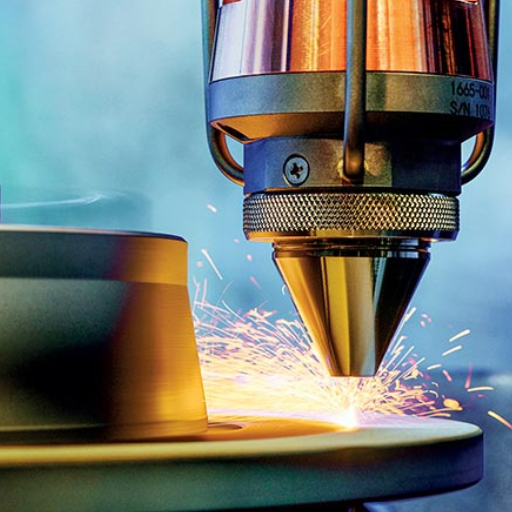
|
Category |
Metal 3D Printing Challenges |
CNC Machining Challenges |
|---|---|---|
|
Material Issues |
High porosity affects part strength |
Material selection difficulties |
|
Structural Issues |
Cracking during cooling |
Tool breakage during machining |
|
Process Issues |
Residual stress causes warping |
Complex programming requirements |
|
Surface Quality |
Rough surfaces need post-processing |
Surface irregularities |
|
Cost Factors |
High material and machine costs |
Expensive tooling and setup |
|
Precision |
Density inconsistencies in parts |
Maintaining tight tolerances |
|
Setup |
Complex printer parameter tuning |
Machine calibration challenges |
When it comes to manufacturing, mechanical properties and surface quality should not be overlooked, especially with modern production methods, such as additive manufacturing (AM) and precision machining. To enhance these properties, there is a serious need for knowledge on the factors influencing the materials chosen, the parameters of the process used, and the procedures followed after completion.
1. Enhancing Mechanical Properties
The best possible mechanical properties are often achieved by fine-tuning the material ingredients and manufacturing process. For example, developments suggest more than a small benefit of altering the heat treatment in metal 3D printing to improve tensile stress-strain and ductility values. One research publication in the Journal of Materials Processing Technology notes that adjusting layer thickness and build orientation in 3D printing improves part quality by lowering the interior air gap percentage that is there because of the created air bubbles arising from the sintered ceramic. There will also be advancements in the material’s properties, which are expected owing to various other factors like the neuro-fuzzy system, genetic algorithm, and particle size. Advanced composite materials such as carbon fibre reinforced composites are very lightweight, making them suitable for the aerospace and automotive industries.
2. Improving Surface Quality
The exacerbation of unevenness is a topic that occasionally attracts interest within most advanced technological processes, particularly in 3D printing and CNC equipment processing. Citing the 2023 research published in ScienceDirect, it was noted that the techniques of post-processing technologies, such as grinding, burnishing, and laser finishing, contributed up to 50% improvement in surface roughness. Furthermore, in situ monitoring systems installed during the production processes can also help reduce the number of post-processing procedures. There are methods such as electrochemical polishing or advanced coatings for the processes that require excellent finishes, such as medical implants or even optical devices.
Industries can drastically improve components ‘ strength-related and surface properties by utilizing advancements in material properties and machining and manufacturing operations. As a result, continuous efforts are being made in research and development to make the techniques mentioned earlier more efficient, economical, and dependable, especially for high-tech applications.
Superiority in the efficient control of the manufacturing process parameters requires the optimal use of advanced automation tools, digital technologies, and an effective logistics policy to respond to claims of production volumes with the least appropriate cost and minimal wastage.
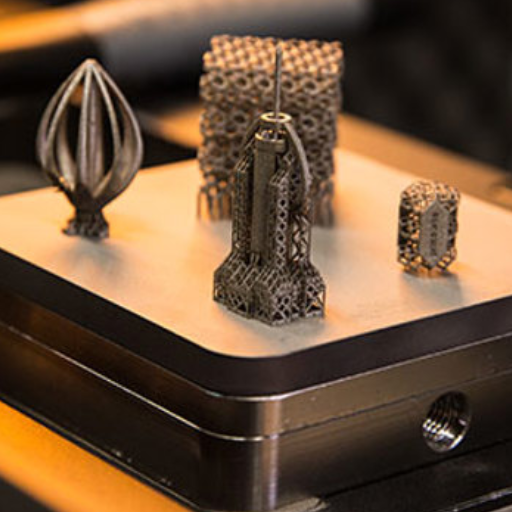
Integrating 3D printed materials into your CNC factory enables smooth functioning and reduced maintenance costs. It is also essential to ensure that some components or tools can be made using 3D printing within the facility, such as suitable-sized fixtures, jigs, or prototypes. This step is crucial since it is where a 3D printer is acquired and the materials relevant to the processes are selected. There are particular applications; therefore, after leasing a printer, it is helpful to schedule around the same production timeline… for example, when possible, using 3D printing for quick testing of concepts or specific small-number prototypes. Regularly enhance your team’s competencies by incorporating real-time training for your employees in using and applying technologies, such as 3D printing and CNC. Of course, it provides access to ways of completing all tasks or duties more efficiently using the 3D manufacturing feature.
|
Category |
3D Printing Setup |
CNC Setup |
|---|---|---|
|
Space Requirements |
Ventilated area with level surfaces |
Dedicated, vibration-free workspace |
|
Power Needs |
Stable power, similar to a refrigerator |
High power for heavy-duty machines |
|
Equipment |
Choose a printer based on material needs |
Select the machine for material and precision |
|
Software |
CAD software for 3D modeling |
CAM software for toolpath programming |
|
Safety |
Ventilation for fumes, gloves for handling |
Safety shields, proper tool handling |
|
Post-Processing |
Tools for cleaning and curing parts |
Finishing tools for surface refinement |
|
Training |
Staff training on printer operation |
Training on CNC programming and safety |
|
Collaboration |
Use management software for workflow |
Team coordination for a complex project |
Several aspects, such as material needs, quantity, accuracy, production volume, and costs, become very important in choosing the appropriate technology and printer according to one’s needs. The development of 3D printing and CNC machining technologies has made it essential for businesses to study the specific angles at which they can be applied in business activities.
1. Material Compatibility
Different types of 3D printing and CNC machining support other kinds of materials. Fused deposition modeling systems, for example, work exceptionally well with thermoplastics such as PLA and ABS, whilst stereolithography is best used with fine-detail resin materials. In contrast, CNC machines can make large-scale parts since the system can handle a broader range of materials like metals (aluminum, brass) and tough resins. In addition to providing flexibility in production processes, it is often used to upgrade machines, particularly for high-strength requirements.
2. Accuracy and Tolerances
3D printers usually have layer resolutions of 100 microns or less, which are suitable for designing prototypes whose tolerance is within a reasonable range. The advancement in contemporary SLA technologies can make it even more precise, with a resolution of 25 microns, which is suitable for very complicated models. Such is the case with CNC milling machines, where the subsequent achievable tolerances are on the order of ±0.001 inches, critical when working on high precision components.
3. Production Speed and Scale
FDM printers serve immediately in producing true-to-design parts at a relatively low cost. On the other hand, CNC machining is more beneficial when mass production is to be done since it enables a high-speed process with steel components.
4. Cost Considerations
This is the idea of how much the consumer will be prepared to pay for the print system, the materials, and service, in this case, making it the most critical point of analyzing the potential profitability of the 3D printer market. Regarding the specific equipment, 3D printers’ cost varies significantly, from about $200 for a basic extrusion desktop FDM 3D printer to $5,000 for an industrial SLA 3DP. The attack on machining inesign carries several costs, the first being that CNC machines will need to invest a significant amount in acquiring the machines, with the cheapest ones going for no less than $5000 to $10000, depending on their capacities. Costs such as the cost of raw materials, tooling, and maintenance of the machines have to be figured out in the final cost analysis as well.
5. Recent Market Trends
The 3D printing market has been forecast to grow at a CAGR of 23.3% from 2023 to 2030 based on the most recent reports from experts in the industry. At the same time, demand for CNC manufacturing is increasing because of the production requirements for tailored parts in the aerospace, automotive, and other manufacturing industries.
Therefore, combining these elements should help businesses identify the most appropriate technology and printer for the set goals and budget. It also provides a strategic insight into conceptualizing 3D printing and CNC machining technologies for various new applications that circumvent their inherent limitations. Since 3D printers are perfect for all things related to applications requiring some flexibility in performance, and CNC machining is ideal for applications demanding extremely accurate and durable solutions, merging the two processes adds value and satisfies most user expectations.
Developing people in an organization, Boosting knowledge, and creating an individual’s required competencies involves enabling front-line staff to get hands-on experience using 3D Printing and CNC on these machines to design and orientation, as well as other software applications and Protective clothing, to ensure that the optimum utilization of resources is attained to provide quality output in the shortest time possible.
Development of a 3-D Printer and CNC Milling Desktop Machine for Manufacturing Labs
Read on ASEE
Comparative Study of 3- and 5-Axis CNC Centers for Free-Form Machining of Difficult-to-Cut Material
Read on ScienceDirect
Automatic Part Localization in a CNC Machine Coordinate System using 3D Scans
Read on Springer
A: 3D printing is an additive manufacturing process that builds parts layer by layer. CNC machining is a subtractive process that removes material from a solid block to create parts. Each method has its advantages depending on the part complexity and production quantity.
A: A 3D printer works by depositing material, such as polymer filaments, layer by layer to create 3D-printed parts. This method allows for producing complex shapes that may be difficult to achieve with traditional CNC machining.
A: A CNC router can cut and shape 3D-printed parts, especially if they require additional finishing or mounting features. However, the initial creation of the parts would still be done through a 3D printer.
A: CNC machining services offer precision and the ability to work with various materials. Due to its ability to produce strong and durable components, CNC machining may be preferred for larger parts or when isotropic properties are needed.
A: The controller in CNC and 3D printing systems manages the movements of the mill or 3D printer. It interprets the design files and ensures that the machine operates accurately to build the part as intended.
A: Economies of scale play a significant role in production choices. CNC machining may be more cost-effective for larger quantities due to faster production rates, while 3D printing can be advantageous for smaller runs or highly customized parts.
A: Common materials for 3D-printed parts include various polymer filaments and, in some cases, metal powders for more advanced applications. The choice of material depends on the desired properties of the final part.
A: Limitations of 3D printing include slower production speeds for larger parts and potentially lower surface finish quality compared to CNC machining. Additionally, specific complex geometries may be easier to achieve with CNC methods.
A: CNC and 3D printing can complement each other in part production. For example, 3D printing can create intricate designs or prototypes, while CNC machining can be used for final production or finishing of those parts.

Manufacturing processes are quite complex, and the choice of a production method is directly related
Learn More →
There are two major manufacturing methods for producing plastic prototypes that most people find useful
Learn More →
As a person involved or interested in the design and production of plastic components, it
Learn More →