

Manufacturing processes are quite complex, and the choice of a production method is directly related
Learn More →
Aluminum enclosures are an integral part of modern manufacturing, bestowing a life of durability, usefulness, and resistance to environmental aggressors. With CNC machining, the production of aluminum boxes has achieved a higher level of precision and efficiency, transforming what were once less refined components into precise and functional instruments for design and industrial use. This article explores CNCs and their impact on aluminum enclosure manufacturing, focusing on the effects on accuracy, customization, and scalability in electronics, aerospace, and industrial manufacturing.
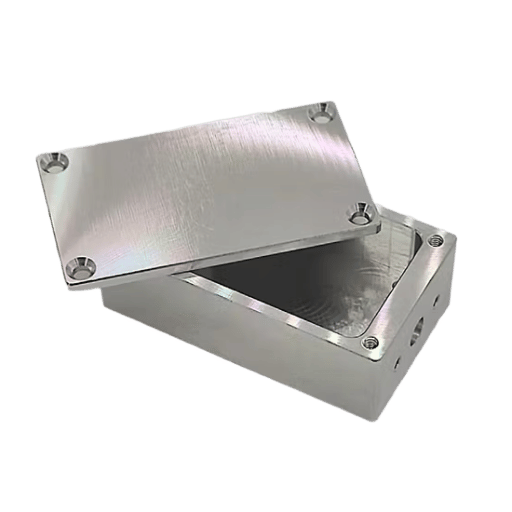
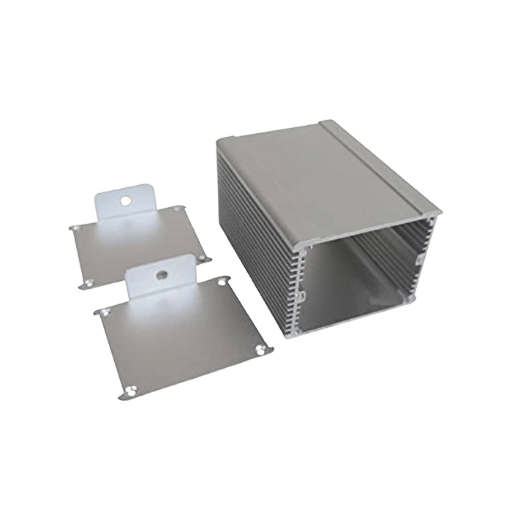
CNC aluminum boxes are precision-engineered enclosures manufactured via CNC machines. This manufacturing process ensures accuracy and consistency, making it suitable for industries that require ruggedness and custom solutions. CNC machining facilitates the creation of complicated designs, very tight tolerances, and surface finish requirements that are often required to protect sensitive components in electronics, aerospace, and industrial applications. These cabinets scale well, are very versatile, and very durable; they are indeed the very best choice for demanding projects.
A CNC aluminum box is a protective enclosure made of aluminum via CNC machining. The method ensures accurate dimensions, smooth finishes, and high durability for all aluminum CNC products. These boxes typically find applications in housing sensitive components that require protection from environmental factors such as moisture, heat, or physical impacts. Thanks to their customizable design and strength, they serve perfectly in applications concerning electronics, aerospace, and different industrial fields that require reliable yet robust enclosures.
There are instances when aluminum enclosures become appropriate in the modern manufacturing sphere owing to:
The CNC machine stands for Computer Numerical Control machine, where machines or tools are guided through pre-programmed software to produce parts with high accuracy. It is the translation of a digital design file into instructions for the machine.
Key CNC Operations:
Tensile Strength: 70 MPa to 700+ MPa
Strength-to-Weight Ratio: Exceptional performance
Natural Protection: Oxide layer enhances durability
✓ Corrosion resistance in harsh environments
✓ Withstands extreme temperatures
✓ Resists deformation under load
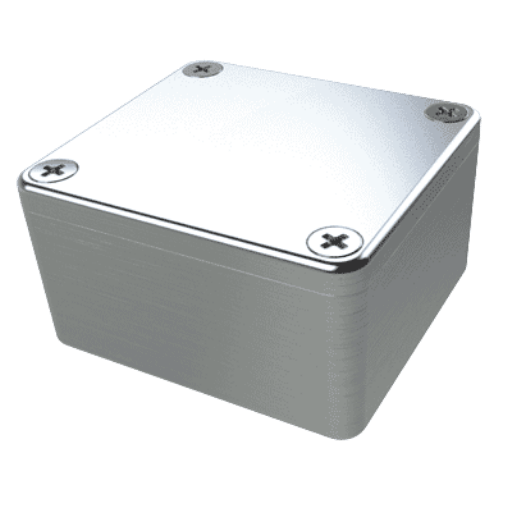
Aluminum is highly durable, boasting an exceptional strength-to-weight ratio; therefore, it is an essential material for all CNC enclosures. It is innately corrosion-resistant and hence offers long-lasting protection in all environmental conditions. These properties, combined with its naturally formed oxide layers, make aluminum the preferred choice for CNC operations in the aerospace, automotive, and telecommunications industries.
Precision Level: Tolerances as tight as ±0.001 inches
Minuscule tolerances can sometimes compromise moving parts in engineering, such as those used in aerospace or medical applications; therefore, this becomes a necessary consideration.
This domain of tooling enables CNC applications to possess advanced software and automation systems, which translate digital designs into physical parts, thereby ensuring consistency across high-volume manufacturing runs but maintaining adaptability for low-volume machine jobs and one-off creations.
The global CNC machining market is projected to reach $140 billion by 2030
Multi-axis machining and high-speed tooling aim to increase productivity, enabling the simultaneous production of complex components. Such efficiencies have been said to reduce operational expenses, thereby increasing competitive advantage in aerospace, automotive, and medical device manufacturing.
Housings to protect sensitive avionics systems in extreme environmental conditions
Electrical systems, control units, and battery enclosures are designed for heat dissipation
Protective casings for antennas and transceivers, providing EMI shielding
Housing diagnostic equipment and portable devices, ensuring reliability and safety
Market Outlook: Aluminum CNC products are experiencing increasing demand due to the rise in industrial automation and the proliferation of connected devices. The global aluminum enclosure market is estimated to see the highest growth due to improved thermal management and customizability.
Some innovations in designing CNC aluminum boxes bring forth precision, speed, and versatility:
Impurities or inconsistencies in aluminum alloys can result in structural weaknesses or aesthetic imperfections.
Solution: The quality control implementation must be strict and should include regular inspections of raw materials and non-destructive tests.
High-speed machining processes can lead to accelerated tool wear, particularly when cutting harder grades of aluminum. Dull tools reduce accuracy and surface quality, increasing production costs.
Solution: The use of special tooling materials, such as carbide-coated tools, coupled with the implementation of a predictive maintenance program.
The high thermal conductivity of aluminum results in heat build-up during machining, leading to thermal distortion and affecting dimensional accuracy.
Solution: Coolant optimization, adaptive feed rates, and precise heat dissipation methods.
Achieving a uniform surface finish is challenging due to chatter marks or burr formation and is especially critical where it concerns aesthetic or functional finishes.
Solution: High-speed finishing passes and post-processing methods like micro polishing.
Making customized aluminum enclosures or producing in small batches can incur high costs, which is a function of setup times and tooling adjustments.
Solution: Use of modern CNC technologies, such as 5-axis machining and modular fixturing systems, to optimize process flow.
This manufacturing process generates a significant amount of waste materials and consumes a substantial amount of energy.
Solution: Recylcing of materials, optimizing cutting paths and utilization of energy-efficient machinery.
Industrial activities account for approximately 23% of global greenhouse gas emissions
Recycling aluminum requires 95% less energy than producing it from raw materials
The CNC machining field is undergoing rapid transformation, with developments in automation, intelligent systems, and material sciences. Here are particular technologies envisioned in the future of CNC machining:
Real-time adaptive adjustments during the machining process with predictive analytics to predict tool wear or potential faults.
💡 Up to 25% improvement in operational productivity
It is a combination of CNC machining and additive manufacturing, aimed at achieving greater design freedom and material efficiency.
💡 Produces complex geometries with minimal waste
Connected machines for smooth data exchange, remote monitoring, and predictive maintenance.
💡 40% of manufacturers adopted IoT-connected machinery
5- and 6-axis CNC machines manufacture complex parts with fewer setups, resulting in reduced lead times.
💡 Superior precision, especially in aerospace & automotive
Machining speeds and durability are enhanced by carbide tools with coating and by polycrystalline diamonds.
💡 Lightweight and durable components for demanding applications
Creates virtual replicas for better simulation, troubleshooting, and process enhancement.
💡 Saves millions annually by reducing errors
🚀 Future Impact: CNC aluminum box production and other precision manufacturing industries can achieve unprecedented levels of efficiency, accuracy, and sustainability, and remain competitive in the rapidly evolving industrial environment by leveraging these emerging technologies.
6-8%
CAGR through 2030
Key Growth Drivers
Industry 4.0 Adoption
Leading Regions
Asia-Pacific Dominance
⚡ Conclusion: This upward trajectory highlights the pivotal role that CNC aluminum box production will play in future industrial innovation and global economic development, with manufacturers that have adopted advanced technologies securing unprecedented opportunities.
There is an increasing trend of integrating high-performance materials with manufacturing methods in the CNC aluminum box industry. It is a new era of higher performance, efficiency, and sustainability.
7075 Alloy: The bravest strength for aerospace applications
6061 Alloy: Idyllic strength-to-weight ratio and corrosion resistance
Applications: Aerospace, automotive, telecommunications
Hybrid Materials: Enhanced composites and coatings
Anodized Finishes: Enhanced durability and thermal performance
Recyclable Aluminum: Sustainable production methods
These developments indicate significant changes that align with efficient and environmentally friendly production methodologies, enabling the industry to meet modern performance and environmental standards.
A CNC aluminum box is a custom enclosure machined from aluminum using CNC milling technology, designed to house various electronic components and equipment, while providing the utmost protection against weather parameters and ensuring durability.
Aluminum casing resists corrosion extremely well and is very durable, hence protecting sensitive electronics with its own weight. The lightweight property also allows good heat dissipation, further enhancing the performance and longevity of electronic devices.
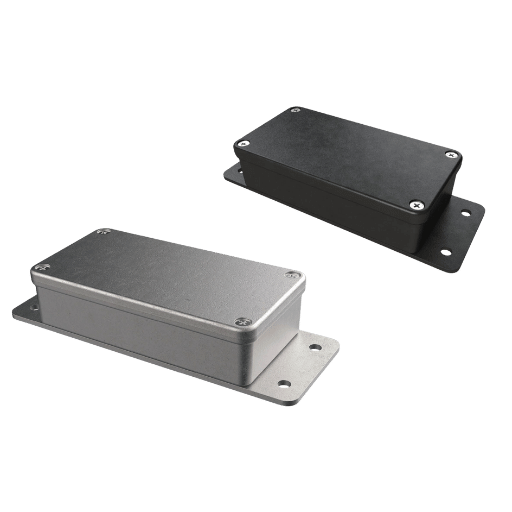
CNC aluminum enclosures have a wide range of applications, including industrial control, aerospace devices, outdoor equipment, and more. Such enclosures can be fabricated with customized designs, providing a safe shelter for various components.
With CAD software in place, the drawings and 3D files can be very accurate. You can then work with a bona fide manufacturer specializing in CNC machining to ensure the actualistic requirements and tolerances are attained.
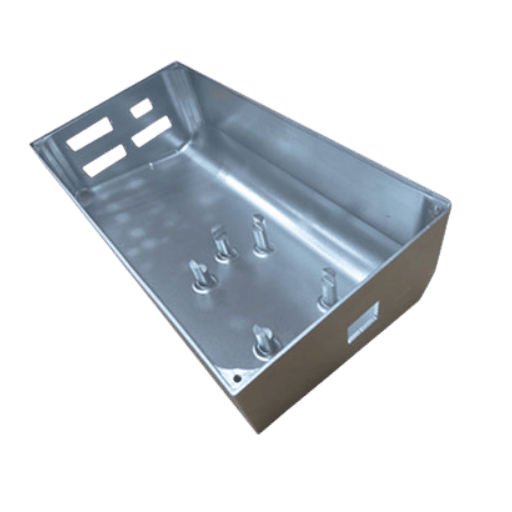
When designing a custom aluminum enclosure, consider features such as shape, size, cutouts for connectors, and assembly method. Additionally, ensure the design includes necessary holes for ventilation and easy access to internal components.
Yes, aluminum can be extruded to create custom shapes and profiles. This process allows manufacturers to produce long lengths of aluminum components that can be easily cut and machined into specific designs, such as enclosures or housings.
CNC milling for aluminum boxes is a method that uses computer-controlled machines to cut and shape aluminum into an enclosure design. This CNC milling process enables high precision and repeatability in production, ensuring that every aluminum box meets the specified requirements.
The surface finish of aluminum cases considerably influences their durability. With a weathering finish such as anodic oxidation, corrosion resistance and resistance to abrasion are enhanced, thereby prolonging its longevity in aluminum cases exposed to various adverse environments.
Aluminum alloys are generally preferred in CNC machining due to their qualities, including a good strength-to-weight ratio, favorable machining properties, and corrosion resistance. As such, they offer a viable solution for producing strong and lightweight parts for various applications.
Customizing your box for EMI shielding involves altering design parameters, such as adding one or more layers of conductive coatings or conductive gaskets. A design that ensures a tight fit and proper grounding will further enhance its effectiveness in shielding an electronic device from electromagnetic interference.
Aluminum CNC boxes embody cutting-edge manufacturing technologies combined with exact engineering and green practices. As industries are increasingly demanding enhanced performances, ground-breaking applications, and high levels of environmental stewardship, the CNC machine leaves no stone unturned to usher in a transformation in the manufacturing world across sectors.

Manufacturing processes are quite complex, and the choice of a production method is directly related
Learn More →
There are two major manufacturing methods for producing plastic prototypes that most people find useful
Learn More →
As a person involved or interested in the design and production of plastic components, it
Learn More →