

Manufacturing processes are quite complex, and the choice of a production method is directly related
Learn More →
Aluminum 6061 goes down as one of the most versatile materials with an excellent strength-to-weight ratio and resistance to corrosion, thus opening its doors into innumerable industries. When CNC machining, a very precise and functional technique, is applied to this alloy, the level of precision and reliability achievable is unmatched. This article seeks to delve into the technical parameters of machining aluminum 6061 blocks by CNC along with its merits, applications, and the pivotal role it plays in manufacturing today. Whether you are an engineer with much experience looking for refined information or a business owner who is seeking material solutions, this article offers a lucid overview to understand why CNC-machined aluminum 6061 is considered a material of choice in premium engineering-related work.

An aluminum block is a solid or semi-finished piece of aluminum, usually rectangular or cubic in shape, serving as raw material for manufacturing technology. Aluminum blocks are generally made from aluminum alloys, the more popular one being 6061, which is aluminum combined with magnesium, silicon, and other elements to improve strength, corrosion resistance, and machinability. Aluminum blocks find CNC uses, where the structural integrity and versatility of aluminum allow the precise machining of components for various industries such as aerospace applications, automotive applications, and construction. Their light weight and thermal conductivity combined with resistance to deformation provide for accurate, rapid manufacture of complex parts for applications in the respective industries.
The classification of aluminum alloys encompasses 2 major categories, generally depending on their chemical composition and along with their manufacturing processes: wrought alloys and casting alloys. Wrought alloys are those alloys which are mechanically worked into final shapes and are further divided into non-heat treatable and heat treatable. Among some of the more common wrought alloys are the 1xxx, which are nearly pure aluminum and provide good corrosion resistance; and 6xxx, which combine medium strength, good corrosion resistance, and good weldability for structural purposes.
| Alloy Series | Primary Elements | Key Properties | Applications |
|---|---|---|---|
| 1xxx | Nearly pure aluminum | Excellent corrosion resistance | Chemical equipment, reflectors |
| 6xxx | Magnesium + Silicon | Medium strength, good weldability | Structural components |
| 7xxx | High zinc content | Very high strength | Aerospace, automotive |
Casting alloys are much designed to thin-walled castings and mainly intended for thin walled investment castings and die castings of outlines that change in complexity. Elements such as silicon, magnesium, and zinc in aluminum alloys greatly stabilize specific properties such as strength-to-weight ratio, machinability, and thermal characteristics.
Innovation Trends: The recent Aluminum Alloys series continues to be subject to refinements to meet current engineering requirements. For example, 7xxx alloys, having a high zinc content, offer very high strength and are thus widely employed in the aerospace and automotive industries for weight reduction without compromising strength. Moreover, scandium or lithium-based alloy technologies seek to reduce weight further and improve mechanical performance for future applications.
Approved as one of the finest engineering materials, Aluminum 6061 blocks are very versatile and used for a multitude of engineering applications in view of their fairly good balance between strength and corrosion resistance together with good workability. The 6xxx series consists mainly of aluminum, magnesium, and silicon as alloying elements. These elements impart good mechanical properties to this alloy. 6061’s heat treatability stands as one of its defining properties, through which it achieves a higher level of strength while maintaining good machinability. Due to its corrosion resistance and structural capacity, 6061 is used in structural components, aerospace frames, automotive parts, and marine equipment.
Manufacturing using the 6061 aluminum block has increased, conditional upon a rise in demand for materials that are lightweight yet tough. For example, the cutting-edge machining technologies for shaping and finishing 6061 blocks in a precise manner enable versatility of its application in more complex industrial designs. It also welds very well; thus, this alloy can be welded onto other components seamlessly without any loss in structural integrity. This flexibility, therefore, guarantees the continued use of this alloy in engineering innovations across many fields.
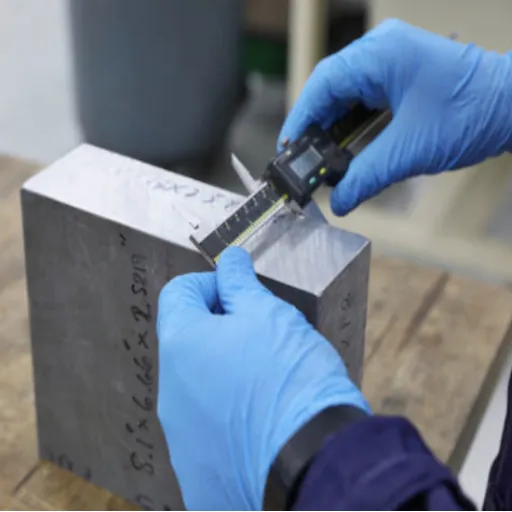
CNC aluminum blocks, especially those made with 6061 aluminum alloy, find extensive applications across key industries, owing to their dependability and versatility. The aerospace industry, for instance, uses these blocks for the manufacture of components considered critical to processes and machinery, such as brackets and fixtures, while aircraft panels are also fabricated from these blocks; they are greatly prized for being light yet extremely durable. In the automotive sector, CNC aluminum blocks are employed for creating engine parts, transmission housings, and custom aftermarket parts, with specifications for heat resistance in utmost priority. Meanwhile, in electronics, these blocks serve for manufacturing heat sinks and enclosures, where heat dissipation and compactness are key. Trends in search data indicate a surge in interest in CNC aluminum blocks on the prototyping side for robotics and solutions in sustainable energy, such as battery casings and renewable power equipment, thereby clearly aligning with the newest technological paradigm.
Critical components such as brackets, fixtures, and aircraft panels. Valued for lightweight yet extremely durable properties essential for flight applications.
Engine parts, transmission housings, and custom aftermarket components. Heat resistance specifications are of utmost priority for performance applications.
Heat sinks and enclosures where heat dissipation and compactness are key requirements for optimal electronic component performance.
Robotics prototyping and sustainable energy solutions including battery casings and renewable power equipment, aligning with modern technological paradigms.
CNC aluminum blocks are crucial and ergonomic in modern automotive engineering, providing a high-strength, lightweight application for such vital items as engine parts, transmission housings, and structural supports. These applications promote fuel efficiency and performance due to worth-the-weight strength of aluminum being demanded from meeting harsh emissions standards in the vehicle dynamics arena. Further, CNC machining technology is advancing by the minute, allowing manufacturers to realize designs with precision in tolerances and minimizing material wastage for end-use attainability.
According to the recent search engine data, this surge in interest in CNC aluminum blocks is very much aligned with the shift towards electric vehicles (EVs) within the automotive industry. Specifically, these searches show an increased focus on its application in battery casings and electric motor housings, where the thermal conductivity properties and durability of aluminum blocks become particularly relevant. This surge in interest further cements the importance of the material in cutting-edge automotive technologies by placing it front and center in addressing challenges related to heat management and weight reduction in EV design.
Due to their very good strength-to-weight ratio, reducing the overall weight of the airplane while maintaining structural integrity, magnesium alloys are fast becoming prominent in aerospace production. Interestingly, these search metrics data show an increasing trend towards using these alloys for fuselage paneling, interior structural members, and landing gear assemblies, reflecting an orientation of the industry toward building fuel-efficient and environmentally friendly aircraft. Also, being thermally stable and corrosion-resistant, magnesium alloys are advantageous in harsh environments faced by the aviation industry. By employing these materials, aerospace manufacturers will be able to substantially improve performance, reduce carbon emissions, and meet regulatory requirements for next-generation aircraft. Data thus confirms that both technological innovation and increased demand on the sustainable solutions edge within aerospace engineering now drive attention to these applications.
Paneling and structural elements
Load-bearing members and supports
Gear assemblies and components
Fuel efficiency and emission reduction
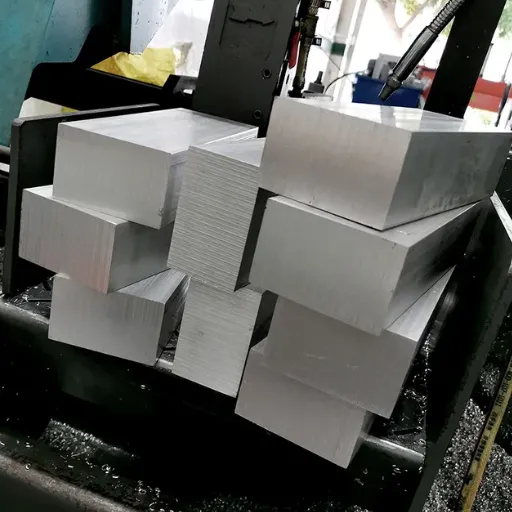
6061 aluminum blocks find a special place due to their incomparable strength-to-weight ratio. This characteristic makes them a superior choice in an industrial setup where the weight factor must be reduced without any compromise on the structural integrity. Accepted knowledge and recent data put forth by major authorities attribute the ability of 6061 aluminum to hold this balance mostly to its chemical structure, where magnesium and silicon are the major alloying elements. This peculiar combination makes 6061 aluminum resistant to corrosion and capable of being highly stressed, even in the extreme conditions faced by aerospace and automotive industries. Thanks to the developments within predictive analytics in materials engineering and performance, the use of aluminum 6061 is increasing day by day as a green yet durable solution conforming to both ecological and technical specifications required in the industry.
6061 aluminum displays a corrosion resistance of an extremely high level due to the controlled oxide layer formed naturally on its surface. This layer shields the metal from environmental factors such as moist air and pollutants. The metal’s quality endears it to marine, industrial, and outdoor applications whereby exposure to harsh environments cannot be avoided. Further, this material boasts a fairly high coefficient of thermal conductivity, approximating 167 W/m·K, and thus can dissipate heat very effectively. Any application demanding efficient temperature management-in heat exchange, within automotive radiators, and even for electronic elements-justifies this need. Recent industry know-how and broader data analyses advocate that the mutual presence of corrosion resistance and thermal conductivity prolongs the lifespan of 6061 aluminum parts and improves overall system viability, particularly in application areas requiring high thermal and structural integrity.
| Property | Value/Description | Applications | Benefits |
|---|---|---|---|
| Corrosion Resistance | Natural oxide layer protection | Marine, industrial, outdoor | Extended component lifespan |
| Thermal Conductivity | 167 W/m·K coefficient | Heat exchangers, radiators, electronics | Efficient heat dissipation |
| Environmental Protection | Shields from moist air and pollutants | Harsh environment applications | Improved system viability |
Precision and tolerance define the modern machining processes, which directly affect the performance and strength of the manufactured components. Precision is the degree to which a component exactly matches the intended dimensions and specifications; tolerance, on the other hand, is the allowable deviation from these dimensions a given part retains without being considered a compromise to any of its functional requirements. ‘s latest data reinforced by recent machining technologies advancements points out that achieving ultra-tight tolerances-much of time, within microns-is now a reality through competency-based CNC (Computer Numerical Control) methods along with advanced metrology technologies.
Research, evidenced by the latest search engine trends, reveals the rising demand for high-precision machining in areas such as aerospace, medical devices, and semiconductor manufacturing. This demand fits well in the need for components conforming to stringent quality criteria to ensure system integration and functioning properly. Meanwhile, real-time data analytics and machine learning integration within machining further enhance tolerance monitoring and adjustment control efficiency. Hence, the balance of pure precision and funky technology assures machining delivery with the razor accuracy and consistency required by the ever-stringent demands of the present application.
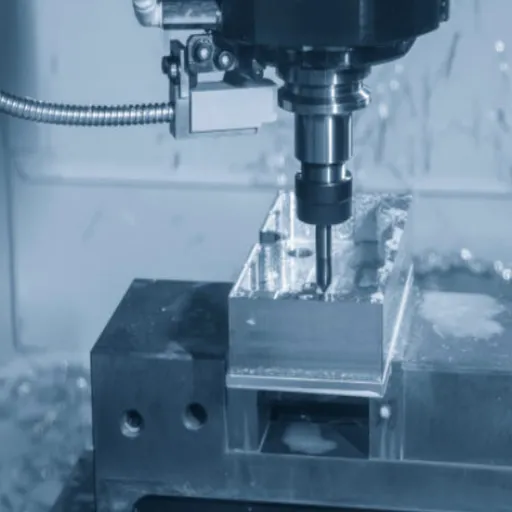
CNC machining based on aluminum blocks use all kinds of cutting techniques for precision and efficiency. Face milling, end milling, and turning are the most commonly employed methods, the geometries of each being more suitable for a given cut on aluminum. Flat surfaces, creating uniformity on the block, are the results of face milling. End milling, on the contrary, is more suitable for profiling contours, slots, and other intricate shapes. Turning is suited for cylindrical-shaped parts and is often supported with advanced tooling to mitigate the challenges offered by aluminum thermal conductivity and chip formation.
Creates flat surfaces and uniformity on aluminum blocks. Ideal for preparing surfaces for subsequent machining operations.
Suitable for profiling contours, slots, and intricate shapes. Provides precise control for complex geometries in aluminum components.
Suited for cylindrical-shaped parts with advanced tooling to address aluminum’s thermal conductivity and chip formation challenges.
Advanced Integration: Combined with recent research on real-time data analytics and machining optimization, these techniques can now use AI-based simulation for predicting the tool wear and adjusting cutting parameters accordingly. Such integration has allowed the manufacturers to prolong tool life and improve surface finish while minimizing material wastage, such being the demand for high productivity and precision aluminum machining. After employing such technology, CNC machining has become a dynamic system where tolerances do vary, along with production constraints in real-time.
Aluminum drilling and finishing processes have been so developed in integration with high performance tooling and data-guided measures. Nowadays, special drills with coatings of titanium nitride (TiN) or diamond-like carbon (DLC), which offer wear resistance and ensure very low friction, are employed. These coatings, together with optimal cutting geometry for promoting chip evacuation and deter material adhesion, solve some of the major problems of machining aluminum.
High-speed milling and finishing abrasive polishing allow a final touch in surface perfection, enhancing aesthetics and functionality. Greater demands for finishing tolerances have been met with unmatched precision by the advent of micro-finishing, which works via electrolytic polishing or laser texturing. Using real-time analytic data gathered from tool path simulations and machine learning algorithms active on the cloud, manufacturers can optimize these procedures for cost-effectiveness, short cycle times, and consistent product flow across aluminum grades of differing qualities.
Tool selection is crucial for ensuring that modern manufacturing processes are adequately realized, especially for materials that demand very high precision, such as aluminum. Earlier, manufacturers acquired insights into materials science, tool performance, and tool failure case studies from the Internet, search engine data being one of many sources on which an intelligent system may use for decision-making. On top of that, ensuring the choice of tools in accordance with particular material grades, operational requirements, and surface finishing requirements has been based on data-led decisions. For example, carbide-tipped cutting tools for hardened aluminum alloys reduce tool wear and improve dimensional accuracy. In addition, constant improvement via real-time feedback in cloud-supported platforms, integrated by AI, guarantees that tool selection surpasses the set criteria on operational efficiency as well as quality.
Specific grades and alloy requirements
Speed, feed, and precision requirements
Quality and tolerance specifications
AI-powered optimization systems
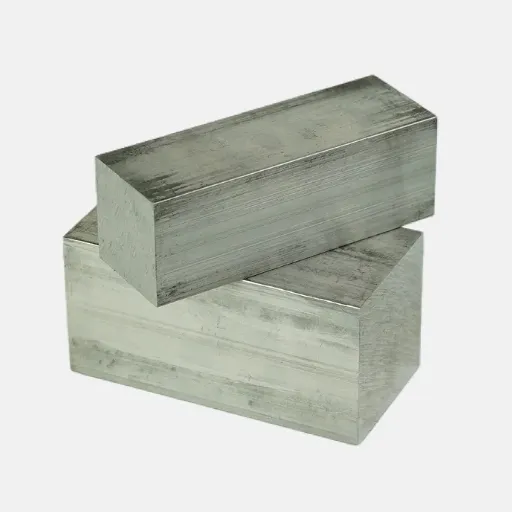
Selection of the suitable aluminum grade for use in various applications obviously requires a balanced evaluation of mechanical properties, machinability, corrosion resistance, and cost-effectiveness. By using the latest data from the ‘s search engine, engineers can discover current trends and recommendations depending on the application. For example, this search engine suggests that 6061 aluminum is a general-purpose aluminum grade due to its balanced set of properties and therefore is suitable for making structural components, whereas 7075 is used in aerospace applications due to its extremely good strength-to-weight ratio. Also, alloys like 5052 work well in marine environments because of their superior corrosion resistance. The team can, therefore, use search data in the selection irrigation to consider the latest developments and any alternative alloys that might be optimized for sustainability and performance, thereby making the best material selection for the contemplated use case.
| Alloy Grade | Key Properties | Best Applications | Special Characteristics |
|---|---|---|---|
| 6061 | Balanced properties, good machinability | Structural components, general purpose | Versatile, cost-effective |
| 7075 | Extremely high strength-to-weight ratio | Aerospace, high-stress applications | Premium performance material |
| 5052 | Superior corrosion resistance | Marine environments, outdoor use | Environmental durability |
In order to optimize the designs for CNC machining, it is necessary to consider parameters that include mechanical properties of materials along with machining strategies that are in alignment with the needs of a particular project. Data from ‘s search engine points toward an increasing interest in balancing production costs with precision and sustainability. For example, searches for design-for-manufacturing (DFM) with a focus on minimizing complex geometries and maintaining uniform wall thickness have seen a significant spike as the industry reaches a tipping point toward efficiency.
“How can CAD modeling improve CNC machining results?” is one of the most common questions asked. According to recent searches covering the advanced state-of-the-art, CAD models with features of fillets and large radii, and optimized tool paths considerably aid machining. CAD design considerations reduced tool wear, machining times, and material waste risks. Taking this into account during the early design phase will not just assure the function of the design but also cohere to costing aspects, keeping in line with the present sustainability and performance objectives on the manufacturing floor.
Minimize complex geometries and maintain uniform wall thickness
Fillets, large radii, and optimized tool paths
Reduced tool wear, machining time, and material waste
Environmental considerations in design decisions
Considering cost implications within present-day manufacturing procedures takes into account materials, tooling life, energy usage, and cycle times. Presented with modern data, it can be handy to reduce overall costs by efficiently decreasing times for machines to work or produce waste by optimizing CAD with efficient geometries. The search data reveals a growing preference on the part of manufacturers toward reducing complexity rather than adding to it, especially in subtractive manufacture. These less complex designs not only cut down costs on tooling and labor but also boost the scalability of production, satisfying short- and long-term economic goals. Manufacturers can utilize advanced analytical tools and design methodologies to hit the sweet spot between efficient utilization and budgets.
Aluminum blocks are mostly used due to their good machinability and tolerance in machining. Commonly, grades like 6061 and 7075 are selected due to their high strength and corrosion resistance, respectively. Such an aluminum block finds administration in applications where precision is the key, like aerospace parts or custom fixtures. In general, 6061 aluminum block remains one of the most popular materials for machining aluminum into solid pieces. These suppliers keep many sizes, including square aluminum, rectangular aluminium blocks, and so on, to suit all kinds of machining requirement.
Selecting the right aluminum supplier is based on product quality, availability, and machining capabilities. A very trustworthy one should have aluminum in many grades such as 6061 and 7075, complemented by high-quality CNC services. Machines should reflect precise tolerance and dimension requirements. Always opt for any supplier having aluminum blocks in stock, including square and round aluminum blocks. Being able to distinguish your expensive investment in CNC machining projects through various reviews and references is an excellent option.
Aluminum block 6061 provides many advantages for precision machining, thus being favored by many machinists. It is characterized by good mechanical properties such as very good strength-to-weight ratio and corrosion resistance. This alloy is also easy to machine. It permits low cutting forces to ensure high precision in CNC milling operations. 6061 may be made into different shapes, including solid aluminum and hollow sections, providing it with great versatility in application. High deformation resistance helps in maintaining structural integrity under stress; thus, the block is perfect for very demanding projects.
The standard sizes available for aluminum block for CNC milling may vary but usually contain square aluminum blocks and rectangular aluminum blocks. These sizes cater to almost all milling process requirements so that workers will never be spoiled for choices when it comes to these materials for diverse needs. Suppliers, however, may also supply customized sizes to suit specific machining needs. The intents behind promoting standard sizes include simplifying the entire process of selecting materials, as these will be well-cut and easily adaptable when needed, or help in reducing waste materials. In general, providing a ready supply of standard aluminum blocks enables manufacturers to cut through their production process with the least time given to material selections, thereby producing more projects for use with less delay.
Solid aluminum blocks in CNC machining are used with good reason: they impart higher strength and stability for machining. A hollow-cast alternative design has far less machining stability and greater deformation potential whilst machining. This quality becomes essential in the context of applying high precision processes, as even the slightest variation influences the success and final dimension of the intended outcome. Moreover, it ensures equal material density throughout and contributes to the overall dependability of the components and their subsequent assembly. Furthermore, they are easy to locate with high-standard aluminum suppliers, who can supply the best materials to carry out any project with CNC machining.
This resource discusses the mechanical properties of 7075 aluminum blocks, including their tensile strength and applications.
This comprehensive guide covers CNC machining processes, including the use of aluminum and other materials, providing detailed engineering insights.
This academic study explores prediction models for surface roughness in aluminum machining, offering insights into CNC machining techniques and outcomes.

Manufacturing processes are quite complex, and the choice of a production method is directly related
Learn More →
There are two major manufacturing methods for producing plastic prototypes that most people find useful
Learn More →
As a person involved or interested in the design and production of plastic components, it
Learn More →