Precision tooling and machining industries rely on aluminum plates in various grade series, and due to this versatility, the metal is considered a universally applicable tooling material. In aerospace, automotive, and robotics, as well as in mold-based design, quick-change pallet systems, and similar high-performance process automation, aluminum automation has been playing an increasingly significant role as machining has evolved. In this guide, we will explore what makes aluminum suitable for automation, the procedures used to cut these plates, and how they contribute to modern-day manufacturing.
Introduction to Machined Aluminum Plates
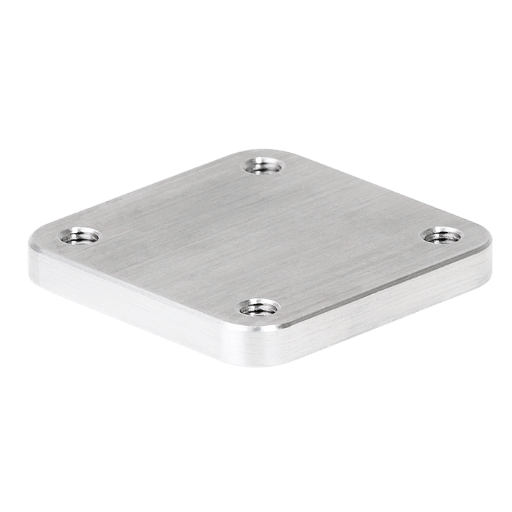
Machined aluminum plates are considered one of the primary manufacturing and engineering materials, offering the best weight-to-strength ratio and utmost versatility. They are produced using precision machining processes that adhere to very tight standards for dimensional tolerances and surface finishes.
Key Applications of Aluminum Plates
- Automotive parts – Contributing to fuel efficiency through lighter vehicle designs
- Aerospace components – Used in fuselage panels and wing structures for weight minimization
- Industrial tooling – Custom parts for different types of machinery and equipment
- Construction – Frameworks and facades utilizing rust-resistant properties
Definition and Overview
Aluminum sheets are flat surface materials in a rectangular shape, made from selected alloys of aluminum. They are built and designed with a good strength-to-weight ratio, suitable for structural and functional applications in a number of industries. These plates are appreciated for their sturdiness and corrosion resistance against environmental factors so that they may be further machined or fabricated for specific use.
Recent Trends in Machined Aluminum Plate Technology
Latest Innovations Include:
- Advanced Alloy Formulations – New compositions improving strength-to-weight ratios, especially involving 6061 aluminum
- Automation Integration – CNC systems considerably cut down production time while maintaining precision
- Sustainability Focus – Recycling programs and waste minimization efforts, reducing environmental impact
- Enhanced Processing – Improved uniformity in workmanship through technological advances
What are Machined Aluminum Plates?
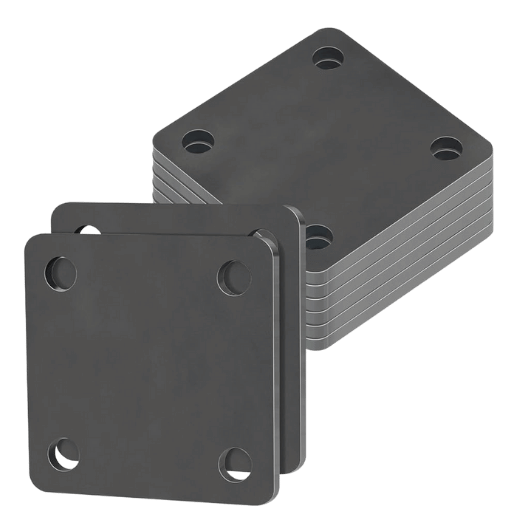
Composition and Types of Aluminum Plates
| Property |
Details |
| Type |
Plain, Perforated, Tread, Anodized, Clad |
| Grade |
1100, 3003, 5052, 6061, 7075 |
| Properties |
Lightweight, Durable, Corrosion-resistant |
| Applications |
Structural, Decorative, Aerospace, Marine |
| Finish |
Plain, Anodized, Clad |
| Strength |
Varies by grade (e.g., 7075 is strongest) |
| Formability |
Excellent (e.g., 5052, 3003) |
| Weldability |
High (e.g., 5052, 6061) |
| Corrosion Resistance |
Excellent (e.g., 5052, 7075) |
| Heat Treatability |
High (e.g., 6061, 7075) |
Comparison between Cast Aluminum and Machined Aluminum Plates
| Parameter |
Cast Aluminum |
Machined Aluminum |
| Material Types |
A356, A380, A390 |
6061, 7075, 2024 |
| Production Speed |
Faster for high volume |
Slower for complex parts |
| Surface Finish |
Requires post-processing |
Smooth, customizable |
| Precision |
Lower |
High |
| Strength |
Moderate |
High |
| Cost |
Low for mass production |
High for small batches |
| Applications |
Automotive, furniture |
Aerospace, medical |
| Thermal Conductivity |
~90 W/mK |
~180-190 W/mK |
| Volume Suitability |
High-volume production |
Low-volume, custom parts |
Precision Ground Aluminum Plates: An Overview
Key Features of Precision Ground Plates:
- Flatness Tolerances: ±0.002 inches to ±0.005 inches over extended surface area
- Thermal Conductivity: 180-210 W/mK for excellent heat transfer
- Special Alloys: 6061-T651 or Mic6 alloys for dimensional stability
- Applications: Aerospace, electronics, medical, precision instrumentation
Precision ground aluminum plates are high-quality materials for critical uses requiring precise tolerances, flatness, and stability. These plates are manufactured with special alloys that provide dimensional stability and uniformity even when placed under stress. The combination of high strength with low thermal expansion ensures optimal performance in demanding work environments.
Manufacturing Processes for Machined Aluminum Plates
CNC Machining Techniques
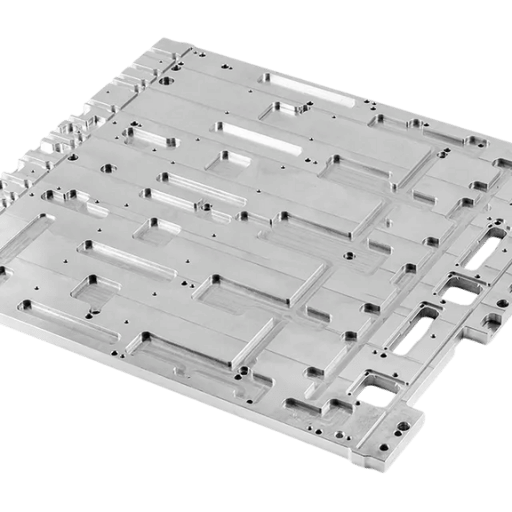
CNC machining is a value-added process that works upon aluminum plates to manufacture them with very high accuracy and at a sustained rate of production. This tooling involves computer-controlled tools to cut, drill, and mill, imposing complex geometries, and executing tight tolerances.
CNC Machining Process Steps:
- Design Stage: Engineers employ CAD software to produce detailed models and specifications
- Programming: Designs converted into CNC programs using CAM software that generates toolpaths
- Multi-axis Operation: 5-axis CNC machining moves parts simultaneously along five different axes
- Precision Achievement: Tolerance as tight as ±0.0005 inches (±0.0127 mm)
Benefits of CNC Machining for Aluminum Plates:
- Faster production rates with consistent quality
- Significant savings on raw materials through precision cutting
- Better quality control and repeatability
- Enhanced tooling with carbide and diamond coating capabilities
- Higher feed rates without compromising surface finish
Machining Movement: Importance and Implications
Movement during machining largely governs precision, efficiency, and the quality of the product. CNC machines use motion coordinated along multiple axes; traditionally, these axes are selected from X, Y, and Z, as well as some rotation axes in advanced setups.
Advanced Movement Control Features:
- Linear Motors: Provide superior precision and speed control
- High-accuracy Encoders: Ensure precise positioning within micrometers
- Sophisticated Feedback Systems: Maintain smooth and precise movements
- Simulation Software: Virtual machine movement checking before actual machining
Machining Capabilities for Special Needs
Modern machining technologies exist to meet different and imperious needs for various industries stretching from aerospace to medical device manufacturing. Advanced CNC manufacturing systems can control tolerances of ±0.0001 inches, ensuring that designs with any kind of intricacy are executed with perfect accuracy.
Advanced Machining Capabilities:
- Multi-axis machining systems (up to 5 axes) for complex geometries
- High-performance material compatibility (titanium alloys, carbon composites, UHMWPE)
- Predictive modeling and real-time monitoring
- Custom solutions for both high-volume production and rapid prototyping
Advantages of Machined Aluminum Plates
Free from Internal Stresses and Internally Stable
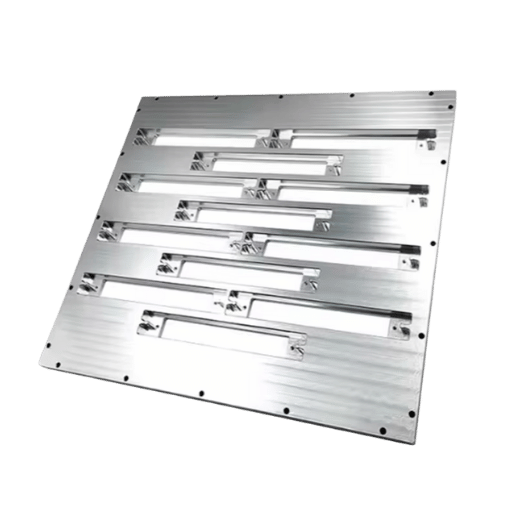
Machined aluminum plates are prized for their structural integrity and dimensional stability. Unlike rolled or cast alternatives, machined plates undergo special treatments that minimize internal stress, which can cause warping or distortion over time.
Stability Factors:
- Enhanced Grain Structure: Uniform distribution achieved through controlled machining
- Thermal Resistance: Ability to resist thermal expansion or contraction
- Precision Standards: Flatness accuracy up to 0.0005 inches
- Load Resistance: Superior vibration and load-carrying abilities
Fine-Grain Aluminum Alloys: Advantages and Applications
Fine-grain aluminum alloys are developed to provide enhanced mechanical properties and better performance in an array of applications. This fine microstructure, obtained through controlled processing techniques, gives remarkable strength, ductility, and corrosion resistance.
Major Advantages of Fine-Grain Alloys:
- Higher Fatigue Resistance: Due to the uniformity in the grain of the structure, these alloys have better resistance to cyclic loads
- Excellent Machinability: CNC precision machining requires less tool wear
- Superior Thermal Conductivity: Heat exchanger and cooling system
- Versatile Applications: From construction to renewable energy
Cost-Effectiveness and Durability of Aluminum Products
Aluminum products are cost-effective because they are recyclable and, of course, very durable. Since aluminum can be recycled at 100% capacity with no loss in quality, a significant portion of production costs is saved.
Cost-Effectiveness Factors:
- Recyclability: More than 75 percent of aluminum ever produced is still in use today
- Corrosion Resistance: Thin oxide layer formation minimizes the care needed
- Lightweight Benefits: Minimization of fuel consumption in transport applications
- Long-term Savings: Reduced life cycle expenditure for various applications
Considerations for Selecting the Right Aluminum Plate
Factors to Consider: Specifications and Requirements
Key Selection Criteria:
- Grade and Alloy: Consider strength, corrosion resistance, and machinability (5052, 6061 common grades)
- Thickness and Dimensions: Determine requirements based on load-bearing capacity and design compatibility
- Surface Finish: Consider aesthetics, friction resistance, or coating functions
- Strength Requirements: Evaluate tensile loading, impact requirements, and structural assignments
- Environmental Conditions: Account for moisture, chemicals, temperature extremes
Choosing Between Aluminum Tooling Plate and Cast Tooling Plate
| Key Point |
Aluminum Tooling Plate |
Cast Tooling Plate |
| Manufacturing |
Rolled |
Cast and machined |
| Stability |
Moderate |
High |
| Tolerances |
Standard |
Tight |
| Applications |
Strength-focused |
Precision-focused |
| Weight |
Lightweight |
Lightweight |
| Corrosion Resistance |
Resistant |
Resistant |
| Use Cases |
Construction, engineering |
Jigs, fixtures, templates |
| Cost |
Lower |
Higher |
Recommendations for Specific Needs and Applications
Application-Specific Recommendations:
- High Stability and Precision: Cast tooling plates are preferred for tight tolerance and dimensional stability requirements
- Strength-Focused Projects: Aluminum tooling plates suitable for construction and general engineering applications
- Budget Constraints: Aluminum tooling plates offer cost-effectiveness with good performance for general applications
- Corrosion Resistance: Both options provide excellent resistance to moisture exposure
Frequently Asked Questions (FAQs)
Q: What is a machined aluminum plate, and for what purposes may it be used?
A: A machined aluminum plate is one that is processed to given specifications and close tolerances, mostly for mold and tooling purposes. It is applied in the manufacturing of jigs and fixtures, along with machine bases, wherein it offers benefits of lightweight construction and high performance.
Q: How does the thickness of a machined aluminum plate affect its performance?
A: Rigidity and dimensional stability of the machined aluminum plate are directly influenced by thickness. Thicker plates resist bending and distortion better, making them suitable for applications where tolerances are tight and strength is required.
Q: What advantages do Mic-6 cast aluminum tooling plates offer?
A: A Mic-6 cast aluminum tooling plate is free from internal stresses, has unmatched flatness, and has unmatched dimensional stability. This makes it suitable for the highest quality machining operations and precision applications.
Q: How does machining affect the surface finish of aluminum plates?
Q: Which aluminum alloys are popular for machined plates?
A: The alloys usually used for aluminum machined plates are 6061 and 7075. These alloys have the good strength-to-weight ratio and corrosion-resistant properties, hence preferred for industrial applications.
Q: What benefits do aluminum cast tooling plates carry over steel?
A: Aluminum cast tooling plates weigh only one-third as much as steel, hence convenient in handling and installation. They also fetch a better salvaging price than steel, and being corrosion-resistant, provide support under varied environmental conditions.
Q: How can one maintain tight tolerances in machining aluminum plates?
A: Ensure tight tolerances for aluminum plate machining by means of accurate machinery and techniques. Before machining, the machines are regularly calibrated, the correct tools are selected, and the machining tolerances are accurately specified.
Q: What is the function of aluminum blanks in the manufacturing operation?
A: Aluminum blanks consist of rough stock aluminum pieces used as base materials for machined aluminum plates. They provide an inexpensive way of making parts of specific sizes that are to be further processed into achieving exact dimensional requirements.
Q: What protective treatments are available to machined aluminum plates?
A: Protective treatments remain anodizing for machined aluminum plates to increase corrosion resistance and surface hardness. This treatment ensures aluminum remains resistant in harsher environments and bestows both the aesthetic and functional benefits.
Q: How does the jig plate improve machining accuracy?
A: A jig plate provides an accurate and sturdy surface for manufacturing purposes. Jigs are primarily used by manufacturers to position components accurately, thereby reducing setup time and increasing machining accuracy, which in turn improves product quality.
Reference Sources
1. K100-S Aluminum Plate Information Packet
-
- Caltech LIGO Documentation
- The document provides detailed information on K100-S aluminum plates, including their mechanical properties and corrosion resistance.
2. Deformation Machining – A New Hybrid Process
3. Aluminium
4. Aluminum CNC Machining Service
Conclusion
Machined aluminum plates are a critical component in modern manufacturing setups, providing the application with tremendous variation, precision, and serviceability across various sectors. From aerospace applications, where the strength-to-weight ratio needs to be maximized, machined aluminum plates continue to lead the forefront of manufacturing innovation and efficiency in precision tooling, where precise tolerances must be met. Knowing about the different types, manufacturing processes, and selection criteria will thus help opt for a specific material for a special application, which in turn will enhance the quality of the product and the success of the operation.