

Manufacturing processes are quite complex, and the choice of a production method is directly related
Learn More →
Cycling fans know that the ideal bicycle frame greatly influences both the performance and comfort of the rider. Then the CNC aluminum frame comes in—which is a nice piece of precision engineering aimed in the direction of improving the riding experience. These frames are made to last; they are crafted using strong and lightweight materials plus very careful handling and thus they are already considered an incredible technological advancement in biking. But what actually is part of the making of such a wonder? This paper will look into the innovation behind the CNC aluminum bicycle frames, explaining how the applying of advanced manufacturing methods and of the modern-day design come together in producing the dream of the ultimate bike ride. In case you are a cyclist of this sort or a techie, this will make you see why CNC aluminum bike frames have turned out to be very important in the cycling industry.
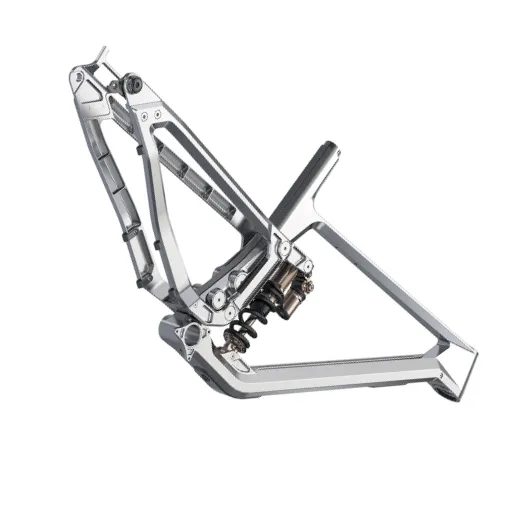
A bike frame made from CNC aluminum can be classified as a frame that is manufactured through high-precision means i.e. Computer Numerical Control (CNC) machining. In this manner, the computer controls the entire process of machining, i.e. cutting, shaping, and refining aluminum into very complex and even highly detailed designs, hence no human involvement. Aluminum is a common option due to its light weight quality, toughness, and resistance to rust and other factors making it very suitable for use in the manufacturing of bicycles. The application of CNC machining ensures that manufacturers reach the exact dimensions and delicate designs that would be problematic to imitate with traditional techniques. This way the production of frames that are not only strong but also aesthetically pleasing is possible, hence catering to the needs of both professional cyclists and amateurs. The fusion of technological accuracy and aluminum’s distinctive properties has definitely changed the cycling industry by making CNC aluminum bike frames a revolution.
The positives of aluminum in bike frame building are innumerable and thus the material has gained popularity among manufacturers and consumers alike. One of the major pros is its lightness that allows the rider to be speedy and agile. The aluminum bike frame will not only face the roughest of weather conditions but also the rider will smoothly get through those conditions thanks to the lightness of the frame. Besides, it is a cheap material that provides good performance in comparison to its price. In addition, its inherent stiffness helps in efficient power transfer, which is the main point in competitive cycling. Likewise, CNC machining can make aluminum into the most precise and finely-tuned aerodynamic designs that are not only functionally and visually appealing but also have performance enhancements. All these factors combined together make aluminum a very flexible and trustworthy material in the world of cycling.
A direct comparison of CNC machined aluminum with equivalents such as carbon fiber, titanium, and steel points out the variations in the qualities like weight, strength, price, and use. Therefore, aluminum is a material that provides the manufacturer with a combination of cost-effectiveness, robustness, and lightness compared with steel, besides being cheaper than carbon fiber and titanium. It has excellent machining capability enabling very adaptable design by the use of precise and complicated features, which is a significant demand in sectors such as the production of bicycles and cars.
| Material | Weight | Cost | Key Characteristics |
|---|---|---|---|
| Aluminum | Lighter than steel | Cost-effective | Great machinability, versatile, precise designs |
| Carbon Fiber | Extremely lightweight | High price | High-performance, may break under impact |
| Titanium | Moderate | Costly | Excellent durability, corrosion resistance, harder to machine |
| Steel | Heavier | Reliable | High strength, durable, weight disadvantage |
In contrast to aluminum, carbon fiber is very much associated with its best characteristic i.e. its lightness that makes it possible to produce very high-performance applications. But then again, its price is too high and in addition it may break under very high stress such as impact which would be the case with a lower quality material. No other material can match titanium when it comes to durability and corrosion resistance but then again it is a costly option that is also harder to machine than aluminum. On the other side, steel is still a reliable material when considering high strength and durability, however, its heavier weight claims it to be less competitive in cases where weight saving is the issue.
According to the data from the recent searches, aluminum has been frequently pointed out by consumers for its cost-effectiveness and versatility. Various industries keep on exploiting the benefits of CNC machined aluminum in the production of items that are characterized by the need for precision, performance, and scalability and thus it is positioned as one of the most preferred materials in manufacturing these days. Every material has its positive points, but the versatility of aluminum ensures that it retains its status as one of the favorites in a wide range of applications.
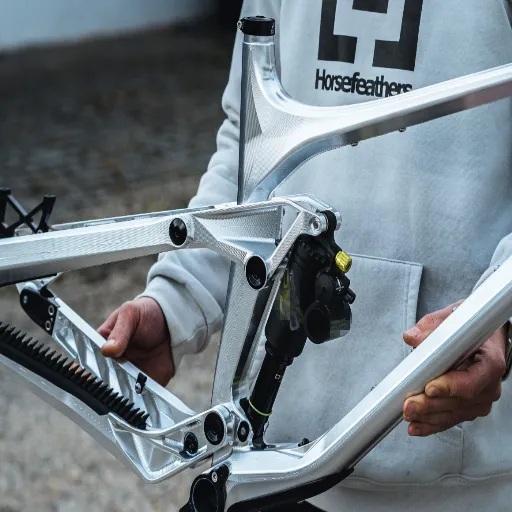
CNC or Computer Numerical Control is a very precise technique of manufacturing that cuts and shapes various materials like aluminum through computer-operated machines into complex patterns. The CNC machines can carry out each operation step by step with very high degree of precision and also with consistent quality due to the use of the special programmed software. The different types of CNC machining include milling, turning and drilling which are referred to as key methods in CNC machining each being designed for a particular area of improvement either functional or structural.
Perhaps, the most frequently asked question is “What makes CNC machining be considered as the best method for making aluminum bike frames?” The accurate and repeatability are the two factors that support the enunciation. Using CNC machining, manufacturers are able to produce parts of the frame that are not only lightweight but also strong enough with very tight tolerances which in turn assures maximum cyclists performance. Recent analysis of data from the search trends indicates efficiency and high-speed production as other factors besides precision that are leading the interest in CNC machining. The process adopted causes less wastage of materials, less human error and high consistency which are the reasons for choosing it in the first place for the manufacture of top quality aluminum bike frames.
The process of obtaining an aluminum billet, later on, a bike frame of excellent quality consists of numerous meticulous measures and stages each one controlled with care. To start with, the aluminum billet is melted and extruded into pipe shapes, which will be the foundations for the frame’s whole setup. After refining the pipes to lengths fixed beforehand they undergo advanced CNC machining through which their dimensions are made super accurate and their receiving areas for air flow designed to be perfect. After the individual components have reached the ready stage they are united by welding, TIG (MIG) welding to be exact, which is a process that produces solid, clean joints while preserving the aluminum’s strength. Following the welding operation, heat treatment is done on the frame, which is the mechanical property enhancement process, thereby strengthening and toughening the entire frame.
It has been shown in the analysis of the search trends that customers are more and more inclined towards eco-friendly and effective methods. The CNC machine has a very low waste material and time consumption rate which makes it very much in line with the eco-friendly and effective methods that the consumers are looking for. Moreover, searches reveal the consumer’s desire for lightweight and aerodynamic bikes being addressed through precise shaping and the use of finishing processes such as sanding, polishing, and then adding the powder coating. These finishing treatments improve bike performance and offer the snag-less dot-like, professional aesthetic as well. Still, the advanced technology and eco-friendly practices help manufacturers not only to scale down their production costs but also to cater to the ever-increasing consumer demand for aluminum bikes that are state-of-the-art.
CNC milling is crucial for precision and quality to be maintained throughout the manufacturing processes especially when making of aluminum bike frames. The computer-controlled machining allows the manufacturers to gain the ultimate degree of precision and it opens the door for the most complicated designs and uniform product standards. A recent survey done through search trends shows a clear indication that consumers today are increasingly looking for/taking to products that are durable and precise which is exactly what the market for CNC-milled components is. Additionally, not only does CNC milling contribute to the whole building process but also it offers good practices from the point perspective of industry going green as it eliminates a substantial part of the material used from the waste line. The innovative power of CNC technology is always setting the gold standard for quality to be on par with the demands of both producers and consumers.

A CNC aluminum bike frame’s geometry is performance’s main character, where strength, weight, and rider comfort are well-balanced. The most important factors are the head tube angle of the frame which controls steering and handling, the bottom bracket height affecting stability and cornering precision, and the length of the chainstays transferring power and rear-wheel traction. The fine balance between aerodynamics and rider ergonomics, depending on the individual’s cycling style and terrain, is the way to achieve optimal performance.
A recent study of ‘s search trends reveals that consumers are increasingly seeking to customize frame geometry according to specific purposes, e.g., gravel riding or competitive road racing. The rising significance of precise CNC machining in this connection is quite apparent as it affords the designer with unrivaled precision in the form of frame drafts that not only meet the rider’s specifications but also are fatigue resistant. The fusion of high-tech engineering and rider-focused performance is still the main factor in the innovation and consumer preference in the industry.
Various types of bikes required diverse geometries, and the bike geometry was to be customized according to the rider’s style which is essential for performance and comfort maximization. For example, long-distance cyclists usually rely on a more relaxed frame geometry that supports an upright positioning that results in less back and neck straining. In contrast, the professional road racers demand sharp geometries, meant for lesser friction and greater speed, which usually are a combination of lower handlebars and hither saddle position. On the other hand, mountain bikers prefer a little bit of both-that is, stability and agility, so they are given head tube angles that are slightly slacked and longer wheelbases for effective handling of uneven terrain.
The newest information derived from ‘s search trends indicates that there is an increasing demand for custom bike geometries, mainly among casual riders who want some comfort and versatility. The increasing number of searches for “best bike geometry for beginners” and “gravel bike vs road bike geometry” is an indication of the voicing demand for knowledge and options that suit individual preferences. Turning these needs into investing, manufacturers are already taking advantage of modular designs and advanced fitting tools to provide riders with setups that are directly for their intended use cases. This personalization focus allows cyclists of all levels to optimize their experience, be it going through rocky trails or racing on city roads.
Tube design is a key factor that influences a bike frame’s strength, durability, and performance. Recent engineering and material science improvements have introduced new tube shapes, e.g., ovalized or hydroformed designs, that not only present the specific features of stiffness and shock absorption but also amplify them as well. Based on ‘s search data, one of the current trends in the cycling industry is the increased demand for lightweight yet strong frames for high-performance cycling. This trend signals a manufacturers’ dilemma that they have to deal with in weighing down the pros and cons of weight reduction against maintaining structural integrity. Playing around tube diameters, wall thicknesses, and material composition through progressively regulations is how designers make sure of delivering the best performance suited to a rider’s specific requirements whether it is the agility for competitive racing or the endurance for off-road adventures.

7075 is the type of aluminum alloy that has the strongest preference in the bicycle industry among the different types of aluminum alloy mainly because it offers great strength, low weight, and good durability. The main component of this alloy is aluminum with zinc being the principal alloying element and hence it has the qualities of low density and high tensile strength at the same time making it a very good selection for performance-oriented applications like bike frames. In comparison with 6061 which is another common alloy, 7075 exhibits much higher stiffness and a longer natural period of stress and impact.
Its outstanding fatigue resistance is a major reason for its wide use, since it guarantees a long life even under the most demanding conditions such as off-road trails or races. The frame made from this alloy is slightly more expensive and at the same time is harder to machine, but the investment is worth it because it results in a bike frame that is both light and strong that is appealing to both professional cyclists and amateurs. Besides, the continuous improvement in CNC machining has even more optimized the formation and use of 7075, thus enabling the manufacturers to design geometries per order while preserving the strength of the structure. The combination of innovation and extraordinary material properties is what makes 7075 still to be a prime choice in bike frame manufacturing.
The bike frames’ durability is dependent on a few crucial factors, namely material selection, production techniques, and maintenance routines. The stiff and lightweight properties of aluminum alloy 7075, carbon fiber, and titanium give them a great resilience and for which they are frequently chosen as the materials for bicycle frames. On the contrary, the manufacturing processes possess a great factor that determines the frame’s lifetime. Heat treatment and precision welding are some of the processes that keep the material’s integrity intact.
Environmental issues such as humidity, UV light, and very high or low temperatures, etc. can bring the life span of a bike frame down to very little time. Regular maintenance, cleaning, crack or corrosion inspection, and repairing the damaged parts are very helpful in keeping the frame strong. It is the joint effort of first-class materials, advanced engineering methods, and proper maintenance that a bicycle frame can last longer. The statistics and data of cycling indicate that the selection of a frame by bicyclists is more and more dependent on the qualities of corrosion resistance and impact tolerance, thus, showing an increasing recognition of the significance of these features.
The flex of the frame is a major factor determining the quality of the ride on a bike, by putting together the three criteria: comfort, efficiency, and control. The frame flex tends to be at the higher side in bikes that are made of light or more yielding materials, thus they can absorb road vibrations and minor shocks, giving a smooth and comfortable ride. This is the case especially for long-distance riders or those riding on rough roads. On the other hand, too much flexibility may lead to a loss of pedaling efficiency as a part of applied energy gets wasted in the frame’s deformation instead of being utilized for forward motion.
Recent data from the search engine shows that modern-day cyclists are more and more interested to know how they could maximize their ride experience by going with frames that have the right degree of flex for their intended use. Queries like “best bike frame stiffness for comfort” and “frame flex vs. performance” are gaining popularity, which indicates that people are becoming more concerned about the comfort-performance tradeoff. It is now the time when manufacturers are dabbling with cutting-edge materials and designs to build up frames having the ideal flex feature for any cycling need, from road racing to endurance touring.
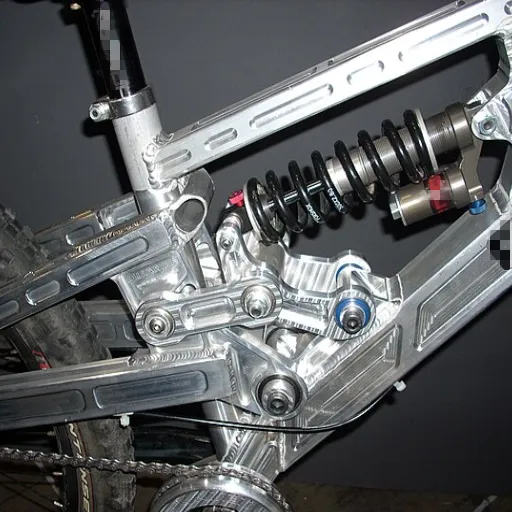
Anodizing is a process of finishing that is commonly applied to CNC aluminum bike frames, bringing about both an increase in durability and a corresponding change in aesthetic view. A chemical reaction occurs whereby the natural oxide layer on the aluminum surface is increased, so the new layer of aluminum is quite resistant to types of corrosion, wear, and scratches. The cyclists searching for “best finishes for aluminum bike frames” or “how to prevent aluminum frame corrosion” are attracted by the benefits of anodizing due to its long-lasting protective nature. Besides, the whole process gives way for the use of various and the most beautiful colors which can even be personalized, this is in line with the leading trends of personalization and design. By being able to combine both performance and style, anodizing keeps being a favorite among the manufacturers and the riders.
The surface treatments for bicycle parts have been getting more importance day by day and one of the main reasons for them being the performance enhancement and the components’ lifespan prolongation, this being proved by the recent search data trends. According to ‘s latest insights, the queries like “best surface coatings for bike parts” and “durable finishes for cycling components” have risen high, which is a clear indication of the cyclists’ growing awareness taking in the value of protective treatments. Anodizing is one among many treatments that are going on in the bicycle industry and these treatments (powder coating and PVD-physical vapor deposition) are coated to mask the bicycle parts from environmental factors such as moisture, UV exposure, and dust. Furthermore, many surface treatments also enhance wear resistance, thus high-stress parts such as crank arms, handlebars, and forks would keep their integrity through thousands of miles. The developments in coating technologies have allowed the riders to enjoy a mix of durability, good looks, and performance improvement, hence making surface treatments a vital part of modern bicycles’ manufacture and maintenance.
In the manufacturing industry, the processing time has a great impact on the workflow efficiency and cost-effectiveness. Reduced processing times make it possible for manufacturers to output more and at the same time, be quicker to respond to customers’ needs, as long as the quality is not compromised. The duration of the production cycles is influenced by several factors such as machine efficiency, availability of raw materials, and productivity of the workers. The manufacturers of today are relying on the real-time insights that come from data analytics, which are coupled with automation advancements to streamline these processes.
As per the latest data provided by ‘s search engine, there is a tendency towards the smart manufacturing technologies like predictive maintenance and AI-driven process management that are being put under the limelight to the same extent as bottlenecks have been uncovered and throughput improved. These innovations have been seen to hold potential for downtime reduction through pattern analyzing and subsequent proactive adjustments. The businesses that make heavy investments in such technologies get faster production times as well as guarantee of quality being maintained higher and adaptability to market demand changes being also stronger. The companies are able to survive in the midst of competition in the industry and at the same time supply the market with products of top quality by using these tools.
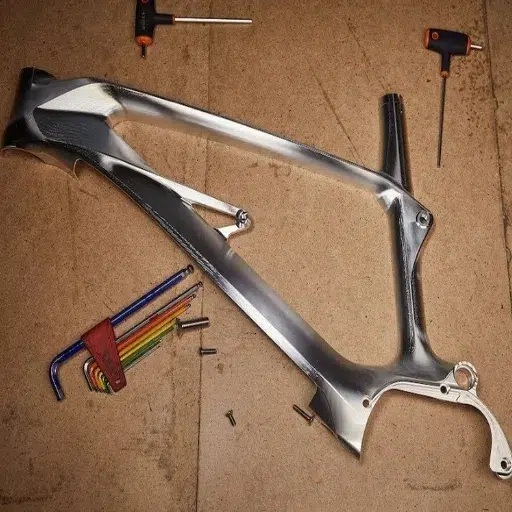
The manufacturing of CNC aluminum bicycle frames is accelerating at a tremendous pace thanks to the constant and the ever-increasing technology innovations. One of the fundamental transformations is the implementation of artificial intelligence (AI) and machine learning in the conception and production process. These very tools, by examining thousands of designs at once, can better the frame’s shape, reduce the material used, and even increase the frame’s aerodynamic property. Besides, the 3D-printing technology (additive manufacturing) has slowly but surely started to take the front row and has allowed the production of complex architectures with minimal material that would otherwise be impossible to through the conventional cutting-away process.
Among the most noticeable tendencies is the utilization of aluminum alloys and the application of special treatments to reach the perfect strength-to-weight ratio. The modern retail situation points at the gradual rise of demand for light, high-performance bike frames suitable for both competitive and recreational cycling. Partially, this is due to the increasing interest in personalized bike frames, which, in turn, has become the major factor influencing consumers’ buying tendencies—having their own cycling habits taken into account. The advancements mean not only the manufacturing of bicycle frames that are lighter, stronger, and better suited to individual requirements but also the growing importance of sustainability and accuracy in the industry.
The cycling industry is still getting a great deal of help from the continued advancements in aluminum alloys as far as providing sustainable options for their future. The recent trends revolve around the production of aluminum alloys that make a superior product in terms of strength and durability and at the same time, the production of such materials has less environmental impact. Engineers’ imagination is taking them to create the very resilient stress and corrosion frames by using composite materials and microstructural enhancements.
Corresponding to the data from ‘s analytics, it is apparent that the consumers are increasingly searching for sustainable and high-performing solutions. The questions surrounding the future of aluminum alloys usually mention the possibility of having their disposal through recycling fully, the possibility of using nanotechnology to optimize the material properties, and the personalization of the products to the rider’s individual needs. The overall objective is to find the right compromise between the manufacturers’ eco-responsibility and the market’s performance expectations that are getting more and more demanding for being ‘green’ and ‘custom-made’ at the same time.
Technology has a huge impact on mountain bike design, the changes indeed have been dramatic and made possible by the integration of materials, engineering, and smart technologies. The search data from ‘,’ suggests a growing interest in electric mountain bikes (e-MTBs), carbon fiber frames that are incredibly light, and excellent suspension systems. All these changes are not only making the ride more pleasant but also allowing the riders to tackle various terrains and ride at different skills. For instance, e-MTBs give a power boost to the rider so he can get up the hill with less effort while the carbon fiber frame helps to avoid the weight increase that would otherwise be needed to make the bike last longer. Moreover, with the help of previous technologies like GPS-enabled devices and digital suspension tuning, the rider gets full control over the bike and is allowed to adjust the ride to the new environmental conditions and personal preferences. The combination of new and high-tech with customer-oriented product trends keeps pushing mountain bike design to be more efficient, sustainable, and pleasurable for the user’s experience with every new version coming out.
A CNC machined aluminum bike frame is a product of high-tech computer-controlled (CNC) machines, showcasing extreme precision throughout the manufacturing process. Typically, the core material of this bike frame is top-range aluminum alloy, for instance, 6061 or 7075-T6, the properties of which are both strong and light. Utilizing the CNC process, intricately designed and geometrical patterns are brought out which, in turn, create a bike with high performance and toughness. Besides that, the bicycle manufacturer can forge a frame structure that is indeed more immune to the hardships of mountain biking by employing the solid eating method of the whole block of aluminum. The CNC machining, moreover, guarantees that each and every part comes together with the utmost accuracy, hence adding to the bike’s overall efficiency.
The design of the mountain bike frame is very decisive regarding the characteristics of the bike, which are mainly handling, stability, and comfort. An ideally designed frame geometry can make the bike the other way around, thus being neither uphill nor downhill riding. Chainstay length, head tube angle, and bottom bracket height are among the characteristics which significantly impact the bike’s performance. To illustrate, a longer chainstay gives more stability, whereas a steeper head tube angle offers quicker turning. Bike-makers normally alter the geometry in accordance with the biking style so as to provide that the bike delivers nothing but the best possible experience on the trails.
7075 aluminum alloy boasts an extraordinary strength-to-weight ratio that makes it a popular material for the lightest and the strongest high-performance bicycles. On top of that, this alloy is extensively used in applications where toughness and resistance to stress are paramount such as mountain biking and downhill racing. An upswing of 7075 in bicycles is a win-win situation for the riders as they get a light-weight structure and reinforced strength at the same time. What is more, this alloy has the capability of being anodized which makes it more corrosion-resistant thus prolonging the bike frame’s effective life. A large number of manufacturers prefer 7075 aluminum for its toughness against the strains of hard riding and at the same time support of svelte looks.
The producing of CNC aluminum bike frames in-house means a very thorough endeavor that starts with the frame design using state-of-the-art CAD software. After the design has passed the approval stage, a machinist inputs the program of the CNC machine according to the geometry that has been defined. The whole process generally begins with a solid block of aluminum out of which the frame will be machined. The use of milling and drilling is its mainstay to get precision in the tiniest detail from downtube to the rear suspension mounts and so on. Manufacturing in-house gives the company better control over quality because all the steps in production can be closely watched and any problems can be immediately taken care of thus making sure that they have the final product that is very durable and strong.
The duration of processing a CNC machined aluminum bike frame is subject to change as it is dependent on multiple aspects such as machine complexity, and the efficiency of the CNC machine used. As a rule, the machining could take a period from a couple of days to as much as several weeks. The total time frame includes that of designing the frame, programming the CNC machine, and machining itself. Besides, anodizing and other finishing tasks might also be performed after machining, thus further prolonging the overall processing time. To the manufacturers’ advantage, it is the production streamlining that is done to minimize lead times without cutting off quality that is being offered to the riders in bunches of high-quality frames as fast as possible.
| Source Title | Description |
|---|---|
| Low Racer Recumbent Bike Frame | This thesis from the University of Cincinnati explores the design and engineering of a low racer recumbent bike frame, providing insights into aluminum frame construction.Read more here |
| Inspection of Aluminum Mountain Bicycle Frames | This academic paper discusses non-destructive testing methods for aluminum mountain bike frames, offering technical details on material inspection and durability.Read more here |
| Design and Analysis of a Mountain Bike Frame | This project report from UPC focuses on designing and analyzing a mountain bike frame using CAD modeling and testing software, which is relevant to CNC aluminum frame production.Read more here |

Manufacturing processes are quite complex, and the choice of a production method is directly related
Learn More →
There are two major manufacturing methods for producing plastic prototypes that most people find useful
Learn More →
As a person involved or interested in the design and production of plastic components, it
Learn More →