

Manufacturing processes are quite complex, and the choice of a production method is directly related
Learn More →
Any industry which requires precision components faces both opportunities and challenges when it comes to machining 2024 aluminum alloy. Its broad applications in aerospace, automotive and defense rely on these sectors for their unmatched strength, fatigue resistance, and favorable machinability. Moreover, getting optimal results necessitates proper know-how of the material and careful approaches in machinign accuracy, finishing, and cutting tool life. This article presents essential strategies, commonly known practices, and important fundamentals to expertly machine 2024 alloys to assist engineers and manufacturers aiming to construct efficient refined components.
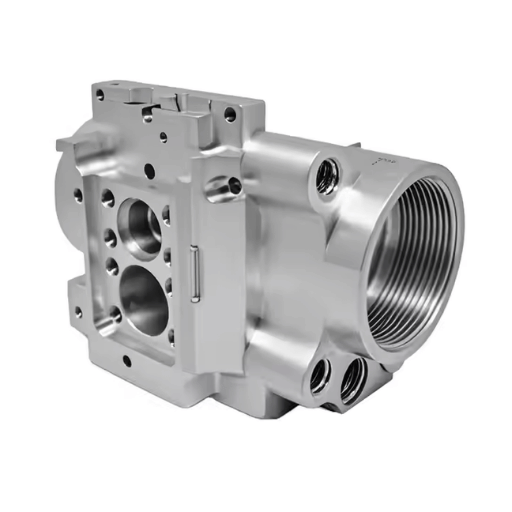
2024 aluminum is widely used in aerospace engineering due to the weight of the aircraft and the structure which require an alloy with considerable strength and fatigue resistance. It is widely used in several parts of the aircraft like wings and other parts that continuously face stress. Also, 2024 aluminum offers precision manufacturing with complex parts and good machinability, further enhancing its suitability for such applications. Its performance characteristics make it an enduring option for persistent demand in aerospace environments.
While studying alloys, the focus stream is their resilience, in which 2024 aluminum does particularly well with tensile resilience due to the temper and processing conditions, ranging 400-500MPa. This endurance is coupled with yield resilience of roughly 275MPa which further enhances resilience against mechanical pressure. The material exhibits an elongation grade of 10-15% over 2 inches adding ductility to certain alloys enhancing their composition. These alloys are typically subjected to enormous amounts of pressure greater than 3 barg, especially in aerospace technology and these factors ensure optimal safety.
Additionally, the most recent searches show that 2024 aluminum has a density of about 2.78 g/cm³, which enhances lightweight characteristics vital to aviation. Copper being the main alloying element improves the fatigue resistance of 2024 aluminum, providing greater life under cyclic loading. Extensive research and real world tests showcase 2024 aluminum’s strength, further supporting the material as a premier option in weight sensitive and high-stress environments.
2024 aluminum stands out for its high strength-to-weight ratio, excellent fatigue resistance, and machinability, although it exhibits lower corrosion resistance compared to other aluminum grades like 6061 or 7075.
|
Property |
2024 Alloy |
6061 Alloy |
7075 Alloy |
|---|---|---|---|
|
Strength |
High |
Moderate |
Very High |
|
Weight |
Light |
Light |
Light |
|
Fatigue |
Excellent |
Good |
Excellent |
|
Corrosion |
Low |
High |
Moderate |
|
Machinability |
Good |
Excellent |
Good |
|
Weldability |
Poor |
Excellent |
Poor |
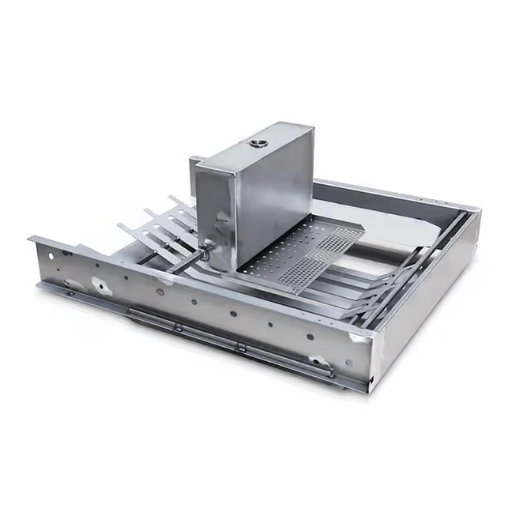
Cutting and Milling: Aluminum 2024 is best processed with a high-speed cutting tool and a milling machine. Due to it’s good machinability, it can be sliced with considerable precision although softening and tool wear mitigation techniques will often be needed for the specialized tools that are necessary to due to the material’s hardness.
Drilling: Increased strength of Aluminum 2024 means that cleaner and more accurate holes free of deformations will demand controlled feed rates and sharper drill bits.
Turning: Turning processes are very successful with shaping Aluminum 2024, however the overall surface quality and overheating issues will demand adequate lubricants and coolants to be used in the process.
Surface finishing: After machining processes, secondary operations like grinding or polishing are performed to enhance surface finish in order to prepare the material for coating and assembly.
The application of CNC (Computerized Numerical Control) machines has transformed the machining aluminum 2024 grade components in terms of accuracy, productivity, and replicability. Cutting, shaping, and drilling of aluminum components are done with minimal human error using sophisticated software algorithms.Models with real-time feedback and adaptive controls aim to self-optimize parameters like feed rate, speed of cutting, and tool utilization. Recent trends from Google suggest that aerospace and automotive industries are increasingly leveraging CNC tech to economically fabricate higher-grade aluminum 2024 components with optimal surface finishes. It is evident that CNC machining has become instrumental in innovation and productivity in various industries.
Accelerated Tool Failure – The machining of 2024 aluminum often results in elevated tool wear due to it’s challenging strength characteristics, forcing frequent tool changes which increases machine downtime.Workshop productivity is further hampler by
Adhesion of Cutting Tool Materials – Due to the nature of the operation, the cutting materials tend to stick to the cutting tools, resulting in poor quality finishes and necessitating rework.
Thermal Expansion – Due to machining’s heat build-up, 2024 aluminum’s high thermal conductivity creates issues with sustaining tight tolerances as it heats and expands materials.
Surface Finish Variability – Achieving uniform surface finish consistency folds down to very fine adjustment of parameters—too loose will instead draft defect features such as chatter marks or rough surfaces.
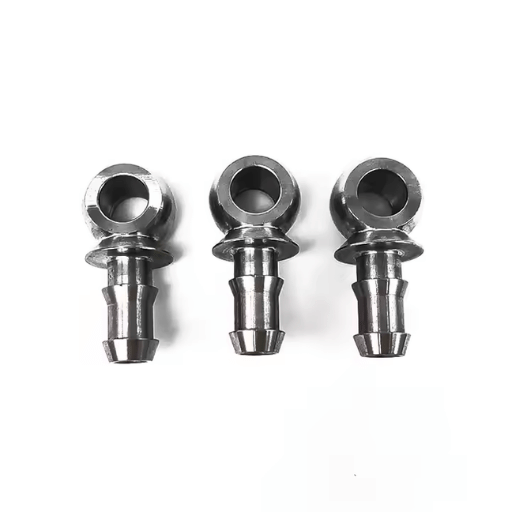
In the case of aluminum machining, a CNC machine’s spindle speed, rigidity, and high-performance cutting tool compatibility needs to be taken into consideration. Current searches suggest users are looking for thi CNC machines with higher RPM capabilities, given that cutting speed for aluminum is a crucial factor. The use of high-speed spindles (15,000 RPM or more) engraves a more efficient surface finish while reducing deformation of the material and surface finish better than low speed alternatives.
Damping vibration in rigid structures of modern CNC equips also solves issues of dimensional accuracy and chatter during high-speed cutting processes, these CNCs have become essential for professional aluminum machining. Models from seasoned manufacturers who specialize with non-ferrous metals tend to augment eficiency and reability is sought. These CNC models increase the accuracy and productivity of machining operations.
As for aluminum machining, tools must be selected with precision since they determine surface finish quality. The coating, geometry, and condition of a tool also its material affect the surface interaction with a cutting tool. An example would be coated carbide tools, which perform better with friction and built up edge formation with oversurface titanium aluminum nitride (TiAlN) coatings. Furthermore, tools with appropriate rake angles and clearances are better for chip removal and cutting action. Losing a sharp edge on a tool is also a serious issue since it leads to excess heat and surfaces becoming rough. The overall refinement a tool achieves is greatly widened when one seeks out tools specifically made for metals non-ferrous in nature like aluminum alongside maintaining them regularly.
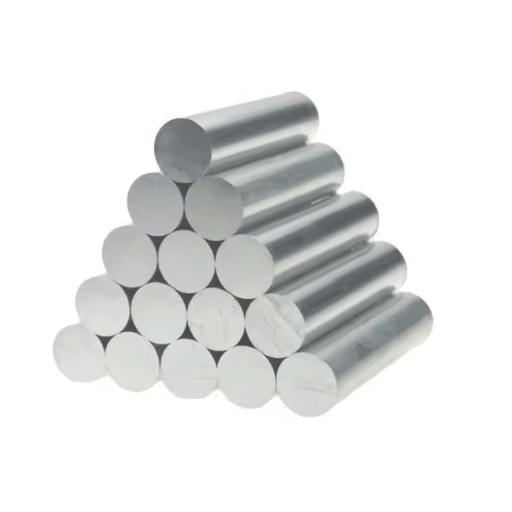
2024 aluminum offers superior strength compared to 6061 but is less machinable than both 6061 and 7075 aluminum alloys.
|
Parameter |
2024 |
6061 |
7075 |
|---|---|---|---|
|
Strength |
High |
Medium |
Very High |
|
Machinability |
Moderate |
High |
Moderate |
|
Corrosion Res |
Low |
High |
Low |
|
Weight |
Moderate |
Light |
Moderate |
|
Thermal Cond |
Moderate |
High |
Low |
In the aerospace industry, 2024 aluminum is advantageous for taking undercarriage components because of its specific weight having unrivaled strength to weight ratio. Although its protective resistance is low, with proper treating and coating, it can withstand harsh environments. Its common use in military airplanes and commercial aviation busts the myth that 2024 is less favorable than aluminum 6061 and 7075.
Out of the alloyed aluminum variants, 6061 has extensive popularity and usage due to its resistance to fatigue, high wear, and extreme weather conditions 7075 is frequently paired with.
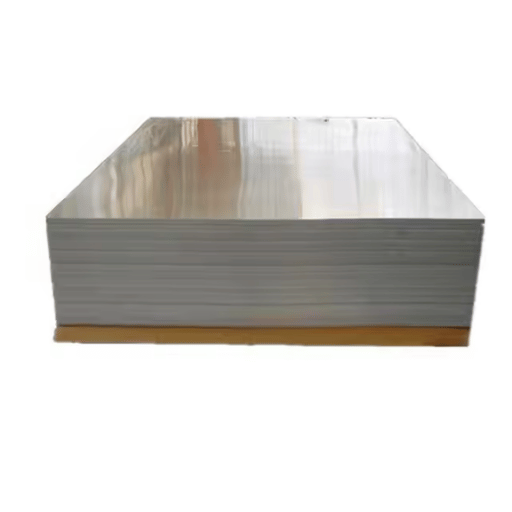
Use in Aluminum alloy 2024 applies within aerospace industries because of the alloys difficulty to dampen and wear out. As an alloy with great tensile strength, it also endures repeated fatigue which makes it great for wing and hurase parts. It improves resilience in frameworks and helps stringers balance stress loading. In addition, the 2024 aluminum alloy’s enduring wear helps support durable structural components which in turn increases the efficiency of both military and commercial aircrafts.
With the incorporation of lightweight alloys within automotive components, vehicle weight can be reduced up to 30%. In return, increasing fuel efficiency as well as reducing emissions.
Fatigue-resistant materials ensure unmatched operational endurance. These materials give way to better crankshafts and suspension systems extending life.
An alloy engine’s block benefits from sophisticated materials with top-tier thermal conductivity during extreme conditions improving overall performance.
Precision in Machining: Enhanced production alloys substantially advanced the machinability of materials, decreasing production time by as much as 20% and improving accuracy within tolerances on challenging geometrical assemblies.
Alloy materials with a high strength-to-weight ratio have become vital in industries like aerospace and automotive and construction. There is a notable trend in the search for advanced materials such as lightweight yet durable ones owing to greater focus on energy efficiency and overall performance optimization. These features stem from strict control of the alloy’s composition and high-level innovative engineering processes like heat-treatment coupled with additive manufacturing that strengthen grains, reduce impurities, and refine the microstructure. Therefore, advanced alloys are gaining acceptance as they enable revolutionary product designs where optimal performance and efficiency are critical.
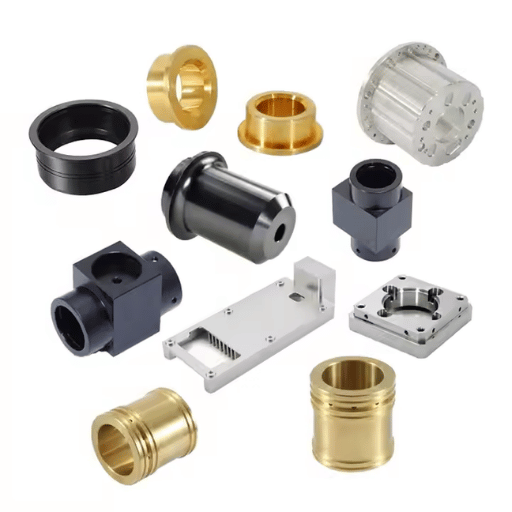
A: The properties include high strength, great ease of machinability, and good fatigue resistance; these allow 2024 aluminum alloy to be implemented in high precision aerospace parts.
A: Corrosion resistant alloy 2024 is weaker in comparison to constructs such as 6061 aluminum and aluminum 6063. Owing to this weakness, 2024 alloy often undergoes surface treatments to protect it from corrosive factors.
A: Common methods of working on 2024 aluminum alloy in CNC machining are CNC turning, high-speed machining, and other advanced CNC methods. This is important during part manufacturing because it assures the needed machining standards and accuracy.
A: The aerospace industry favors 2024 aluminum alloy for its applications owing to its properties like a very high strength to weight ratio, and superior fatigue resistance. These mechanical characteristics facilitate the building of structural components that need to endure harsh aerospace conditions.
A: The 2024 aluminum alloy is commonly used in machined parts for aerospace, automotive, and military. These industries take advantage of the alloys’ high strength and excellent machinability.
A: The shipping of 2024 aluminum alloys enhance their properties due to the seasoning which help in the control during machine operations to wind up at excellent floor polish and precision. This is especially important when needing to build sophisticated components with strict tolerances.
A: 2024 aluminum possesses higher strength and improved fatigue resistance than aluminum 6063 which is widely admired for its great corrosion resistance and architectural use. Thus, the value out of either would depend on what the use would be.
A: The machinability of 2024 aluminum alloy improves the quality of parts produced, and consequently boosts the efficiency of machining services. This is particularly important in industries where rapid response and consistent reliability are essential.
1. An experimental study on the abrasive flow machining of aluminum alloy (AA 2024)
Citation: (Choopani et al., 2023, pp. 1–12)
2. Effect of Electrical Discharge Machining on Surface Characteristics and Microstructure of Aluminum Alloy 2024
Citation: (Muttamara & Nakwong, 2022)
3. Optimization of cutting parameters by thrust force and time for drilling of aluminum 2024 T351
Citation: (Turgut & Ozsoy, 2023, pp. 1263–1272)
4.Top Aluminum CNC Machining Service Provider & company in China

Manufacturing processes are quite complex, and the choice of a production method is directly related
Learn More →
There are two major manufacturing methods for producing plastic prototypes that most people find useful
Learn More →
As a person involved or interested in the design and production of plastic components, it
Learn More →