

Manufacturing processes are quite complex, and the choice of a production method is directly related
Learn More →
Nylon and Delrin (acetal/POM) are two of the most common engineering plastics for CNC-machined parts, but they behave very differently under load, moisture, and heat. Choosing between them comes down to your application’s specific demands: Nylon offers superior toughness and wear resistance, while Delrin delivers better dimensional stability and lower moisture absorption. This comparison breaks down the key mechanical, thermal, and chemical differences so you can pick the right material for your project. For process-specific advice on cutting nylon, see our nylon machining guide.

Nylon and Delrin are two engineering plastics that are very popular overall, having good mechanical properties. That is, Nylon is considered to be very desirable because of its number-one quality of being composed of good material, adaptable, and wear-resistant for use in gears, bearings, and other industrial components, while Delrin, also referred to as Acetal, is used in applications requiring solid mechanical properties, like superior strength-to-high-ratio-force, low friction coefficient, and dimensional stability. Common applications for this product include precision parts such as screws, bushings, and small mechanical components. When a matter of fact is required more under toughness and impact resistance, then Nylon would be chosen, whereas for precision and smooth mechanical performance, Delrin is preferred. The material selection will depend on various requirements of the project such as load-bearing capacity, degree of friction, and environmental factors like moisture and heat.
Nylon, which is a type of polymer among synthetics, is highly appreciated for the characteristics of durability, flexibility, and chemical resistance combined in the most impressive way. The engineering plastic is characterized by the maximum amount of tensile strength, beautiful resistance to wear, and the capability of absorbing shock and vibration, which makes it suitable for a wide range of applications. Its low friction coefficient further supports the above-mentioned property by allowing smooth mechanical movements and its resistance to wear and tear adds to the longevity of the material even in tough environments.
Nylon by itself makes the product highly important in industries such as automotive, consumer products, and electronics. It is of course evident that Nylon has an important place in the manufacture of gears, bearings, bushes, and textiles-a capable, all-condition candidate to face the lowest of temperatures and decompositions in a wide variety of chemicals. But, in some situations, moisture may get into it and cause a small moisture-induced change in dimensions. Yet it is because of its versatility and hard-nosed applicability that nylon has for so many years lead engineering and designer preferences the world over.
The CNC machining process is highly dependent upon material selection, with the latter acting as probably the most important factor in establishing efficiency, durability, and performance stacks. The material selected will subsequently dictate your machining parameters, the tooling that you need, and even the feasibility of production. Metals-most commonly aluminum, steel- are widely chosen for their strength and machinability. On the other hand, polymers like nylon and PEEK are good choices because of their lightweight, corrosion resistance, amongst other advantages. Carbon composites and bioplastics are the materials embraced by industries today because of the global awareness of their eco-friendliness, as well as for dispensing better properties for the CNC-machining process. Accurate choice of materials leads to high precision of tolerances and superior finish on surfaces, thus making material selection a critical factor in achieving precision and repeatability in modern machining systems.
Nylon and Delrin differ primarily in their mechanical properties, moisture absorption, chemical resistance, and temperature tolerances.
| Parameter | Nylon | Delrin |
|---|---|---|
| Tensile Strength | Medium | High |
| Moisture Absorption | High | Low |
| Chemical Resistance | Medium | High |
| Temp. Tolerance | Moderate | High |
| Friction | Moderate | Low |
| Durability | High | Very High |
Such differences render Nylon a better choice for uses where flexibility and shock absorption are essential, while Delrin is the superior material for high-strength, low-friction, and high-precision environments.

Nylon and Delrin differ in tensile strength, moisture absorption, chemical resistance, temperature tolerance, friction, and durability.
| Property | Nylon | Delrin |
|---|---|---|
| Tensile Str. | Medium | High |
| Moisture Abs. | High | Low |
| Chem. Resist. | Medium | High |
| Temp. Tol. | Moderate | High |
| Friction | Moderate | Low |
| Durability | High | Very High |
In comparing Nylon and Delrin, the clear winner is Delrin with respect to tensile strength. Low in tensile strength, Nylon can be used in fabric products or other products that need flexibility and resistance to impulses. But in the case of Delrin, a very specific type of plastic, it can be easily stressed to higher levels, given the high tensile strength it is known for. Numerous works of engineering literature show that the tensile strength of Delrin is more or less around 14,000 psi, though for Nylon, this strength ranges between 6,000 and 9,000 psi depending on the type or grade. Thus, it is always preferable for Delrin whenever you require materials that exhibit excellent mechanical performance with no deformation or failure under heavier loads.
Nylon has better resistance to impact than Delrin in general when comparing impact resistance properties. Nylon’s ability to flex and bend considerably less in the case of an impact allows it to absorb and dissipate energy more efficiently, thus, preventing fractures. Delrin, in contrast, is much less flexible and akin to glass, so it does not resist strong-impact forces as well without breaking. Nevertheless, the hardness and strength of Delrin are the reasons why it is still used in applications where good, but not the highest, impact resistance is necessary and the security of the structure is of utmost importance.
Comparing the two materials, nylon and Delrin, in the parameters of flexibility and load-bearing capacity clarifies that each material fits specific applications nicely depending on the properties that nature has given them. Nylon possesses a greater amount of flexibility which enables it to be stretched and bent under the load but not break. This feature of nylon makes it the most suitable material among others in terms of dynamic or fluctuating loads, as it can easily distribute the pressure and its being resided able to flex over time.
Delrin on the contrary, is a little less known as acetal, but provides an excellent combination of features such as great rigidity and excellent dimensional stability. Not that it is totally void of the same kind of flexibility, still, Delrin resists deformation under heavy loads and retains its shape even if the load is applied for a long time.
Recent surveys carried out have shown that nylon is usually the lessor option to choose from when it is the material’s elasticity property that is to be taken into account in applications such as gears, bushings, and frequently moving or vibrating bearings. On the other hand, Delrin challenges are present in all high-precision engineering applications, for the purpose of which a machine parts must be manufactured and load elements become crucial specifically in maintaining, with precision, the exact dimensions of the specific. So much depends on the specific aims of the particular project and the performance priorities set forth.

Nylon and Delrin possess excellent machinability as their shared characteristic, yet they differ in some properties. Nylon is, to a certain extent, less hard and, due to its nature, absorbs moisture more easily, thereby affecting the dimensional stability and machining accuracy. On the other hand, Delrin’s density and stiffness provide it with superior dimensional and stabilityand, consequently, it is capable of producing sharper cuts with the least amount of cutting tool wear. The two elements can be worked through the same means, but the latter is frequently chosen for precision and consistent quality applications.
To get the best possible results in machining nylon, one has to consider its properties very carefully. On the one hand, nylon is a material not very difficult to machine, but on the other hand, its absorbing of moisture can lead to problems of changes in dimensions, which must be taken into consideration in the manufacturing process. The common conventional machining methods of turning, milling, and drilling are good to go on with nylon, but the condition is that the cutting tools must be very sharp to prevent heat production. Too much heat may soften the material and this may lead to either inaccurate cuts or surface finish defects. To avoid this, it is advisable to have low cutting speeds and high feed rates.
Moreover, application of coolants can also help in reducing the heat during the machining operation, which in turn would result in smoother finishes and longer life of the tool. Stress relieving procedures such as annealing can be beneficial beforehand especially for massive or intricate parts. By doing the right preparation and making the necessary changes, nylon can be machined into precise, robust parts for a variety of uses.
Nylon and Delrin are two materials of just about the same class in respect to machinability. This makes them perfect for precision machining, with a few minor dissonances dotting some of the essentials. An acetal resin, Delrin reigns as low in friction, good for maintaining dimensional stability, and maximum of air for sustenance to the machine while it produces the least heat and less tendency to warp its state. Consequently, it is susceptible for very small and very dear parts among all others.
Partly, Nylon, in general, cannot be counted out on account of its mechanical strength and damp substance, yet it is a difficult material to work with just because of the stated tendencies. For instance, high moisture absorption plus scales give rise to distortion. Regarding the surface finish, it is rather hard to get the same quality as Delrin can achieve. Further, when Nylon is machined, the heat will more likely mount, which causes varying degrees of trouble slightly below the lower threshold to loosen or melt the rather fine surfaces not handled with care.
Given both materials are great to machine with the right tools and techniques, Delrin is considered more machinable, especially to applications needing tight tolerances for parts with very fine finishes. Nylons may be more appropriate when impact resistance and flexibility are important.

Delrin exhibits higher strength and stiffness relative to Nylon, and hence is frequently used in applications involving heavy-duty and stiff components.
Nylon displays better flexibility and greater impac resistance compared to Delrin, which makes it an ideal choice for components that are subject to repeated stress or dynamic loads.
Nylon absorbs more moisture from the environment compared to Delrin resulting in lesser dimensional stability, while Delrin being a bit more stable with good resistance to moisture.
Delrin provides greater thermally stable and higher melting point than Nylon, thus it is suited for high-temperature applications.
Nylon is always presented as a cheaper option and more widely available than Delrin. Therefore, this circumstance is very important when considering a budget-sensitive project.
In terms of cost, normally nylon is considered the less expensive one as compared to Delrin and this fact ensures that nylon remains the most preferred option for those projects that are cost-sensitive. Besides, nylon’s easy access is an important factor in making it cheaper. On the other hand, Delrin’s higher cost can be rationalized in the case where it is used for the applications where its higher thermal stability, moisture resistance, and mechanical properties result in a longer beneficial performance. The choice should evaluate the initial price and the particular conditions of usage to come up with the most economical and appropriate selection.
It is very important to realize the differences between Nylon and Delrin when dealing with the subject of machinability and processing. Delrin, being an acetal polymer, is regarded as the best in machinability. It can easily be machined with very little wear on the tools, and thus very high precision and smooth surface finishes can be obtained, and this is the main reason for the use of Delrin in applications where very tight tolerances are required. Besides, Delrin creates less heat during the cutting process due to less friction, which means that less heat is built up and thus distorting of the material is precluded.
Nylon is considered a bit stiff while Delrin has a high degree of machinability and flexibility for different applications. However, more energy is used when using nylon, as compared to Delrin, which is a major downside to nylon itself. This could result in serious problems, including material-deforming or a very rough tool-path surface, when tools are not properly optimized. However, the inherent toughness and resilience of nylon is a good friend in the world of high-impact-strength applications or, at the very least, high flexure resistance. Furthermore, keeping in mind the moisture-absorption tendency in Nylon is somehow important in terms of maintaining size stability while machining.
The individual case may determine the final usage of Nylon or Delrin, depending on the processing applied, acceptable tolerances, lifespan, and environmental conditions under which the material shall work. The type of tooling, cutting speeds, and processing environment can help achieve good outcomes with both materials.
A few essential aspects have to be taken into account when comparing Nylon and Delrin in terms of durability and performance:
Delrin is the material that delivers excellent resistance to wear and friction, and, thereby, is the best option for applications that involve parts sliding over each other and others moving frequently. Nylon, although strong, could get worn down faster than Delrin under the same conditions.
Nylon bears high impact resistance as compared to Delrin, as the former absorbs shocks due to an experience of sudden stress.
More moisture is absorbed from the air by Nylon than by Delrin and, this change affects dimensional stability, reducing the performance of the device considerably in applications wherein the surroundings are extremely humid. Delrin does not absorb any water and hence retains its polymer characteristics even when in wet environments.
Nomex has a higher service temperature compared to nylon.ventarioNylon has DL shot to a much higher-level temperature and its strength can be hindered by these temperatures compare with Delrin.
In the end, what factors shall determine the most suitable material for applications, depending on the specificities of requirements such as surrounding environment, types of mechanical stresses, and the anticipated length of service for the components.

Due to wear-resistant properties, low friction, and the ability of self-lubrication, nylon is frequently accepted as the best wear-resistant material for gears and other surfaces in the form of bearings.
Possessing the dual merits of light weight and toughness, nylon is the ideal choice to attract the need of these basic mechanical sections just like bushings and spacers.
The electric connector, insulator, or any other electrical component made of nylon gains respect due to the strong insulation effect it offers as well as the quantity of electrical discharge which it is allowed to carry upon it.
It is most fitting with respect to the strength and endurance it promises in responding to manufacturer appeals for it to serve their purposes.
Where existing hardware must deal with superior rigidity and reduced maintenance, nylon surface-reinforced custom parts such as rollers or conveyor tracks for some industrial applications are made and assembled routinely.
A broad spectrum acetyl plastic Delrin has found its way into many uses which want a material that is tough, holds its shape, and glides easily. It is, primarily, used in precision construction of components such as gears and bushings in various markets, that range from automotive to electronics. Considering such properties it can be used as a replacement for metal in such structures but in a lighter way.
Delrin, albeit strong and durable, retains rather bio-inert hence raises questions on its potential effects on the environment if disposed of wrongly. recycling efforts remain low due to its nature however such negatives are on the process of being improved. In the long run, using Delrin in service elements is helpful in the reduction of waste because it is long-lasting thus there is less rushing for replacements in materials. Environmental issues will be tackled best with the safe elimination and looking into possible sustainable solutions.
In determining which material between Delrin and Nylon is most suited for a particular task, it is important that those properties be considered as well as what is expected of the application. Delrin (or acetal polyoxymethylene) is quite admirable because it has a remarkable strength to weight ratio, elasticity and is wear resistant making it perfectly suited to the manufacture of precision parts and gears as well as parts where dimension is required to maintain accuracy. Even in the presence of humidity and temperature changes, Delrin does not disappoint in performance.
On the contrary, Nylon is much more popular for its durability, abrasion-resistance and flexibility. This is actually the most common material in use for bearings, or bushings, or any other parts that undergo cyclic stresses and impacts in practice. In contrast, Nylon is susceptible to the surrounding atmosphere and unlike Delrin, imbibes water/air which might prove disadvantageous outside in wet and damp areas.
In the end, trying to figure out what to choose between these materials comes down to the environmental situations, mechanical needs and cost factors. Turn to Delrin when precision matters and humidity is thought to be problematic, but tough goods will be enhanced with Nylon due to its wear-resistant properties. Cutting across the entire demands of one’s project and the outstanding features of the materials will ensure that it is goes the distance.
Comparative Study of Steel, Nylon 66, and Delrin Helical Gears Used in Steering Gearbox – This study compares the performance of Nylon 66 and Delrin in mechanical applications, providing insights into their properties.
Polymer Wear Modes – This research examines the wear characteristics of polymers, including Delrin and Nylon, under various conditions.
Indentation of Poly (Formaldehyde), Reinforced Nylons, and Poly (Ethyl Terephthalate) – This paper discusses the mechanical properties and performance of Delrin and reinforced Nylon in engineering applications.
Delrin (a brand of acetal) and nylon are both engineering thermoplastics. However, the properties are not the same. Though it has a lower coefficient of sliding friction for a lesser amount of wear and tear and tends to have less dimensional instability than that exhibited by nylon, with time Delrin maintains its mechanical properties instead of experiencing creep, as is nylon’s case, which is the more porous synthetic material with loads of toughness and high tensile strength in certain grades.
In bonding, the delrin material is preferred when the part has precision parts demanding tight tolerances because ‘it machines cleaner with minimal creep, and therefore it is suitable for precision components. Nylon may be used but has the ability to absorb moisture and would typically swell, making the environmental control difficult when choosing nylon or a filled grade of nylon, given the need for some sort of post-processing on the chosen material or an adjustment to the design.
Delrin is highly wear-resistant acetal with a low friction coefficient, and is great for things like sliding part and bearing use. Nylon is resilient too, and filled grades can boost abrasion resistance but nylon tends to increase wear when it absorbs moisture. Delrin is best for recycled dry sliding under load.
The acetal, typically sold by Delrin, is suitable for both injection molding and machining; atlotal 150 and additional grades are injectable with a predictable flow with tight finishes. Nylon also molds well‹nylon grades are common in molded forms-but nylon is the more hygroscopic, requiring drying before it is used for injection molding. Where dimensions must be maintained directly out of the mold, delrin is mostly in use.
Delrin suits applications demanding low friction coefficient, precise gears, bearings, slide parts, and those require long-term dimensional stability; it machines well, and injection molded acetal parts are common. At the same time, nylon finds a way even in their opposite domain of tougher parts against the impact, say textile parts, fasteners, 3d printed prototypes; nylon is also used to great lengths in areas where flexibility and high tensile strength (in some grades) would be beneficial. Filled nylon might be taken if enhanced wear and abrasion resistance are required.
Grasping the differences that exist between Nylon and Delrin is a key point for decision-making regarding the selection of materials. Each of the two materials has its own specific benefits that might greatly influence the outcome of your project in the field of engineering.

Manufacturing processes are quite complex, and the choice of a production method is directly related
Learn More →
There are two major manufacturing methods for producing plastic prototypes that most people find useful
Learn More →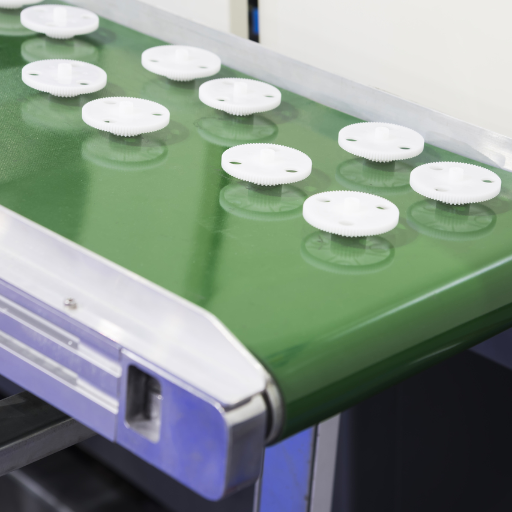
As a person involved or interested in the design and production of plastic components, it
Learn More →