

Manufacturing processes are quite complex, and the choice of a production method is directly related
Learn More →
Injection molding is a manufacturing procedure that has gained immense importance as it is used to manufacture a variety of products made of plastic on an everyday basis. This can range from fine medical products to sturdy parts for automobiles, and without a doubt, many sectors have seen immense changes due to this process. This process mainly involves an injection molding machine, a wonderfully advanced machine that transforms liquid substances into various structures. However, what comprises this machine, and how do the different sections of the machine’s structure function to produce such impressive results?
This post will examine the elements composing an injection molding device in greater depth, discussing each part’s functions and how an injection molding process can be described as incorporating composite parts. If you are in the industry and seek to broaden your horizons, or are just a layman excited to grasp the mysteries of manufacturing, this is where you must stop by. Get ready to play an inquisitive role when it comes to one of the key accomplishments of engineering that crafts the current human civilization.
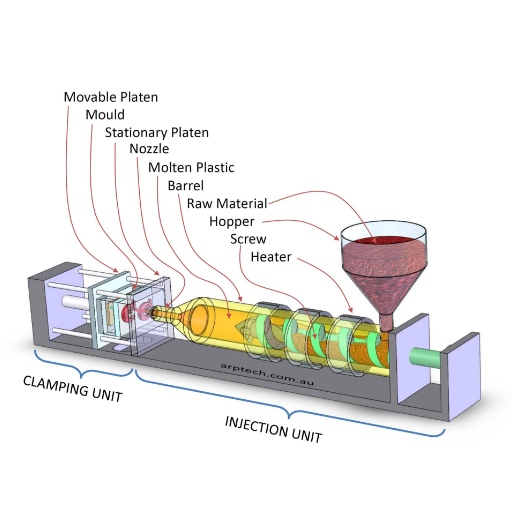
Injection molding equipment is a critical component in manufacturing as it helps form diverse parts and products, cutting from the basic principle of pouring molten material into a form. Usually, these machines can be thought to comprise three main sets of constituents: the injection unit, the mold section, and the clamping section. In detail, the injection unit plasticizes material before injection, dies shape the plastic, and the clamping section holds the mold, ensuring the process remains in its place. This technique is advantageous since it offers fast, precise, and large quantity production of quality parts made of various materials, including but not limited to plastics, metals, and ceramics.
An injection moulding machine is a production tool used for metalworking in which material is injected into a mould to form a part instead of being pressed into shape by hand. It works according to a particular order of actions, including melting and forcing raw materials, usually plastic, metal, or ceramics, into a mould under high pressure to get the desired shape. The latest technology in molding machines makes them very efficient in high production rates, achieving high accuracy and precision. For instance, these devices employ various gadgets such as efficient molding process controls, precise sensing instruments, and CNC systems that provide consistent, high-quality products. This type of machine is most commonly used in the automotive, medical, packaging, and electronics industries because it allows the quick and efficient manufacturing of sophisticated and strong items with very little waste in materials and time.
One of the dominant aspects in the plastics industry is injection moulding, which has been popularised for its qualitative efficiency and adaptability. According to the latest data, injection moulding represents a large percentage of plastic goods produced globally. The 2022 market is valued at over $265 billion and will grow to over $390 billion by 2030, rekindling at a rate of 5.4% year-on-year. This growth affirms how successful the technology is in meeting mass production requirements.
Another potential use of injection molding is how it can produce accurate designs for complex parts in large-scale part productions, which is highly necessary in sectors like automobile, medical, consumer, and electronics. For instance, in the automobile manufacturing, injection molding produces lightweight and strong components such as dashboards or bumpers, which helps save fuel. And in the same way, but a turn for the better, the medical industries under this process ensure that every little thing it manufactures is sterilized or relatively ‘safe’; thereby, molds thin needles, zero clear scalpels, and in-vivo medical implants.
New technological developments in modern injection molding systems, such as CAD tools and the Internet of Things (IoT), have increased production levels. These developments, on the one hand, help minimize material wastage by around 30% and improve efficiency, while having the capability of real-time monitoring and error identification. The emergence of multi-material injection molding has benefited manufacturers, as they can now bond plastics with other materials, offering more product designs and functions.
As far as being eco-conscious, the latest updates in injection molding appreciate the use of post-consumer plastics and the emergence of biopolymers. Other investigations affirm that injection molding is much less wasteful than many different manufacturing systems, so its control can assist in the green agenda. As a result, injection molding has gone beyond simply being a good manufacturing technology to allowing for the development of green technologies.
Firstly, the choice of raw materials is very important in deciding between thermoplastics, thermosets, or elastomers that are coarsely designed and hence manufactured by melting and then ejecting them into a mold chamber. The molten material is pushed into the mold cavity using specialized machinery while progressing inside the mold and cooling down after assuming the desired shape and size of the product. Finally, the part is removed from the mold with the help of ejection mechanisms and released from any excess or waste.
The latest computing technology and automation application in molding production have also resulted in additional gains, as the overall procedure has proven more efficient with less expenditure. In addition, thanks to the enhanced features of the developed mold materials, designing extremely demanding parts in the automotive, aerospace, or medical devices sector is now possible with appreciable precision. This process continues to be the newest and thus most effective tool in manufacturing, connecting operational effectiveness with enlarged ability in structural development.
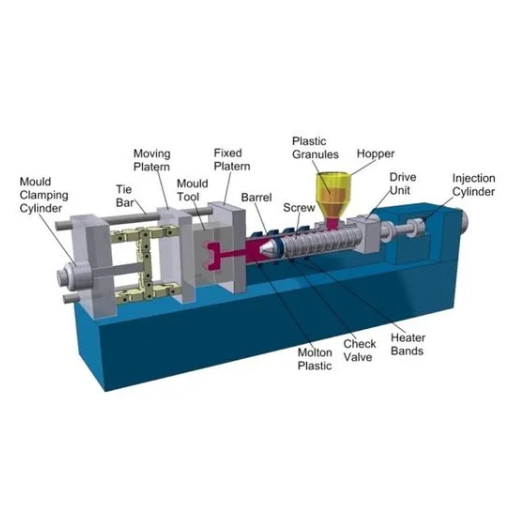
This unit prepares the molten plastic and inserts it into the mold. It consists of the hopper, barrel, screw, and nozzle.
The aforementioned holds the mold tightly throughout the injection and cooling operation to close the process correctly. It exerts uniform pressure on the mold to effect the correct molding process.
The last unit is responsible for positioning the product. Its mold consists of two halves: the housing and the hood/jacket, which universally open or close. The mold is designed to accommodate the required size and shape of the component.
It operates the machines by controlling the movement of materials for the clamping and injection units. It also generates power for personal safety and efficient plant working conditions.
The operating system adjusts and monitors the machine’s parameters—temperature, pressure, and process timing.
This exhaustive list of these and other technical devices assures a high-quality and efficient injection process.
The term “hopper” is quite familiar to those who man an injection molding machine. The design includes a hinged, usually sealed container that acts as a house for storing and transporting raw materials such as pellets or beads for plastic injection. Traditionally attached on top of the machine, it provides a means for matching customizable or consistent raw material supply to the feed or screw system during the cycle of molding. Recently, hoppers have also been incorporated with accessories like pellet dryers that ensure the pellets have no moisture level to prevent defects. Many other added benefits of technology include having sensors that control the amount of the material to keep it at certain levels to avoid spillage, to maintain its high performance, and to reduce wastage. With these consequences in place, the production process will be very high for leafing goods, minimizing time wastage and enhancing the operation procedure on a given machine.
This is one of many components that work hard every moment to produce the desired processing output, in this case, by evenly warming plastic granules until they become molten. The polymer enters a revolving screw spiral groove, which heats up due to contact with the granules, while the heater bands around the barrel assist in the heating. Thus, the carefully prepared combination of processes allows the plastic to be ready for shaping to the desired viscosity. Today, introducing new technologies in the form of careful heating systems and controlled melting aids in eliminating the disadvantages. These advancements bring to life higher product features and lower power costs. Any effort geared towards manufacturing friendly products is precisely the development objective pursued.
The injection unit may be likened to a beating heart in an injection molding machine. An injection unit, namely, manufactures plastic items and makes sure the manufactured items are of the required accuracy. This is achieved by controlling complete melting of the plastic and ensuring that the plastic is accurately filled in the mold with the necessary pressure and temperature. Advanced technological ability, including servo drivers, enables the following, with real-time ware and a feedback strategy, to ensure the abstract and molten plastic dose is maintained within the correct quantity and application width. Such a machine paradigm also integrates complex sensors and algorithms, allowing the plastics processor to optimize machine operation, minimize scrap, and maintain dimensional accuracy.
Also, given the current technological advances, where computers and other systems are closer than ever to organisational activities, it is understandable that the role and influence of Industry 4.0 have increased significantly. Now that each press is set with its corresponding injection unit, additional information can be known about the former. Or, if the press itself needs an overhaul, the status of each injection unit may also be extracted. All these allow for a somewhat larger reach, thus facilitating the ability of injection molding manufacturing to adhere to current requirements and, in the case of energy, efficient management without harm to the environment.
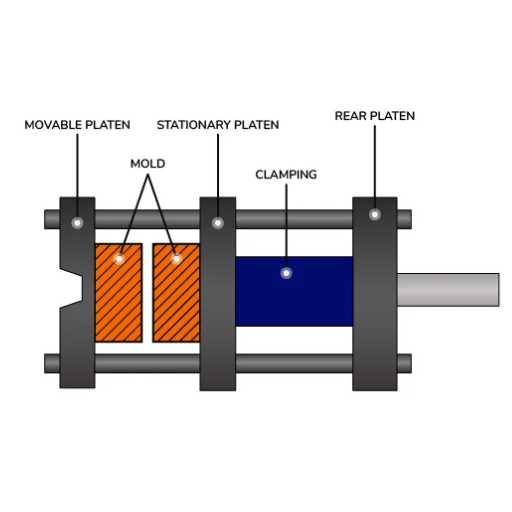
Throughout injection molding, the injection unit ensures the mold will be subjected to a certain force throughout the cycle. This can tighten the two halves of the mold together and hold the pressure that the injected liquefied material applies. In various forms, this includes three basic, most essential elements: the fixed plate, the movable plate, and the mechanism for holding the mold in place. Some principal functions include ensuring the tolerance of the mold, ensuring the easy opening and closing of the mold, and restraining the flow to avoid the loss of material in the mold, which helps in producing good quality aw making parts that are required.
The very foundation of the injection process is the clamping unit, which is responsible for the unequivocal maintenance of the mold in place while casting and cooling take place. In most cases, this can be achieved by guiding the ejector system and applying sufficient tonnage through the clamping unit not to produce flash on the components. According to the information provided by suppliers, current clamping units are fully automated and have in-built sensors for constant performance reading, including the applied clamping force. Function in the degree of efficiency is increased, wastage is minimized through defects, and the quality of the products is significantly improved. For one, more attention is paid to the use of up-to-date technologies, which reduces the availing pressure at the expense of lowering effects while maintaining the available functionality.
Clamping screws are critical parts of rubber mold design and plastic components manufacturing which assurance that the molds stay clamped during the process. Here are the top five kinds of clamping screws with their data:
Toggle clamps operate by pivoting links in a toggle array to move from one position to another. They are commonly found in plastic injection molding machinery and are very efficient. They are especially good for applications that require moderate clamping forces. In general, they consume less power, although they can break down easily due to wear and tear since they have moving parts.
The hydraulic clamping systems use hydraulic cylinders to exert pressure on molds to clamp them. With other systems, the power required to apply a clamp upon the mold is not even; with hydraulic clamping systems, it is almost uniform. Such systems are used where large or thick-walled molds and very high clamping forces are expected. Given their lifespan and power, such polymer systems are best suited for practical heavy-duty operation applications, even if the initial investment may be high.
Gears, levers or screws are the preferred modes of action aimed at achieving the clamping objective of mechanical clamps. Though essential, their function is easy to master as they often possess high precision and repeatability. The available hydraulic systems may be superior to these mechanical systems in other respects; however, the simplicity in maintaining the latter and the relatively low costs associated with operations are incomparable in the small-scale economics.
Magnetic clamping uses potent magnets to secure the mold in place. This enables quick mold changing, enhancing productivity in the industrial plant. As effective as magnetic clamps are and the specific applications they are intended for, they are not as powerful as other clamping systems, such as toggle or hydraulic, so they can only be restricted to the smaller size of molds they can handle.
Electric clamping machines use electrical motors to provide clamping force, offering high energy efficiency and accuracy. These clamping machines have gained much popularity in today’s plastic injection molds due to their energy-saving advantages, which allow clamping operations to be preprogrammed and controlled. Moreover, using such clamps without hydraulic fluids is possible, and they do not pollute the environment.
Each clamping mechanism has its own pros and cons, and the choice is heavily dependent on the mold size, the material, and the processing conditions.
If aligned properly, the mold in the injection molding process ensures that the parts produced do not have many defects; they have none in many cases. The only reason such a process will not make good parts is if the molds are out of alignment. In which case, defects of the parts will be caused by problems such as unequal pressure, flash, excessive abnormalities, or elimination of a machine. Even when last accessed, it was found that mold alignment also helps increase the production efficiency in terms of material use and reduces wastage, even in the case of the issued equipment. The order aligning and control devices were mechanical systems necessary because of their progress, technology, and aims and targets lines of action. Indeed, with technological innovations such as perfect cameras, automatic systems, and laser alignment, the perfect molding of parts is becoming less complicated with the current trajectory. Therefore, it is better to pay attention to the proper positioning of the components of the mold in particular processes, not only for more efficient work but also because of the economic benefits incurred due to lowering the need for maintenance.
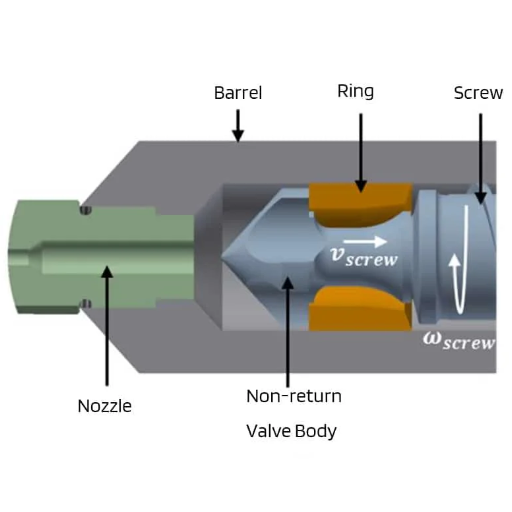
In the injection molding process, the primary function of the nozzle is to join the molding die to the machine. It is the point where the barrel and the molds are linked so that the molten material is geared to flow down into the mold, precisely and neatly as it should. The nozzle design will affect heat dissipation, molding behavior, and outputs. A nozzle may also function in a preventive manner to counter loss or distortion of matter by deploying, for example, sealing treatments. Nozzle type, its basic parameters, nozzle wearing, and related problems majorly impact the part output.
In the case of injection molding, the nozzle plays a vital role, which is the structural element that directs the movement of the melted material from the barrel to fill the cavities in the mold. As pressure is applied, the barrel and plunger slide continuously, then the half-plungers move again into their original positions, the filled barrel slides to the forward position, then the push-out piston drives the molten resin material due to this phenomenon, and it is discharged from the machine. More often, the nozzle performs the exhaust task, it protects and warms all effort-resisting polymer until it has flowed to the required place. Nozzles are usually made with a continuous reduction of the inner diameter so that the flow is unhindered and reliable and that no distortion or pressure loss occurs.
Recent nozzles incorporate some technological advancements to help in their functions and offer precision. According to the most recent survey results, even today, there are various designs of nozzles with heated and insulated parts for precise temperature control during injection. The practice of self-maintenance, for example, which includes applying anti-wear materials on such nozzle surfaces and parts, has started to take root already and has partially succeeded in reducing the wear pattern and extending the useful life of such surface parts. All these new developments help to improve and facilitate the production process since additional measures can guarantee that the quality of the parts produced by adjusting the injection mold is excellent. The efficiency of the molding process depends on the correct operation of the nozzle, which is one of the manufacturing aspects modern industries focus on.
Open nozzles have a free flow path where the molten materials can easily reach the site without any obstruction. This is commonly used in processes with frequent color changes, as it allows easy system cleaning and flushing.
Close-off nozzles have a mechanical or even hydraulic system that closes the gate and prevents the movement of the melt during the process. They are particularly advantageous in huge mold designs and high-viscosity materials because they ensure accurate material flow.
Shutter nozzles rectify the problem of material in the shots during processing by closing them off and stopping the flow of the materials using an engineering retractable relief melt filter. This also enables more ease in applying closure to the filter for high-deforming materials because it can be manually shut off.
Positive displacement nozzles work by using the molten material to overcome the pressure of spring-loaded pistons that either push or pull the molten material in or out. As expected, such nozzles improve the end products’ structural and physical characteristics.
In automated molding processes, the nozzles in question might be the most suitable way to separate the sprue efficiently and remove the parts. This reduces the costs associated with machine removal of the parts without changing the conveyor line.
All nozzle types have their main applications, and whether adjustable or not, they are made to be versatile, another advantage that makes it easier to meet different needs.
Designing nozzles for manufacturing poses challenges, such as material compatibility, wear durability, enforcement, thermal stress, or flow controls. The tradeoff between longevity and high-resolution performance is especially challenging since the nozzles are constantly exposed to high pressures and temperatures during aggregate formation. Moreover, deposits or blackouts in the nozzle can change the machinability and affect the part quality.
To solve the problems that come with this, manufacturers are considering using new materials such as hard steel or ceramics, or else composites fabricated from both materials that have natural resistance to wear and have a longer life. Methods such as improving the design of the nozzles with specific geometries that can be used instead of the nozzles, due to the precise construction of the movable components of the signals, in conjunction with compartments, or areas with holes, also enhance the flow in the device. Furthermore, using simulation tools enables engineers to visualize and anticipate performance under differing conditions and arrive at an appropriate design that enhances productivity. Improved machinery and materials simplify the design of nozzles in the complex manufacturing setup.
If one opts to investigate more add-ons, one must restrict components to the purpose and the existing available components. It is necessary to check such factors as the material’s wear resistance, the maintenance complexity, and the company’s efficiency. Additionally, it is recommended that you purchase standard parts with a high degree of proven performance. Moreover, choosing flexible designs as better alternatives is essential because they will effectively allow the current operational efficiencies to suffice for future improvements.
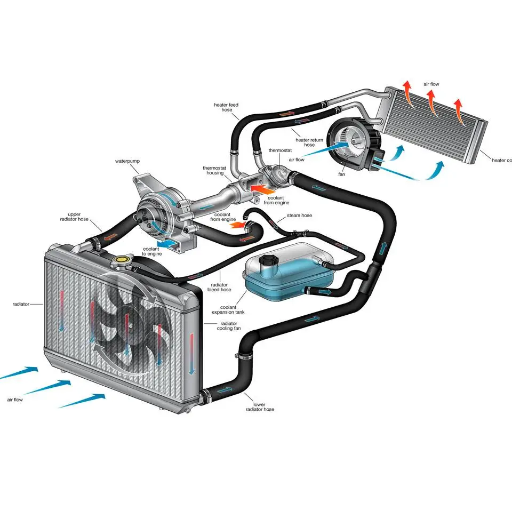
A cooling system is one of the most crucial elements in forming moulds; it can use as much as 70% of the total duration of the cycle. Among the main tasks of this system is managing the objective of removing the heat from the die and helping cool the solidification process of the parts in the mold. Poor cooling systems will magnify the duration of production, costs, and the extent of implementation of new products in the machine tool. Uneven cooling can lead to defects such as warping, shrinkage, or internal stresses that compromise the finished quality of the molded product.
One of the most promising approaches for manufacturers adopting new technology in their processes is using advanced cooling technologies whereby conformal cooling channels are brought closer together through 3D printing. These have the advantageous properties of more precise temperature control and enhanced heat transfer without the traditional straight lines of cooling channels. Such technologies not only improve the overall efficiency of the manufacturing process but also lower overall operating costs. The manufacturers must ensure the cooling system is designed correctly and enabled to realize consistent and high-quality output in the competitive market.
One of its well-known functions is the automation of assembling metal parts from other work machines, such as the ERW tube mill and high-tech engineering machines. Attachments and hinges usually link the parts, and each part communicates with the others as it proceeds. One of the robotic arms is mainly utilized to join complex parts and ensure the correct operation sequence is initiated by ‘and’. The vibrating feeders accomplish the alignment and spacing aspects of the processes; however, if the parts are very sensitive, other devices are applied to assist the process. In addition, the assistance of the unskilled laborer was mainly due to the technology itself, which proved skeptics wrong that, since the cable channel manufacturing machinery was in place, the production levels would not be affected in any way. Ensuring the monitored parameters are maintained above the minimum value is termed closed-loop control.
Hydraulic blasting machines, for example, optimize the performance of the shaping machinery by providing compact structures and controlling the process. With the help of hydraulic pressure, mechanical power, and movement, it is possible without any hitches or errors. Such systems, as in preference, electromechanical components and hydraulic equipment with function combined units, exclude additional power generation. When they are on, they deliver power only when necessary. On the other hand, as soon as the information is collected and analysed with an adequate hydraulic system, i.e., suitable, preventive, and possibly predictive maintenance is implemented, the modern hydraulic systems will perform efficiently with minimal to no breakdown. Advanced robot testing and wearables are frequently used in industry, augmenting the efficient use of such hydraulic systems, at a cost.
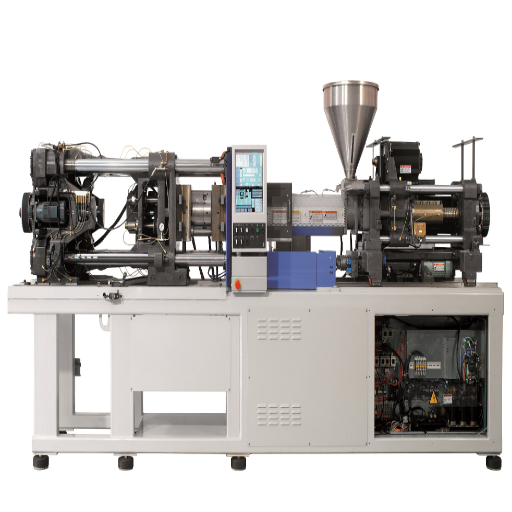
Injection molding machines are pretty effective in that they are good at generating many of the same components with little material waste. It is helpful in that it does not allow for errors, which would entail the constant need for extra work or correction. Contemporary developments, like environmentally sound electric and hybrid systems, cause the rate of thermoplastic productivity to rise and an enhanced rate of energy resources savings. These equipments is crucial to all kinds of producers with constant productivity at a particular expansion rate, meeting the benchmarks of economical yet sustainable development.
If I understand right, all parts of these machines function perfectly alone and with each other to provide the best and correct manufacturing processes. For example, the main components are the mold, which gives shape to the material, and the clamping unit, which keeps the mold securely. This injection unit delivers the material to the right place, and lastly, the control system manages the entire process with these and many other elements. The significance of all parts is evident, especially in producing high-standard outputs without forgetting the energy optimization and decrease in waste.
Over the recent years, the injection molding industry, especially its future development, has experienced significant advancements due to improved integration of technological devices, sustainability, and material science. One
than simply administering to the needs of production, one of impressive evolution that growth of an Unmanned Manufacturing and including all those under the Fourth Industrial Revolution is enhancing mechanized capabilities inclusive of machines equipped with sensors hence the advent of real-time data monitoring and processing to enhance accuracy, alleviate downtime, and increase operational efficiency is one of the outstanding trends of the present year. Automation has become cheaper by adopting technologies like robots in several functions. This allows efficiency in production within the shortest time while ensuring that employees are out of harm’s way.
Sustainability is another critical focus, as manufacturers adopt eco-friendly processes and use marks (mark to comprehend) made from recyclable materials, thus reducing environmental pollution. The development of biodegradable polymers and the utilization of recovered plastics are also on the rise, which supports the zero-waste recycling effort.
Moreover, 3D printing, microwave molding, and other unconventional technologies have started to emerge, replacing traditional injection molding, further speeding the process of preparing samples, and increasing opportunities for product development. In addition to increasing production effectiveness and reducing production costs, these and other related factors create a means for the product’s price and how long it takes to make it.
Consequently, embracing such emerging systems and tools will assist in meeting Modern Production requirements better and faster.
Three remarkable and highly matched virtues associated with the injection molding process are efficiency, efficacy, and consistency regarding productivity, all of which are key components of contemporary manufacturing demands. Importantly, one should also note that in the context of Industrie 4.0, these three components improve significantly at the cost of integrating technologies like automation, predictive maintenance, and IoT systems in the production facility. The volume of inquiries about sustainable and energy-efficient injection molding solutions has significantly increased due to concerns about environmental requirements. Adopting more eco-friendly technologies will further the industry’s goals in enhancing process efficiency and protecting the environment, enabling the industry to thrive in a changing market full of climate-conscious consumers.
A: The main components of an injection molding machine include the injection unit, clamping unit, and mold. The injection unit consists of the screw and barrel, which melt and inject the plastic material into the mold cavity. The clamping unit opens and closes the mold, ensuring the two halves are secured during injection.
A: The injection process begins with melting the plastic material using heaters. The molten plastic is injected into the mold cavity through the injection nozzle at a controlled injection pressure. Once the plastic is injected, it cools and solidifies to form the desired plastic parts.
A: The screw and barrel play a crucial role in the injection molding process. The screw rotates within the barrel, melting the plastic pellets and creating a flow of molten plastic. This flow is then injected into the mold, allowing for the production of injection-molded parts.
A: There are several types of injection molding, including standard injection molding, reaction injection molding, and metal injection molding. Each type serves different purposes and is suited for various materials and applications, producing plastic parts.
A: The injection speed and pressure are influenced by the type of plastic used, the mold’s design, and the final product’s desired characteristics. Proper control of the injection parameters ensures a consistent flow of molten plastic into the mold, impacting the quality of the injection-molded parts.
A: Plastic molding machines are widely used for their efficiency and ability to precisely produce high volumes of plastic parts. They allow for creating complex shapes and designs while minimizing waste, making them an ideal choice for manufacturers.
A: Mold components are critical in injection molding as they shape the final product. The mold’s design and quality directly affect the dimensions and surface finish of the injection-molded parts. Proper maintenance of mold components ensures longevity and consistent production quality.
A: Temperature control is vital in the injection molding process because it affects the melting of the plastic and the mold’s cooling. Maintaining the correct mold temperature and molten plastic ensures optimal flow and solidification, which leads to high-quality parts.
A: Molding machine manufacturers focus on the quality of materials used, precision engineering, and rigorous testing of their machines. They often implement quality control measures throughout the production process to ensure that the machines perform reliably and efficiently in the injection molding process.

Manufacturing processes are quite complex, and the choice of a production method is directly related
Learn More →
There are two major manufacturing methods for producing plastic prototypes that most people find useful
Learn More →
As a person involved or interested in the design and production of plastic components, it
Learn More →