

Manufacturing processes are quite complex, and the choice of a production method is directly related
Learn More →
When operating a CNC router or plasma system, the CNC table parts form the base for your operations. Whether making intricate designs or cutting through thick materials, these CNC tables must be apt enough to offer precision, speed, and results that can be replicated every time. The article explores all the significant components of a CNC table and helps you understand their importance for the establishment and smooth operation of the system. Considering the general design of stability and precision of movements in the core elements necessary for every CNC professional or enthusiast, we are laying down the foundation. Are you ready to build upon your CNC set-up by clarifying what matters?
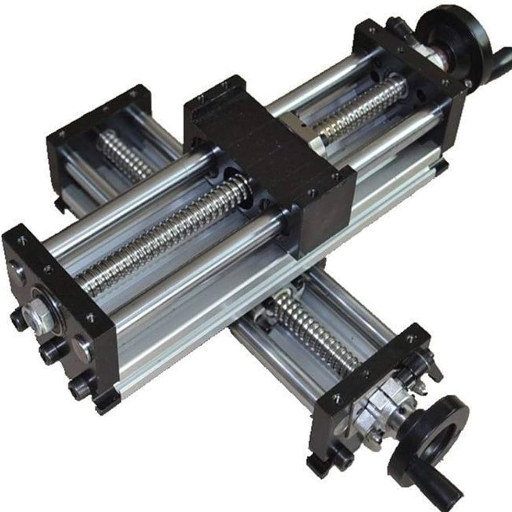
The controller is referred to as the brain of the CNC machine. It accepts commands from the computer and operates accordingly, generating movements in the machine to carry out the required operations.
The machine frame is the general support protrusion and stabilizes all the component systems. A strong frame is needed to ensure operational precision and durability.
The spindle is considered the CNC’s cutting tool. It holds the cutter and rotates it, removing the material.
Cutting tools are those that cut into the parent material to give it its shape according to the programmed design.
The drive system controls the movements of the machine axes, allowing the controller to command smooth and accurate positioning.
The worktable holds the material to be worked upon and remains still during machining.
The coolant system keeps away the heat generated during the operation, protecting the tool and the material being processed.
All of this contributes to the CNC’s operational efficiency and reliability. Knowing what they do helps maintain and optimize your machine.
The CNC controller is the brain of the CNC machine, performing all machine movements. It converts programmed instructions (G-code and M-code) into mechanical actions that include spindle rotation, cutting tool movements, coolant flow, etc., allowing the workpieces to be machined with constant accuracy and quality, sometimes with tolerances ±of 0.0001 inch.
Modern CNC controllers offer real-time monitoring, error detection, and adaptive control to help improve performance. Integrating the AI-based CNC controller can improve machining efficiency by 20%, reducing the cycle time and waste production. Multi-axis controllers allow a machine to carry out intimidate activities for machining aerospace components or highly detailed medical implants, which cannot be done through manual operation.
With the increased demand for precision manufacturing, CNC controllers have evolved for IoT connectivity to support remote monitoring and predictive maintenance. Recent studies indicate that innovative CNC systems can cut unplanned downtime by nearly 30%, thus drastically improving production scheduling. Such developments make it evident that CNC controllers are the driving force behind the innovation and efficiency of the modern manufacturing workflow.
The direct speed, accuracy, and thus the efficiency of the machining operations of the motor and the spindle tend to be among the most important factors affecting CNC fabrication performance. The motor powers the spindle and rotates the cutting tool at high speeds to achieve operations like drilling, milling, and cutting. The ability of these components determines quality, while accuracy goes into the making of a finished product.
Modern-day CNC table parts have high-speed spindles that can go up to 60,000 rpm to serve applications that require utmost precision, such as aerospace and medical manufacturing. High-end motors, such as servo motors, are generally employed due to their precise positioning capabilities, high torque, and steady running through complex machining operations.
Direct-drive technology also aids CNC spindle operation, minimizes mechanical losses, and heightens performance. Eliminating drive belts or even gear systems by direct-drive systems ensures greatly reduced vibrations for a finer finish. Several studies also report that direct-drive motors are about 15% more energy-efficient than traditional systems; hence, they are a maker-friendly dark green choice.
The implementation of intelligent sensors and IoT-enabled monitoring systems has revolutionized spindle and motor management. These systems provide real-time feedback about temperature, vibration, load, etc., thereby enabling predictive maintenance and reducing downtime. Enhanced spindles with auto-tool changes can considerably cut down production times by ensuring seamless changeovers between tools.
With the infusion of technology, the motor and spindle working synergistically have lifted CNC fabrication to another level of precision and reliability, thereby convolutively fueling further innovations and providing high-performance machining with a platform for competitive evolution.
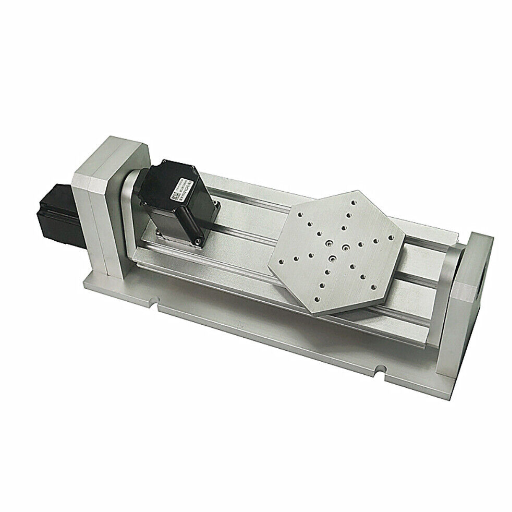
Wear-and-tear in CNC plasma components can be identified by visual inspection, observing performance, and occasionally keeping track of cutting quality. These usually come with indicators like irregular edges to the cut, more slag to the materials, or diminished cut precision. The arc becomes less stable, or perhaps it becomes very exorbitantly spattering, indicating that welding nozzle or electrode wear has set in. With time, slat beds may become warped and carry an excessive buildup of molten material. This distorts the vellum that supports materials. Through regular maintenance checks, one has to monitor such signs. One then evaluates against the manufacturer’s guidelines to ascertain the timely identification and replacement of components, which decreases downtime for the customer.
Owing to this, deciding when to replace parts for your plasma cutter would guarantee its performance is maintained at optimum levels while alleviating some of the operational expenses. According to recent data, some common signs are visible wear on consumables such as nozzles and electrodes.
Uneven cuts, excess slag, more arc instability, or reduced cut quality could be red flags when inspecting the consumables. Also, adhere to the manufacturer’s recommendations for appropriate usage since many consumables have specific terms of service regarding cutting time and amperage. Besides, the slat beds should be inspected regularly for any accumulation or distortion, impacting the support to material and cut quality. Replacing worn parts ahead of time will ensure efficiency and quality and prevent sudden downtime, thus prolonging the overall system life.
Standard CNC plasma table replacement parts include nozzles, electrodes, swirl rings, shields, retaining caps, slat beds, and controllers.
|
Key Point |
Details |
|---|---|
|
Nozzles |
Focus the plasma arc for precision cuts. |
|
Electrodes |
Conduct electricity to sustain the plasma arc. |
|
Swirl Rings |
Control the flow of gas for a steady arc. |
|
Shields |
Protect consumables and improve cut quality. |
|
Retaining Caps |
Secure the consumables in place. |
|
Slat Beds |
Support materials during cutting and reduce the risk of distortion. |
|
Controllers |
Manage the motion and accuracy of the CNC system for precision cuts. |
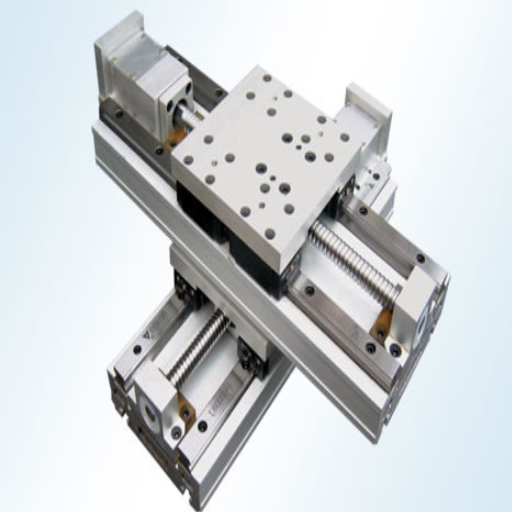
CNC tables provide exact precision in cutting by controlling the cut tool’s movement. Consistency and repeatability of motion along defined paths are ensured, reducing the chance of human error. The software is advanced enough to follow programmed designs with predetermined specifications, producing clean and precise cuts. Since the table is heavy and sturdy, it will reduce vibrations and shifting of the material to achieve even greater precision.
Vacuum pumps are pivotal in workpiece stability, particularly during precision machining and cutting processes. Under suction force, the workpiece gets drawn strongly against the table surface, with no chance of moving during machining. With increased stability, the accuracy of the process is improved, and wastage due to movement or misalignment of the material is minimized. While the modern systems are energy-efficient and improved from their older counterparts, these systems offer a variable suction level depending on the material in use, thereby exercising a degree of adaptability for excellent stability in numerous applications; hence, vacuum pumps have become a must for any kind of nailing to achieve consistent and reliable results.
Calibration is an essential procedure in maintaining precision and accuracy in CNC systems. This procedure usually begins by verifying the machine’s original measurements, axis alignment, and spindle accuracy, using dial indicators and laser interferometers. The backlash in the components of the machine should be regularly checked and adjusted, such as the ball screws or linear guides, to have a smooth motion. More advanced techniques, such as using a Renishaw probe or software-based compensation systems, may also be applied to fine-tune the machine’s performance by mapping deviations and applying corrections where needed. Such routine calibration significantly boosts productivity and reduces the wear and tear of the machines, thus translating into long-term reliability in various machining tasks.
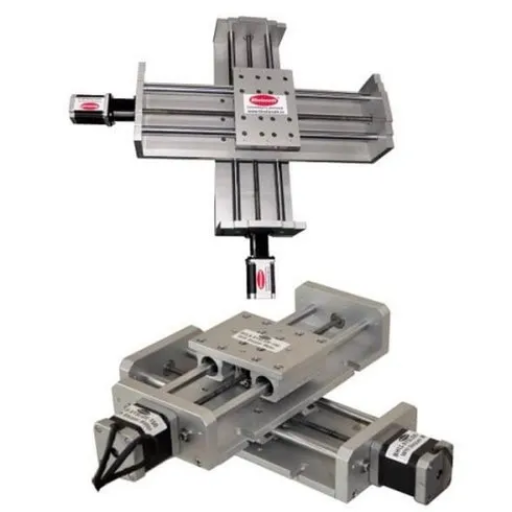
More machines that utilize such parts could include milling machines, lathes, routers, and plasma cutting machines. Such equipment typically shares components such as linear guides, ball screws, and servo motors for accurate and controlled movement. Likewise, waterjet and laser-cutting machines could use similar motion-control systems to guarantee accuracy and efficiency. The incompatibility of the parts sometimes depends on the machine’s size, what it is supposed to do, and how much precision it demands.
Buildings, gantries, motors, drive systems, cutting tools, power supplies, control systems, and work surfaces are the components of CNC routers and plasma tables.
|
Key Point |
CNC Router |
CNC Plasma Table |
|---|---|---|
|
Frame |
Rigid, wood/metal |
Heavy-duty metal |
|
Gantry |
High-precision |
Supports plasma cutting |
|
Motors |
Servo or stepper |
Servo or stepper |
|
Drive System |
Rack & pinion/ball screw |
Rack & pinion |
|
Cutting Tool |
Router bit |
Plasma torch |
|
Power Supply |
Standard electricity |
High-voltage needed |
|
Control System |
Router-compatible |
Plasma-compatible |
|
Work Surface |
Flat, vacuum optional |
Grate/grid for sparks |
Interchangeability of parts between different CNC systems varies depending on the design, application, and compatibility. Servo or stepper motors are commonly interchangeable, as these are used for accurately driving motion. The same goes for the drive mechanism, typically rack and pinion, because this method of driving linear motion is extremely reliable from platform to platform. Some control systems could also be interchangeable, more so if they are software-based and can be adapted to work alongside other cutting tools and power supplies. Usually, cutting tools, power supplies, work surfaces, and similar items might be specialized more concerning the precise machining task or be on the router or plasma side.
1. Design and Structural Analysis of 3 Axis CNC Milling Machine Table
3. Optical Control Method for Additive CNC Machines
A: CNC router parts create a complete CNC router setup. These include the frame, motors, control mechanism, and other accessories that work together to automate the cutting process of materials like wood, plastic, and aluminum.
A: CNC plasma cutting uses a high-velocity jet of ionized gas to cut through conductive materials. CNC oxyfuel cutting utilizes a flame that burns gas and oxygen to melt the material. Both methods are effective but suited for different applications and materials.
A: The choice between a servo and a stepper motor depends on your application requirements. Servo motors provide higher torque and precision at high speeds, making them ideal for industrial CNC applications. In contrast, stepper motors are generally more cost-effective and more straightforward to control for less demanding tasks.
A: CNC control software is essential for programming and controlling CNC machines. It translates design files into machine language, allowing the CNC router parts to execute precise movements and cuts according to the programmed instructions.
A: You can install an auto tool change (ATC) system on your CNC router. An ATC allows for quick and automatic switching between different CNC tooling, increasing efficiency and productivity during machining operations.
A: Essential CNC router accessories include a vacuum table for material hold-down, clamps for securing workpieces, a tool rack for organizing tooling, and linear rails for improved movement precision. These accessories enhance the functionality and efficiency of your router.
A: The Z-axis in CNC routers refers to the vertical movement of the cutting tool. It allows for depth adjustments during cutting, crucial for achieving precise cuts through different material thicknesses.
A: A CNC router can cut various materials, including wood, MDF, plastics, and aluminum. The choice of material often depends on the specific CNC router parts and tooling used.
A: When purchasing a router kit, consider the build quality, compatibility with CNC parts, ease of assembly, and included components. Ensure the kit meets your specific needs, such as maximum cutting sizes and the type of materials you wish to work with.
A: T-slots are essential for securing workpieces and fixtures to the CNC router table. They provide flexibility in positioning and hold-down options, which are crucial for accurate machining and preventing movement during operation.

Manufacturing processes are quite complex, and the choice of a production method is directly related
Learn More →
There are two major manufacturing methods for producing plastic prototypes that most people find useful
Learn More →
As a person involved or interested in the design and production of plastic components, it
Learn More →