

Manufacturing processes are quite complex, and the choice of a production method is directly related
Learn More →
CNC metal machining has changed the course of modern manufacturing and has become the benchmark for precision, efficiency, and customization. CNC machining is present in all industries that require high-quality components, be it the aerospace sector, the automotive sector, the healthcare sector, or any other. But what exactly is its importance and what are the ways precision CNC services can upgrade your projects? This manual will cover various aspects of CNC metal machining starting from its technical basics to its many applications and the reasons it is a game-changer when it comes to achieving unmatched accuracy and quality. It will be a complete resource for you to learn about key processes and even to see cutting-edge use cases for CNC metal machining.

CNC (Computer Numerical Control) metal machining is a production technology that uses computer software to control the movement of machines and tools in advance, thus allowing the user’s specification to determine the quality of the metal parts produced. The use of such technology results in the performance of difficult and time-consuming tasks being carried out with precision and consistency, thus making it possible to produce very large quantities of the same quality product. CNC machining is the main manufacturing process of modern design because of its ability to produce intricate designs with tight tolerances and its wider application across the various industries that include aerospace, automotive, and medical due to the variety of different cutting, drilling, and shaping techniques it employs.
CNC (Computer Numerical Control) metal machining is a very precise manufacturing technique where the movement of machinery, tools, and cutting equipment is dictated by pre-programmed computer software, thus shaping metal parts with an extremely high degree of accuracy. The whole procedure takes place through a computer by feeding the metal with specific instructions and turning it into an engineered component. Among these are milling, turning, drilling, and grinding which are all part of CNC machining procedures and so the final part will have both the desired shape and dimensions. The process has been improved with technology and data system advancements which have not only guaranteed efficiency but also reduced the amount of material wasted and provided high accuracy consistently. CNC metal machining, which is widely used in different industries like aerospace, automotive, electronics, and healthcare, has become an indispensable part of manufacturing in today’s world, mainly because it can make very intricate, custom-made, and complex designs with very tight tolerances.
The phrase Computer Numerical Control (CNC) denotes the automation of machine tools by a coded program that controls the execution of certain movements and tasks. CNC systems have software that is programmed in advance, like the case of lathes, mills, and routers; thus, they are able to perform these operations very accurately and even more than traditional manual processes. CNC employs G-code which is the most accepted programming language for CNC machines and it specifies the operations like cutting, drilling, or shaping, among others, that the machine should carry out. Its capacity to provide parts that are consistently and accurately and also intricate made within a very short period has rendered it not only a very popular tool but also an absolute necessity in production of parts and components in the areas of aerospace, medical, and automotive sectors. The integration of CAD (Computer-Aided Design) and CAM (Computer-Aided Manufacturing) software not only makes the CNC process efficient but it also drastically improves design accuracy and cuts down the time for production.
CNC machines used in metal machining include milling machines, lathes, routers, plasma cutters, laser cutters, grinders, and electrical discharge machines (EDMs).
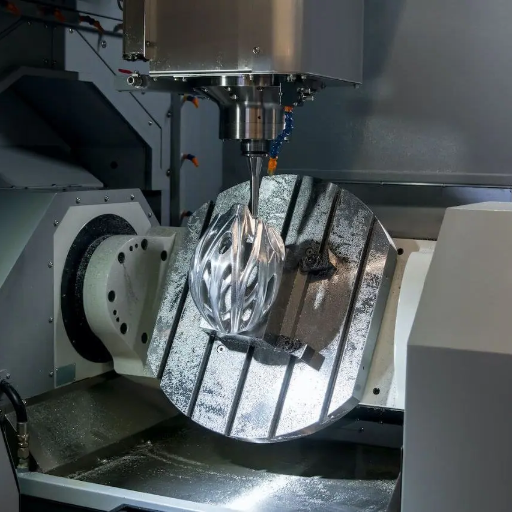
The revolutionary CNC metal machining technology has brought about the current scenario of the manufacturing sector where it is all about precision and accuracy. CNC machines can repeat the same quality of production and even handle very complicated and detailed designs with the help of the programmed instructions. The precision levels in CNC machining can be as high as ±0.001 inches which is a very critical factor for industries such as the production of aircraft, cars, and medical devices. This precision results in reduced material waste, fewer errors, and compliance of parts with quality standards. In addition, CNC machining has a wide application range in different materials like aluminum, steel, and titanium, etc. Thus, it is still the most sought-after option in metal fabrication when quality and efficiency are to be considered.
CNC machining services are considered the most efficient and the fastest of all the methods used for such production mainly because they are capable of automating even the most complex manufacturing processes without losing their precision. The technology and programming of machines have pyramided to such an extent that CNC machining can produce thousands of parts in short periods of time while still being of high quality. Statistics from the recent past indicate that the fastest turnaround times associated with CNC machining, are most utilized by manufacturing sectors where rapid prototyping and stringent production deadlines are the norm. This efficiency not only reduces lead time but also brings the product to the market quicker, thus giving the companies a competitive edge. Besides, the total dependence on machines causes less human errors and as a result, the overall productivity goes up. Manufacturing today requires the combination of speed and reliability and that is why CNC machining has become the solution that all manufacturers need.
The accuracy, efficiency, and waste reduction of metal CNC machining make it very economical. CNC machines, being the very cutting-edge technology in the industrial world, guarantee uniformity and make minimum use of materials, thereby reducing the possibility of expensive rework. Besides, the technology ceases to depend on manual workers, hence, reducing labor costs. Its capability to produce large quantities with very low defective rates thus greatly enhances cost effectiveness, hence, it is the best option for small as well as large scale production needs.
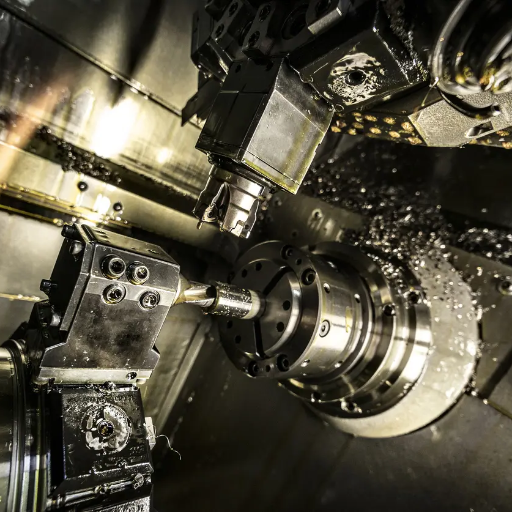
CNC metal machining has a major impact on the aerospace industry where precision and reliability are the main requirements. Parts of airplanes consisting of turbine blades, engine components, and structures must be fabricated with such perfection that they can not only endure harsh conditions but also pass the safety standards that are not stringent. The tolerance of the components made with CNC machines may be as tight as a few microns, which guarantees high-performance results. Besides, the capability of working with titanium, aluminum, and heat-resisting alloys supports the idea of CNC machining as a good technique for making parts that are lightweight yet strong. The combination of this technology’s efficiency and consistency considerably reduces the time of production processes, thereby helping the aerospace companies to cater to the needs of both commercial and defense sectors effectively.
The automotive sector is significantly dependent on custom-made CNC metal parts that provide unmatched precision and reliability. With CNC machining, it is possible to create complex and still very high-quality components such as engine parts, transmission housings, and brake systems, which are made to precise specifications. Parts, in general, are made of aluminum and steel which gives them the characteristics of being strong and performance-friendly during rough times. The CNC process moreover, plays a big part in making prototypes quickly and even mass production, thus giving the car makers a chance to be always one step ahead and do so without compromising on the quality they demand from the very start.
Precision metal fabrication is of utmost importance in the medical sector as it assists the making of top-notch and dependable parts for medical devices and equipment. Examples are surgical tools, metal parts for operations, and testing equipment, and all these require very high precision and uniformity. Manufacturers are making use of new technologies such as laser cutting and computer numerical control machining to see that there is precision and to meet the rigorous medical standards. This kind of detail plays major role in patient safety, Device performance improvement, and making new healthcare solutions that are more techy.
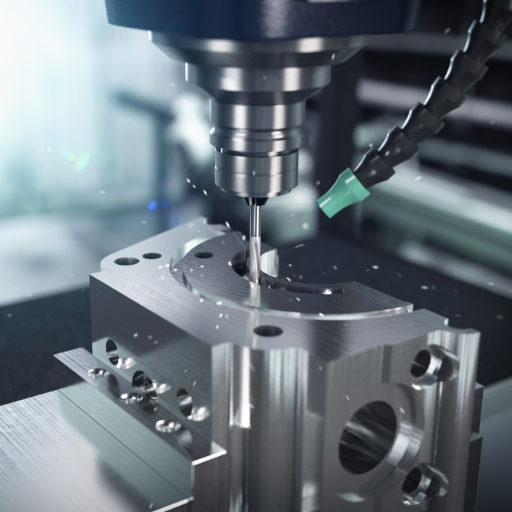
Artificial intelligence (AI) is appearing as a disruptive force in CNC machining and is one of the main reasons behind the increase in efficiency, precision, and automation up to a point where AI and its applications are now considered indispensable in CNC machining plants. Ai-powered systems perform the analysis of the operational data in real-time, which further enables the prediction of maintenance that helps in reducing the downtime and maintaining the machine performance. Besides, the machine-learning algorithms are engaging in refining the machining processes by detecting the patterns and recommending the changes to attain higher accuracy. The use of AI also facilitates the quality control process to improve, where the advanced sensors and vision systems are used for early detection of defects in the manufacturing process. The overall effect of these innovations is that the manufacturing process becomes shorter, less waste is produced, and products of better quality are obtained.
The last few years have seen huge advancements in multi-axis CNC machining, literally powered by the modern technology and the new methods. One of the main angles of improvement is the adoption of artificial intelligence (AI) and machine learning that not only speed up the machining processes but also make them more dependable and quicker. Besides that, the fusion of these technologies enables to perform predictive maintenance, advanced toolpath optimization, and real-time monitoring that can adapt to challenging designs and material issues.
Besides, the progress in software has resulted in the better representation and visualization of multi-axis movements, thus minimizing the on-site production losses due to programming mistakes and time to wait for correcting such mistakes. The advent of high-speed machining and the capability to work on an extensive variety of materials including composites and superalloys have enhanced the flexibility of CNC machines thereby making them indispensable in the fields of aerospace, automotive and medical equipment manufacturing.
The introduction of new materials into precision CNC machining of metals has completely altered the situation. Parts made from these materials can now be up to four times the original strength, and at the same time, they will still weigh much less and last longer. Also, the new materials include nickel-based superalloys, titanium, and advanced alloys that remind us of their amazing strength-to-weight ratios and incredible temperature resistance, which are areas especially for aerospace and medical techs. The use of composites and non-metals especially for their unique properties like resistance to corrosion and thermal stability is increasing in the market as well. The reason behind this shift is that all these materials combined with advanced machining technologies not only result in the production of innovative solutions for complicated manufacturing challenges but also the performance of an extensive range of customization options.
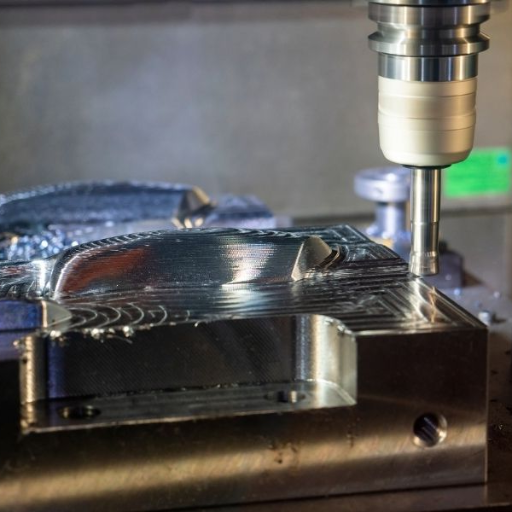
When choosing CNC machining services, the capability of the provider in machining and the ability to maintain tight tolerances must be considered as the most significant points. The accuracy of the parts is determined by the set-up of the machines, the skills of the technicians and the processes used. Choose service providers with multi-axis machines as they can do complex shapes and fine designs more precisely. The fewest micrometers can be tolerances for some industries like aerospace, medical and alike; thus, it is important to have a CNC machining service that can always provide you with this precision level.
Another factor that needs to be considered by companies is tolerance, which is the name given to the highest allowable size difference in dimensions. Tolerances down to a few micrometers are the common practice in the aerospace and medical industries, so it’s critical to partner with a CNC machining service capable at all times offering this precision level. Besides, it is worthwhile to take a look at the provider’s quality assurance methods and the certifications obtained such as ISO 9001 or AS9100 as these are the signs of high standards and commitment to quality. Ultimately, the provider who is proven, by virtue of his machining skills, of his ability to reach tight tolerances and who has strict quality controls is the one that can be relied on to deliver high-performance components accurately suited to the individual requirements.
The machined components’ quality and usability significantly depend on the surface finish. Therefore, when choosing CNC machining services, it is very important to understand the positive influences surface finish can have on performance, life span, and compatibility of the parts. A finish done right does not only help the specified purpose but also provides the part with a trait of being durable, working smoothly with the other parts, or being aesthetically appealing, depending on the situation.
It is good to discuss your surface finish needs with the machine shop at the start of the project. Specify whether the parts will have a polished, matte, or any other special finish, and at the same time, check that the shop has the right skills and equipment to consistently produce such results. By combining the desired surface finish with your project’s goals, you will get the highest performance and a product of excellent quality.
Choose a CNC machine shop that has shown its skills in your industry and specific project requirements. Confirm their capability of working with the same materials and parts as yours to ensure quality.
Examine the workshop’s surface and internal machining capabilities in terms of machine types, machine sizes, accuracy, and output. If the workshop is equipped with modern and perfectly working machines, it will typically lead to increased efficiency and precision.
The factory should implement very strict quality control over its products. Good practices like ISO 9001 certifications should be inquired and their inspection procedures should be discussed to confirm the dependability and uniformity of the production.
Find out their manufacturing calendars and if they are able to meet the deadlines of your project. When the delivery dates are dependable, your projects will be accomplished on time.
Communication that is effective is the basis of all successful partnerships. If the shop is quick to reply and is truthful and even proactive regarding your needs and worries, then you are well guided through the project.
Manufacturing Automation: Metal Cutting Mechanics, Machine Tool Vibrations, and CNC Design – A detailed review of CNC systems, including their design and operational elements.
A Review of Recent Application of Machining Techniques Based on CNC Operations – A study exploring various machining techniques and applications of CNC operations.
Basic Investigations of the Incremental Sheet Metal Forming Process on a CNC Milling Machine – Research on incremental sheet metal forming using CNC milling machines.
Precision CNC Machining and Ways to Achieve It – Insights into achieving high precision in CNC machining and its applications.
The main advantages of CNC services are that they offer high accuracy and uniformity in the slicing of steel and stainless steel which in turn leads to less wastage and faster production. The latest in cutting-edge technology along with the experienced workers and tool selection in the modern CNC machining world is capable of producing intricate parts and mass metal parts with very definite tolerances. Faster prototype machining, a dependable source for machined parts, and easy CNC programming for repeated orders of custom machining are just a few of the many benefits of CNC.
High-precision CNC machining gives the maker super-tight tolerances that could be most critical when making such complicated products as multi-feature components and assemblies. Multi-axis CNC machines, CNC milling and turning, precision machining centers, and shop combining of CNC turning and milling operations are the mix for buildings of intricate geometries. This technique improves yield, the time for making custom parts is cut down, and less time is consumed in checking the quality of metal components.
In cases where precision and repeatability are the priorities, CNC services are the way to go. In addition to that, you will be able to use complex metal designs that would take ages to accomplish by traditional machining while the CNC process is pretty fast for prototype machining or mass production. Traditional machining may still be suitable for very simple parts or low-cost fixtures, but services involving CNC metal machining excel at custom metal parts and assembly parts machining, as well as jobs that require CNC programming to produce repeatable results.
The most critical capabilities of CNC machining are the number of axes, the types and numbers of CNC tools, the spindle speed, the tooling change systems, and the materials compatible like stainless steel and alloy steel. Sheet metal projects require capabilities related to laser cutting integration, bending, and finishing. A machining center that has access to both CNC metal cutting and sheet metal services as well as the combination of milling and turning features will be in a better position to support the wide range of needs of metal parts and custom CNC machining.
Certainly, the type of metal cutting and the cutting tool selection have direct impact on the life of the tool, the cycle time, the quality of the surface, and the total cost. The machining time is less due to the getting perfect toolpaths from CNC programming, the choice of proper cutting tool coatings, and the selection between milling or CNC turning operations. Online CNC machining service platforms and machining centers can quickly provide a quote and recommend the cheapest way to produce complex parts considering the trade-off between the material costs and lead time at the same time.
CNC metal machining is the top-tier manufacturing technology of today’s world, enabling precision, efficiency, and versatility to coexist and consequently providing endless possibilities for great results in various industries and applications.

Manufacturing processes are quite complex, and the choice of a production method is directly related
Learn More →
There are two major manufacturing methods for producing plastic prototypes that most people find useful
Learn More →
As a person involved or interested in the design and production of plastic components, it
Learn More →