

Manufacturing processes are quite complex, and the choice of a production method is directly related
Learn More →
CNC (Computer Numerical Control) machines for metal have significantly changed the world of modern manufacturing, offering unmatchable precision, effectiveness, and adaptability in making metallic products. CNC technology has become a fundamental element of precision engineering in any application scenario – from designing complicated aerospace parts to creating strong industrial equipment components. This blog post examines the incredible possibilities metal CNC machines provide and their underlying technology, key benefits, and significance in manufacturing. Come along to discover how these devices reshape raw metals into finished items by pushing frontiers that define industries, innovation drivers across sectors, and possibilities beyond limits.
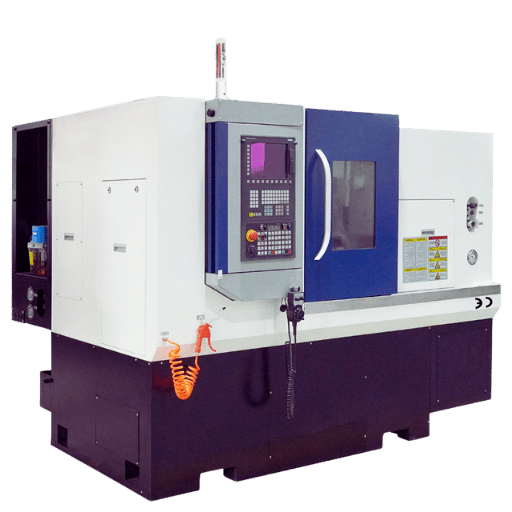
There are several forms of CNC machines used in metalworking, each catering to particular applications:
Every type of CNC machine is customized for manufacturing needs, thus providing solutions to various sectors, including automotive, aerospace, and medical device fabrication.
CNC milling machines are indispensable to metal fabrication as they provide precision CNC and flexibility for various applications. They use spindle tools that spin around and remove material from a workpiece, shaping it into the desired shape. Their common uses include creating intricate parts, engraving, and drilling. These firms can cut a wide variety of metals such as steel, aluminum, and titanium, among others, therefore making them ideal for aerospace, automotive, and industrial machinery production industries. The capability to produce uniform and precise products has made them vital in present-day manufacturing operations.
CNC lathes have been instrumental in metalworking because they can accurately shape parts using rotational machining. They are made to hold and rotate the metallic workpiece while cutting tools remove enough material to attain the preferred shape. Among other things, they make cylindrical components like shafts, bushings, and threads. CNC lathes are highly regarded as they can produce exact and repeatable results, thus being very useful in the automotive industry and aerospace. They save on production time through their efficiency and versatility, producing quality finished parts.
CNC plasma cutting devices are high-tech instruments that precisely cut electrically conductive materials, such as steel, aluminum, and copper. The cutting tools produce a plasma arc at a high temperature that melts the materials while a stream of gas quickly removes the liquefied metal, thus making clean and accurate cuttings. Due to their capacity to take care of intricate models, they are common in several sectors, such as automobile manufacturing, construction industry, and fabrication industries dealing with metals, among other sectors. Improving accuracy and efficiency in CNC machines is one of the main benefits of CNC automation; it can reduce material wastage and production time.
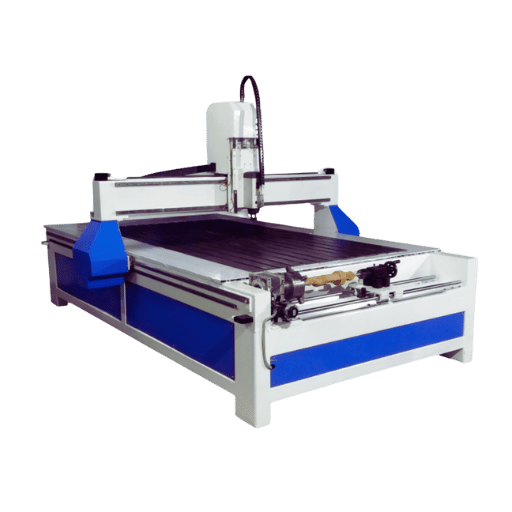
Computer numerals control CNC machines, and as such, they follow specific commands that instruct them on how to manipulate the tool(s) and material(s) most effectively for a given fabrication process. Digital designs, produced through CAD applications, initiate the CNC phase. Conversion of this design into a CNC program happens during CAM processing. The machine reads this program, which details how to move tools, their speed, and depths to make cut shapes or drill holes. For metalworks projects in particular, these automated operations guarantee uniform precision, high productivity levels, and minimal human errors associated with manual labor when using machines of this sort.
CNC (Computer Numerical Control) technology has transformed metal manufacturing, bringing incomparable levels of precision, repeatability, and efficiency. CNC systems can manufacture complex geometries with tight tolerances to 0.001 inches, which is a must in aerospace, automobile, and medical sectors where accuracy reigns. CNC machines have been found to help reduce production time by up to 30% compared to other manual methods, and they also minimize material wastage, thus making them practical for large-scale production purposes.
Modernized CNC technologies integrate CAD (Computer-Aided Design) and CAM (Computer-Aided Manufacturing) software to ensure the design stage is linked directly to the production stage. Recently, adaptive controls and real-time monitoring systems have been added to CNC machines to enhance process reliability while reducing downtime. Moreover, hybrid CNC systems that involve additive manufacturing alongside machining are beginning to emerge, thereby enabling more design freedom when producing metallic components by allowing intricate structures that were previously impossible.
Adopting CNC technology can solve the labor force problem in that when a machine is automated, one person can operate several of them. This not only reduces labor costs but also minimizes skills gaps in manufacturing. Additionally, due to safety improvements, CNC systems are necessary for modern metal fabrication, such as fully enclosed workplaces. These advancements indicate an ongoing move towards more innovative and productive factories.

The choice of a CNC router machine for metal fabrication offers accuracy, speed, and flexibility. They give accurate cuts and designs, ensuring consistent quality across all projects. Their automation capability reduces production time to a great extent, and errors are minimized, which increases productivity. Besides, these machines are versatile enough to easily handle different types of metals, making them suitable for the needs of various fabricators. It is this aspect of consistency, as well as versatility, that makes CNC routers indispensable in contemporary fabrication involving metals.
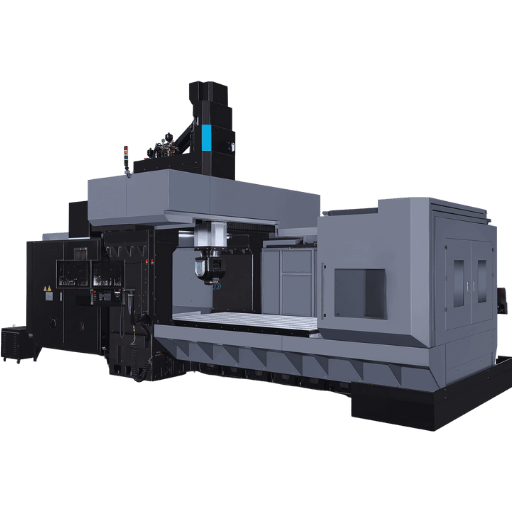
When selecting a metal CNC machine, consider the key factors below:
Considering these factors, you can choose a CNC machine that best suits your metal fabrication needs.
Every kind of CNC machine has its use cases; hence, the choice depends on specific requests concerning metallurgical production and operational requirements.
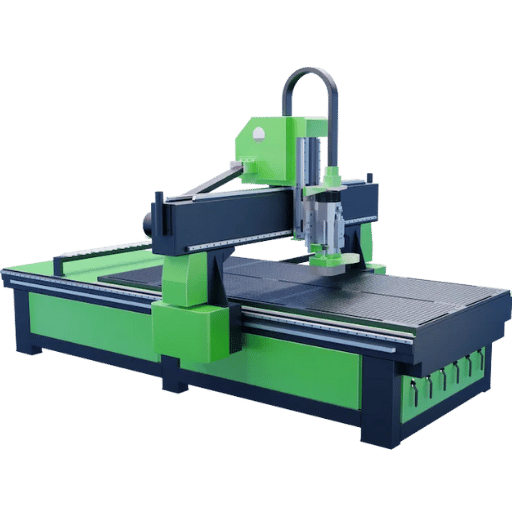
When dealing with problems linked to metal CNC (Computer Numerical Control) machines, I focus on proper machine calibration, routine maintenance planning, and high-quality CNC equipment. Correct calibration of the machine minimizes deviations and increases precision in operational processes. In addition, I give first place to regular inspections and maintenance as the best way to cope with wear and tear problems that can lead to poor machine reliability. Furthermore, using long-lasting sharp cutting instruments reduces the possibility of error while elongating the tool’s lifetime. This approach allows me to cope with obstacles and ensure accuracy when undertaking precision metal fabrication tasks.
The initial stage in metal CNC applications is the machining process, which involves three main steps. Design, programming, and execution take place in most cases through routing machines to make complex shapes. The first step is creating a CAD (Computer-Aided Design) model representing a workpiece’s desired dimensions and characteristics. This CAD model is then transformed into CNC instructions using CAM (Computer-Aided Manufacturing) programming that describes such details as tool paths, cutting speeds, and sequences. The last stage comprises implementation by a CNC machine, which uses precision tooling to produce parts accurately. It ensures high repeatability, very few errors, and strict adherence to tolerances when fabricating metals.
A: Metal CNC machines, also known as Computer Numerical Control machines, are a type of controlled machine tool used to cut and mold metal parts with high precision. They use pre-programmed commands to direct cutting tools (like drills or laser cutters) through materials to remove unwanted material.
A: Different types of metal CNC machines include CNC lathes, mills, laser cutters, plasma cutters, and routers. Each machine serves certain purposes, such as turning, milling, and routing, that allow it to cut different materials and shapes with accuracy.
A: Many components in the metal fabricating industry are manufactured using high-tech devices such as Computer Numerically Controlled (CNC) lathes for highly precise and quality output. These devices enable complex shape making of metallic components by automating repetitive tasks and producing consistent and high-quality products. Their use minimizes human errors, hence reducing labor costs and boosting productivity.
A: CNC metal machines can cut many materials, including aluminum, steel, brass, copper, and titanium. Material selection is based on the specific project requirements and the type of metal being worked on.
A: Cutting tools are paramount in CNC machining as they actually remove material from a workpiece, especially among CNC lathe machines. It is important to select the right kind of cutting tool, such as drills or laser cutters, to achieve the desired precision and finish.
A: A CNC laser cutter employs a high-power laser beam to cut material from the workpiece. The computer-controlled machine directs the laser beam, enabling intricate and precise cutting. CNC lasers efficiently cut thin metal sheets and complex shapes.
A: Feedrate and cutting speed ensure good cut quality and tool life while conducting CNC machining. Feed rate denotes the rate at which the cutting tool is introduced into the workpiece, while cutting speed implies that it defines how fast a given tool will operate. These rates must be appropriately adjusted for optimum application performance and accuracy.
A: CNC machines help produce high-precision metal parts and components in the aerospace industry. These machines can make intricate geometries required for aerospace purposes, thus guaranteeing that the parts meet strict safety and performance standards.
A: The ability to move or position the cutting tool or workpiece along multiple axes while working on it is a feature that distinguishes multi-axis CNC machines, for example, 3-axis machining and 5-axis machining. This feature enables more versatile, accurate, and efficient production of complex shapes and contours, which would be difficult for traditional manufacturing methods.
1. Dynamism in modeling the Feed Drive System of a CNC Metal Cutting Machine is vital for optimizing its performance with spindle dynamics.
2. CNC MACHINE: AN IMMENSE HELP TO ENGINEERING SECTORS THAT ARE WILLING TO UNDERTAKE INNOVATIVE MACHINING OF CYLINDRICAL AND PRISMATIC PARTS
3. Multi-objective optimization of the Turning Process during the Machining of AISI 1025 on a CNC machine Using Multi-objective particle swarm optimization

Manufacturing processes are quite complex, and the choice of a production method is directly related
Learn More →
There are two major manufacturing methods for producing plastic prototypes that most people find useful
Learn More →
As a person involved or interested in the design and production of plastic components, it
Learn More →