

Manufacturing processes are quite complex, and the choice of a production method is directly related
Learn More →
Getting to the point of producing high-quality, custom aluminum parts, it is the precision that is primary. CNC machining has opened up new ways of manufacturing for different industries with difficult and complex designs, thus making it possible to produce strongly, light, and finely detailed aluminum parts. The present-day manufacturing of CNC aluminum body machining and why it is the go-to technology for industries such as aerospace and automotive will be and explored in this article. It does not matter if you are a professional wanting to learn new things about high-tech manufacturing processes or just an everyday person wishing to know the secrets of how custom aluminum parts are made with perfect accuracy; this guide will inform you of the impact and the benefits of CNC machining.

CNC machining is a term that refers to a process of manufacturing using machines that are operated and controlled by computers and not by people. Such a great level of machine automation enables very accurate and tight tolerances cutting, drilling, grinding, and milling of the items to be made in a very complex manner. It is a machine method that works best with metals like aluminum, etc. because of its extreme precision and ability to duplicate the operation accurately. According to the most recent statistics, the dependence of the above-mentioned industries, i.e. aerospace, automotive, and medical, on the efficiency of CNC machining to meet modern manufacturing needs has been the primary cause for the continuous growth of interest in CNC machining solutions. Less human error on one side and faster production times on the other side make this process a must-have in high-performance industries demanding super-quality results.
Machining of aluminum is a multistep process that requires accuracy in order to obtain good results and efficiency. The first step in this process is to select a grade of aluminum that is most suitable for its future application since aluminum can be found in various alloys and each has a particular set of properties. The next step once the material is chosen is its preparation and clamping to maintain steady stability throughout the machining process. The computer-controlled machines with precise programming will then carry out cutting, turning, drilling, and milling, effectively transforming the aluminum to its finished state. Heat generation is avoided and dimensional accuracy is ensured through the use of lubricants or coolants.
Information derived from search engine shows that there is a continuous increase in the number of people that are interested in aluminum machining, especially in the context of the advancement of CNC technology. The industry is looking for information on high-speed machining methods and special tools that improve efficiency when dealing with light yet strong aluminum. This is indicative of the increasing need for aluminum processing in sectors like aerospace, where strength, weight, and accuracy are the three most critical parameters.
The list of merits of CNC aluminum machining is so long that it seems to be the most preferable option for the likes of industries such as aerospace, automotive, and electronics to name a few. The latest search statistics from high-speed machining techniques in CNC have become the most popular ones due to their precision and consistency that are unparalleled. Among the factors that contribute to the modern design of the aluminum component being a mix of lightweight yet sturdy nature, CNC machining has taken care of tolerances, and that, in turn, has resulted in detailed geometries. Moreover, innovations in machine tools such as carbide cutters and specialized coatings have dramatically decreased cutting times, hence, raising output. CNC aluminum machining keeps on being the best choice for the industry because of the barely-there wasted material and the possibility of increased production coming from scaling up efficiently that correspondingly meet the demand for quality and cost-effective manufacturing solutions.

In order to select correctly the CNC machining projects between aluminum alloys 6061 and 7075, it is very important to know their properties and applications. The alloy 6061 is quite adaptable and has a wide application area thanks to its great corrosion resistance, good weldability, and fair strength-to-weight ratio. Its strength is moderate but still suitable for a variety of applications including automotive parts, electronic enclosures, and structural frames. Its relatively low cost and great machinability have also made it a very popular material.
7075 aluminum alloy is, however, the king of the composites when it comes to strength and hardness. This is the reason why many industries use it in the case of parts that have to perform under very stressful and extreme conditions. The extreme conditions may include stresses in the aerospace industry, sporting gear, and military hardware. But there is a tradeoff with 7075 since it has a lower corrosion resistance and is also more difficult to weld than 6061. Not only that, but it also has a higher price tag that is a direct result of its premium characteristics.
| Characteristic | Aluminum 6061 | Aluminum 7075 |
|---|---|---|
| Strength | Moderate (45,000 psi tensile) | Very High (83,000 psi tensile) |
| Corrosion Resistance | Excellent | Lower than 6061 |
| Weldability | Good | Difficult |
| Machinability | Great | More challenging |
| Cost | Relatively low | Higher premium |
| Common Applications | Automotive parts, electronic enclosures, structural frames | Aerospace, sporting gear, military hardware |
| Best For | General-purpose, cost efficiency | Maximum strength, extreme conditions |
In the end, it all comes down to the project specifications when it comes to the decision between 6061 and 7075. In the case of general-purpose use where cost efficiency and corrosion resistance are the two major factors, 6061 will be a superb selection. On the other hand, in case of applications that will take maximum strength and durability, 7075 will be the preferred option despite its higher cost and poor machinability. When these aspects are carefully considered, it will certainly lead to the right material being chosen for each specific application.
Aluminum 6061 is a material widely used in many different industries primarily due to its properties that are perfectly balanced along with its versatility. The melting point of aluminum, magnesium, and silicon is the primary composition, also, there are several small amounts of other elements. One of the most important characteristics of this metal is its outstanding resistance to corrosion which is a result of the oxide layer covering it. The protective oxide layer not only makes aluminum resistant to corrosion but also to environmental factors like moisture and chemicals. On the other hand, 6061 weldability is good and is thus suitable for projects that are required to have intricate or large-scale structural assemblies.
Besides being easy to weld, this alloy has reasonable strength and fatigue resistance as evidenced by its approximate 45,000 psi tensile strength and about 40,000 psi yield strength. Aluminum 6061 also has good machinability, which is another important benefit of this alloy as it can be easily shaped and cut to the required precise dimensions; this proves to be very useful in manufacturing and engineering contexts. Moreover, aluminum 6061 is light but tough, thus being able to serve in different applications such as in the aerospace, automotive, construction, and consumer goods industries. Its overall well-rounded characteristics make 6061 one of the most widely used aluminum alloys for both commercial and industrial purposes.
Aluminum 7075 is characterized by the high-strength and toughness qualities that it possesses which makes it one of the strongest aluminum alloys available. Its tensile strength can be as high as 83,000 psi which at any point makes it amongst the toughest ones if not the toughest of the alloys and this is especially advantageous for the applications where only the strongest materials can be used. Not to mention, the strength-to-weight ratio is extraordinary, thus it does not lose the aeronautical, marine, and automotive industries where performance and weight savings are critical. Properly treated and good corrosion resistance are some of the characteristics that 7075 also possesses as a drawback but not heavy machines will overcome this and get the engineers their required accuracy. 7075 aluminum is thus used in various critical applications such as not only aircraft wings but also fuselage structures and all these other high-performance cycling components. Therefore, these very properties make Aluminum 7075 the industry standard for tough and performance-oriented applications.
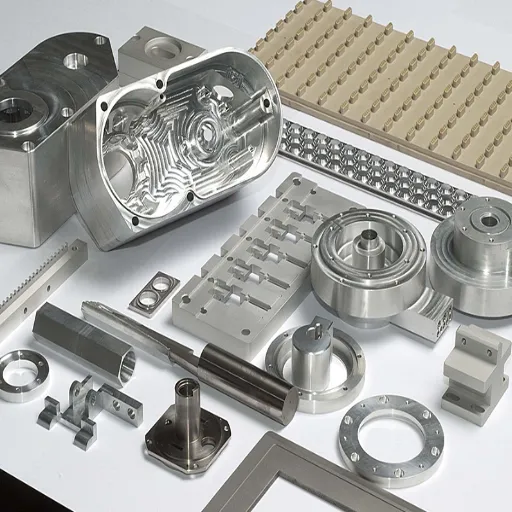
Aluminum CNC parts are required in almost all industrial sectors due to their high strength-to-weight ratio, slicing through the air like a feather and inflexibility. The aerospace industry is one of the main users of CNC machined aluminum for planes’ structural parts, inside systems, and coverings making sure that the products are durable without losing the weight-efficient factor. Likewise, the automotive industry takes precedence over aluminum CNC parts for their engine, transmission, and structure with the goal of not just enhancing performance but also gaining more on the fuel economy side. On the other hand, the electronics sector immaculately finishes the CNC machined plain aluminum housings for the devices including but not limited to smartphones, laptops, and communication devices due to the latter’s superior thermal conduction property as well as the protection feature that is combined with it. Furthermore, the medical sector is getting into the world of plastics-free surgical instruments provided by aluminum CNC parts and diagnostic equipment where precision and biocompatibility are required. It is not just these industries but also the robotics, power, and sports equipment manufacturing through utilization of these parts that the aluminum CNC machining has started up being a process that secures a place in the modern production and up-gradation of technology.
Custom aluminum parts possess superior lightness, and at the same time, the highest possible strength are the ones that are most applied in the aerospace industry. The particular application of aerospace requires materials not only to be light but also to withstand intense environmental conditions; and aluminum is very much close to these expectations. The structural components, brackets, and fittings that are being machined precisely from a high-grade aluminum alloy are the solved issues of performance and reliability.
CNC machining technology has made so much progress that now it is possible to manufacture parts that not only intricate but also customized one, in accordance with the industry’s strict requirements. This precision not only secures compatibility with demanding aeronautical standards but also aids in weight reduction, which translates to better fuel economy and hence lower costs. Moreover, due to the properties that are very resistant to heat and fatigue, aluminum is safe to use even in environments of high altitude and extreme stress, thus reinforcing its already stronghold of being a modern aerospace materials manufacturer.
Aluminum is an indispensable material in the automobile industry since it is both light and strong. To not only meet the consumers’ heightened demand for fuel-efficient, but also eco-friendly cars, the manufacturers are now increasingly relying on aluminum for crucial car parts such as engine blocks, body shells, and suspension units. The good thing about aluminum is its resistance to rust which therefore allows it to retain its quality for long and its environmentally friendly aspect is also well taken care of in its recyclability.
Recent statistics indicate that searches for “lightweight materials for cars” and “fuel-efficient vehicle parts” have doubled worldwide. This shift indicates that consumers are interested in technology that cuts down the need for fuel and reduces the amount of emissions, thus putting aluminum ahead of others as the material to be used in the first instance. Heater less and slimmer sacs that are made of aluminum, besides being resource-efficient and eco-friendly, have also positively affected the automotive industry by supplying greener cars along with their excellent fuel-saving and performance features.
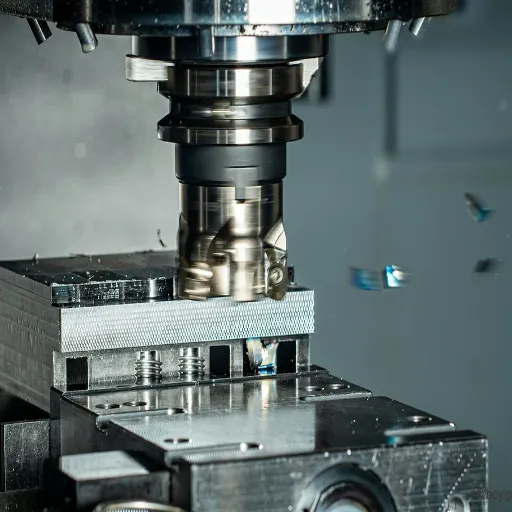
In the process of designing CNC aluminum bodies, it is essential to take into account the physical properties of the materials as well as the trends of the market. As per search engine current analytics, there has been an upward trend in the number of searches for light-weight and fuel-saving parts for vehicles which points out the need for weight reduction as the foremost criterion. This demand should be met by the designer’s choice of high-strength and light-weight aluminum alloys so that the end product will not only enhance fuel economy and reduce emissions but also be in line with the demand.
Making of high precision parts is another key aspect. CNC machining has to be handled in a way that very minute tolerances are kept to make the parts fit and work together properly. The designer should look at the issues such as the ratio of strength to weight, the ability to fight corrosion, and the possibility of recycling so that they can be given to the consumers who are environmentally conscious and who are looking for durable and at the same time sustainable products. By putting these priorities into practice, CNC aluminum bodies will satisfy both performance and environmental demands.
Aluminum is characterized by its best feature of being non-magnetic, and this is the reason why it is extensively used in those applications where there could be the magnetic interference problem. It is not like ferromagnetic materials that can be influenced by magnetic fields; therefore, it can be used in electronic enclosures, MRI machines, and aerospace systems. This characteristic of aluminum guarantees that it will not impede the operation of delicate instruments or disrupt the magnetic fields that are needed for some technologies to work. Besides, it is also the non-magnetic characteristic which along with the lighter and durable frame is making aluminum popular among those industries that demand accuracy and performance.
Achieving accuracy in CNC machining design involves paying close attention to several key factors. The first factor which plays a significant role in the overall successful implementation is the correct choice of materials with respect to their machinability and the functional requirements of the application. The usual practice is to select high-grade materials such as aluminum, which although has good machinability, still retains its strength and its property of being non-magnetic at the same time. Furthermore, the application of strict tolerances in the construction of the design can ensure that the parts will be produced according to the exact specifications. In addition to this, the usage of advanced CAD software and simulations will not only help in refining the designs but also in reducing the discrepancies that may arise before the machining starts.
Another very important aspect is the optimization of the tool path strategies that would reduce the possibility of errors and at the same time provide with the same standard of precision. When it comes to extreme accuracy in certain applications, engineers have to factor in thermal expansion as temperature changes can alter material dimensions. The latest CNC technology, such as 5-axis machining, combined with thorough quality control methods like real-time monitoring and inspection, will not only help maintain the highest level of performance throughout the production of the final product but also assure quality.
When designs are refined with these considerations, not only does it improve machining accuracy but also it is a cost-effective method of production as less material is wasted and there are not many adjustments required after the processing is done.
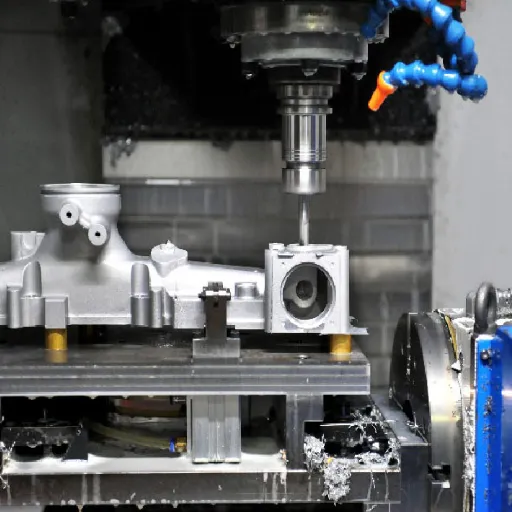
Based on the recent progress in CNC technologies, the aluminum machining is extensively featured with a incorporation of superior technologies improving the overall performance in terms of sustainability, precision, and throughput. One of the major changes is the AI and machine learning algorithms integration into the CNC systems. By utilizing these methods, machineries are able to perform self-optimization, reducing the time taken for a cycle, and making tools last longer by analyzing machining data as it happens. On the other hand, hybrid machining techniques which include additive manufacturing and traditional subtractive method are gaining ground in industries where design complexity and rapid prototyping are highly needed like in aerospace and automotive sectors.
A breakthrough is also seen with the use of tooling materials and coatings that provide exceptional durability and cutting performance. The materials such as the coated carbide and cubic boron nitride (CBN) are manufactured for the purpose of machining aluminum alloys that are subjected to very high temperatures and pressures during the process. Likewise, the improvement in coolant delivery systems such as high-pressure coolant and cryogenic machining helps to maintain the required coolness thus prolonging life span of the tools and achieving better surface finishes.
If the manufacturers employ these innovations, they will get the advantage of furnishing the highest precision ever witnessed along with lower costs and less harm to the environment. The trio of intelligent systems, hybrid techniques, and enhanced tooling continues to carve the path for the future of aluminum machining processes thus the industries can keep up with the increasing demand for quality and customization.
Emerging technologies in aluminum machining are transforming the entire manufacturing process with cutting-edge methods being widely adopted now. One of the most striking changes is the deployment of machine learning and artificial intelligence (AI) in the machining systems that directly affect the quality of the output. This approach allows for the real-time adjustment of parameters like tool paths, predictive maintenance, and cutting parameter optimization, which lead to higher output and lower downtime. Furthermore, the joint operation of additive manufacturing and method of traditional subtractive techniques has been one of the key reasons for better utilization of materials and the manufacturing of complex geometries that weren’t possible before. The further development is represented by the use of advanced coatings and nano-engineered cutting tools, which provide superior wear resistance and heat dissipation, features that are very important when working with the properties of aluminum.
By taking advantage of these technologies and applying the latest data insights, the industry is still raising the standards of precision and performance in aluminum machining. Consequently, they will be able to at least meet and even surpass changing customer requirements, improve sustainability, and keep their competitive advantage in swiftly changing markets.
Automation is an indispensable factor in CNC machining today, it has propelled the manufacturing processes to higher efficiency, accuracy, and scalability levels. Through the use of state-of-the-art robotics and intelligent systems, the operations of CNC machines are now carried out with little or no human involvement at all, thus eliminating practically all errors and minimizing downtime. Manufacturers can leverage data-driven insights, for example, those that come from search trend analysis, to spot upcoming demands and fine-tune their production schedules so that they are in sync with customer orders. Moreover, automation increases consistency in undertaking complicated tasks, enables more efficient use of resources, and results in overall reduction in production costs. All these advancements have a positive impact on operational performance and readiness of industries to cope with the fast pace of technological change.
Aluminum is one of the most widely used and preferred materials for CNC machining due to its very good properties. Among them is a high strength-to-weight ratio, which makes aluminum suitable for applications where lightness is an important factor. In addition, the material is very machinable, which means that production time and cost are reduced. Different grades like 6061 and 7075 aluminum come with their own benefits, e.g., dealing with corrosion resistance and mechanical properties respectively. To mention more, aluminum can be either anodized or powder-coated which will not only add to its aesthetics but also enhance its durability. All in all, aluminum’s versatility is a key factor for its use in parts across many different industries.
There are a variety of aluminum types in CNC machining, every single one of them has different characteristics. Among the very commonly used ones are:
The machine shop often opts for the type of aluminum depending on the project requirements such as desired mechanical properties and the end-use of the product.
Anodizing is a process that can do a lot for the properties of aluminum CNC parts. This process gives a protective layer that can resist corrosion and wear, thus making the parts stronger for the long-term use. The surfaces that are anodized can be dyed in different colors which aftermarket aluminum parts can be even more attractive. Moreover, the anodizing process also toughens the aluminum surface which can be a great asset in high-friction applications. All in all, anodizing is a common process for extending the lifespan and improving the performance of aluminum components used in CNC machining.
One of the main processes in aluminum part fabrication is CNC milling, as this process not only allows but also supports the production of the most elaborate and precise shapes. This subtractive machining process is performed with rotary cutters such as carbide end mills that remove the stock material from the aluminum. It also stands out as a method of producing custom aluminum parts with very tight tolerances and intricate designs. CNC milling can be done on various aluminum types like 6061 and 7075 thus guaranteeing that the final product will comply with the specific engineering requirements. The capability of managing speeds and feeds properly adds to the efficiency and quality of the milling process as well.
Although it still remains a challenge to working with them, the major reason behind using aluminum alloys in CNC machining is their mechanical properties which are superior to pure aluminum. The use of aluminum alloy like 6061 and 7075 results in stronger products, which stand up to heavy duty applications and thus are less prone to fatigue. Aside from that, aluminum alloys might, in many cases, be even more corrosion resistant than the manufacturers are willing to expose them to the harsh environments of the industry applications. However, by the right choice of alloy, it is quite feasible to fine-tune performance characteristics, be it in aerospace, automotive, or industrial applications. This variety indeed makes it very much sure that aluminum will still be the first choice material in CNC machining operations.
CNC machining of aluminum is the crown jewel of the high-tech world of manufacturing as it is able to offer precision and at the same time efficiency and versatility which are the main reasons for the coming into being of the present world’s toughest industries. The aerospace sector requires components that are lightweight yet incredibly strong; automotive sector demands parts that can help in making the car more fuel-efficient. So, everywhere you look, you will find the CNC process as one of the most vital ways of manufacturing. The different grades of aluminum alloys that can be worked with, mainly 6061 and 7075, will be the main factors for manufacturers to choose the material that is best suited for the application hence guaranteeing performance at no less than optimum throughout the span of application.
The journey to the future now brings us to the point where the merging of artificial intelligence, machine learning, and automation is able to break the barriers in aluminum machining. These technological developments are not only contributing to the accuracy and lowering of costs but also to the sustainability through better material utilization and energy efficiency. The coming of hybrid machining methods, advanced tooling materials, and intricate coolant delivery systems are other markers of the industry’s focus on modernization and excellence.
CNC aluminum machining is the way forward if you are an engineer aiming for the design and manufacture of supercritical aerospace components, or a car manufacturer trying to make the lightest vehicle possible, or a product developer that’s working on the next wave of consumer electronics. Knowing well the characteristics of different aluminum alloys, being open to new technologies, and following the best practices in design and manufacturing are the keys to unlocking the vast potential of CNC machining for the production of custom aluminum parts that not only fulfill the quality and performance standards but also exceed them.
Lehigh University – CNC Milling of Complex Aluminum Parts: Discusses the challenges and techniques involved in machining complex aluminum parts using CNC technology. Source
PubMed Central – A Review on Solid-State Recycling of Aluminum Machining: Examines advanced recycling methods for aluminum machining, including CNC applications. Source
U.S. Department of Commerce – Aluminum Extrusions from the People’s Republic of China: Highlights the precision capabilities of CNC machinery in producing aluminum parts. Source

Manufacturing processes are quite complex, and the choice of a production method is directly related
Learn More →
There are two major manufacturing methods for producing plastic prototypes that most people find useful
Learn More →
As a person involved or interested in the design and production of plastic components, it
Learn More →