

Manufacturing processes are quite complex, and the choice of a production method is directly related
Learn More →
CNC milling machines are pivotal in modern manufacturing, transforming the fabrication of precision parts in several sectors. Whether you are an experienced machinist or an individual interested in the technologies shaping our society, knowing the fundamental parts of a CNC milling machine will help you fully harness its potential. This guide explains the basic components of a CNC milling machine, demonstrating their roles and significance and their interrelations in producing high-quality, precision-engineered parts. You will surely have an enriched understanding of these machines’ increasing capabilities and how they can drive efficiency and innovation in machining processes.
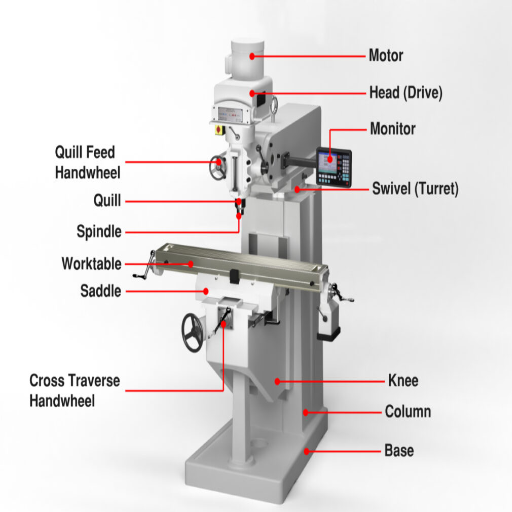
A CNC milling machine is more than an oversized drill press; it is a blend of electronic finesse and mechanical rigor that carves parts with astonishing precision. Though the setup may vary from shop to shop, the following elements are commonly found on nearly every horizontal bed.
Every part of a CNC milling machine is crucial; skip one, and the whole system can falter. When they work in concert, the mill turns out precise cuts repeatedly, ready for anything from aerospace prototypes to custom furniture runs.
Modern CNC milling machines are embodiments of tight tolerances and computer-driven discipline. A shop-floor servo motor, guided by a laptop-sized controller, executes commands with stopwatch-like accuracy. Ball screws paired with linear rails shave off nearly all slop, coaxing the table into almost imperceptible slides—an industrial-grade spindle bites into aluminum or steel, maintaining power even as sparks fly. Embedded encoders and stray-voltage sensors watch every move, flagging problems before a part leaves the vise. Such orchestration places the system in the narrow comfort zone where aerospace and medical shops must operate.
Cutting-tool choice remains the machinist’s enduring surgical strike. Metalworkers reach first for carbide or high-speed steel that won’t melt the instant chips appear. Geometry-only two, three, or four flutes; positive or negative relief-studies form the bite. Next comes coating, titanium nitride flashing gold, and ceramic layers hiding beneath oily mist. Micro-powder production gives edges a fighting chance, letting the cutter endure longer than the project deadline.
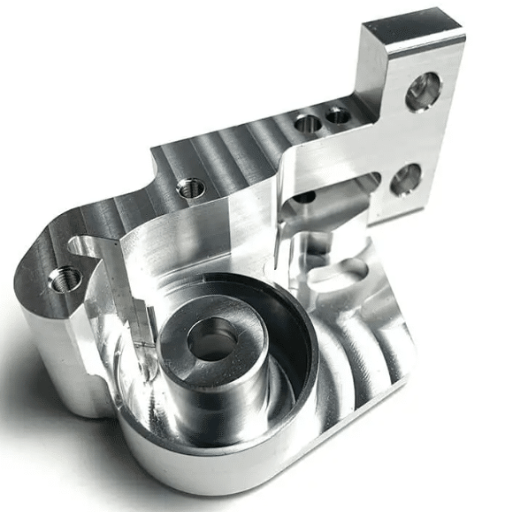
CNC milling machines turn metal and plastic into finished parts from the factory floor to the laboratory bench with repeatable precision. In the automotive realm, the technology shapes everything from crankshafts to complex brackets. Aerospace engineers use the same equipment to mill lightweight ribs, control surfaces, and even custom mountings. Hospitals see the process when surgeons reach for titanium implants or highly specialized surgical tools. Electronics firms quietly schedule a batch of housings or circuit-carrier plates on the same equipment, and die-makers rely on it to carve the master forms that stamp the next round of parts. Rapid-prototype shops use the service whenever strict dimensional fidelity and the ability to re-cut a single program are non-negotiable.
CNC milling machines are utilized across several sectors because of their accuracy, flexibility, and capability to manufacture intricate parts. The most important include:
CNC milling machines are extensively utilized in the production of engine parts and transmission units, as well as custom metal and plastic assemblies. Quality consistency ensures reliability in CNC machining for mass production.
The aerospace sector depends on CNC milling for the production of sophisticated elements like turbine blades and structural parts, as well as some vital safety-related mechanisms, owing to the stringent demand for accuracy.
CNC milling is used to manufacture surgical tools, prosthetic devices, and dental implants. CNC technology helps to achieve the stringent regulations and demands placed on medical devices for quality, accuracy, and reliability.
CNC milling is extensively used in the manufacture of electronic and computer components, including housings, heatsinks, and other enclosures requiring rigid precision for delicate parts.
CNC milling machines are critical in manufacturing molds, dies, and fixtures, as well as precision parts used to shape and form materials in various manufacturing processes.
CNC milling machines manufacture components for renewable energy technologies like wind turbines and solar panels, making strides towards cleaner energy innovations.
CNC milling’s extensive applicability in prototyping and product development stems from its capability to swiftly produce accurate models from different materials. This makes it a crucial component in numerous industries.
The impact of CNC milling on modern manufacturing and technological advancement is profound, as these industries showcase.
CNC milling is extensively used in different industries to make custom parts and components. Some widespread projects are making precision gears, enclosures for electronics, aerospace components, medical implants, and automotive parts. CNC machines can produce very complex designs with tight tolerances, which are critical for the reliability and performance of the parts. Moreover, custom projects often include new product prototypes, specialized tools, or custom-made parts for specific uses. This flexibility makes CNC milling indispensable for innovation and high-quality production in many industries.
Modern CNC milling machines routinely deliver tolerances within ±0.001 inch; such accuracy turns engineering blueprints into physical parts without compromise. Aerospace and medical-device makers prize that dependability because even tiny deviations can translate into failure in flight or the operating room.
A computer-driven cutter needs only a set program and a workpiece to complete duplicates. Set-up may take an afternoon, yet once dialed in, the cell seldom pauses, slicing away hours or days from tight delivery schedules while still maintaining consistent quality.
A single machine can chew through aluminum, carve carbon-fiber lay-ups, grind ceramic inserts, or mill titanium brackets with little more than a tool-swapping chore between batches. That material flexibility invites product designers to prototype today and scale up tomorrow without the headache of transferring jobs across specialty shops.
The per-part price evaporates once the code is humming, often landing below what a skilled machinist could manage by hand; scrap is trimmed by the closed-loop feedback that catches errors in real time. Long runs become an exercise in punch-clock efficiency measured in megabytes and minutes.
Gears, feeds, and depths are logged as numbers, not gut feelings, so the routine variance of human touch fades from the picture. Operators still oversee the line, yet most of their attention shifts to monitoring alarms rather than controlling motion, and that shift cuts defect rates sharply.
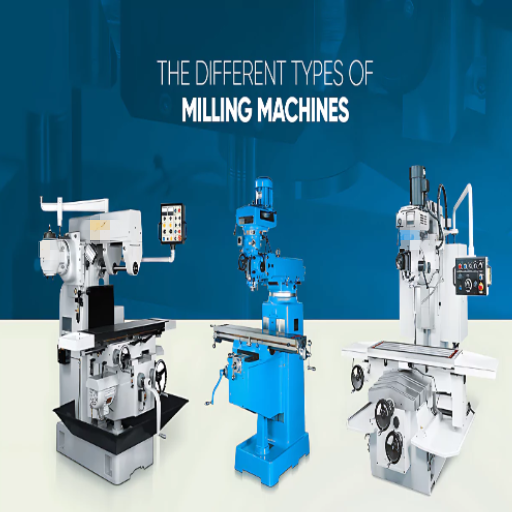
CNC milling technology divides into several distinctive categories, each reflecting a particular industrial need.
Vertical milling centers host spindles mounted in a vertical orientation, making them ideal for flat surfaces, keyways, and intricate engraving.
Horizontal mills approach the workpiece from the side, which allows them to slice through thick stock and carve deep grooves with remarkable stability.
Dedicated routers, often associated with cabinetry shops, spin lightweight bits at high rpm, delivering clean cuts in wood, plastic, and thin aluminum sheet.
A 5-axis gantry expands the tool path into rotations and translations, letting aerospace engineers craft airfoil molds that would stymie simpler setups.
Dual-spindle configurations possess twin heads, enabling the simultaneous machining of parts or knock-off side-one-and-complete-the-other efficiencies.
Even within this roster, specialty fixtures and adaptive software can push common prototypes into bespoke territory, altogether redefining conventional shop capability.
Multi-axis CNC machines stand apart from their simpler cousins by introducing additional rotational movements rather than merely sliding along fixed axes. That expanded freedom translates into greater geometry versatility and tighter tolerances on even the most complicated workpieces.
|
Parameter |
Standard CNC |
Multi-Axis CNC |
|---|---|---|
|
Axes |
3 (X, Y, Z) |
4-12 (X, Y, Z + rotations) |
|
Flexibility |
Limited angles |
Multi-angle access |
|
Precision |
Moderate |
High |
|
Complexity |
Simple shapes |
Intricate designs |
|
Efficiency |
Lower |
Higher |
|
Setup |
Multiple setups |
Single setup |
|
Cost |
Lower |
Higher |
|
Applications |
Basic parts |
Aerospace, medical |
The world of CNC milling is far from monolithic. Vertical, horizontal, five-axis, and eclectic cousins, such as plasma and waterjet rigs, each bring unique strengths to specialized shops that face distinct material and industry demands.
|
Type |
Key Use |
Material |
Feature |
Precision |
|---|---|---|---|---|
|
Vertical Milling |
General machining |
Metals, Plastics |
Vertical spindle |
High |
|
Horizontal Milling |
Production machining |
Metals |
Horizontal spindle |
High |
|
Multi-Axis |
Complex geometries |
Metals, Plastics |
Multi-angle cuts |
Very High |
|
Router |
Prototyping, woodwork |
Wood, Plastics |
3D routing |
Moderate |
|
Plasma Cutter |
Metal cutting |
Metals |
Plasma torch |
Moderate |
|
Waterjet Cutter |
Heat-sensitive cuts |
Metals, Glass |
High-pressure water |
High |
Choosing the right mill is anything but trivial. The final decision involves project intricacy, expected run size, raw-stock characteristics, and, of course, the hard ceiling of available capital.
Soft metals like aluminum are best processed using standard 3-axis CNC machines.
Hard metals like titanium require robust spindles and high torque, which is only found on 5-axis or hybrid CNC machines.
The stated purpose or function of the machine is an essential consideration when purchasing a machine. Due to budget constraints, multi-spindle CNCs and 5-axis machines have much higher initial investment costs. Still, they can provide considerable savings in operational costs due to improvements in efficiency over time. On the other hand, small businesses and workshops are better suited to 3-axis models, which, while lacking the efficiency of more advanced options, are much cheaper.
As with all other machines, modern CNC machines are increasingly equipped with features such as tool-changing automation and IoT capabilities. Over 60% of manufacturers surveyed in 2023 said that they prefer CNC machines that come with digital monitoring capabilities, which provide real-time performance assessment and enable predictive maintenance.
By assessing every aspect of your needs, you can make informed decisions based on the technology available to achieve optimal productivity without compromising operational goals.
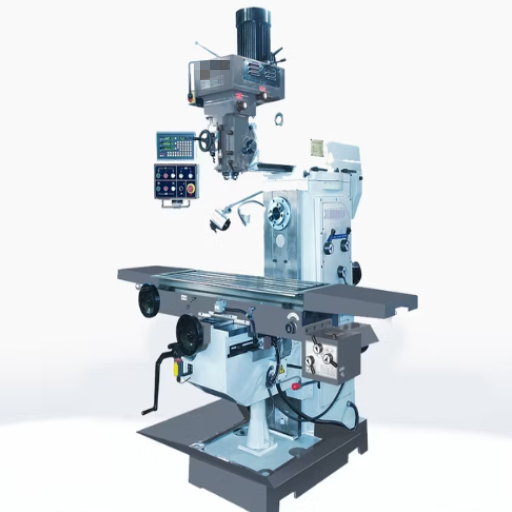
CNC milling brings a number of benefits that are inevitably important in contemporary industrial production:
CNC milling enables manufacturers to enhance quality and productivity, thus remaining an indispensable asset for modern industry.
Precision and constancy remain cornerstones of contemporary manufacturing, and CNC milling technology consistently fulfills that demand. Sophisticated numerical control software directs cutting tools with micrometer-level finesse, allowing even the most intricate geometries to be reproduced without deviation. Every part is thus machined to its exact blueprint, a discipline that virtually eradicates variances and upholds stringent quality benchmarks. Whether a workshop turns out a one-off prototype or a factory rolls out tens of thousands of identical blanks, the uniform performance of a CNC mill streamlines the workflow and curbs costly rework.
The productivity of CNC milling is further improved with the help of automation, software, and other machines. Due to automated tool changers, high-speed spindles, and real-time monitoring systems, modern CNC milling machines need less human supervision and can work around the clock. As stated in recent industry reports, outdated machining methods can now be outperformed by modern cnc systems, which are proven to decrease production time by 50%.
Computer-aided design (CAD) and manufacturing (CAM) software have streamlined workflows by optimizing cutting paths to reduce waste material and tool wear. The integration of CAD/CAM is proven to be more sustainable with 25% reduction in scrap rates, and therefore, more cost-efficient.
Advanced technologies such as predictive maintenance and integration of the Internet of Things (IoT) improve machine uptime. IoT-enabled CNC systems can observe a machine’s overtime health, thus enabling a 20% reduction in downtime through early detection of potential problems. These improvements make CNC milling more vital in the modern manufacturing industry.
A: The core components of a CNC milling machine include the machine control unit, cnc controller, milling tool, spindle, and the various parts of a CNC machine that work together to perform precise machining operations.
A: Types of milling machine operations include face milling, end milling, angular milling, and slot milling, among others. Each type of milling utilizes different techniques and tools, tailored to the specific machine work required.
A: CNC milling works by using a cnc milling machine to remove material from a workpiece. The machine follows a programmed sequence, typically defined in a cnc program, which dictates the movements of the milling tool along the axes in CNC milling.
A: CNC milling services provide high precision and repeatability, allowing for the production of complex parts with tight tolerances. They are also efficient for large production runs and can accommodate various materials used in CNC machining processes.
A: The cnc controller is crucial for executing the cnc program that directs the machine tool. It interprets the program instructions and controls the movement of the milling machine to ensure accurate machine work.
A: Yes, CNC milling machines are versatile and can machine various types of materials, including metals, plastics, and composites, making them suitable for different milling work applications.
A: CNC milling machines typically operate on three axes (X, Y, and Z), with advanced models like 5-axis CNC machines offering additional movement. These axes allow the milling tool to navigate in three-dimensional space, enabling complex machining tasks.
A: Vertical milling machines have a vertical spindle orientation, while horizontal milling machines feature a horizontal spindle. This difference affects the type of machining operations they perform and the milling tools used in CNC milling work.
A: Choosing the right CNC milling machine depends on the type of material, the complexity of parts to be produced, the required precision, and the specific machine operations needed for your project. Consider consulting with CNC milling services for expert guidance.

Manufacturing processes are quite complex, and the choice of a production method is directly related
Learn More →
There are two major manufacturing methods for producing plastic prototypes that most people find useful
Learn More →
As a person involved or interested in the design and production of plastic components, it
Learn More →