

Manufacturing processes are quite complex, and the choice of a production method is directly related
Learn More →
When we speak about the age of today’s development, progress becomes possible thanks to the infusion of new ideas, new ways of seeing, and new processes. One of the most significant accomplishments in this field was the invention of people who combined 3D technology and computer numerical control in printing. This development goes beyond just how things are made; it looks at how things are built in terms of design, edge cutting abilities, accuracy, and efficiency. The industry’s demand has made it possible to go from making intricate models to fabricating working models within a single unit that combines CNC and 3D printing, thereby redefining industrial processes. This article will do justice to why this revolutionary innovation is already making an impact in business ventures and society at large while maximizing cost efficiency and promoting perfection in execution. Brace yourself for a glimpse at the future of making things and learn why CNC 3d printing replacement parts are at the forefront of this change.
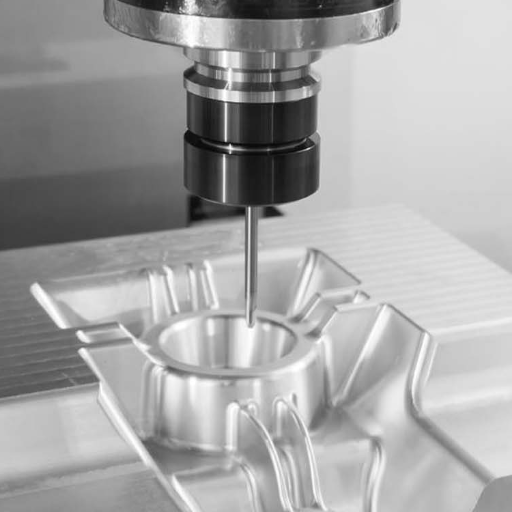
Although 3D printing and CNC machining technologies offer adept capabilities that are each unique in their own sense, they have always been known to be the bread and butter of many manufacturers and designers today. Specifically, there are advantages of 3D printing, also called additive manufacturing, which is mainly about building objects layer by layer using various materials such as plastics, metals, resins, and polymers as raw materials. 3D printers are versatile because they can make nearly any object, allowing the generation of complex designs and prompting models quickly as on a bell-curved graph, overhang angle or the detailed feature to thickness ratio, and so on, increases, the volume concentration of printing increases, and the level of difficulty of 3d printing in DFM increases. As the name implies, it makes the feature displace at an angle along the central direction of the Z-axis. In the machining, center cutting tools used here can perform the machining as the cutting commences in the proper position. CNC machining is the partner to 3D printing because it creates the extra features by removing the additional material that 3D printing could not produce, and allows for the development of complete functional components. On the other hand, CNC machining uses tough materials while constructing automotive engines and auto body parts. The best of all, 3D printing does not waste material; however, finished product prices reach hundreds of U.S. dollars.
3D printing, also known as additive manufacturing, is a technique that fabricates 3D items from a computerized blueprint by depositing components on successive layers. From this perspective, this new-generation technology is advantageous in building fast prototypes and intricate designs that more traditional methods could never achieve. Using Computer-Aided Design (CAD) software, computer instructions are prepared for specified models and retrieved for accurate detail and fitting on the parts as manufactured.
This chapter endeavours to provide a comprehensive view of 3D printing, highlighting a comparison of the three most popular techniques, Fused Deposition Modeling (FDM), Stereolithography (SLA), and Selective Laser Sintering (SLS). Each method caters to different applications and materials, from plastics, resins, and even metals, to biocompatible materials. Design models and products do not simply fit any area of 3D printing. Some included technologies, such as FDM, are extensively applied in 3D printers for home users for prototype development. In contrast, SLS is used most notably in aerospace and health care to manufacture durable parts.
If you are familiar with the situation, the latest amount was more than 16 billion U.S. dollars in 2023 as per Global Industry Analyst’s report, and shall reach 23.3% CAGR by 2030. Some drivers are the anticipated growth in the market in terms of technological improvement in standards regarding 3D printing and increased concerns about the rate of carbon emissions in some sectors, such as cars, buildings, and medicine. For instance, it has been possible to elaborate on 3D printers’ application in the medical field to implement customized prostheses and organ models, minimally affecting patient care.
This technology has a transformative potential; it is also eco-friendly and straightforward. Manufacturing that is tolerant to molding often generates much scrap material, contributing to further environmental pollution. Contrary to conventional methods, 3D printing fabricates the part using one skint thickness and does not use or cause more than is required for this particular layer forming of an object. This is sound ecological engineering and more so in the context of the current global campaign for green technology.
CNC machines, particularly in CNC manufacturing, have been enhanced by their extremely high accuracy, productivity, flexibility, and automation. Internal software uses a computed algorithm to move and operate tools and machinery to make the correct components and structures for automobiles, aeronautics, microelectronics, medical devices, and many other industries within and around two miles of the city.
The additive technologies and CNC machines combining cutting do not use all the available advantages, adhere to fractions of mm sizes, improve the materials and resins in several applications, making the most challenging surfaces and structures. The global CNC machine market was equal to $70 billion in the year 2022, and this size has been predicted to rise at a compound annual growth rate (CAGR) of 6.4%, covering the period 2033 to 2030. This emphasizes the future growth of CNC machine applications, especially in the mass production industry that involves large and complex designs.
The widespread use of CNC machines makes it convenient and even necessary for potentially defective components to arise, and the errors also decrease. There is no margin of error for CNC machines; this can be as low as 0.01 mm with the given tolerances. The current CNC systems have also found technology that connects to other systems via the internet; with such systems, global-level machinery usage is possible, and the remote-controlled image of a machine in Japan is made and presented in real time in the USA.
Additionally, besides their contribution in terms of precision, CNC machines also go a long way in improving throughput by minimizing labor requirements and cycle times. This means most machining tasks can be carried out by machines, leaving the labor only with the final handling of the machines after setup, which requires minimal labor, making the systems very efficient and saving on cost and time. CNC systems perform many operations, from drilling and milling to turning and grinding, making them perfect tools that can be deployed in any industry without fail.
Most importantly, CNC machines also encourage environmentally friendly practices in the manufacturing industry. They conserve resources by optimizing the use of materials and eliminating the need to engage in hazardous energy consumption. To illustrate, industries may accomplish over 95% of material utilization using CNC machining, which is quite contrasting to the situation in which conventional machining is employed. This setup echoes the clamor for sustainable materials in today’s industrial undertakings.
The use of CNC machines is indispensable in advancing manufacturing, which is woven with innovation, efficiency, and green practices. With the pace at which the market is absorbing other new technologies, it is not far-fetched that these machines, which are fast becoming indispensable to their users, will have a further significant impact on the development of production procedures and models for the future.
Additive manufacturing builds objects layer by layer, while subtractive manufacturing removes material to shape objects.
Here’s a concise comparison in tabular form:
|
Parameter |
Additive |
Subtractive |
|---|---|---|
|
Process |
Layer addition |
Material removal |
|
Materials |
Plastics, metals |
Metals, plastics |
|
Complexity |
High |
Moderate |
|
Accuracy |
Moderate |
High |
|
Speed |
Slower |
Faster |
|
Cost |
Higher (setup) |
Lower (setup) |
|
Volume |
Small batches |
Mass production |
|
Surface |
Rough |
Smooth |
|
Setup |
Minimal |
Extensive |
|
Training |
Basic (desktop) |
Advanced |
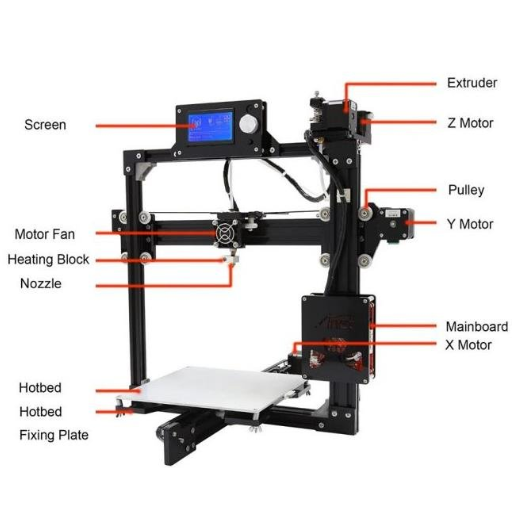
The correct understanding of the components of the CNC 3D Printer is essential for efficient support and maintenance. Below are the most critical parts:
These components come together to create a fair measure of accuracy that allows 3D models to be made effectively because of the tools built into the CNC and the materials added by the 3D printer.
These five elements require your 3D printer to work optimally and produce sharp, high-quality prints.
Programmable and capable of simultaneously executing a wide range of tasks, CNC machines have an extensive application in companies that deal with automated manufacturing processes. These machines consist of several vital elements, each having a specific function, all aimed at ensuring the same thing: accuracy in the aspects of production, speed, and efficiency. They include: Controller, Communication, Spindle, Spindle mount, Linear bearing, Rotary table, Work bearing, etc. A few of such elements and their role are as follows:
The assimilation of intelligent automation into CNC fabrication is rapidly on the rise, replacing the manual controls that have been in use for traditional manufacturing processes. More effective maintenance procedures, improved sustainability and adaptability, and high precision are the other areas and activities to develop in an adverse environment. In the quest for knowledge of the properties and operation of CNC machines, people tend to seek answers to how tool paths can be made more efficient, reduce downtimes, and achieve more precise manufacturing, which is pivotal to modern manufacturing approaches.
Regarding 3D printed CNC parts, I have certain key aspects that focus on manufacturing. For example, I have always used materials such as PLA and ABS for prototyping because they are easy to print and economical. And when it comes to strength and elevated temperatures, I resort to mining in some metal engine with a thermally stable plastic base, such as nylon, polycarbonate, or composite materials, at least with carbon reinforcement. Each has its distinct feature; therefore, I use the most suitable one depending on the project’s requirements.
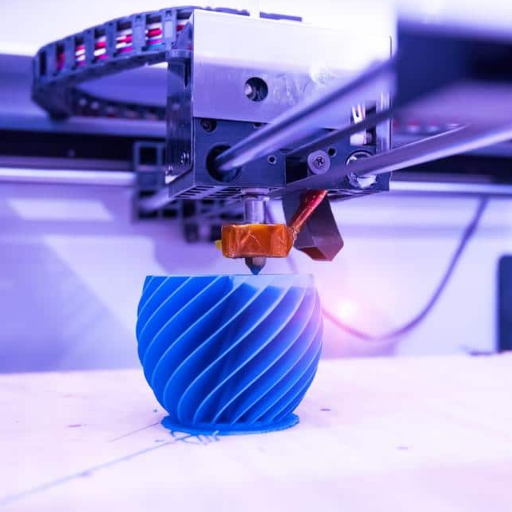
3D printing is making a three-dimensional object from a digital file. This type of printing is faster than traditional manufacturing methods and requires no specialized tools of any kind. The technology is still on a snag level; nevertheless, its disruption potential is immense. Some industries have maintained that additive manufacturing is complementary, where the offered range of products excludes substitutes. This way, if the extent of work at a given phase of production is 90% occupied, the finishing at the following process may seem like the exact extent of work.
Production costs are minimized as material efficiency is improved while the cost of expensive molds and unique tooling is eliminated. Economists argue that test cases lower costs by 70% compared to standard production.
Stereolithography, one of many fast prototyping techniques, is a handy tool in product and process development due to its much higher resolution. Thus, it involves fewer further stages of production and less time to introduce the product into the market. For instance, 3D printing helps reduce the duration of design iterations by an average of 60 percent.
Kinetic Sand allows one to construct shapes and structures that one can’t usually create with other methods. This customization is most beneficial in environments such as health care, where tools designed specifically for a patient can be customized using this process.
For that purpose, 3D printing is a potent tool that engineers can use to create complex parts or forms that are almost impossible to reach with conventional manufacturing techniques. This allows them to experiment, push the designs to the edge of possibilities, and create pieces that could not have been thought about otherwise.
In this sense, once they have a working prototype, these business models enable the business to assess the fit, working, and performance of their product, and to identify issues that may occur well in advance. Studies, on the other hand, claim that the possibility of identifying design problems at the prototyping stage tends to reduce shaping errors in the final production by as much as 50% in some industries.
Prototyping is crucial in the early stages of manufacturing since it allows designers and engineers to develop physical embodiments of the concepts they have in mind, which is actively done to examine the designs. Over 78% of companies using prototyping acknowledge that rapid prototyping improves the speed of new products’ market time.
The medical sector uses many suggestive examples to ensure that medical devices offered to people are safe and working perfectly before full production. For instance, in precise testing, 3D prototypes of surgical instruments can be made, as they are utilized in testing, resulting in better patient outcomes and a nearly 30 percent reduction in the development costs.
Aerodynamic efficacy, part-equipment alignment, and assembly quality evaluations are productive tools for automobile constructors of prototype constituent constructs. Tests are crucial, and rapid prototyping reduces the design cycle by 20%.
Zero waste during the process and the importance of validation, Builder trades use fundamental components instead. A statistical report revealed that Boeing’s advanced prototyping saved 35% of the material waste during prototype testing in 2022.
All the consumer electronics companies, mainly in consumer electronics, set up a gummy project in product development to demonstrate project design standards and usability before actual manufacture begins. Studies also indicate that using prototypes increases customer satisfaction by over 25%, resulting from product ease of use and increased reliability.
Case Study 1: Tesla’s Iterative Approach to Electric Vehicle Design
Tesla is recognized as a market leader in electric vehicles. And the most significant testimony to its practical and uncompromised approach to technological advancement is its unique prototyping models. Tesla has quickly improved their battery technologies, aerodynamics, and car user experience thanks to further development strategies. To put it in another way, introducing prototypes at an early stage has led to cost reduction in the manufacturing processes by 50% and increased customer satisfaction by 60%. Such prototypes also identify any mistakes at such an early stage, thereby sparing the need for reworking efforts, which are costly during manufacturing.
Case Study 2: Nike’s 3D-Printed Footwear Development
This study will be broken down into section A: ‘How Nike began 3-D Printing in developing Footwear.’ a) Introduction, Nike and The Issue, b) Approaches to Problems. In the gathering of cross-linked information, it was found out that Nike, an orthopedic and athletic accessories manufacturer, has evolved innovatively from an early (straight) line approach to the current 3D designs.
It did not consume too much time and organizational cost because multiple regions consumed similar content and videos related to the post-exploding entertainment world.
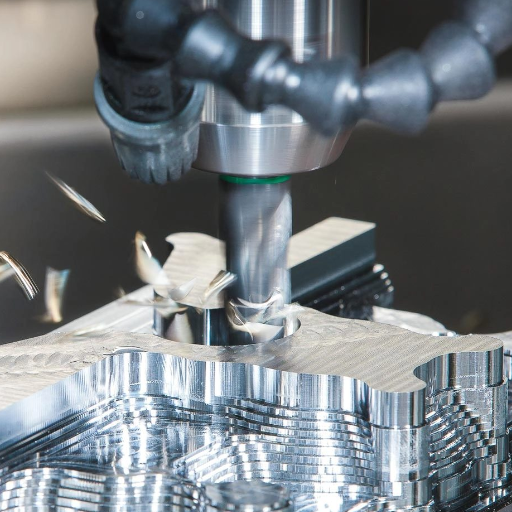
Applying 3D printing and numerical control (NC) machining has advanced manufacturing processes in numerous industries. In the healthcare industry, for instance, 3D printing helps design specific implants and prostheses for patients, enhancing their accuracy and results. CNC machining, on the other hand, is good at making stainless steel surgical instruments with thin walls and very low limit deviations.
Owing to these techniques, both sectors, namely aerospace, can produce what is called a “for its weight product.” This not only lessens the airplane’s weight but also increases fuel efficiency. Being the department of a transport division, the ability to engineer a car leverages the advantages of the technologies mentioned earlier to rapidly create paddies and other interior parts that are specialized for the vehicle in question.
In this way, it becomes clear why 3D printing and CNC machining have become so popular in other sectors, as they are equal in efficiency and productivity.
CNC 3D printing, through the fusion of two types of technologies – computer numerical control and additive manufacturing, which emphasizes speed and flexibility- is instrumental in transforming the manufacturing process. Consequently, it allows the creation of very intricate and complex parts that cannot be molded within any traditional manufacturing process. Notably, the manufacturing sector is relieved of the long prototyping processes that traditionally took a lot of time due to the advantages of 3D Printing with CNC.
Furthermore, the ability to remove and put advanced materials instead of them, like composites and metal, has been identified to make that technology suitable for very high-tech sectors such as the aerospace and medical industries. CNC 3D printing is considered more environmentally friendly since there is no material waste, unlike others, and it is done by constructing one layer at a time until the whole object is done. Therefore, integrating this technology with other advanced manufacturing processes such as CNC machining, EDM, and AM will continue increasing, such that a small hybrid system is overwhelmed with installing new equipment.
Besides stainless steel, which is consumed by almost 36% of all aluminum, metals used in the industry include lead, zinc, copper & aluminum. The largest consumers are building, pipe profiles, sheet and wire rod, and structural (combined with non-metallics) sectors. An increase in cement, followed by the glass industry, indicates a significant decrease in such climatic variables. Most construction projects are expected to proceed as planned, and, in the future, a few new projects are scheduled to start. Finally, with the increase in construction works, imported building materials will account for more than 10%.
The future of 3D printing technology is moving continuously forward at a very high speed, thanks to the rise in technology, material engineering, and other forces in the industry. It has been observed that even in the recent past and also in the present, there is a high rise in 3d printing-related searches in connection with sustainability or multi-material printing, two very rich wells of inquiry. More so, the sustainability of such practices has to be addressed as well, with most researchers aiming at developing materials and processes that do not require much energy to make, thus not damaging the environment. Moreover, there exists an increase in the use of multi-materials, which allows for the printing of very complex components in one printing, including components with various properties.
The essential CNC 3D printer parts include the frame, stepper motors, control board, print head, extruder, and build plate. Each component plays a crucial role in the 3D printing, ensuring the printer operates effectively to produce high-quality printed parts.
3D printing involves adding material layer by layer to create parts, while CNC machining removes material from a solid block to produce parts. This fundamental difference leads to various advantages and disadvantages depending on the part complexity and geometry required for the project.
Choosing the right filament for 3D-printed parts depends on the intended application. Materials like PLA and ABS are popular for functional parts, while specialized applications may require TPU for flexibility or nylon for strength. When selecting filament, always consider the part size and the desired surface finish.
Yes, titanium can be used in CNC machines and 3D printers to create strong, lightweight structural parts. However, it requires specific settings and tools to manage its properties effectively during the part production process.
Integrating CNC machining and 3D printing allows for greater flexibility in part production. CNC can be used for precision finishing and creating complex geometries, while 3D printing can rapidly produce many parts with intricate designs, combining the strengths of both manufacturing methods.
To ensure compatibility between different 3D printer parts, check specifications such as dimensions, electrical connections, and mechanical fittings. Researching and selecting parts designed for your specific printer model will also help prevent part size and functionality issues.
Part complexity can significantly impact 3D printing, as more complex designs may require advanced slicing techniques and longer print times. Additionally, intricate geometries may necessitate support structures, affecting the final part’s surface finish.
To achieve a better surface finish on 3D-printed parts, consider adjusting print settings such as layer height and print speed. Post-processing techniques like sanding, painting, or chemical smoothing can enhance the surface quality, producing a more professional appearance.

Manufacturing processes are quite complex, and the choice of a production method is directly related
Learn More →
There are two major manufacturing methods for producing plastic prototypes that most people find useful
Learn More →
As a person involved or interested in the design and production of plastic components, it
Learn More →