

Manufacturing processes are quite complex, and the choice of a production method is directly related
Learn More →
CNC lathes sit at the hub of today’s factory floors, carving out parts with speed and exactness most machinists only dream about. Newcomers and veterans alike need a good grasp of what drives these machines if they want to tap into that potential. A solid walk-through of each critical piece- the spindle, tool turret, and control panel- is the fastest way to build that knowledge. Stick with the post, and you’ll see how those elements mesh to churn out intricate, spot-on components, giving your shop the edge it probably craves.

The headstock is a CNC lathe’s powerhouse. It grips the spindle, spins the job, and keeps everything rotating smoothly.
A heavy, flat bed serves as the machine’s backbone. Without that solid frame, even minor bumps would ruin a cut.
The tailstock slides in and out to nestle against the free end of a long bar. It stops the workpiece from wobbling while the tool digs in.
Mounted near the spindle, the turret is like a toolbox on wheels. With one flick of a switch, drills, knives, or inserts can be swapped within seconds.
The chuck is a gripping clamp that bites down on the metal blank. If it slips, nothing else matters, so the jaws hold tight.
Steel guideways buried in the bed let the carriage glide with little effort. A tiny amount of grit can ruin that slick action, so they stay clean.
Operators tap commands into a touchscreen or keypad, then hit Start. The panel translates ideas into G-code and watches the machine obey.
A fog or stream of fluid keeps bits cold whenever cutting gets hot. Lubrication here is prevention; without it, tools wear out in minutes.
Every part, from the chuck to the coolant jet, makes cuts neat and repeatable. Together, they turn raw stock into precision parts with surprising speed.
Computer-numerical-control lathes have become a staple in contemporary shops, partly because their core parts mesh smoothly.
Touchscreen panels now greet the technician with bright icons so that multi-step routines can be queued up in a matter of taps.
Tougher guideway steels- and in some cases ceramic composites- keep chatter in check long after the calendar page has turned.
Even the flood-cut coolant circuits have been overhauled; biodegradable additives do the chilling while leaving a smaller trail behind. Such progress guarantees that the CNC lathe stays near the tip of tomorrow’s production spear.
A CNC lathe machine is a tightly engineered combination of subsystems, each quietly carrying its share of the workload.
The headstock sits at the rear of the bed and transfers torque through a series of precision bearings mounted on a hardened shaft. Variable-speed electronics give operators a wide range of spindle speeds, while several recent models have switched to direct-drive motors that eliminate chatter and vibration.
Integrated into the front end, the chuck grips the raw bar or billet without letting it budge. A three-jaw outfit works well for hex stock; for smaller parts, a collet chuck can be snapped in for finer work. Today, that hardware often includes self-centering jaws and a quick-release latch to shave seconds off setup.
Nestled further down the carriage, the tool turret acts like a rotating toolbox and presents each cutter exactly when the program calls. Some high-end machines now deploy servo motors that index the turret in milliseconds and mix milling, drilling, and boring tools in a single row. Models boasting twelve stations or more are gaining ground in contract shops that juggle varying part runs.
Every turner begins with the bed, a heavy slab that quietly carries the machine’s whole ambition. Common choices are grey cast iron or polymer-infused granite; both shrug off vibration and keep their shape season after season. Recent laboratory trials show that the modern composite option curbs heat-related drift by nearly thirty percent.
Guideways are the polished rails that let the carriage slide with almost theatrical grace. Engineers increasingly favour laser-hardened rails because the burn finish locks in rigidity without the grinding dust. Even so, makers now top those runners with thin ceramic films, so the original accuracy lingers well beyond the warranty.
CNC turning relies on interdependent components that choreograph the machining process with uncommon precision. The carriage-in constant, sensor-fed communication with the control computer translates program commands into movement that reshapes the workpiece within microns of target dimensions. A heavy cast bed anchors the entire assembly against lateral sway, assuring that even delicate passes maintain the acceptable tolerances demanded by modern drawings. Motion begins on a leadscrew mated to a closed-loop servo, the motorized hardware dialing in depth, feed rate, and pitch without so much as a hand crank turning. Their disciplined collaboration permits high-speed cycles that repeat a complex toolpath hour after hour, boosting shop-floor output while all but eliminating human error.
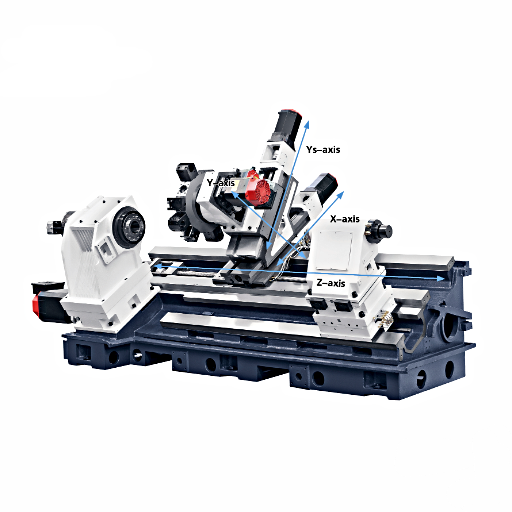
A computer-controlled lathe executes machining chores- cutting, turning, threading- precisely as programmed. The run starts with a digital drawing translated into machine code, often G-code, readable by the tool. That code directs every axis and spindle motion.
The workpiece is locked to a spindle rotating at a preset RPM. Servomotors push the cutting tool along planned tracks via leadscrews and feed rods. Feedback sensors confirm positioning, allowing the operation to continue without human oversight. This high level of automation delivers uniform quality across diverse production runs.
In CNC machining, the spindle is, quite literally, the heart of the setup. It grips the workpiece and spins it with laser-like precision, delivering the steady torque that turns raw stock into usable shapes. Recent upgrades, such as high-speed designs and adaptive control features, have pushed efficiency through the roof and made finishes remarkably smooth. Built-in sensors now track temperature, vibration, and several other performance gauges, allowing the system to tweak itself on the fly. Because of all this, the spindle remains the most reliable part for guaranteeing repeatable, top-notch quality in almost any manufacturing shop.
The control console of a CNC milling or turning centre is sometimes described as the machine’s nervous system. Everything from tool rotation to coolant flow is executed based on commands keyed in here. Earlier panels relied exclusively on membrane push-buttons, but advances have pushed manufacturers toward bright touchscreens paired with self-diagnosing software. Remote troubleshooting is now routine because many shops tie the panel to an IoT network that can export real-time metrics to a handheld device. Today’s controls balance minute-by-minute precision with macro-level productivity in a landscape where uptime equals profit.

Portable workshops now offer a surprising array of CNC lathe designs. Horizontal CNC lathes still dominate the market, yet vertical lathes, multi-axis spindles, Swiss-style machines, and fully automated centers each carve out their faithful niches.
|
Type |
Key Feature |
Main Use |
Axis |
Size |
|---|---|---|---|---|
|
Horizontal |
Versatility |
General machining |
2-4 Axis |
Medium |
|
Vertical |
Large workpieces |
Heavy-duty cutting |
2-4 Axis |
Large |
|
Multi-axis |
Complex angles |
Precision parts |
4-9 Axis |
Varies |
|
Swiss-style |
High precision |
Tiny components |
5+ Axis |
Small |
|
Automated |
Unmanned ops |
Mass production |
Varies |
Varies |
What sets these turning centers apart is their footprint, axial reach, and the kinds of melody each can play with a piece of metal. That variation lets engineers pick the right partner for parts as small as watch gears or as wide as turbine disks.
|
Key Point |
Description |
|---|---|
|
Mechanism |
Lathe-based rotation |
|
Workpiece |
Cylindrical shapes |
|
Axis |
2-5 axis options |
|
Precision |
High accuracy |
|
Automation |
Manual or automated |
|
Material |
Metals, plastics, etc. |
|
Applications |
Automotive, medical |
|
Production |
Low to high volume |
Specialty lathes-anti-drum units for roll manufacturers, gang-tool Swiss machines for watchmakers, or power-matic jobbers for production shops-curve the technology even more, driving tool insert and control choices.
|
CNC Lathe Type |
Description |
|---|---|
|
Multi-Spindle Lathes |
Designed for high-volume production, these lathes handle multiple parts simultaneously. |
|
Swiss-Type Lathes |
Ideal for small, intricate components, commonly used in the medical and electronics industries. |
|
Turning Centers |
Versatile machines that combine turning, milling, and drilling in a single process. |
|
Vertical CNC Lathes |
Suitable for large, heavy workpieces and allows for vertical part rotation. |
|
Twin-Turret Lathes |
Enable simultaneous machining on both sides of a workpiece for increased efficiency. |
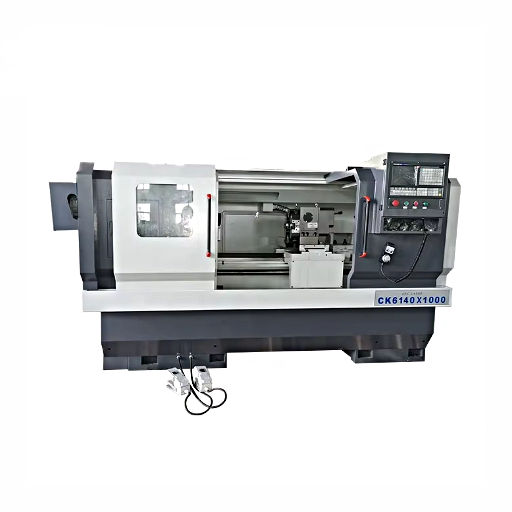
An operator must speak the lingo to keep all that cutting motion on tempo. Terms such as chuck, turret, and spindle are not jargon; they chart where error enters the dance. Knowing how those pieces fit, plus speaking of feed, retract, and work offset without stutter, saves time and money, plain and simple.
CNC machining sits on a foundation of specialized vocabulary that anyone hoping to tweak the process eventually must confront. Familiarity with the jargon can transform baffling displays and error messages into straightforward guides for action.
Mastering even half of this lingo smooths hand-offs, reduces costly mistakes, and allows operators to talk in shorthand that sounds fluent after only a few shifts.
In CNC machining, precision is not an optional upgrade; it is the bedrock upon which part quality and market confidence rest. Components that emerge from the spindle with exact geometry slot together as intended, a necessity in rigidity-sensitive settings such as aerospace frames, automotive drivetrains, or surgical implants. When tolerances tighten, less raw stock is sacrificed to oversizing, the rework queue shrinks, and every consecutive run echoes the last one. That steady rhythm streamlines workflow, trims expense sheets, and quietly earns repeat business by shipping what the customer expected, on the dot.
A: The essential components of a CNC lathe machine include the headstock, tailstock, lathe bed, turret, tool holder, and the CNC machine tool itself. Each of these parts plays a crucial role in the CNC lathe operations.
A: The chuck is a vital component that holds the workpiece securely in place during the machining process. It can be adjusted to accommodate different sizes and shapes of the processed parts.
A: CNC turning involves rotating the workpiece against a fixed cutting tool, while CNC milling consists in moving the cutting tool against a stationary workpiece. Both processes are essential machine operations in the world of CNC technology.
A: The CNC lathe bed provides the foundational support for all moving parts. It is designed to absorb vibrations and maintain the accuracy of the machining process, ensuring high precision in the production of parts.
A: CNC turning services specialize in machining parts through turning operations on a CNC lathe. They produce complex parts with high precision, often using materials like aluminum, brass, and cast iron.
A: The turret is a rotating tool holder that allows multiple cutting tools to be mounted on a single machine. This enables quick tool changes during CNC lathe operations, enhancing efficiency and flexibility in processing parts.
A: Modern CNC machines have integrated advanced computer numerical control systems that improve lathe operations’ automation, precision, and efficiency. These advancements allow for the production of intricate and precise CNC components.
A: Precision CNC machining is crucial because it ensures that parts meet strict tolerances and specifications. This is especially important for industries that require high-quality components, such as aerospace and automotive.
A: CNC lathe parts from China are often more cost-effective due to lower manufacturing costs. However, quality, precision, and the reputation of the manufacturer must be considered when sourcing parts, as these can vary significantly.
A: Understanding the basic components of CNC machinery is essential for effective operation, maintenance, and troubleshooting. This knowledge helps operators optimize machine performance and ensure high-quality production of CNC machining parts.

Manufacturing processes are quite complex, and the choice of a production method is directly related
Learn More →
There are two major manufacturing methods for producing plastic prototypes that most people find useful
Learn More →
As a person involved or interested in the design and production of plastic components, it
Learn More →