

Manufacturing processes are quite complex, and the choice of a production method is directly related
Learn More →
Producing medical components requires an unmatched accuracy, uniformity, and dependability level. Turning, one of the primary processes of CNC (Computer Numerical Control) machining, has also become one of the most critical processes concerning medical component manufacturing. This blog post discusses the significance of turning in CNC machining to fabricate complex and precise parts in medicine. From its technical principles to its uses in life-saving instruments, we will explain why turning has no substitute within this industry. This article is meant for people in the medical manufacturing field or those interested in how CNC technology is revolutionizing healthcare.

CNC turning in medicine is the application of computers to create specific and finely crafted parts of medical devices and instruments using computer-aided machines. The process of forming a shape involves using a rotating piece of cylindrical material alongside cutting instruments to form the intended shape. The manufacture of medical devices, surgical tools, and diagnostic devices relies on CNC turning to guarantee precision, uniformity, and compliance with rigorous industry requirements. Being remarkably accurate makes CNC an essential technology for the fabrication of components needed for stringent healthcare standards.
With CNC technology, one is able to manage the manufacturing process with the utmost accuracy, ensuring high results that can be repeated. It is fundamentally advantageous for highly detailed parts like surgical tools, prosthetic devices, and medical implants. Automated processes eliminate the majority of human error, therefore CNC machining achieves the tight tolerance deadlines crucial for compliance with healthcare standards. This type of machining also allows for rapid prototyping and quick turn production, which drive cost-efficient innovation in the medical device field.
The use of CNC turning techniques is very important in the medical components industry as it allows for the accurate manufacture of cylindrical parts with great precision. Through the use of advanced CNC turning processes, manufacturers are able to create important surgical tools such as surgical pins, bone screws, and joint implants to adhere to the requirements of the healthcare sector. For instance, CNC turning machines can have tolerances as tight as ±0.0001 inches, which guarantees that each part interfaces with medical assemblies perfectly.
Moreover, turning on a CNC machine aids in the process of machining titanium, stainless steel, and even advanced polymers such as PEEK (Polyetheretherketone). These materials are essential in the making of implants, as well as tools that require strength while being put into the human body. Industry reports show that the global integration of CNC turning in healthcare systems has greatly contributed to slowing down the time it takes to make precision components, especially in prosthetics and dental implants. This method allows for the quick production of custom-tailored pieces through efficient material removal and finishing processes.
The proficiency gained from high-speed machining and multi-axis configurations add even greater efficiency to CNC turning, enabling even more complex geometry and surface finish requirements to be achieved. Such capabilities render CNC turning a critical component in medical manufacturing, enabling the health sector to adopt innovative technologies that enhance patient care while remaining compliant with rigid laws and regulations.
CNC turning has significant importance in the manufacture of precision components required for medical devices. It is required in the medical industry for CNC machining in more ways than one, as outlined below:
Orthopedic Implants
Surgical Instruments
Prosthetics and Artificial Joints
Dental Implants
Catheter and Stent Components
Parts for Diagnostic Equipment
Custom Medical Components
Industry data show that CNC turning accounts for more than 50% of precision medical components indicating its supremacy in the industry. Its capacity to utilize sophisticated materials, meet stringent requirements, and provide repeatable results reinforces the technology’s pivotal role in medical device manufacture.
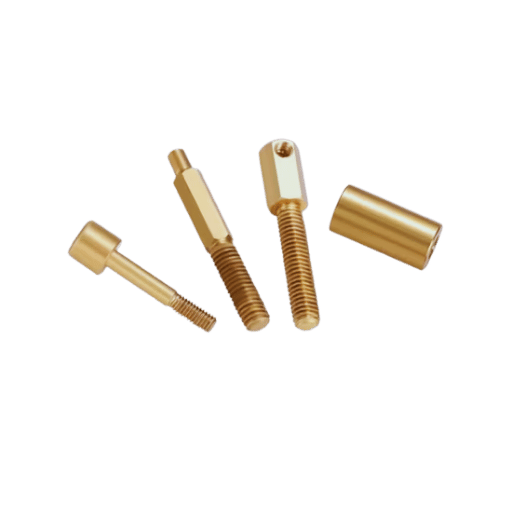
The stakes are high in medical manufacturing due to the need for faultless performance in life-saving devices. Thus, precision is of utmost importance. The parts, which include implants, surgical tools, and diagnostic devices, need to have tolerances that sometimes go as far as microns so that they are able to coincide with the human body and function as intended. For instance, to minimize the chances of complications during and post-surgery, orthopedic implants, e.g., hip and knee replacement parts, need to be machined with precision so they can properly fit and be sufficiently durable.
Orthopedic implants, e.g., hip and knee replacement components, must be machined with great accuracy to ensure they fit the intended space and are durable, thus minimizing post- and during-surgery complications. Increased precision in CNC machining has allowed for highly intricate designs and complex geometries to be built and manufactured with unmatched precision and repetition. This is crucial for micromedical components designed for delicate procedures like those in minimally invasive surgical instruments. In addition, sophisticated CNC systems are capable of machining titanium and stainless steel PEEK, wearing surgical-grade materials that need to be biocompatible.
Circumstantial evidence from the recent analysis of the medical manufacturing data suggests that the industry deeply relies on precision CNC services to stay compliant with international standards like ISO 13485. Such standards focus on tracking and reproducing medical components without any defects. The integration of state-of-the-art CNC technology with quality assurance measures enables the industry to satisfy the increasing global demand for high-quality medical devices set to exceed $700 billion by 2025.
Accuracy in keeping narrow tolerances for medical devices is paramount for its function, dependability, and patient safety. This accuracy is accomplished by using modern manufacturing methods like CNC machining which make it possible to manufacture parts to within a few micrometers. Calibration of company equipment, selection of materials, and compliance to established processes guarantees quality. Moreover, the use of CMMs eliminates deviations and defects by ensuring that all processes are aligned or checked with strict design requirements.

Turning Techniques
Spin is a basic Type of the spindle fabrication process used in the manufacture of medical devices. It uses a lathe and a workpiece where the workpiece is rotated on a spindle, and a cutting tool moves to remove the material and shape the workpiece. The method is exceptionally effective for producing cylindrical parts such as bone screws, pins, and customized implant devices with very tight tolerances. Advanced CNC turning allows for components to be produced at tolerances of ±0.005 mm, which is the most stringent limit in medical applications. Modern turning centers also have live tooling features associated with secondary operations, which include drilling or slotting, thus there is no required repositioning which enhances operational and copying speed.
Also, innovations in super abrasive materials like carbide and polycrystalline diamond (PCD) have improved the surface finish of cutting tools and deepened and decreased remodeling abrasive materials’ edges. This construction qualifies as a performance materials CAD/CAM tool geometry for biological elements with minimal deviation allowance. It is rigidly formed and issued for functional reliability.
Milling Techniques
Milling refers to a process used to make intricate shapes, slots, and pockets using a rotary cutter to remove material from a workpiece that does not move. It is essential for making detailed medical components, including prosthetic joints, surgical instruments, and dental implants. CNC milling machines, and especially 5-axis systems, are able to machine these complex geometries in a single setup. This not only saves considerable production time but also reduces the chances of alignment errors.
According to data, 5-axis milling is capable of achieving surface finishes of 0.4 µm Ra, which is important for components that are in contact with biological tissues because it minimizes irritation while helping the tissues to heal. At the same time, while this is done, the versatility of the milling machine guarantees that a number of biocompatible materials, including titanium, stainless steel, and medical-grade polymer PEEK, will be milled. Toolpath generation software is being developed to optimize cycle times and material removal rates to increase efficiency while being cost-effective and accurate.
Incorporating turning with milling in hybrid machining centers is another emerging trend in the medical industry. These systems offer automated processes where no manual work is required to switch from one operation to the next, which helps in the making of intricate components like femoral implants or dental abutments without compromising the throughput and quality.
Accuracy and consistency take priority when a lathe is selected for medical uses. Very precise tolerances are often required for medical parts, which is why the lathe must be able to achieve great accuracy every single time. This is critical when producing complex elements such as bone screws, orthopedic pins, and surgical instruments. In order to meet the needs of CNC lathes with sub-micron precision, industry standards like those of an ISO 13485 certification will always be met.
Material compatibility also stands as a crucial factor. The medical grade materials such as titanium, stainless steel, and peek along with other grade materials need powerful lathes that incorporate modern cutting technologies to preserve the surface and smooth the finish. For example, titanium alloys require powerful lathes equipped with rigid setups, high torque, and coolant systems to counteract tool wear and reduce thermal damage.
Over the years automation has become one of the most popular features sought out in medical manufacturing. For instance, lathes with bar feeders have the capability of considerably enhancing productivity whilst minimizing the probability of human errors. Features like live tooling enable a combination of turning and secondary procedures like drilling or threading and as such, boost productivity.
As a last point, integration of software is very important. Modern lathes that have sophisticated CAM (computer-aided manufacturing) components and real-time monitoring features enables manufacturers to refine their production processes further. The integrated technologies of Industry 4.0 enhances productivity and ensures traceability, which is critical in the medical field.
The growth of precision machining in the healthcare space is shifting significantly, as evidenced by the figures, with estimates that the global market for medical devices will exceed $700 billion by 2030. Manufacturers who invest in advanced supporting technologies such as lathes that guarantee accuracy, efficiency, and reliability will no doubt excel in this highly competitive and regulated industry.
The rising popularity of precision in the production of medical devices has escalated in recent years alongside technological progress. The integration of CNC systems in the earlier years was extremely basic, as they could only focus on limited shapes and materials. Modern CNC devices, however, monitor in real-time and have multi-axis functionalities, which allow for huge blocks of complex information to be processed simultaneously. With the advancement of time, the information has been and is still being directed toward the development of complex parts of implants, surgical instruments, and diagnostic devices that require stringent tolerances. Moreover, the progression was influenced by the introduction of tougher and more durable industry standards to guarantee patient safety, biocompatible materials, and reliable devices.

Meeting the tolerance requirements for medical devices is one of the greatest issues that manufacturers have. Implantable devices and surgical instruments, for instance, necessitate that components be manufactured to exacting tolerances within and beyond the range of ±0.001 inches (±0.025 millimeter) or lower. These tolerances are imposed because of the stringent guidelines placed by the FDA and ISO governing bodies on product safety and effectiveness.
The capability of these precise tolerances has been enhanced tremendously with the use of modern CNC machines with multi-axis configurations and new metrology. For example, coordinate measuring machines (CMMs) allow for verification of component dimensions as they can check if components comply with specifications to within a few microns accuracy. Moreover, automation and in-line inspection are integrated into the process consistently, lowering the level of errors that occur even in high-volume production.
Additionally, material selection is equally as important to consider in adressing tolerance concerns. Ti, stainless steel, and some other materials are frequently chosen because of their compatibility with the body and strength. Their machinability, however, can be problematic which necessitates the use of advanced cutting tools and optimized process parameters if precision is to be maintained. The adoption of these technologies has been reported to result in lowering scrap rates by 30%, which reduces waste and costs.
As the need for advanced surgical instruments and custom medical devices continues to grow, manufacturers have to constantly develop new strategies to achieve efficiency and accuracy. Recent developments, like 3D printing and hybrid CNC machining centers, allow greater freedom in achieving accuracy requirements while still maintaining fast production times, increasing the benchmarks in manufacturing medical components.
Choosing the material for medical parts is a careful selection process of balancing mechanical characteristics, biocompatibility, and the ease of manufacturing. Stainless Steel and Titanium are some of the materials of choice due to their strength and ability to resist corrosion, which is needed for durability in medical settings. For implants, PEEK and cobalt-chromium Biocompatible alloys are greatly utilized to curb negative tissue reactions. In order to simplify the selection process, testing along with the use of established standards, such as ISO 10993, should be relied upon for safety and performance assurance. Focusing on material with proven application success lowers risk and aids in gaining regulatory approval.
Adhering to medical device standards is an important aspect of device safety and effectiveness while also ensuring regulatory approval. Medical device manufacturers are required to follow a number of international standards, which include biocompatibility, mechanical features, and the company’s risk management procedures. As an example, ISO 13485 requires high-level documentation and uniform practices of production, as it is based on quality management systems. On the other hand, ISO 14971 assists organizations in the identification, assessment, and effective mitigation of potential dangers by detailing a complete and structured procedure for risk management.
In addition, compliance with FDA regulations and guidance documents, such as 21 CFR Part 820, which mandates quality system requirements in the U.S., and the EU MDR (Medical Device Regulation), which demands comprehensive documentation and extensive post-market surveillance, also have to be followed. New statistics show the increase in regulatory requirements with the last five-year period, with a 26% increase in global medical device recalls due to non-compliance and non-documentation. It is imperative to use proactive approaches such as regular audits, stringent supplier controls, and enhanced systems for product traceability to ensure compliance and enable unfettered product approvals in various regions.
Employing the latest technology and consistently gathering intelligence from relevant sources allows the manufacturer to keep ahead of the competition. Missing these targets can result in postponed launches, fines, or endanger patient safety. Full compliance assists with market entry and increases confidence among healthcare professionals and patients.

The manufacturing and innovation of surgical instruments depend on medical devices and tool manufacturing, which in turn relies on precision medical machining. The information below reveals quantitative impacts and metrics relevant to accuracy and reliability:
Increased Reliability and Quality
Adaptation of Selective Materials
Decrease in Manufacturing Time
Tailored instruments for complex procedures
Incorporating Additional States
Meeting Stringent Regulations Policies
This level of detail offers increases and assures the standardization for surgical procedures and deepen the impact and further development of the healthcare sector to meet and respond to the increasing needs for effective, result oriented, medical devices.
With precise engineering, the creation of medical equipment can be advanced, particularly inaccurate component measurement. Accuracy is greatly improved, leading to a broader range of medical device functionality and increased durability. Consistency and adherence to regulations like ISO13485 and FDA guidelines also enhance the safety and quality of the equipment integrally relied on by healthcare practitioners and patients which makes precision machining critical for the safety of healthcare professionals and patients.
A: Turning is of particular significance in the fabrication of components in the medical device industry. One of the main functions of CNC turning in healthcare equipment manufacturing is the fabrication of medical precision turned parts for devices or components which are the most critical in the healthcare production system.
A: CNC turning guarantees the accuracy of medical precision components due to the high level of automation of control over machining operations. This capability permits the making of more sophisticated metal parts and is turning other parts with a high degree of repeatability and accuracy which is essential in the production of medical parts with stringent requirements.
A: The need for accuracy in the turning of medical parts is highly emphasized because of the risk factors on safety and reliability of medical devices and implants. The precise turned components in any medical device will have a direct effect to safety and operational reliability of the medical equipment.
A: The services of CNC machining facilitate myriad aspects of medical product development, from accuracy and efficacy to repetition in trim and complex. There is rapid prototyping as well as the production of intricate medical device concepts. There is also a proper transition from the concept stage to the final output stage in machine production, all while maintaining high standards of quality.
A: Swiss type machining improves on medical CNC machining by incorporating precision into the production of small minute intricate devices in the field of medicine. This process is especially helpful in dealing with medical parts and components that require high tolerances and finely polished surfaces.
A: From one conduct to the next, precision turned parts serve best against a certain array of medical devices and implants which contain surgical tools, diagnostic devices, and even the components designed for minimally intrusive procedures. Precision in construction ensures these instruments and devices work properly and observe safety standards.
A: In the development of new medical devices turning enables the making of prototypes and final versions of products. This helps in product development because it allows designers to incorporate and modify parts to ensure functionality as well as compliance with set regulations.
A: Machining parts with precision is essential because it impacts the medical device’s ability to gain the required industry approvals, such as FDA clearance. Apart from the need for FDA approval, precision machining further ensures that every component serves its purpose, which enhances the overall device’s performance and safety.
A: Indeed, turning services can meet the specific demands of healthcare and medical sectors by offering ready-made parts differing on precision medical components scope. Medical parts which require specific characteristics can be produced using these services which have the ability to machine certain components needed in a medical setting.
1. CNC-Turning of An Additive Manufactured, Highly Complex Profiled, Ti6Al4V Component Taking Into Account Layer Orientations Effects
2. Ultrasonic Vibration Assisted Turning Of Titanium Alloy Ti-6Al-4V: Numerical and Experimental Studies
3. Investigating Optimum SiO2 Nanolubrication During Turning of AISI 420 SS
4. Steel

Manufacturing processes are quite complex, and the choice of a production method is directly related
Learn More →
There are two major manufacturing methods for producing plastic prototypes that most people find useful
Learn More →
As a person involved or interested in the design and production of plastic components, it
Learn More →