

Manufacturing processes are quite complex, and the choice of a production method is directly related
Learn More →
In the case of CNC machined parts, the surface finish can be a game changer. It not only affects the look and feel of the product but also contributes a lot to the features such as functionality, longevity, and performance. Depending on your requirements, whether they are reducing friction quite literally or providing grip due to roughness or just the visual effect, surface finish selection can have a major impact on your project’s end result. This guide will present the different surface finish types that are compatible with CNC machining, the most important factors to keep in mind when choosing one, and the best ways to pair the finish with your application needs. With a solid grasp of the options and their consequences, you will be able to make choices that not only enhance but also the quality and performance of your machined parts.
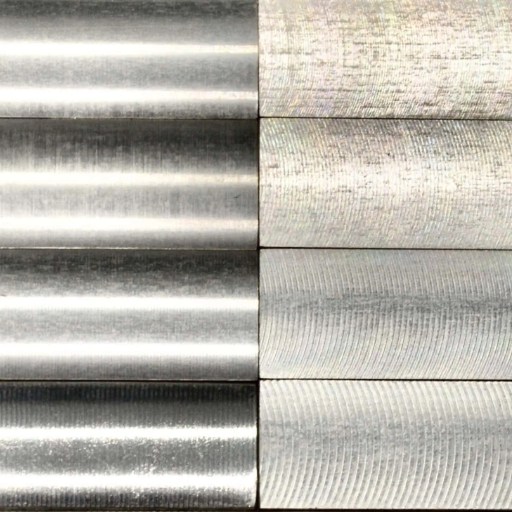
The CNC machining process’s surface finish is the texture and quality of a component that has been machined. The surface finish indicates the smoothness, reflectiveness, or roughness of a surface. The finish of the component is determined by the cutting method, cutting tools, and material type. If the wrong finish is used, it will adversely affect the performance, longevity, and aesthetic of the part. The selection of finishes ranges from very basic as-machined surfaces to very sophisticated ones such as polishing, anodizing, or plating, depending on the intended application.
Surface finish is like the texture and quality of the product surface after its manufacture that embodies the characteristics of roughness, waviness, and lay. The manufacturing process governs surface finish and plays the most important role in governing the performance, functionality, and appearance of a component. There are significantly more contributors to the factors going into the decision of surface finish as far as less friction and less wear for a smooth surface versus assistance in adhesion or bonding on a rough surface in some applications. Falsely templatized by singularly saying it has to be polished, ground, or coated, an appropriate surface finish for the job is mostly a combined finishing process of one of these last three operative paths.
Surface finish of CNC machined parts is an important factor that influences the performance and quality of parts. The finish does not only affect appearance of the part but also affects functionality, lubrication resistance, and versatility. A good texture available cuts down friction thus less wear, which benefits the longevity of the various mechanical components and makes the performance of the device better. One excellent example is the aerospace and medical industry, which demands a high degree of accuracy and reliability. Proper finishes are imperative in such applications.
The demand for CNC machining services that apply high-end surface finishing techniques comes as a consequence of this situation. Among the various technologies like diamond polishing, precision grinding, and anodizing, which are quite effective in producing uniform, smooth, and defect-free surfaces, customers show particular appreciation for the above-mentioned ones. The application of these methods results not only in the enhancement of the performance of the parts but also in the lessening of the chances of failure in critical components under extreme conditions. The role of the surface finish is, therefore, to make the product more reliable, to optimize the use of the resources, and to make it compliant with the rigorous standards set by the industry.
Surface roughness is an important characteristic that indicates the quality of a material’s surface. It is usually described in terms of the distortions (in micrometers or nanometers) category along the normal vector of the surface. The deviations can be represented through standard parameters like Ra (average roughness) or Rz (mean peak-to-valley height) etc. Being measured by tactile and non-contact methods among which the major ones are stylus profilometers and optical methods such as interferometry, confocal microscopy, and laser scanning.
The developments in measurement technologies and, in particular, data analytics have enhanced the precision with which surface roughness can be assessed and monitored. The industry is gradually moving towards AI-based systems that can perform roughness analysis on a real-time basis for manufacturing control. Such systems will not only increase the accuracy but also provide a cost-effective solution for the monitoring and maintenance of surface finish quality in the industries that demand the highest quality standards, such as aerospace, automotive, and medical devices.

This is the standard surface finish that is directly the CNCMilling process. The surface exhibits the imprint of the cutting tool & has an average roughness (Ra) of 3.2~1.6 µm, i.e., it is rough.
Bead blasting gives a smooth and flawless matte or satin look, caused by the force small spherical beads are thrown against the surface. It is also sometimes used for aesthetic purpose.
Anodizing is a process of oxidation through electrochemical means that leads to the formation of an oxide layer on metal surfaces (thickness usually 0.001+-0.002 inch) which is resistant to rust and is available in many colors. This method is widely adopted for aluminum parts.
Powder coating consists of the application of a powdered paint layer that is then heated to cure the paint, thereby giving the surface a long-lasting, resistant to wear, and ornamental quality.
Polishing is the method of surface improvement by scratching off the upper layer and shining it thus making it reflective. This is very suitable for those parts that draw high visual quality.
Brushing process yields the surface with a regular directional grain, thus giving an industrial look and at the same time hiding minor flaws.
The choice of these surface finishes is determined not only by the functional and aesthetic needs but also by the specific material of the part.
The surface quality resulting from the machining process without any additional treatments or modifications is called as-machined finish. A finish of this kind usually shows signs of the tools used and has a texture that is not too rough and not too smooth. It is used for parts that have to work but where looks do not count and it is usually the cheapest choice. Surface roughness varies with the machining method and tool precision, but it is still a reliable performance for most applications.
Bead blasting is a surface finishing technique that involves the use of fine glass beads or other abrasive media that are shot at high pressure to clean, polish or give a material’s surface a certain texture. This technique is very much adaptable and also gets rid of the unwanted flaws while giving the surface a uniform, matte finish. The process is very popular in the automotive, aerospace, and manufacturing sectors, mainly because of its ability to increase the aesthetic value of the surfaces or prepare them for further coatings. Bead blasting is still one of the most searched processes online, which is mainly attributed to its environmental friendliness and material compatibility. Many users are interested in the comparison of bead blasting with other finishing techniques, which are mainly regarded as its efficiency and non-destructive nature. This method is still a dependable choice in terms of the quality of finishes and has a vast scope of application, including metals, plastics, and glass.
Anodizing is a very extensively studied surface finishing method, which is usually asked for its benefits and practical uses over other processes. The users very often inquire about the anodizing advantages. The main ones are the first-rate corrosion resistance, the particular enhancement of the surface durability and an attractive finish that can be obtained in various colors to suit the client’s taste. Anodizing is the process that is mainly done with aluminum, but it is also applicable to other metals such as titanium and magnesium. Its unique feature is the green process, as it does not need any volatile organic compounds (VOCs) and gives a very durable, eco-friendly coating. Moreover, many users want to know the pros and cons of anodizing against such treatments as electroplating or powder coating, and one of the main points in favor of anodizing is that it can be applied to light materials without any compromise in their mechanical properties. In conclusion, this treatment still is a very important one for the industries that consider the reliability, variability, and sustainability of the surface treatment as their top priority.

The choice of surface finish for CNC machined parts depends largely on both the specific needs of your application, be they functional or cosmetic. Matter material, environmental conditions, product life, and appearance all have to be taken into account in one way or another. There would be some of the more common choices for CNC machined finish types, such as anodizing for decorative appeal and corrosion resistance, powder coating for the dual objectives of protection and decoration, or perhaps electropolishing for a super-smooth, mirror-like finish. Considering some of the operational requirements of a part might help to come up with a suitable finish in terms of performance and aesthetics, complementing the two worlds successfully within the confines of a cost.
Properties and quality of any material like aluminum, stainless steel, or titanium will also determine the kind and extent of the finish that can be applied and its effect on the process performance.
Think about the exposure to factors in the air, such as humidity, changes in temperature, and saltwater and other chemicals; under these conditions the life and performance will definitely be impacted by the finish.
The part should be judged also on the basis of its wear resistance, surface hardness, and friction levels to ensure that it meets the necessary specifications.
For the general aesthetics, the ultimate appearance of the final part would be crucial as per the specific application; the part might call for a shiny, a colored, or a matt look.
Basically, there could be a significant difference in cost between finish processes. The task is to balance the budgeting for the project and the intended durability and aesthetic of the part.
The process of optimizing surface finishes for CNC machined parts involves a mix of different elements including accurate machining techniques, good material selection, and proper post-processing methods. It is wise to start with material selection that will directly influence the finishing process for example among metals aluminum and stainless steel and among plastics some have noticeably smoother finishes. Besides, the machining parameters, such as cutting speed, feed rate and, and tool angles should be refined to achieve the desired surface finish. The use of sharp, high-quality tools combined with regular monitoring for wear assures the quality of the surface finish. The use of coolant or lubricant during machining not only helps in reducing wear but also in diminishing the possible surface flaws caused by heat.
If even smoother surfaces are desired, then might come into play the post-processing that includes polishing, bead blasting, or chemical treatments. Advanced finishing processes like anodizing or electroplating, which are some of the most common examples, are not only for aesthetic purposes but also for better durability. The use of Computer-Aided Manufacturing (CAM) to preprogram the exact tool paths minimizes the risk of tool marks. It is through the incorporation of these techniques along with frequent quality inspections and adherence to the best practices in the industry that the parts from CNC machining will present optimized surface finishes that are in line with the application’s needs.

Surface finish values for CNC machining are generally quantified by the Ra (Average Roughness) value, which specifies the average height of the surface peaks as measured against the centerline average roughness of a given sampling length. These variations begin from very rough finishes that are usually discovered on non-critical parts and typically end with super smooth finishes typically used for precision and decorative applications. The surface roughness required by the intended application of the part determines the selection of the suitable cutting tools, cutting parameters, and finishing processes.
Roughness Average, in short, RA, is a universally accepted measurement of the texture of a surface. It sets down the average deviation of a surface profile with reference to its mean line over a line-length from the user’s perspective. Smaller RA values mean that the surface is smoother; on the other hand, larger values suggest textures that are rougher. At any temperature, moisture, and temperature extremes, these numbers are critical to the design and surface finish process for such things as proper sealing or friction reduction. RA numbers have become popular because they are an easy and consistent way to determine surface quality.
The levels of roughness on the surface of parts made by CNC machining can be different according to the finish and the application that are required. The table below shows the common finishes and their typical RA values:
The choice of finish is based on the combination of performance and aesthetic needs, and the part will be functional and cost-effective at the same time.
Surface roughness, rather than aesthetics, measures the roughness of a surface and describes the feel of the irregularities and peaks that may be present on it.
| Key Point | Surface Finish | Surface Roughness |
|---|---|---|
| Definition | Visual texture | Peaks/Valleys |
| Unit | No fixed unit | µm, RA |
| Measurement Tool | Visual inspection | Profilometer |
| Purpose | Aesthetics/Function | Functionality |
| Focus | Appearance | Micro-irregularities |
| Common Range | RA varies | 0.2-25 µm |
| Application | Decorative designs | Precision needs |
| Impact | Costs and visual use | Performance efficiency |

The surface finish of a CNC-machined part has a significant impact on both its functioning and aesthetic acceptability. Bodies like the International Organization for Standardization, ISO 4287, and the American Society of Mechanical Engineers, ASME B46.1, have formulated very clear guidelines for the assessment of surface roughness. In these standards, any number of parameters, like Ra, which is the average surface roughness, and the aspect effect of profiles, are described and are employed in determining the suitability of the defined surface for its intended function. For functional parts, higher accuracy always presumes much tighter than average tolerances and a finer surface in the range of 0.2 to 1.6 microns Ra. On the noncritical side, aesthetic importance ranges do not always have such high pitch requirements, and hence they could be at 25 microns Ra. Compliance with these defined standards ensures an across-the-board inter-compatibleness, trust from the standpoint of reliability, and economy of space.
The ISO (International Organization for Standardization) and ASME (American Society of Mechanical Engineers) standards are the most important references for acceptable surface finishes on CNC machined parts. The compliance to these standards by all the industry players results in the elimination of misunderstandings and thus, the global trade and manufacturing are being facilitated.
Based on ISO standards, the rules for the surface texture measurement, notation, and specification have their basis on ISO 4287 and ISO 1302. These parameters consist of Ra (the arithmetic average roughness), Rz (average peak-to-valley height), and other profile characteristics, which show the engineers the parts’ functional requirements. The ASME standards, primarily ASME B46.1, define surface roughness, waviness, and lay by introducing the ways to measure and interpret surface textures in a very effective manner.
The standards of both organizations are different in terms of the roughness limits they set for different applications. For instance, high-precision components intended for the aerospace or medical sectors could be specified with the finish roughness values as low as 0.1–0.8 µm Ra, while less critical industrial parts may be allowed to have a finish up to 12.5 µm Ra or even higher if the specifications are strict enough. By combining the ISO and ASME standards, the manufacturers across the globe will be able to produce their components that are meeting the functional, aesthetic, and durability requirements by simply complying with the rigorous quality control processes.
It is very important to guide CNC machined parts’ surface finishes according to standard norms in order to ensure functionality and quality of the parts. ISO 1302 and ASME B46.1 are the most frequently referred standards. These standards set surface finish parameters like roughness average (Ra) and the allowed range according to the part’s application.
Offers a flawless system for marking surface texture demands in technical drawings. It utilizes symbols and numbers to unambiguously convey the finish required.
Deals with surface texture and gives a very scrupulous way to measure and specify different surface roughness parameters, one of them being Ra, thus, the standard becomes very detail oriented.
Common Surface Finish Ranges for CNC Parts:
By adhering to these standards, one not only has inter-communication between designers and manufacturers but also gets the part performed to be reliable.
The compliance with surface finish requirements is vital for the performance and dependability of CNC machined parts. The manufacturers have to follow the common norms of the industry like ISO 4287 and ASME B46.1 in order to measure and verify the surface roughness values like Ra with the same consistency. The periodic checks with the help of such as profilometers or surface roughness testers are of great importance in the process of proving the compliance with the design specifications.
The processes of quality assurance should provide for the unambiguous recording of the surface finish parameters and the regular calibration of the measuring instruments. This guarantees that each component complies not only with the functional but also with the aesthetic criteria. The designers and manufacturers practicing proper communication will have a less error-prone and more consistent and repeatable production outcome which is the desired effect.
Study of Machining of Gears with Regular and Modified Outline Using CNC Machine Tools – This study explores surface roughness parameters and their implications in CNC machining processes.
Nanofinishing of 3D Surfaces by Automated Five-Axis CNC Ball End Magnetorheological Finishing Machine – Research on achieving precision surface finishes using advanced CNC techniques.
Manufacturing Automation: Metal Cutting Mechanics, Machine Tool Vibrations, and CNC Design – A comprehensive guide discussing surface finish and tolerances in CNC machining operations.
Optimal Tool Shape Selection Based on Surface Geometry for Three-Axis CNC Machining – This paper discusses the relationship between tool shape, material removal, and surface finish in CNC machining.
CNC surface finish is the feature that refers to both the texture and the look of the part’s surface after machining—this aspect embraces the smoothness, the prevalent surface pattern and the surface topography among other things. Surface finish is of major importance because it influences not only the function but also the aesthetics of the product: surfaces that need smoothness for creating tight seals, reducing friction, or making precise contact are expected to be very smooth, whereas other surfaces may be finished off with a rough handle or even a matte appearance. Besides, the attributes of the material and the surface finishing impact the performance of the CNC components in terms of wear resistance and the subsequent operations like coating or anodizing.
Profilometers or non-contact optical instruments which make surface topography maps and give values like Ra, Rz or Rt are the common methods for measuring surface roughness. These metrics are surface roughness measurement itself and imply the average deviations from the nominal surface, thus enabling engineers to determine if a part after machining is up to the required functional standards. Moreover, the direction of the predominant surface pattern and the predominant surface pattern values can impact the behavior of a seal or mating surface.
To see the suitable finishing option, it is necessary to recognize the part’s function, the raw material (metal parts or plastic parts), the characteristics of the required surface finish, and the budget. Finishing options for CNC machined fabrics extend from simple cleaning and finishing to anodizing, blasting with glass beads or even electroplating without using electricity. Hard coatings should be considered for those parts which need very high wear resistance; on the contrary, dyeing or anodizing could also be applied for beautifying parts aesthetic-wise. Not only machining time and expense along with the fact that parts will also be dyed or need an oxide layer on their surface to protect them, are the key factors in making decisions.
Polishing, grinding, and bead blasting, all constitute the common ways to finish various parts in metals or plastics processes. Other finishing techniques that could be helpful when it comes to surface treatments for both metals and plastics are shot peening, anodizing, and post-anneal processing/chemical passivation. It all depends on the needs of the part: grinding and polishing, for instance, result in a smoother finish; shot-peening such a part would not challenge these options but would mainly cater to strengthening the surface. The aesthetics of finishes should also be kept in mind while final touch is applied.
The selection of material (metal parts vs plastic parts) determines the highest attainable finishes, the applicability of finishing processes and the final surface topography. For example, soft metals can be polished to a mirror finish, while harder alloys may need more abrasive procedures. Sometimes plastics may even melt when subjected to certain finishing techniques, hence the available options for CNC plastic parts are limited. The growth or nongrowth of an oxide layer is thus material dictated because it is part of the surface interaction and this, in turn, can affect the adhesion of coatings and the need for pretreatments such as chemical etching or passivation.

Manufacturing processes are quite complex, and the choice of a production method is directly related
Learn More →
There are two major manufacturing methods for producing plastic prototypes that most people find useful
Learn More →
As a person involved or interested in the design and production of plastic components, it
Learn More →