

Manufacturing processes are quite complex, and the choice of a production method is directly related
Learn More →
Due to its wide range of applications as an inexpensive green material, Polylactic Acid (PLA) is well recognized in the field of 3D printing. Although considering these factors, it is also crucial to understand the melting point of PLA for obtaining satisfactory outputs. This aspect affects both the quality of the print and the level of extrusion and durability of the completed designs. In this article, we will concern ourselves with PLA’s thermal phenomenon and its implications on your 3D printing projects, as well as how you can optimize your printer settings to achieve the most dependable results. Starting from novice to expert, everyone will gain knowledge that will not only broaden their understanding but also assist them in enhancing their prints.

3D printing experts recommend using a temperature of around 170 and 180 degrees Celsius for PLA-based filaments. The recommended temperature PLA filaments must be extruded at is between 190 degrees to 220 degrees Celsius for achieving the best results on layer adhesion while avoiding so-called “warping” of Fe, Ni, or Co. The tip of the surface of the printer should have a temperature that is maintained above the glass transition temperature of around 60 to 65 degrees Celsius to avoid any issues with the PLA becoming too hard and stuck to the printer. As always, check the producer’s documentation that comes with the filament, as it will contain the most precise temperature values that you require.
Unlike crystalline substances, PLA or polylactic acid does not have a distinct melting point. It has a melting range that can vary between 150°C and 180°C, depending on the specific formulation. This range can be influenced by the level of crystallinity or any additives present in the filament. PLA also does not melt in the conventional sense. Instead, it transitions to a soft, pliable state around its glass transition temperature, which is roughly between 60° and 65°. Grasping these traits is vital to guarantee efficient handling and functioning in tasks like 3D printing.
The glass-transition temperature (Tg) defines how Polylactic Acid (PLA) behaves and performs, particularly in 3D printing. High temperatures soften PLA into a rubbery, deformable state, while low temperatures keep it hard and glass-like. For PLA, Tg is typically between 60°C and 65°C. This is the range that should be maintained to preserve stability while heat is being applied.
In 3D printing, for example, the print bed temperature is maintained around the lower range of Tg to promote filament adhesion during the first few layers while preventing warping and degradation. On the contrary, keeping PLA above the Tg temperature for too long will result in deformation, reduction in rigidity, and structural failure.
Furthermore, when the material passes this transition threshold, the mechanical characteristics of PLA, like tensile strength, begin to decrease significantly. Research indicates that the application of plasticizers or increased amorphous content can change the flexibility-enhancing, but heat resistant lowering, glass transition temperature’s plasticization effect. Having command over these parameters is critical when tailoring PLA for specific industrial or commercial applications because working in or near the Tg range has a direct impact on the functional life of the product.
A comparison of PLA and ABS or PETG reveals differences in characteristics that have implications for how the materials are selected for certain tasks. Together with ease of printing and biodegradability, PLA has a low glass transition temperature (Tg) of ~ 60°C that renders it useless for high-temperate applications as neither mechanical nor thermal properties are usable at that temperature. While ABS can provide some heat resistance with a Tg of 105 °C and is better suited for more applications than PLA, it does stink, and more requirements such as a heated bed would render it effective for printing.
PETG has the most suitable material properties when it comes to combination of flexibility and stiffness. It’s Tg of ~80 °C allows it to sit between PLA and ABS. PETG is significantly tougher than PLA which makes it more suitable for durable functional parts. This added plus comes with some downside of needing proper calibration for it to have acceptable adhesion as it can difficult at times.
From a mechanical point of view, PLA has higher tensile strength but lower impact resistance than ABS and PETG. PLA has a demonstrated tensile strength of 50-70 MPa, compared to 40-50 MPa for ABS. PETG’s tensile strength is similar to that of PLA, typically 50-60 MPa, but it is more flexible due to its higher elongation at break. Its flexibility, along with its higher melting point, makes PETG stronger than both PLA and ABS.
Despite the sustainable advantage PLA has due to its biodegradability, its lack of durability when subjected to stress and high temperatures can be offset by the wide range of applications that ABS and PETG have for prototyping, automotive, and industrial manufacturing. The choice of material will rest on the balance of mechanical properties, the impact on the environment, and the application.
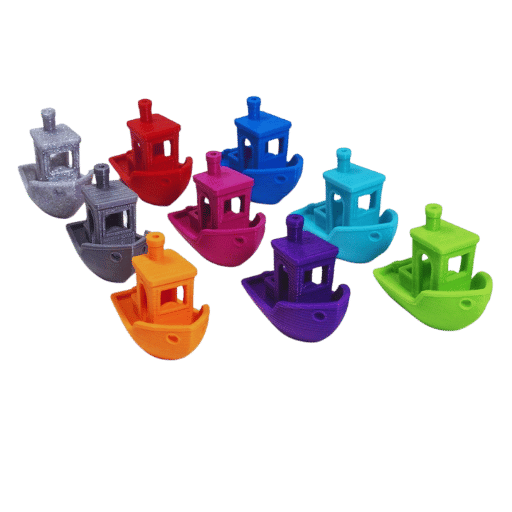
The extruder temperature set between 190°c and 220°c for printing PLA must be optimized according to the brand used, as different brands can have varying attributes such as melting point and adhesion. While lower temperatures close to 190°c are more favorable for standard PLA to enhance surface smoothness, higher temperatures closer to 220°c can create tighter layer adhesion and strengthen it at the risk of straining or oozing.
Carrying out a temperature tower test is recommended to determine the optimal temperature for a specific filament. This consists of printing a vertical structure at defined ranges while looking for shifts in adhesion, finish quality, and stability. For most high-quality PLA filaments, the range of 205°c to 210°c is favorable as it takes a middle ground in ease of printing while being mechanically robust.
Considering external factors like cooling rate and bed temperature are essential. The need for a heated bed is debated, while 50-60 celsius is optimal for adhesion PLA sticks phenomenally to unheated surfaces such as glass or blue painter’s tape. Another beneficial factor is effective cooling via a fan set to 100 percent after the initial layers ensures sharp details while preventing thermal deformation.
Achieving quality prints and material flow requires optimized extruder temperature control. For PLA, the suggested extruder temperature is usually between 190°-220°C. Changes in this range can have a major impact on the surface finish, layer adhesion, and mechanical characteristics of the print. For instance, printing somewhere around 190°C may create finer details, but it does pose a risk of under-extrusion, which can lead to poor layer bonding. On the other hand, closer to 220°C enhances the flow of the material and improves adhesion among layers. However, stringing or oozing may occur.
Ambient temperature is one of many environmental factors that may affect the filament and extruder temperatures. Performing temperature tower tests is ideal in this situation, as they allow for an incremental increase in extruder temperature along with observing what range produces the best print quality. Certain PLA blends, especially those with silk or carbon fiber, often need more specific temperatures to be set. In these cases, manufacturer guidelines tend to need to be followed. Clogging and overheating are continually mitigated by monitoring nozzle consistency while printing to ensure precise extrusion.
The temperature tower works as an organized structure that helps testers find the best temperature for filament extrusion by changing the temperature in small, precise increments with each print. This experiment results in a graphic milestone that is highly visual. Each part of a tower corresponds to a specific temperature, promoting the identification of the settings with smoother layers, finer details, and strong adhesion.
In building temperature towers, the temperature increments will have to be programmed in 5°C steps or 10°C increments based on the sensitivity to the material and the need to accurately achieve PLA’s melting point. For regular PLA, the typical print heating temperatures are somewhere above 190°C but below 220°C, depending on the seller and particular additives blended in. But when it comes to some more exotic blends, such as reinforced silks, carbon-infused PLAs, the temperature range is much higher, reaching even 230°C to get the best flow and surface quality of the filament.
Determining the appropriate temperature range is a crucial step for one’s finished temperature tower. Take, for example, an ideal segment that would present onstant stringing, sharp edges, and a consistent texture. Higher temperatures can increase the glossiness of the layer for enhanced aesthetic appeal, as well as promote stronger bonds between the segments. However, when printing with materials that have a higher melting point, excessive stringing and sagging can pose challenges. On the other end of the spectrum, lower temperature segments have dull and brittle surfaces that possess weak layer-to-layer adhesion, which can be problematic.
To achieve precision during temperature tower tests, try controlling printer settings such as print speed, which is typically between 50-60 mms for PLA, cooling fan strength, which hovers between 50%-100%, and nozzle travel distance. More sophisticated slicing software usually comes with features that allow for automated temperature adjustments mid-test, further easing the process.
Comprehensive temperature calibration helps in solving common printing challenges like under-extrusion or clogging. This, in turn, guarantees a smooth and professional finish for each printed entity. Running a temperature tower schedule within a specific time frame also helps in preventing material wastage and the headache that comes with inconsistent prints.

Due to its usability and biodegradability, Polylactic Acid (PLA) is a common material in 3D printing. However, its performance and integrity can be significantly impacted due to its unstable, temperature sensitive nature. Softening occurs within a range of 60°C to 65°C for PLA, which can lead to deformation under low amounts of stress. Such characteristics make PLA inappropriate for use in environments with high ambient temperatures, for example the inside of a car on a hot summer day.
Research findings suggest that moderate weather conditions can lead to the average temperature inside a car that is parked in the sun exceeding 70°C (158°F). This temperature greatly exceeds the PLA stability ranges and can cause printed objects to bend, warp, or lose their structural integrity completely. Moreover, materials with glass transition temperature regions closer to room temperature undergo inflationary degradation when compounded to prolonged exposure of these temperatures.
To mitigate these challenges, incorporating heat resistant additives into PLA blends or composites will enhance heat resistance. Using alternative polymers like PETG or ABS, which have stronger thermal resistance, is also a solution for high-temperature applications. A careful comprehension of PLA’s thermal boundaries is essential from a design integrity standpoint when objects are exposed to high environmental temperatures for a considerable amount of time.
The glass transition temperature (Tg) for PLA ranges from 55°C to 65°C, depending on the specific formulation PLA has. This is important because it helps us comprehend the starting point at which the PLA begins to soften. Between this temperature range, PLA moves from being a more stiff, glassy material to a flexible, more rubber-like material, which impacts the mechanical stability of printed objects greatly. When designing components that are meant to operate at or above these temperatures, it is crucial to consider this thermal property to avoid deformation or loss of structural integrity.

Under-Extrusion
An example of under-extrusion is when a printer’s nozzle is not releasing enough filament while printing, and the temperature is too low to meet PLA’s melting point. This condition frequently occurs with too low a printing temperature, which causes the filament to melt; however, not enough for it to flow easily. This results in weak, incomplete layers with less than adequate adherence between them, which puts the structural integrity of the part at risk.
Over-Extrusion
Over-extrusion is the opposite of under-extrusion, occurring when filament is extruded in excess, which is often the case with higher than necessary temperatures. The result is some degree of blobs, or oozing, as the print surface loses its desired quality, bringing the accuracy and the measurements of the print to question.
Stringing and Oozing
Spider webs of former filament that connect separate portions of the print is an issue of stringing, which has many perpetrators, one of which is excessive heat. A growing temperature makes the filament overly fluid and results in unwanted filaments left behind as the nozzle transfers from one zone to another.
Clogging
Some improper temperature settings, particularly cold ones, partially melt the filament in the nozzle, resulting in clogs. These empty parts can disrupt printing and will need maintenance to remove the obstructions.
Problems of Layer Adhesion
It is possible for layers of material to bond improperly because of inadequate temperature, which can result in a weak print that cracks or breaks with the smallest degree of pressure being applied. This is particularly important in areas that require high levels of mechanical stability.
Warping
If there is no precise calibration of material and ambient temperature, uneven cooling could occur during the printing cycle. In large prints, this could result in warping at the edges or corners leading to the creation of distorted parts.
Overheating and Reduced Detail
Setting the temperature too high can lead to detail loss and excessive smoothing as a result of overheating. This is especially worrying for objects needing intricate designs or sharp edges.
Nozzle Dripping During Idle Time
At overly high temperatures, filaments can be melted at higher rates than is appropriate, leading to dripping from the nozzle during idle periods. This results from the blobby deposits at the start of segments or layers.
Discoloration or Burn Marks
Filaments of a lighter color are especially prone to excess heat and can get discolored or get burn marks after prolonged periods of exposure. This tape flaw can affect the overall quality of the print.
Proposals for temperature changes
It would be helpful to mention that the filement manufacturer and test prints should be used for adjustments. Close supervision and adjusting the temperature during the print can ensure the best possible outcome where quality and mechanical efficiency are convex.
Adhesive tapes and bed temperature warrant special focus because they are needed for the successful execution of a 3D print. Correct adhesion guarantees that the bed stays attached to the print throughout the printing processes with rails or without detachment issues. For different types of filament, different heaters will need to be set. For PLA, a preferred bed temperature would be between 50-60 degrees, while ABS does much better well over 90-110 degrees because it will start to warp otherwise.
How effectively the adhesive bonds on the filament also matters. If the heat is not equal, there can be issues seeing an even adhesion, allowing distortion. Stability may be improved by using a heated bed with better temperature control. Other methods such as tape, adhesive sprays, and domestic surfaces designed for 3D printing, can create better adhesion. Better thermoregulation systems spraying tape where it is designed, can also solve these equatorial borders.
In the end, knowing the characteristics of the filament used and the specifications of the printer are needed to effectively bow up the bed temperature and technique of adhesion or vice versa. Great prints come from the combination of experimentation and careful observation with actual real-world results.
Understanding the requirements for particular filament types is the first step to correcting errors related to temperature settings. For instance, PLA filament usually has a good print performance when extruder temperature is set between 190 degrees and 220 degrees. ABS, on the other hand, needs higher temperatures of approximately 220 degrees to 250 degrees. Following to the best practices set by the manufacturers often helps in minimization of errors.
Another problem is the variation of temperature that could lead to warping or layer separation. To correct this problem, he or she make sure there is a good heating system in the printer. For example, adding an all-metal hotend helps to maintain thermal consistency at higher printing temperatures. Another suggestion is frequent calibration of the printer thermal sensors to increase the preciseness of the results.
The print could be affected from bottom layers overheating or losing their shape so cooling system must be incorporated into the heater. One approach for achieving uniform heat distribution over the bed surface is to use silicone thermal pad. Studies indicate that materials like ABS with extreme warping related defects could benefit from equally heated beds since it can lower around 30% of loss output.
For users with more experience, an external thermometer such as a thermocouple may be useful to monitor, and make slight modifications to the print in real-time. Also, slicer software options like temperature towers can help find the most effective temperature ranges for the nozzle and bed, which increases print success rates.
Additionally, uncontrolled environmental variables, such as the room temperature, must also be taken into consideration since they are bound to PLA characteristics during printing. For example, cold temperatures can result in loss of heat and subsequently adjust the shower and bed temperature parameters. Enclosures help control these changes to provide better print reliability as well as better temperature stability.

In my assessments, both PETG and ABS are better performers than PLA for different reasons. The filament PLA stands out as the simplest material to use for printing because it uses lower temperatures and does not warp easily, making it appropriate for novice users and detailed projects. For functional components and outdoor applications, materials that are more durable, flexible, and heat resistant, like PETG, are ideal. While in comparison, ABS does have higher strength and heat resistance, it is less user-friendly as it requires higher temperature printing, greater enclosure, and ventilation to deal with warping. I always try to find the balance between ease of use and performance for the component, which depends on the lower melting point properties of PLA.
The melting temperature of PLA (Polylactic Acid) ranges from 130°C to180°C. The specific formulation and any additives alter the PLA melting temperature range. Its low melting temperature range means PLA is perfect for applications with low-temperature requirements and ease of printing, but also indicates that PLA is unsuitable for regions of high temperatures since it begins to soften at around 60°C to 65°C (glass transition temperature).
On the other hand, PETG has a mid-range heat resistance for heavy functional applications, withstanding approximately 80°C glass transition temperature and having upper operational limits of 230°C. This improves its thermal performance for such applications. In comparison, ABS has better resistance to heat with a glass transition temperature of about 105°C and melting point greater than 200°C, making it appropriate for high mechanical stress applications. The higher the melting points of PETG and ABS, the more challenging the printing conditions, such as heated beds/enclosures, become.
Analysis of different materials provided aid in choosing which corresponds to the individual project needs while determining climatic conditions, ease of use and thermal performance at the same time.
Considered one of the most popular choices in Fused Deposition Modeling filaments, Polylactic Acid (PLA) is accessible, user friendly, and environmentally friendly. PLA is made from renewable resources such as corn starch or sugarcane, making it biodegradable and environmentally friendly when compared to petroleum based filaments. This feature of sustainability is in line with the increasing efforts across the globe to reduce plastic waste and carbon footprint.
With PLA, the dimensional accuracy is exceptional, which brings the resulting prints to extremely precise quality. This feature makes PLA ideal for prototyping and models with high, intricate detail. In addition to that, it has a low melting point of around 180 degrees centigrade to 220 degrees centigrade, which allows for a reduction in energy costs while printing. The low melting point also eliminates the necessity for a heated bed in many instances. Another benefit of PLA is that it has a lower tendency for warping than other materials, such as ABS. This helps achieve reliable results in an open printing atmosphere.
According to statistical data, the tensile strength of PLA is estimated to be between 37 MPa to 60 MPa, to the particular formulation and the printing conditions. This is confirmed as it gives enough strength for the use of lightweight structure parts, aesthetic models, and educational use. Additionally, its odorless emission and PLA’s safe usability make it a preferred option for indoor or household printing, and also because PLA is biodegradable.
Nonetheless, PLA serves its best purpose in non-functional parts or rudimentary low-stress applications because of the lower thermal resistance in which deformation begins around 60 C. However, the development of formulations as PLA+ has increased its durability and mechanical temperature resistance while broadening the use of these materials without losing the advantageous properties of the material.

A: The melting point for polylactic acid or PLA is generally between 180°C and 220°C, although different formulations of PLA filament have specific variations in melting temperature.
A: The ease of printing in PLA is primarily due to greater melting point which enables lower temperature extrusion. Because PLA does not require a heated environment to adhere to the print bed, it is less likely to warp compared to ABS materials.
A: PLA is an environmentally friendly thermoplastic, as it comes from renewable materials. It is the most common material used in 3D printing due to its low melting temperature, ability to hold detail, and good strength.
A: The glass transition temperature of PLA is approximately 60°C, which is the temperature at which it begins to soften. Knowing this information facilitates proper temperature calibration on the 3D printer for optimal layer adhesion and print output quality.
A: For finding the optimal printing temperature for PLA filament, it is best to begin with the extrusion nozzle temperature set by the supplier, which is usually between 180°C and 220°C. The value might need to be increased or decreased depending on how the printer outputs PLA and the characteristics of the PLA filament available.
A: Many users prefer to use PLA because it is easy to work with, has a lower melting point, and does not warp as much. This makes it perfect for new users and for printing detailed items. Its nature as a thermoplastic and a bio material also makes it a sought-after material in creating different 3D prints.
A: PLA has the advantage of being easy to print, but can also be excessively brittle, making it incapable of withstanding high temperatures. Its glass transition temperature would lead to PLA softening and in certain situations, its utility will be restricted. Moreover, for some uses, ABS may offer more strength than PLA does.
A: Print quality is greatly influenced by the nozzle temperature when printing with PLA. If the temperature is set too low, the filament will not melt adequately, which leads to PLA not adhering to layers properly as it needs to be softened to a certain degree. Setting the temperature too high is also damaging as it would either lead to stringing or a rough finish. In essence, finding the perfect temperature balance is indispensable for successful results.
A: For basic 3D printing needs, PLA could come in handy, especially when intricate detailing or simplicity is required. However, its brittleness and low melting range means it is not acceptable for parts that need durability or heat.
1. Fused Deposition Modelling of PLA/MWCNTs Filled with Cobalt-Based Polymer Composite Produced by 3D Printing
Key Findings:
Methodology:
2. Fabrication and Characterization of Poly-Lactic Acid/Graphene Biopolymer Composites by Fused Deposition Modeling and Their Physical, Morphological and Mechanical Properties Analysis
Important Conclusions:
Methodology:
3. Interaction of lignin and TiO2 with PLA Composites: A blend of simulation and empirical investigations
Summary of Findings:
Methodology:

Manufacturing processes are quite complex, and the choice of a production method is directly related
Learn More →
There are two major manufacturing methods for producing plastic prototypes that most people find useful
Learn More →
As a person involved or interested in the design and production of plastic components, it
Learn More →