

Manufacturing processes are quite complex, and the choice of a production method is directly related
Learn More →
Modern industries are keeping up with technological transits to make processes speedier and more precise. Hence, aluminum CNC turning parts have been the centerpieces that define a much higher level of precision and quality in aerospace, automobile, medical, and electronics. This article highlights how such specialized components bring change in manufacturing paradigms being lightweight, highly durable, yet highly machinable. The marriage between CNC and the wonderful properties of aluminum throws up a whole lot of opportunities for manufacturers to enhance their efficiency and quality. Continue reading to know about the new-age applications, developments, and advantages that make aluminum CNC turning parts so significant today.

CNC machining involves a highly accurate manufacturing process that has high automation, where computer-controlled tools shape and fabricate the components from various materials, such as metals, plastics, and composites. CNC machining is the process of cutting materials with controlled movements dictated by the instructions generated through the computer software; essentially, this makes the process more accurate and consistent. Several processes are covered under CNC machining, including milling, turning, drilling, and grinding, thus enabling manufacturers to make various intricate and complex designs with minimal or no error.
The very first step in any process is designing on the computer, usually through CAD, Computer-Aided Design Software. Then, with the help of a CAM system, Computer-Aided Manufacturing, the design is converted into some language or code accepted by the machine. These state-of-the-art CNC machines can maintain tolerances as tight as ±0.001 inches in cases where utmost precision is called for. Industry reports depict the evolution of CNC machining in the past several years amidst the creation of new multi-axis capabilities and adaptive sensors for faster production times and less waste of material. Thus, CNC machining finds itself at the forefront of technologies in aerospace, automotive, medical devices, and electronics.
Precision Achievement: Tolerances as tight as ±0.001 inches
In the domain of CNC, the turning procedure is described as a subtractive machining procedure in which the cutting tool cuts away material from a rotating workpiece using computer numerical control to attain precise cylindrical components. The process works through CNC lathes and turning centers, which check accuracy and consistency. The workpiece gets mounted onto a chuck, with the workpiece often rotating at very high speeds, while the cutting tool shapes it to the desired dimensions.
In today’s CNC turning centers, additional capabilities like live tooling are offered, permitting the simultaneous milling and drilling of parts to reduce setups and increase throughput. Multi-axis configurations of possibly 3-axis or 5-axis turning allow the creation of complex geometries and tighter tolerances down to ±0.0001 inches, thereby making CNC turning the most critical function for high precision in aerospace, automotive, and medical manufacture.
CNC turning has slowly gained efficiency and automation, as reported in industrial statistics. The automation features include bar feeders and robotic arm integration to minimize manual intervention while optimizing material utilization. Improvements in cutting tool materials such as carbide and ceramic inserts now allow CNC turning of the harder materials like titanium and nickel-based alloys without any compromise in surface finish quality and part integrity. Therefore, these improvements keep CNC turning relevant in present-day manufacture.
Ultra-Precision: Tolerances down to ±0.0001 inches achievable
CNC machining aluminum sits on an interesting crossroads of availability, performance, and cost-efficiency, thus becoming a widely favored metal across a range of industries. Aluminum is known for being light, weighing in at nearly 2.7 g/cm³ or one-third the weight of steel, thus lessening the weight of parts without any compromise in structural integrity. This advantage, albeit slight, is heavily leveraged in aerospace, automotive, and electronics fields-and every bit of weight bargained away turns into fuel economy and maybe even extra performance.
Aluminum is very easily machinable, as it is soft, along with such a low melting point, machining becomes quicker, thus leading to higher tool life. This story of machining practice decreases cost and increases throughput in mass manufacturing industries.
Aluminum also shows a very high degree of corrosion resistance if anodized or subjected to some surface finishing processes and, therefore, can last for longer durations under harsh environmental conditions.
As far as thermal and electrical conductivity is concerned, aluminum is highly effective-Given thermal and electrical conductivity measures near 36.9×10⁶ S/m. Thus, making it suitable for heat sinks, electrical chassis, etc.
CNC aluminum machining lends itself to the sustainability aspect of recycling aluminum without significant degradation, apart from which it remains cost and material efficient. Its versatility and performance guarantee that aluminum will remain in use in contemporary manufacturing techniques.
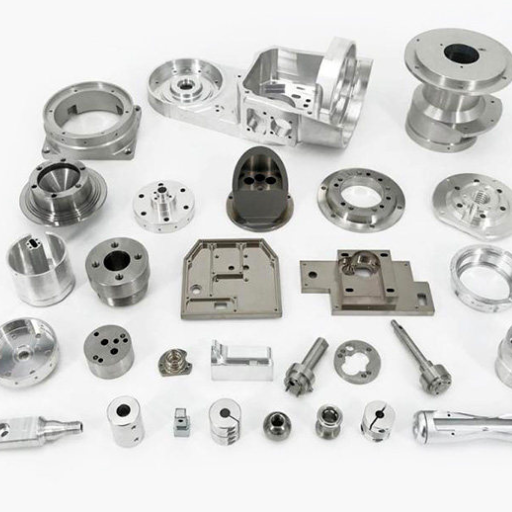
Aluminum alloy 6061 ranks amongst the most preferred CNC grades of aluminum since it retains supreme mechanical properties and is readily available. It offers one of the best combinations of strength, corrosion resistance, and machinability and thus finds applications in the production of automotive parts, aerospace fittings, and structural frames. With a tensile strength ranging from 260 MPa to 310 MPa, it generally stands as a reliable strength factor in carrying the balance between weight and durability.
Owing to its incredible strength-to-weight ratio, 7075 aluminum finishes off aerospace and high-performance applications. It contains largely zinc, and following heat treatment, it attains tensile strengths up to 572 MPa. It is a bit less corrosion resistant compared to several other grades, but it gives the best strength and is therefore used preferentially when strength cannot be compromised in load-bearing parts such as wings and fuselage components for airplanes.
This highly sought aluminum for aerospace applications bestows fatigue resistance, superior tensile strength (approximately 483 MPa), in the heat-treated condition (T3). Copper is the primary alloying agent in 2024 aluminum; it improves the mechanical properties but dismays the corrosion resistance, requiring surface treatment or protective coating in an aggressive environment.
5052 bestows superb resistance to corrosion, especially in marine and chemical corrosive atmospheres. This non-heat-treatable alloy is often selected wherever malleability and weldability are of consideration. With tensile strengths ranging from 193 to 228 MPa, 5052 is mostly used in making fuel tanks, pressure vessels, and other equipment that will be subject to corrosion.
These are medium-strength alloys of the 6000 series and are considered to have particularly high corrosion resistance, and weldability. With tensile strength up to 330 MPa, 6082 finds application in structural and engineering components, including but certainly not limited to bridges, pipelines, and transport systems. It is emphasized and preferentially chosen for CNC work requiring high precision and respect to durability due to its ability to be machined.
The choice of an aluminum alloy depends on the requirements imposed by the project, ranging from mechanical performance to environmental conditions. Looking closely at properties of each alloy grade allows optimized results in CNC processes.
Before putting aluminum alloys to work for machined parts, utmost consideration should be paid to the comparison of mechanical properties and chemical compositions of alloys vis–vis their suitability for the particular application. Machinability, thermal conductivity, and weight would be a few considerations when selecting the alloy based on project-related objectives. For example, 6061 is quite cheap and versatile, whereas 7075 is one level higher when strength is of paramount importance. Similarly, 5052 is the material of choice if corrosion resistance is sought after, while 2024 is the option for fatigue resistance. Correct alloy selection ensures the best-performing CNC machined parts, rendered at the least cost, for the longest durability.
Selection of aluminum alloys for any given job shall be contingent on making quite a detailed evaluation of mechanical properties relative to the particular application for which it has been designed. Useful parameters here would be tensile strength, yield strength, elongation, and hardness. Being conversely, 6061-T6 aluminum is usually said to offer a suitable balance of strength, resistance to corrosion, and machining attributes and is hence used in many structural and aerospace reports. On the other hand, when an extreme strength-to-weight ratio is needed in the design, 2024-T3 aluminum would be a fitting candidate because of its high fatigue resistance characteristic, though it gives allowance for corrosion to some extent.
The 5052-H32 aluminum, being very moderately strong and having stronger resistance to saltwater corrosion, is considered suitable for marine or highly corrosive environments. Aluminum alloy 7075-T651, any place precision machining with tight tolerances is required, will provide the ultimate strength to the components but could be expensive. The type of tempering applied to each alloy produces a certain hardness and ductility to apply well to a particular use. The study of all these brings into the selection of materials and ensuing reduction in maintenance cost and premature failures.

Many factors must be considered during the manufacture of custom CNC aluminum parts to achieve the desired functionality and cost implications. For a high-precision CNC machining process, everything must be carefully laid out in advance, including dimensions, tolerances, and geometries. Appropriate dimensional tolerances shall be set with the functionality of mating components in mind and to conserve materials to the greatest degree. For example, tighter tolerances might be considered for areas of critical mating surface contact while looser tolerances might be considered on less critical surface areas to reduce the cost of manufacturing.
Materials should be selected for the operational environment in question. That is, properties such as thermal conductivity, corrosion-resistance, and mechanical strength should, therefore, following some rational, systematic approach, affect selections because they essentially dictate the lifespan and performance of the component. For example, 6061 aluminum finds wide application in machining operations-the compromise being strength versus machinability. Without such a compromise, 2024 or 7075 might be selected for higher mechanical performance. Furthermore, surface treatment methods such as anodizing, plating, etc., may be undertaken to further increase corrosion resistance and wear resistance.
When machining strategies are decided, a component’s geometry dictates it. Something with complex contours, deep cavities, and undercuts will generally be machined on a 5-axis CNC machine, which adds additional time and cost to manufacture. Ergo, the need for ease of manufacturing ought to be kept paramount whilst ensuring that design does not fail in should functionality. Tool operators can also simulate their machining operations in CAM software to optimize tool path, cut speed, and feed rate to reduce production time and meet quality requirements.
Resolving such matters systematically and directly during the design phase presents manufacturers with the opportunity to strike a better balance between performance, reliability, and cost factors in the production of custom CNC aluminum parts.
CNC machining of aluminum is the preferred method for prototyping, as it retains good material characteristics and is compatible with state-of-the-art machining techniques. Aluminum possesses an excellent strength-to-weight ratio, excellent machinability, and corrosion resistance, placing it in a category suited to iterative testing and functional testing. On CNC European-machine operations with the highest standards raise tight tolerances down to ±0.001 inches. Thus, exact prototypes can be produced that would almost match the final production specifications.
Additionally, CNC machining allows for very short cycle times, and the lead times are quite short compared to other manufacturing methods such as casting or molding. Therefore, industries such as aerospace, automotive, and electronics demand it, such that design constraints must be validated over a short span of time, while performance requirements may likewise have to be validated in the same short period. Heat conductivity and structural properties of aluminum work well with functional prototypes undergoing stress testing or thermal cycle, wherein it may accurately represent the real-world scenario. It is in fact advantageous as it allows designers and engineers to rapidly iterate concepts using modern CNC machining technology and thereby reduce the time-to-market within the required performance/quality constraint.
Quality assurance in custom aluminum machining is considered a multi-dimensional process due to the high requirement of precision, consistency, and compliance with very stringent industry standards. Dimension and tolerance checks are considered to be carried out with utmost precision through advanced metrology tools, namely coordinate measuring machines, and laser scanners. Another means could encompass non-destructive testing methods such as ultrasonic or dye penetrant inspections to uncover hidden defects or surface imperfections that may affect aluminum integrity.
The material certification process implies also that aluminum conforms with specific grades for strength, alloy composition, and thermal properties. Statistical process control is used to keep an eye on set machining parameters such as spindle speed, feed rate, and cutting depth. Controls and corrections in case of any deviations are ensured through SPC. ISO 9001 or AS9100 are examples of ISO certifications that ensure standard quality management systems.
These measures, coupled with rigorous in-process inspections and final assessments, minimize risks of product failure, reduce waste, and enable the production of components that meet or exceed the specifications for functionality and performance in those demanding aerospace, automotive, and medical applications. Keeping quality control at the helm, intelligent technological and skill integration forms the center of excellence in custom aluminum machining processes.
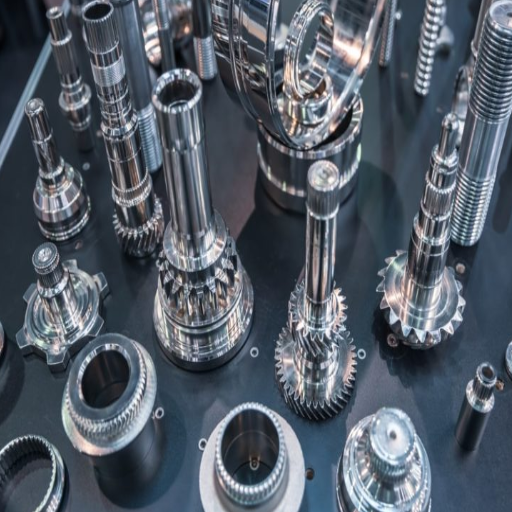
An electrolytic process takes place to enhance aluminum surface characteristics through the formation of a hard, corrosion-resistant, with decorative oxide layer on it. This is an anodic oxidation process while aluminum parts are dipped inside an electrolytic bath of sulfuric or chromic acid, depending on the grade, and an electric DC current is passed through the circuit. Aluminum, with the assistance of this anodic oxidation, is able to produce a thin protective layer: aluminum oxide, on its surface by reacting with oxygen ions.
Anodizing technically also allows secondary processing such as adhesive bonding or coating applications, thereby imparting versatility to aluminum substrates. Such benefits make anodizing a fine finishing process in enhancing performance, look, and durability of aluminum parts through various industries.
Electropolishing is a beauty treatment that improves the surface conditions of machined aluminum parts by removing contaminants and imperceptible imperfections by an electrochemical method. In this highest form of polishing, an aluminum component is submerged into an electrolytic solution usually made up of sulfuric or phosphoric acid while applying an electric current. The anodic reaction causes the metal surface peaks to dissolve selectively, and this leaves the valleys untouched so that a smooth reflective surface is created.
The electropolishing process provides corrosion resistance to the aluminum; being more uniform and better-passivated, it is more resistant to wear and tear in adverse environments, including marine and chemical processing applications. In addition, electropolishing produces a bright mirror finish without tool marks, thus enhancing the aesthetic appeal of the product.
Another critical benefit is growth in cleanliness and hygiene properties. The washing away of surface contaminants and microscopic burrs lessened the possibilities of contamination, thereby creating electropolished aluminum parts to be used primarily in medical, pharmaceutical, and food-processing plants. Some studies show electropolishing decreases surface roughness notably, which could help with wear resistance and lower friction during dynamic applications.
In combination with other finishing treatments, such as anodizing or powder coating, these treatments give manufacturers the ability to ensure better durability, functionality, and customization of machined aluminum components aligned with industry needs.
These days, surface finish specifications are given in the Machinery Handbook and serve as a performance parameter for materials in different industrial activities. For aerospace applications, advanced surface treatments such as shot peening or thermal spray coatings induce residual compressive stresses for fatigue resistance and also act as protective layers against corrosion in atmospheric environments. Aerospace engineering studies state that this technique can enhance the life of highly stressed components by as much as 40%.
Performance Impact: Surface treatments can enhance component life by up to 40%
Chemical-mechanical planarization and chemical mechanical polishing are among the high-end finishing techniques used in the manufacturing of electronics and semiconductors. Such processes guarantee surface smoothness at the nanometer level, which is required for higher electrical conductivity and enhanced functional reliability of microchips. It has been proved by research that a direct relationship exists between surface roughness values (Ra) below 0.5 nm and chip performance in high-frequency applications.
Within the medical device landscape, surface finish tends to be integral to biocompatibility and sterilization. For example, in surgical stainless steel, the passivation process is supposed to increase corrosion resistance and become crucial in complying with ISO 13485 medical standards by avoiding leaving free iron contaminants. Such improvements are thus very important to enable the safety and usefulness of the tools and implants.
This underlines the importance of advanced surface finishing and its optimization of component performance through reduced operational downtime, all within the confines of very strict regulatory standards in critical industries.
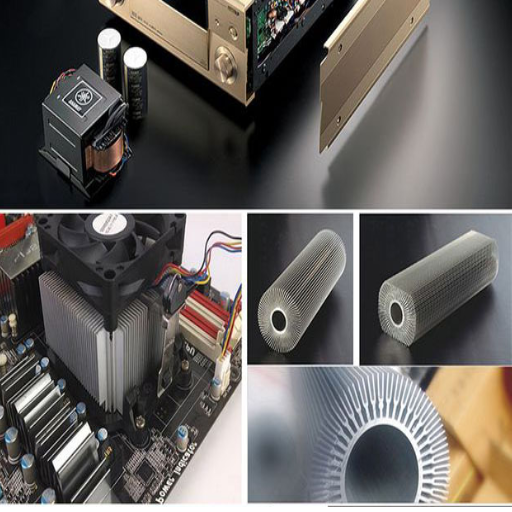
When aluminum CNC turning parts are mentioned for use in the automotive industry, their importance must already be stressed based on manufacture of lightweight and high-grade components. Such components are used for engine components, transmission systems, and suspension elements, where precision and reliability are paramount. The innumerable strength-to-weight ratio reduces overall vehicle weight, which is directly proportional to fuel efficiency and emission levels, with new innovations being targeted in these two aspects in automotive engineering.
And with that, aluminum CNC turning parts are quite flexible and further customizable to meet the complex needs of advanced automotive designs. This refers to parts such as turbochargers, brake housings, and cylinder heads that require dimensional accuracy to fit in perfectly and operate at optimum performance. CNC machining helps manufacturers achieve consistent quality and repeatability in large-scale manufacturing, thus providing a solution to the scalability issue faced by manufacturers without compromising precision.
Still, there is also a sustainability opportunity for aluminum CNC turning parts in the automobile setting. Aluminium is a material strong enough as well as being recyclable. This attribute of being green lends to the increased awareness of sustainable manufacturing in the industry. Discordant-from-performance-adaptability-sustainability, aluminum CNC turning parts have that special x-factor because of which this is yet a key ingredient for design and manufacturing of the automobile of tomorrow.
Aerospace industries depend much on CNC machined aluminum because of its highest strength to weight ratio, corrosion resistance, and capacitance of high precision manufacturing. CNC machining would shape aluminum into forms with postulated complex geometries and tight tolerances required by critical aerospace components. Such high precision largely maintains the structural integrity and functionality of consecutive fuselage panels, wing components, brackets, and engine housings, which are exposed to high stresses during operations.
I would stress that its inherent lightweight attribute of aluminum contributes a good deal towards fuel efficiency and overall performance in aerospace applications. Simply put, an aircraft with less weight consumes less fuel and emits less carbon, thus achieving the industry’s standpoint on sustainability. In addition, aluminum alloys act as a good conductor of heat and electricity, thereby providing the means to go into advanced avionics and heat dissipation systems. These traits, such as the ability to be CNC machined with repeatability and reliability, have etched aluminum as the material of choice for aerospace parts in high-performance settings that must be safety-critical.
In relation to that, CNC aluminum machining certainly aligns itself with added scaling and pricing contrasts pertinent to aerospace manufacturing. The aluminum machined can be recycled and poses a methodological decrease in waste production. Hence, such a framework does provide some footing for a greener and feasible production methodology. With CNC being flexible, manufacturers can switch between prototyping and large-scale production without losing track of dynamic requirements and configurations in aerospace engineering. It is therefore a rise of CNC machining of aluminum for innovation and a method that holds aerospace industries to very strict quality spheres.
The CNC aluminum parts are of utmost importance in the realm of consumer electronics since they stand for precision, durability, and aesthetic kindness. Machinery enables one to make aluminum components with utmost precision and excellently finished surface in items like ultrathin frames for mobile phones and sturdy enclosures for laptop computers. Such precision is required in terms of dimensions in consumer electronics as even slight dimensional errors may result in improper assembly or failure of the product. Besides, aluminum’s low weight and superior heat conduction make it an apt material for all gadgets that need real-time heat dispensation, such as tablets, gaming consoles, and high-performance CPUs.
Having highest versatility in manufacturing under the CNC machining process assures utmost flexibility in shaping parts as per the exact design and functional requirements for modern consumer electronics. Whereas CNC machining provides such great flexibility in ensuring repetition and accuracy in mass production, that tightest tolerances are secured over large production runs. Complex design features such as complicated patterns or fine engraving can just as easily be produced as per CNC specifications, fulfilling both the functional and aesthetic purposes. This extremely wide ability advances into the market itself, where some consumers look for the functional performance of their electronic devices, while others search for grace and elegance. Hence, CNC aluminum parts have gained a breakthrough in the industry, being used today as the symbol of ingenuity and reliability.

Manufacturing processes are quite complex, and the choice of a production method is directly related
Learn More →
There are two major manufacturing methods for producing plastic prototypes that most people find useful
Learn More →
As a person involved or interested in the design and production of plastic components, it
Learn More →