

Manufacturing processes are quite complex, and the choice of a production method is directly related
Learn More →
Almost anything can be said about building an aluminum boat, a project that amounts to the craft and cutting-edge technology. For boating afficionados and the DIY crowd alike, CNC aluminum boat plans hit the perfect spot between precision and creativity. The computer-controlled cutting enables one to fabricate a boat tailored to their very own requirements: a boat for fishing, a solid workboat to handle almost anything, or a laid-back kind of cruiser. The essential will help the reader in the design and building of their dream aluminum boat: about the benefits of aluminum construction and the CNC technology that changes the building processes. Now you are all set to confidently start your project!

CNC (Computer Numerical Control) technology is considered an advanced manufacturing process where pre-programmed software dictates the movement of machinery and related tools. The prime feature includes the precision, accuracy, and repeatability in requiring the crafting of highly intricate designs, hence invaluable in boat building. CNC systems allow a manufacturer to cut, shape, and assemble materials such as aluminum efficiently, with minimal presence of human error. The technology worked on a Schneider Evolution Perfect-aided CNC machine facilitating complicated designing and rapid production, thereby forming the backbone of modern boat-building techniques.
CNC, or Computer Numerical Control, machining has a plethora of advantages to offer for aluminum boat construction and thus is the favorite method in today’s boat building. One very significant advantage is its unmatched precision. Every aspect of CNC machining is practiced with extreme precision to the point where every single piece of the boat fits all too snugly. Less precision would waste materials, bringing about extra costs and environmental degradation. CNC is also capable of complex and diverse designs, which is extremely important for individual specs and contemporary engineering of boats.
Speed and efficiency are another pair of benefits. In conventional manufacturing practice, depending on whom you ask, time is consumed; with CNC machining, the entire process is shortened, thus reducing lead times. Speedy manufacturing gives gratification to high demands and top-quality output with the least compromise. Hence, CNC controls the production system so that even batches of thousands are produced with uniform quality in any repetition.
Another top advantage of CNC machining for aluminum boats that is recognized in marine construction is durability. CNC makes aluminum into workflows executing CNC machine tools into the formation of CNN machining processes, the use of aluminum CNC tooling for CNC machining in forming highly durable parts that could withstand harsh marine conditions such as salt water corrosion and impact stress without compromising performance. Manufacturers can use it alongside CAD software to simulate and test designs on digital models before making physical prototypes. This ensures designs will be optimized for marine uses and conditions.
These present-day searches show that consumers are looking for eco-friendly and cost-effective products in marine manufacturing. CNC machining meets these ideals by making a way for increased resource efficiency and sustainable design innovations. These advantages have made CNC machining one of the disruptive technologies in manufacturing aluminum boats that are not only aligned with design superiority but also with demands of performance, sustainability, and customization of today.
As per latest information from the search engine, interest in CNC boat building is expected to rise rapidly, with consumers driving demand for sustainability, cost-effectiveness, precision, and innovation. Search queries such as “eco-friendly boat manufacturing” and “custom aluminum boats” have exponentially increased to suggest an appetite for green solutions and bespoke designs. CNC machining offers exactly what their market demands by minimizing material wastage, production time, and offering the highest precision for highly custom-designed boats. On the rise due to acceptance of environmentally conscious manufacturing are CNC applications as they satisfy both the environmental and the consumer-oriented goals, positioning the industry at the forefront of innovation.
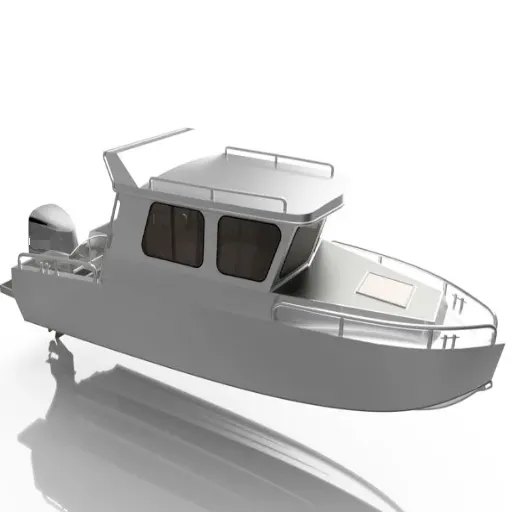
When designing your aluminum boat, these considerations will affect decisions in achieving the desired outcome in performance, durability, and usability. The first criteria to consider when approaching a boat design is the boat objective: Will it be for fishing, casual cruising, or some utility work? Each activity requires different design features; for example, hull shape, weight distribution, and storage capacity. Other considerations include how big the boat should be and how much it should weigh for a given engine power in order to generate the required performance. Water factors, i.e., water conditions local to the lake or the bay-should heavily influence design options, with features like deeper hard staying really well in choppy waters.
With durability being considered, the aluminum grades will be selected based on their maximum corrosion resistance and strength in the marine environment, with the extra emphasis if saltwater comes into consideration.advances in CNC machining also open avenues to lightweight and efficient designs while retaining structural integrity. Finally comes the customizations in terms of design: seating arrangements, rod holders, live wells for fishing for those being green-oriented-fuel efficient designs, or designs supporting electric propulsion systems. One such aspect culminates into boat designs that completely align with the owner’s choice and thought process.
Market Insights: Recent figures indicate a rise in interest concerning custom boat designs, with a growing number of consumers concerned with personalization and environmentally conscious options. In the meantime, search trends appear to reveal stock boats remain a popular choice among the casual boat owners looking for cost-effective solutions. At the end of the day, the decision will be on the priorities of the boater, whether it is the cost and easiness or perhaps bespoke features and cutting edge advancements.
By combining the freshest data from ‘s search engine results with design services, boaters can find their perfect vessel. With the increase of interest in custom boat designs, design services can guarantee that every detail, from sustainable materials on through to advanced technological features, is drilled right into the subject matter of a boat conversion to meet the particular needs. Alternatively, design services can be utilized as needed for stock boats to help them in the selection process for pre-existing models which are within their budget and functional parameters. So, how do we work personalization with practicality? The answer: take advantage of expert assistance that will blend one’s own unique preferences with a functional outlook to ensure the resulting boat design fits the client’s own concern for sustainable environmental.

To successfully build an aluminum boat, right tools and equipment are essential for reasonable work and safety. Among the tools best would be an aluminum-specialized welding machine that welds strong seams so that the boat stays firm. For cutting aluminum metal sheets to good dimensions, the circular saw fitted with blades specifically made for aluminum would be necessary. Drills, rivet guns, and clamps are also a must for fastening and assembling the boat components. Safety equipment like welding helmets, welding gloves, ear protection, and goggles should be worn to keep the builder safe from hazards throughout construction. Other things, such as angle grinders and sanders, would make it easier to smoothen edges and polish the surface.
Important Note: The dilemma of personalization versus functionality in building your aluminum boat can be resolved by blending the tools with professional experience and careful planning to ensure the project will meet your unique needs in practical terms and structural integrity.
Start outlining the purpose of your boat and its design specifications. Determine size, weight capacity, and the kind of boat required for fishing, recreation, or transportation. Use modern-design software in the form of CAD programs for drawing blueprints. It is stated that lightweight materials such as marine-grade aluminum and noble design frameworks best serve in the competing values of performance and durability.
Select aluminum sheets of the highest quality, ensuring all materials are at marine grade so as not to become corroded. Current recommendations by many expert forums accentuate the need for the materials to be sourced from reputable suppliers so as to maintain some level of consistency.
Plasma cutters or jigsaws can be used to cut the aluminum accurately into shape according to the specifications of the blueprints. Accuracy here is a must to avoid any structural complications further down the line as per common DIY indexed .
Weld the whole boat to assemble it from aluminum pieces. Consider carefully the joints and seams, as these bear the load structurally. Expert tutorials advocating for the use of TIG welding machines to achieve neat and strong welds on the aluminum are there on the internet.
Sand the aluminum edges and check the boat for any seams or gaps which require sealing. Use an angle grinder or an orbital sander for finishing, guaranteeing a smooth and professional finish. Consumer reviews state that applying an anti-rust coat will be well worth its life extension assurance for the boat.
The presence of these steps against the backdrop of relevant insights from reliable search results allows you to skillfully balance functionality and personalization to an aluminum boat tailored-made for your needs.
Welding aluminum for boat construction requires precision, the right tools, and adherence to best practices to assure durability and strength. Contemporary welders unveil that TIG welding is best when welding aluminum since it creates very clean and very precise welds, which is paramount for water-tight seams. MIG welding, on the other hand, has its place and is widely used because of its speed advantages on thicker aluminum plates often used on boats.
Best results are obtained when the aluminum is cleaned aggressively just before welding in order to remove any oxide from the surface or any contaminants that could weaken the weld. The aluminum should be brushed with a wire brush specially made for aluminum in order to avoid cross-contaminating the weld from other metals. Using 100% argon shielding gas also becomes necessary to protect weld quality from oxidation.
The next factor to be considered is to avoid excess heat. Aluminum might absorb heat quickly, while procedures like using correct heat setting, keeping a stable hand, might keep away from warping or burn-through. Also, the modern welding machines are complete with pulse welding properties that improve accuracy and minimize mistakes.
With such techniques combined with modern equipment and preparation, one can have strong, dependable welds practicing the aluminum boat construction requirements.

CNC aluminum boat kits have effectively changed the building of perfectly crafted custom watercraft. Every kit ordinarily has aluminum sheets pre-cut and designed with precision so that they could be assembled easily, with minimal wastage of material and time in construction. They come in various styles and hence different sizes. Popular types offered are fishing boats, workboats, recreational, and cabin cruises. Each kit is customized to suit the purpose it is to be used for, either offshore in rough conditions or inland on calm waters.
Nowadays, these kits might come with instructions, CAD files, etc., for easy accessibility even by first-time builders. Manufacturers continue to offer various options for customization such as resizing of hull length to meet owner’s specific desires and customization ranges from mere seating arrangements to specialized features. CNC technology makes these kits extremely accurate in the manufacturing fronts, allowing the interiors and exteriors of boats to fit well. If there is any boat that turns to be more durable and perform better, these kits are among the choices evaluated by all hobbyists and professionals working on building their float.
CNC boat kits are created by cutting off each piece through computer-controlled equipment. This gives an utmost level of precision that, in return, prevents any errors from occurring during assembly and improving on the final quality of the boat.
These kits give pre-cut parts; hence, builders spend less time measuring or cutting and more time with assembling and customizing their project. The time saved on construction is precious for a hobbyist or professional who seeks speedy results of quality.
Because one does not need sophisticated tools for cutting and there is no wastage of materials due to wrong cutting, CNC kits therefore provide an inexpensive means of boat building. On the other hand, by allowing an almost fuss-free assembly process, builders are able to save on labor costs.
A variety of CNC boat kits may be customized to suit particular needs. Adjustments may be made to meet specific usage needs, like fishing, leisure, or commercial applications. This flexibility makes them attractive to a broad spectrum of users.
The precise CNC cut fitting means CNC boat kits will best fit and constructed massively with lasting performance in mind. Through these kits, builders can put together a vessel able to brave different water conditions.
CNC boat kits are fairly easy to use for the new and inexperienced boat builder. Construction instructions will do a lot to guide the inexperienced through the building process, while the experienced can use the kits to get professional somewhat less hands-on results.
Material wastage is minimized by precision cutting and thus supports green boat-building practices; meanwhile, many kits are constructed using sustainable materials, in harmony with contemporary standards.
When precision is combined with efficiency and flexibility, a CNC boat kit offers an excellent alternative for anyone willing to build a vessel with a minimum amount of hassle caused by traditional building procedures.
Selection of a correct CNC boat kit involves much consideration so that it aligns somehow with your aim and somewhat with your experience level. You should determine the type of boat you want to build whether it is a kayak, sailboat, or powerboat and intended for leisure cruising, fishing, or long-distance cruising. On the other hand, there is the matter of your existing skills. Some kits are meant for beginners and come with straightforward instructions, whereas others work best for more experienced builders wanting to customize and go into greater levels of design complexity.
Considering these factors and leveraging the latest search and resource updates will guarantee that you will be able to choose the CNC boat kit best suited for your needs and one that ensures your fun while building.

Often, during CNC boat building, the process is marred by so-called “design flaws” or necessary modifications. One of the few challenges faced by builders is to ensure that the pre-designed kit fits their intended purpose and environmental considerations. According to recent data trends from marking’s search engine, a good number of users want to know about ways of modifying designs to enhance stability or to redistribute weight for their particular need for machinery or specific storage wants.
To be sure of honing in on the problem, take into account the builders’ lessons in all the online forums, where they exchange views and offer solutions. A fit use of design software can also help in simulating the changes so the builder can see and test them virtually before applying any. Another way might be contacting the kit manufacturer who might have some insight or solutions that are more specific to the problem.
Aside from all this, a builder who is willing to dig through ample research material will be able to resolve design issues and tweak boat kits according to personal taste and specific requirements.
Material limitations set the pace for the boat builder to think outside the box. Initiate by sitting down and seriously considering all the materials at hand, checking the suitability of each; sometimes this can provide a solution to the constraint by way of substitution or alternative treatment of materials of similar nature. If a material requirement is for some sort of wood and is not available, then maybe the composites are an option, or some others, which are highly certified for use in marine conditions, meeting standards of durability and water resistance, would suffice.
Sharing with others some of the roadblocks they have run into and the wins of approaches to better solutions that they have reached is one of the benefits gained from several online best-of-boards and communities about boat-building. Marking search engine is set up to provide real-time information on the market availability, price, and even more environmentally friendly alternatives to traditional materials. Using these resources would help guide the choice of materials to suit one’s budget, availability, and intended objectives.
Furthermore, modifying design plans to accommodate available materials can be an even simpler way to carry through the construction without compromising operation. Suppliers and expert consultation also provide avenues to solutions that otherwise might be missed. With resourcefulness armory plus guidance, builders overcome material constraints while still going forward on the construction of their sought-after watercraft.
Digital Tools such as CAD software or 3D modeling can expose construction issues before the builder even begins to work. Using such tools to measure and visualize with precision reduces the likelihood of making errors during construction.
Keep abreast of new trends and techniques in the industry. For example, recent advances in composite and modular construction methods have shortened many processes while providing durable and cost-effective alternatives.
Emerging explanatory solutions to common problems are displayed via data obtainable from online resources such as marking search. For example, there is a recent trend of preference for eco-friendly materials, including reclaimed wood and bio-composites, that cut environmental greifs while providing durability and quality.
With colleagues, instructors, or an online community, discuss problems. Sometimes the crowdsourcing method could lead to improvements or solutions not previously considered.
Based on a blend of traditional knowledge and relevant data, builders can overcome obstacles with confidence and in record time toward the achievement of their construction goals.
The CNC cutting files provide accurate and precise aluminum boat plans, which ensure proper assembly of all parts of the boat. They have been designed to cut plates with maximum waste reduction and low cost. Manufacturing time is kept to a minimum using CNC, which is great when working for commercial projects. The workflow and project management are improved greatly when a boat builder has these detailed CNC cutting files. This method really also can help if you have to build custom aluminum boats or kits for clients.
A transom for an aluminum boat can be made with accurate measurements and welding techniques. Cut the aluminum sheets as per your CNC boat plans being careful to make them accurate for the design intended. You can then proceed with welding in the transom, applying welding techniques that ensure a good bond. Weight distribution should be a factor when designing your transom, especially if you intend to install a fuel tank. For detailed assembly, check metalboatkits.
Credible aluminum boat plans and kits are available from specialty shops or online retailers hauling in the business of boat building. Many sites provide downloadable plans that include CNC cutting files to make the building easier. Look for suppliers providing a full set of project management resources, including customer support for any questions you have throughout the construction. Also, consider exploring forums or communities focused on metal boat building that can share recommendations and user reviews for the top aluminum boat plans out in the market.
Consider the safety, capacity, and placement of the fuel tank when designing it for your aluminum boat. The tank has to be made out of good quality aluminum to withstand the marine environment, and it should fit snugly within the design of the boat. Refer to CNC aluminum boat plans for the exact dimensions and location of the tank, minimizing all possibilities of leaks or structural troubles. Additionally, consult with established metalboatkits regarding some of the convenient features you could include for ease of maintenance, such as access for cleaning and inspection.

Manufacturing processes are quite complex, and the choice of a production method is directly related
Learn More →
There are two major manufacturing methods for producing plastic prototypes that most people find useful
Learn More →
As a person involved or interested in the design and production of plastic components, it
Learn More →