Sometimes, the topic of aluminum cutting using a CNC 3018 router just entices the maker and the engineering community. Well and good, since the tool is highly regarded as an affordable and versatile machine. But does it really possess the treatment capacity for a challenging and demanding material like aluminum? We shall weigh the real capability of CNC 3018 for aluminum cutting, sweep some behind-the-scenes common misconceptions, and provide some actionable suggestions. We’ll dive into CNC 3018’s limitations as well as tips to bring out maximum precision and efficiency in aluminum cutting so that you can now implement these on your own. Hence, whether you are a novice enthusiast looking to learn more or a professional seeking an economical option, this article will serve as a handy guide for any aluminum project with your CNC 3018.
Introduction to CNC 3018 and Aluminum Processing

The CNC 3018 is a compact, highly versatile milling machine suitable for hobbyists and small aluminum workpieces. It primarily caters to softer materials, such as wood and plastic, but can also be extensively used for aluminum with a few simple adjustments and tools. The primary elements for aluminum milling to be done correctly are using the correct end mills, maintaining adequate feed rates, and ensuring spindle speeds are sufficiently fast to prevent the tools from overheating. Workpiece cooling and clamping methods must also be employed to ensure accuracy and minimize excessive tool wear. Although it is somewhat deficient in rigidity and power compared to industrial CNCs, the CNC 3018 still presents a suitable cell for operating on lighter aluminum tasks with great care and precision.
Overview of CNC Machining
CNC machining is a manufacturing process where the pre-written computer software commands the movement of tools or machinery. It is a popular process for the automated, accurate manufacture of parts in various materials, including metals, plastics, and even wood. CNC machines move in more than one axis, enabling the machining of complex geometries with the highest precision and repeatability. In general, CNC machining ensures faster production, reduces human error, and facilitates large-scale production with minimal concerns about quality.
Importance of Aluminum in CNC Projects
Aluminum is a crucial component in CNC projects due to its excellent machinability, being lightweight yet durable, making it suitable for a host of applications, including those involving a SainSmart CNC 3040 setup. It allows for milling at higher speeds, hence a decrease in production time and costs. Additionally, aluminum has a good strength-to-weight ratio, making it suitable for applications where components need to be strong yet as light as possible, such as in the aerospace and automotive industries. The corrosion resistance property contributes significantly to its versatility and stands solid in adverse environments. Using aluminum in CNC machining provides precise and efficient machining.
Significance of the CNC 3018 Machine
CNC 3018 is a small and portable worker used for small milling, engraving, and cutting projects. Because it is price-friendly and widely available, it is very appealing to hobbyists, teachers, and small enterprises. Materials include wood, plastics, and soft metals, allowing users to make their own selection for application purposes. Due to its effortless elegance and high openness to software modification, one can creatively tailor the design to meet any particular project requirement, making it extremely useful in execution.
Features of the CNC 3018 for Aluminum Work

Specifications of the CNC 3018 Pro
The CNC 3018 Pro is a compact and versatile desktop CNC machine designed with precision and adaptability in mind. Below are the detailed specifications:
The CNC 3018 Pro provides a reliable introduction to CNC machining while offering customizable options for advanced users, making it a versatile solution for a range of DIY and professional applications.
Components: Spindle, Linear Rails, and More
A few critical components in the CNC 3018 Pro combine precision with functions. The spindle is the primary working element, which rotates several cutting or engraving tools. The standard spindle operates at up to 10,000 RPM, making it suitable for the fine machining of materials such as wood, acrylic, or soft metals. Enthusiasts may later upgrade the spindle to work on harder materials or achieve finer finishes.
The linear rails provide smooth and precise movement over the axes of the machine. These guide rails are typically made of a hardened material, often stainless steel or aluminum, for maximum wear resistance and stability during repeated operations. Coupled with precision stepper motors, the rails enable controlled moves and add robust reliability to the machining process.
The other components include a spindle mount designed for various motor types to enhance functionality, lead screws, and couplings that ensure smooth motion transfer with minimal backlash in all X, Y, and Z directions, thereby increasing accuracy. The CNC 3018 Pro also features an integrated control board, typically based on GRBL, which handles the commands. For safety and convenience considerations, the machine also features a protective enclosure option and an emergency stop switch, allowing for control from anywhere. All these features contribute to the versatility and effectiveness of the machine in delivering precise results for a variety of applications that utilize tools of different diameters.
Upgrades and Enhancements for Aluminum Cutting
Now that you want to cut aluminum with a CNC 3018 Pro, several upgrades and enhancements would go a long way toward improving its performance, improving precision, and maximizing efficiency:
1. High-Speed Spindle Upgrade
When machining aluminum, higher spindle speeds are necessary to produce clean cuts and prevent tool deflection. Power and speed consistency, after all, are of higher importance for cutting, so replacing the stock spindle with a 300W or 500W high-speed spindle makes sense. Higher-speed spindles also reduce chatter, which improves finish quality.
2. Stronger Frame and Rigidity Enhancements
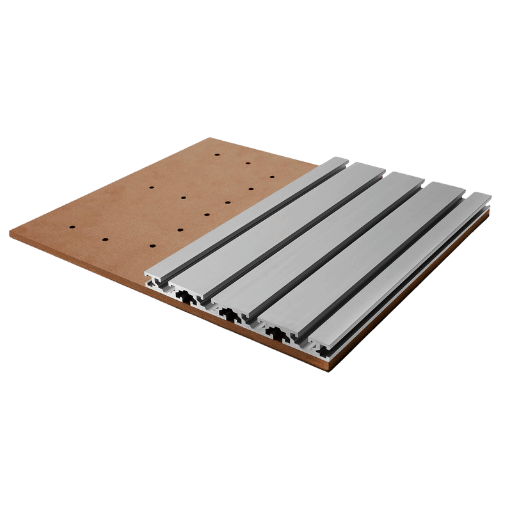
Aluminum cutting requires a stable and rigid machine frame to counter vibration and improve accuracy. Reinforcement upgrades that mount or provide a CNC on a vibration-dampening surface, or additions of aluminum T-slot extrusions that strengthen the frame, help maintain precision during operation.
3. Upgraded Tooling Options
Using end mills specially crafted for aluminum, such as single-flute or two-flute carbide end mills, increases material removal rates while preventing clogging of the tool. Coated end mills, featuring a layer of titanium aluminum nitride (TiAlN), are also capable of extending tool life by mitigating heat buildup.
4. Lubrication and Cooling Systems
Cutting aluminum produces considerable heat, which in turn could affect surface finish and tool life. Installing a mist coolant system or opting for manual lubrication on occasion maximizes heat dissipation while protecting both the material and the cutting tool from compromise. WD-40 serves as a good lubricant, alongside other cutting fluid combinations specially designed for aluminum.
5. Stepper Motor Upgrades
The standard stepper motors on the CNC 3018 Pro could benefit from lighter materials, but would struggle against the higher resistance posed by aluminum. With upgraded, more powerful stepper motors with torque to spare for more intricate cuts, NEMA 23-class ones do the trick nicely.
6. Z-Axis Stability Improvements
The stock Z-axis assembly can exhibit small movements under load. The replacement of the Z-axis assembly with a reinforced one or an all-metal upgrade significantly stabilizes the Z-axis, thereby ensuring a steady engagement of the tool with the aluminum surface.
7. Improved Software for Precision
More advanced CAM programs, such as Fusion 360 or VCarve, offer improved toolpath generation for aluminum cutting. They allow for more control over all parameters, such as feed rates, cutting depths, and RPM, to suit the specific needs of working with aluminum.
With these upgrades, users can transform their CNC 3018 Pro into heavy-duty aluminum cutting systems, resulting in improved surface finish, reduced tool wear, and enhanced productivity.
Benefits of Using a CNC 3018 for Aluminum Cutting

Precision and Accuracy in Aluminum Milling
CNC 3018Pro is capable of high-level precision machining required for intricate aluminum milling tasks. Using stepper motors and lead screws of higher-grade construction, the motion accuracies can be as low as ±0.02 mm, depending on calibration and setup. With such precision, the machine can engrave intricate details into aluminum, creating delicate contours and precise hole placements.
When using proper end mills for aluminum—say, those intended for nonferrous metals—the milling process produces precise edges and a consistent surface finish. The application of software-controlled approaches, such as adaptive toolpaths or spiral cutting, also aids in maintaining dimensional tolerances at their lowest level, thereby minimizing deviations in the end product.
To achieve consistent and reliable results, machine rigidity must be maintained. Things that usually lead to errors, including chatter or uneven cuts, are often eliminated through diligent inspection, the tightening of all fixture parts, and ensuring that spindle alignment is top-notch. All these factors sum up to higher precision, making CNC 3018 Pro the economical way of doing small aluminum machining jobs.
Cost-Effectiveness of the 3018 CNC Machine
The 3018 CNC machine stands out as a highly cost-effective option for hobbyists, small business owners, and those entering the world of CNC. Its very affordable price, depending on configurations and options, usually ranges from $200 to $500, serving an excellent balance between utility and accessibility. Hence, unlike the larger industrial machines that can cost tens of thousands of dollars, the 3018 CNC machinery offers an alternative for the small-volume and precision-oriented work, at least in the core option area.
The 3018 CNC features low maintenance, while the ability to use standard tools and software further reduces operational costs. Being compact means it requires less space and energy, making it even more attractive from an economic perspective. Additionally, for those working with materials such as plastics, softwoods, and thin aluminum sheets, this machine significantly reduces overhead costs for prototyping and small-scale production, making it an all-around investment. These factors together point to the 3018 CNC machine as a highly valued product for achieving precision at a lower cost.
Versatility in Projects Involving Aluminum Extrusions
The 3018 CNC machine is a highly versatile unit for working with aluminum extrusions, making it a prime option for both hobbyists and professionals. Because aluminum extrusions feature a high strength-to-weight ratio, corrosion resistance, and ease of machining, they have become the material of choice in the manufacturing, construction, and automotive industries. Thus, the 3018 CNC machine will be found to be much more helpful in making precise cuts, drilling holes, and smoothing the edges on aluminum extrusions when creating custom parts, brackets, and frames.
With recent developments in the field of cutting tools, such as carbide end mills, the 3018 CNC achieves smooth finishes even on harder aluminum grades. With cutting speeds ranging from 800 to 1000 mm/min and recommended spindle speeds of 10,000 to 12,000 RPM for aluminum, users can now achieve the perfect balance between speed and accuracy. Furthermore, in terms of features, it can be modified to include better high-torque stepper motors or spindles, further enhancing the ability to work on aluminum extrusions. These features offer users a more affordable option for producing precise, complex parts in small to medium production volumes or on custom projects.
Setup Tips for CNC 3018 and Aluminum Projects
Preparing Your Workspace and Materials
The workspace and materials must be adequately prepared whenever one undertakes aluminum projects with the CNC 3018. First, ensure that the workspace is clean, well-lit, and free from obstructions that would hinder free movement around it. Aluminum machining requires stability and silence; therefore, ensure that the CNC 3018 is placed and bolted to a flat surface to prevent inaccuracies due to movement.
After this, select the correct type of aluminum for your project. The most frequently used grades are 6061 and 7075, where 6061 has publicity for being rather versatile and easy to machine, whereas 7075 is stronger but more complex to machine. The aluminum must be clamped firmly on the CNC bed to prevent any movement during operation; otherwise, tool breakage can occur or inaccurate cuts may be made.
Choosing the appropriate cutting tool is a critical consideration. Carbide end mills are the best choice, primarily because they are durable and can form relatively sharp edges for cutting aluminum. Cutting tools of smaller diameters generally provide better precision for intricate details, while those with larger diameters can be used to remove bulk material rapidly.
When aluminum milling is considered, cooling and lubrication form very important factors. These prevent the cutting tool from overdrying and the aluminum chips from sticking to the cutting edge, thus lowering the quality of the work. Mist coolant systems are typically used for this purpose, or manual applications of cutting fluid are used to enhance performance.
Feed rate, spindle speed, and depth of cut are some of the other items that you have to confirm in your CNC 3018 setup. Aluminum typically requires a slower feed rate and a higher spindle speed to produce a better finish and reduce tool wear. These parameters can be set according to the type of aluminum end mill used, and, depending on design requirements, tool life, and workpiece properties, to ensure optimal performance and accuracy. A good setup and planning assure better quality, hence prolonging the life of your CNC machine and tools.
Calibration of the CNC 3018: Z-Axis and Carriage Adjustments
Precise calibration of the Z-axis and carriage system is crucial for ensuring accurate cuts and consistent performance of the CNC 3018. Z-axis calibration must be performed with precision to ensure vertical movement accuracy and, consequently, to prevent uneven cuts or tool damage. Begin by aligning the lead screw and confirm that it is properly lubricated to ensure smooth motion. Check if the coupler connects the stepper motor and lead screw for any signs of wear or looseness, since this can degrade accuracy, especially on the Z-axis.
Furthermore, check the linear rails and sliders on the carriage for smooth rotation. Small misalignments can occur due to vibrations during operation, so it is prudent to periodically tighten the mounting screws and align the rails using a precision straightedge. The precise calibration of the slide can be achieved using a dial indicator or a height gauge, which measures any deviations in the Z-axis travel within a ±0.01 mm tolerance. To optimize performance, the micro-stepping and current of the stepper motor should be set within the machine’s control software, depending on the materials to be worked and the cutting parameters.
Maintaining these tests and adjustments will enable users to minimize tool wear and ensure the system operates accurately in the long run.
Choosing the Right Tools and Bits for Aluminum
Machining aluminum requires a careful selection of tools and bits to achieve optimal performance and surface finish while minimizing tool wear. HSS and carbide bits are typical choices for this work, as they are durable and retain sharp edges in high-speed operations. Carbide tools are front-runners for high-speed cutting and minimum finish shaping; however, a disadvantage is their higher price.
Aluminum end mills are generally designed as single-flute or two-flute designs, as they require considerable chip clearance to prevent excessive heat during cutting. Aluminum tends to stick to the cutting tool. Coatings such as TiN (titanium nitride) or DLC (diamond-like carbon) can enhance tool life and reduce adhesion. In terms of machining settings, spindle speeds and feed rates should be optimized. Aluminum generally requires very high spindle speeds, ranging from 12,000 to 24,000 RPM, depending on the machining strategy and tool diameter.
Moreover, applying coolant will eventually improve the surface finish and prevent the workpiece from overheating, making it more suitable for high-speed milling or drilling operations. In the case of dry machining, however, all benefits can be realized, provided one is using top-notch tools with very advanced coatings. Taking stock of these and other key variables will help machinists work efficiently and accurately on aluminum and get the best out of their tools.
Common Challenges When Working with CNC 3018 and Aluminum

Overcoming Issues with Cutting Speed and Feed Rates
Working with CNC 3018 machining of aluminum, when improper cutting speeds and feed rates are given, can lead to said suboptimal performance, excessive tool wear, and inferior finishes. For optimal working conditions, the CNC 3018 aluminum-working processes require precise parameters to be set in relation to the material and tools being used.
Aluminum is usually softer and prone to heat buildup compared to other metals, so cutting speeds of anywhere between 150-250 SFM are recommended, depending on the alloy type and tool material. Carbide tools can be used at much higher cut speeds than HSS tools due to their heat resistance. Feed rates should be calculated based on chip load, which in turn depends on the tool diameter and the number of flutes. For instance, a nice chip load between 0.001″ and 0.004″ per tooth would be applicable when machining aluminum with a 1/8-inch, 2-flute end mill.
The balancing act between feed and cutting parameters is a very delicate one. Lower spindle powers in a CNC 3018 may even, at times, limit the maximum spindle speeds achievable. One way for users to work around this issue is to focus on the low-speed-high-feed-rate operation, which decreases heat generation and results in cleaner cuts. While defining the toolpath, users can even take advantage of adaptive toolpath strategies in their CAM software. This allows for constant tool-material engagement, subsequently enhancing both accuracy and tool life. Through meticulous adjustment, CNC 3018 users can successfully address the issues encountered with cutting speed versus feed rate during the machining of aluminum.
Addressing Tool Wear and Maintenance
Practical tools must be maintained and monitored to ensure consistent performance and longevity, especially when working with challenging materials, such as aluminum, using the CNC 3018. Tool wear impacts cut quality and accuracy, which in turn determines overall efficiency. While in use, cutting tools must always be checked for wear due to reasons of chipping, dulling, and sharp-edged irregularities that can lead to increased friction.
It is highly recommended to use carbide or coated end mills of good quality, as these tools resist wear better than common steel ones. Literature even shows that coatings like TiAlN can help reduce tool wear by resisting heat and providing reduced friction during cutting. From this application perspective, lubrication or even mist cooling could additionally help preserve the tools from the buildup of heat, which is one of the major causes of premature wear.
Maintain the effectiveness of the tool by applying a replacement schedule that takes into account the material type, the duration of the operation, and the tool’s condition. Performance tests indicate that machining aluminum causes tool wear to occur faster than machining softer materials, such as wood or plastic. Keeping track of these parameters through accurate and systematic recording will enable operators to plan their replacements successfully, thus minimizing downtime and maintaining high standards of machining.
Managing Chip Removal and Spoilboards
Chip removal management is crucial for the performance of machines and the safety of the workplace, particularly when using carbide tooling. The chips accumulate heat, making damage possible. The very advanced equipment solutions include high-efficiency dust collection systems and air knives for the precise evacuation of chips away from the machining surface. These systems clear debris while reducing airborne particles, thereby creating a safer working environment.
Spoilboards must be carefully selected and maintained for accuracy during machining and the proper utilization of materials. MDF (medium-density fiberboard), being uniform in density and cheap in price, is one of the working materials used to create spoilboards. However, from some tests, it was found that periodic resurfacing of spoilboards is necessary to maintain flat and level surfaces, thereby lessening inconsistencies during cutting operations. Additionally, the expected life of a spoilboard bearing can be improved by using a vacuum hold-down to secure the material, thereby preventing unnecessary damage from excessive clamping pressures. Regular inspection and exact alignment would assure the best possible machining accuracy and productivity.
Frequently Asked Questions (FAQs)
Q: What is the Genmitsu 3018 Pro CNC and its features?
A: The Genmitsu 3018 Pro CNC machine is a desktop CNC machine setup for small-scale precision engraving and milling. It features a sturdy aluminum spoilboard and a 500-watt spindle, making it suitable for machining aluminum, acrylic, MDF, and other materials. This machine is the ideal configuration for a creative mind, hobbyist, or professional to design and create complex prototypes and models in a compact space.
Q: How can I mill aluminum using a CNC 3018?
A: Milling aluminum in a CNC 3018 entails setting up the machining parameters for aluminum in a CAD software like Fusion 360, choosing an end mill apt for aluminum, and setting the spindle RPM accordingly. The best option would be to use a 500W spindle upgrade, as it offers more torque and efficiency when machining aluminum.
Q: What upgrades can I perform on the 3018 Pro CNC?
A: The 3018 Pro CNC offers a significant upgrade if it learns to integrate a more powerful motor and a better spindle mount. Its power can be increased by upgrading to a 2.2 kW spindle, or you might opt for a ball screw to gain more accuracy on the Z-axis and X-axis. Furthermore, having a tool changer will add extra functionality to it for more complex projects, eliminating the need to change tools manually.
Q: What is the importance of the z-axis in a CNC machine?
A: It is essential in CNC for the z-axis calibration, considering it allows vertical movements of the spindle. Engraving or milling operations require vertical movements for the machine to accurately control the depth of cuts in relation to the z-axis. The well-calibrated z-axis enables a smooth finish, minimizing damage to both the workpiece and tool.
Q: Can I use the 3018 CNC for 3D printing projects?
A: Though most tools associated with the Genmitsu 3018 CNC are used for CNC milling and engraving, the machine is a target of modification by some enthusiasts for various 3D printing applications. However, a massive redesign may be required along with the installation of a 3D printer head. Compatibility with different materials will depend on the upgrades and the adjustments applied to the firmware.
Q: How can I improve the stability of my CNC 3018 during operations?
A: Stability may be improved by bolting the machine on a very sturdy workbench and making sure the frame has been leveled. Adding t-slot rails will offer more rigidity. Replacing the carriage and the y-axis will reduce vibrations, hence improving the precision during machining operations.
Q: What software is recommended for operating a CNC 3018?
A: Because it is a CNC 3018, a CAD/CAM system like Fusion 360 can be used for design and tool path generation. One can also consider using GRBL-based software as a method for directing the machine’s movement. Beginners may want to choose an easy-to-use software that is widely shared among the maker community.
Q: What types of materials can I work with on a desktop CNC machine?
A: A desktop CNC machine such as the 3018 Pro CNC can be used to deal with a large category of items like wood, aluminum, acrylic, or MDF. These materials require different tools and settings to ensure a smooth process. Select the proper end mills and adjust the spindle speed according to the material’s characteristics.
Reference Sources
- San Jose State University – Senior Project Summaries: This document contains a performance test and rigidity improvement analysis of a CNC 3018 machine.
- PubMed Central (PMC): This article describes the adaptation and application of a desktop CNC mill for precision work, which can include machining aluminum.
- Aluminum CNC Machining Service – Technical documentation on CNC machining processes
- Aluminium Industry Resources: Technical documentation and research on aluminum machining best practices.