The automotive industry is undergoing rapid transformation, with manufacturing technologies impacting every stage of the design and production of automobiles. CNC aluminum wheels have evolved into a revolutionary invention, combining precision engineering with lightweight durability to meet the demands of a typical driver. This article aims to explore various reasons that make CNC aluminum wheels the preferred option for automotive rims, including aspects that lead to improved performance, style, and sustainability considerations. This detailed exploration of CNC technology will enlighten you on the future of wheel design, whether you’re an automotive enthusiast or simply interested in cutting-edge manufacturing.
Introduction to CNC Aluminum Wheels
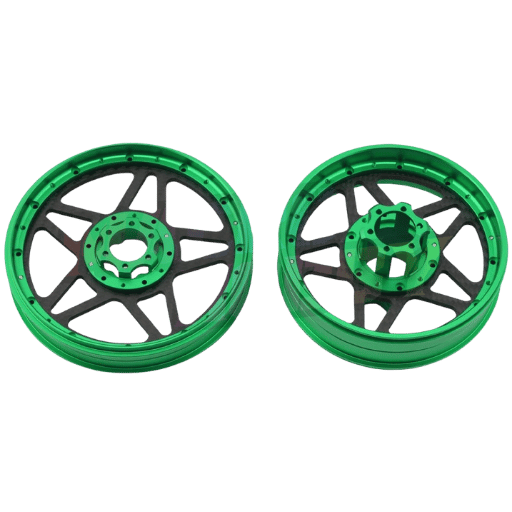
Lightweight CNC aluminum wheels are strong and precise components manufactured using CNC machining. This process involves removing material from aluminum billets to achieve highly intricate, reproducible designs with utmost dimensional precision. Known for their excellent strength-to-weight ratio, these wheels improve vehicle performance by reducing unsprung weight, thereby enhancing handling and fuel economy, provided the correct set of tires is used. From an appearance standpoint and in actual application, corrosion resistance also favors the wide-setting option in aluminum CNC wheels.
What are CNC Aluminum Wheels?
CNC aluminum wheels refer to aluminum wheels manufactured using CNC machining technology. In simple terms, CNC machining involves using precise machines to cut and finish aluminum into a high-quality wheel that is both durable and lightweight. Due to their strength, lightweight properties, and superior performance, these wheels have become extremely popular, serving well in a wide range of applications.
The Importance of CNC Machining in Wheel Production
CNC machining is essential for precision, consistency, and quality in the manufacture of wheels. Using fine tools to a high level of accuracy, this method ensures that the wheels are manufactured to precise dimensions and shapes, ensuring they perform well and possess good strength. In addition, CNC machining reduces material wastage and enables the design of complex construction features that would be impractical for manual work. This is why the CNC process holds so much importance in the manufacture of performance aluminum wheels.
Overview of Aluminum as a Wheel Material
Aluminum has a distinct reputation for being an excellent material for making wheels, owing to its properties of strength, lightness, and resistance to corrosion. Lighter than steel, aluminum wheels offer improved fuel efficiency and enhanced vehicle handling. Due to its high strength, it can withstand the test of time in various driving conditions. Aluminum can be very elaborately worked upon to give beautiful wheel designs that combine both aesthetic value and performance. Thus, corrosion resistance comes as an added advantage in the material, enhancing the longevity of the product and making it a great candidate for contemporary vehicle applications.
Benefits of CNC Aluminum Wheels

Lightweight and Performance Enhancements
As a relatively lightweight option, many aluminum wheels contribute to enhancing vehicle performance. Aluminum wheels have a 30-50% lower weight capacity than steel wheels. The reduction in weight increases acceleration, braking, and overall responsiveness in handling. With lightweight wheels, a reduction in rotational inertia also leads to fuel savings and a lower energy requirement for acceleration.
Performance-wise, CNC machining ensures precise and consistent tolerances as required by the manufacturer, resulting in a superb fit with perfect balance and reduced vibrations. This affords a smoother ride, less wear on tires and suspension components. In other words, the finesse engineering of these wheels makes them desirable for both the galvanizer and the performance enthusiast, offering a step above the regular driving experience.
Durability and Strength Compared to Other Materials
Aluminum alloy wheels offer the best compromise between durability and weight, outperforming steel wheels in terms of performance and matching their strength. Aluminum is corrosion-resistant; therefore, it provides a longer service life in various environmental conditions where moisture, road salts, and other adverse chemical effects occur. Further improvements in alloy compositions and manufacturing techniques, such as heat treatments, have increased the tensile strength of aluminum wheels to very high levels, ensuring that they will not crack or deform under the highest-intensity stresses or impacts.
Just like carbon fiber, aluminum wheels are rarely used to withstand abrasive impacts and offer more economic feasibility compared to their mass production. Carbon fiber can be lighter, but under high tension or collision forces, it might behave in a brittle manner. Steel wheels are renowned for their strength; however, the increased weight may compromise fuel economy and the driving experience.
Key Insight: New technology in alloys over the past few years has given forged aluminum wheels a 20-30% increase in strength over cast aluminum wheels, while maintaining a lighter weight. This mechanical strength and resistance to environmental abuse make aluminum alloy wheels the preferred option for manufacturers seeking durability, stability, and performance, while also being a consumer choice.
Customization Options with CNC Machining
CNC is one of the most prominent aluminum alloy wheel finishing tasks for CNC work, with excellent precision and versatility. A manufacturer can, therefore, fabricate complicated designs on wheels and set wheel specifications according to customer preferences. With custom offsets and spoke patterns, surface finishes can be applied with utmost precision, using brushing, polishing, or painting techniques to ensure a perfect fit with your tires. CNC machining can also provide additional personal engravings or branding for bespoke wheel designs.
Technical Specifications:
- Precision Level: CNC machining can achieve an accuracy of ±0.001 inches, ensuring fairness and consistency in production.
- Production Efficiency: Advancements in multi-axis CNC machines allow for complex geometry to be machined in a single setup, reducing production times while improving customization potential
- Design Integration: The integration of CAD (Computer-Aided Design) software further enhances design fluidity, enabling manufacturers to visualize and modify wheel designs before machining begins
Comparison of CNC Aluminum Wheels with Other Wheel Types
Aluminum vs. Steel Wheels
| Parameter | Aluminum Wheels | Steel Wheels |
|---|---|---|
| Weight | Lightweight | Heavy |
| Durability | Less durable | Highly durable |
| Design Options | Wide variety | Limited |
| Corrosion | Resistant | Prone to rust |
| Cost | Expensive | Affordable tire options are available for those looking for budget-friendly solutions |
| Performance | Better acceleration | Slower acceleration |
| Repairability | Harder to repair | Easier to repair |
| Heat Dissipation | Better | Moderate |
| Off-road Use | Less suitable | Ideal |
| Winter Use | Moderate | These wheels provide superior traction when paired with high-quality tires, enhancing overall vehicle performance |
Forged vs. Cast Aluminum Wheels
| Parameter | Forged Wheels | Cast Wheels |
|---|---|---|
| Weight | Lightest | Heaviest |
| Strength | Strongest | Weaker |
| Durability | High | Moderate |
| Heat Dissipation | Excellent | Poor |
| Cost | Expensive | Affordable |
| Manufacturing | Forging process | Casting process |
| Customization | High | Limited |
| Shock Resistance | Moderate | High |
| Applications | Performance, racing | Everyday, casual use |
RC Car Wheels: Why Choose CNC Aluminum?
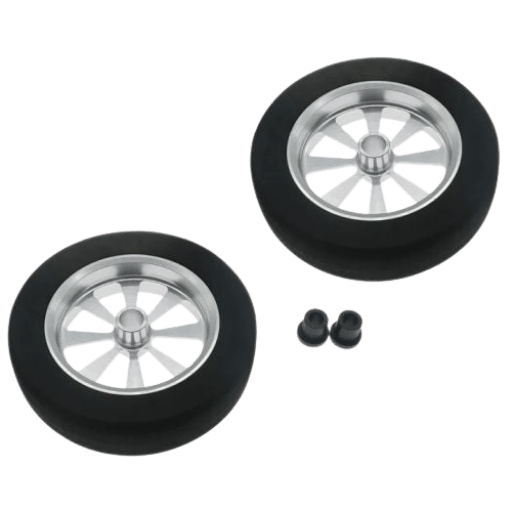
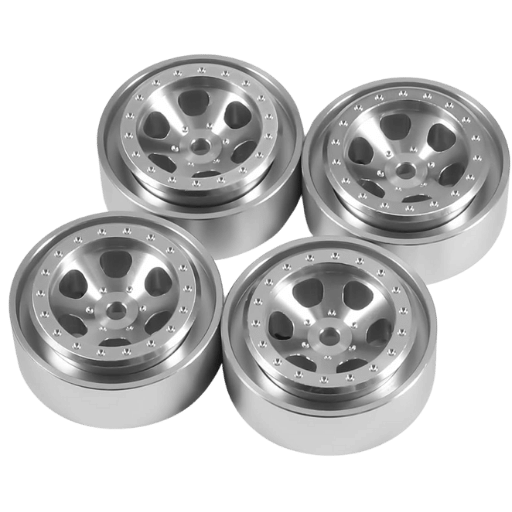
CNC aluminium wheels have become the choice of RC car enthusiasts due to their precision engineering and performance attributes, especially when paired with high-quality tires. These wheels are cut from solid aluminum billets using CNC machining, ensuring better accuracy, consistency, and therefore quality compared to conventional forming methods. This makes them excellent for tire applications.
Key Advantages for RC Enthusiasts:
- Unmatched Strength-to-Weight Ratio: Aluminum is, in fact, very light, which helps minimize its rotational mass, acceleration, handling, and overall performance of the vehicle. This has made it an excellent choice for the more risky tires and high-speed RC applications, wherein utmost precision is needed.
- Superior Durability: Unlike plastic and low-quality cast aluminum equivalents, CNC-machined wheels can withstand intense stress or rough terrain without warping, cracking, or wear. Additionally, the machining process ensures they are perfectly balanced, reducing vibrations and providing a smoother riding experience.
- Excellent Heat Resistance: Since CNC-machined wheels dissipate heat more effectively than their plastic counterparts, they prevent hubs and tires from being damaged during prolonged operations. Hence, this property suits this type of wheel for competitive racing, where consistent performance under pressure is essential.
- Enhanced Customization: CNC machining enables a high level of customization, allowing users to select different designs, finishes, and sizes that best match their RC car in terms of both appearance and functionality.
While the more common CNC aluminum wheels cost considerably more than the initial price, they last longer and perform infinitely better, presenting a genuine bargain for any serious RC enthusiast. With performance, reliability, and build quality at the highest consideration, CNC aluminum wheels are the secondary choice when it comes to RC car components.
Applications of CNC Aluminum Wheels in Various Industries
Automotive Industry Innovations
The CNC aluminum wheels have undergone a path of evolution in the automotive industry, particularly in terms of aesthetics and performance. Their perfectionist approach to manufacturing guarantees superior strength and durability, providing greater vehicle handling and safety. CNC aluminum wheels can be custom-made by automakers to produce, in fact, very light yet robust wheels, which help improve fuel efficiency and further lower exhaust emissions. These developments have led to CNC aluminum wheels being in great demand in high-performance and luxury vehicles.
Aftermarket Wheels for Custom Cars
One of the most essential elements of automobile customization is aftermarket wheels, offering improved performance, aesthetics, and versatility. They must be manufactured with the utmost quality materials, like aluminum or alloy, offering the best balance of strength and lightness compared to OEM wheels. According to statistics, forged aluminum aftermarket wheels are 20 to 30 percent lighter than regular steel wheels, thus enhancing acceleration and fuel economy.
Due to the nearly endless array of sizes, finishes, and designs that cater to individual aesthetics and fitment, aftermarket wheels are favorites among custom-car enthusiasts. For example, large-diameter wheels with low-profile tires improve a car’s stance and enhance stability during cornering. Be aware that reducing unsprung weight with lightweight aftermarket options can positively impact handling and suspension response.
Besides these, rotary forging and flow forming are modern manufacturing techniques that refine aftermarket wheels by enhancing tensile strength without a significant gain in weight. This very durability is beneficial for vehicles with enhanced performance requirements; that is, these wheels can withstand greater speeds and braking forces. Therefore, an aftermarket wheel is a truly desirable choice for the custom car community, meeting both performance and visual demands.
Use in Racing: Performance and Advantages
The application of aftermarket wheels for racing purposes offers several additional performance benefits, including weight reduction, improved grip, and enhanced aerodynamics. Lightweight alloy wheels reduce unsprung weight, thus allowing for faster acceleration, quicker braking, and the crisp feel of responsive handling. Reducing unsprung weight and suspension load will also improve vehicle stability during fast cornering maneuvers.
Racing Performance Data: Studies and data support the claim that high-performance wheels may indeed shorten lap times by as much as 1-2% within literal professional racing settings, depending on vehicle setup and track-specific.
Other factors that contribute to grip include advanced designs and material selection for high-performance wheels, which allow for larger tire sizes and optimized tire contact patches. These translate to gains in cornering and time reductions at the track, indeed providing a competitive advantage. Furthermore, some racing wheels are designed for maximum heat dissipation through advanced cooling properties-an absolute must when sustained braking heats the environment in the endurance racing setup.
With features like beadlock, which prevent tire slippage during heavy acceleration or when high torque outputs are applied, some wheels offer an advantage in maintaining performance and safety. These perks paint a clear picture of how aftermarket wheels enable a race car to perform at its maximum potential under extreme conditions.
Maintenance and Care for CNC Aluminum Wheels
Cleaning and Polishing Tips
To properly clean and polish CNC aluminum wheels, follow these steps:
- Rinse Thoroughly: Start by rinsing the wheels with clean water to remove loose dirt and debris. Use a gentle stream to avoid scratching the surface.
- Apply a Wheel Cleaner: Use a non-acidic, pH-balanced wheel cleaner specifically designed for aluminum surfaces. Apply it evenly and allow it to sit for the recommended time.
- Scrub Gently: Use a soft-bristled brush or microfiber cloth to scrub the wheel, focusing on crevices and hard-to-reach areas. Avoid abrasive tools that could damage the wheel’s finish.
- Rinse and Dry: Rinse the wheels thoroughly with clean water to remove all residue from the cleaner. Dry immediately with a microfiber towel to prevent water spots.
- Polish and Protect: Apply an aluminum polish using a clean cloth, following the product instructions. For added protection, finish with a non-abrasive sealant to preserve the wheel’s appearance and guard against oxidation.
Perform this maintenance regularly to extend the life and aesthetics of your CNC aluminum wheels.
Inspecting for Damage and Wear
The aluminum CNC wheels require periodic inspection to maintain their structural integrity and aesthetic appearance. Begin with a visual inspection of the outer wheel’s surface for corrosion spots, scratches, or cracks, as these could compromise its performance and safety if left unaddressed. Also, take a close look at the bead seat area of the tire, which is crucial for tire sealing.
To extend the inspection, check for bending or warping by spinning the wheel on a balance machine or similar equipment to detect uneven rotation. Even slight deformation can cause vibrations and affect the vehicle’s handling. Also, inspect the lug holes for elongation or distortion, as this may occur due to improper torquing during installation.
Common Causes of Wheel Damage: Industry documents suggest that heat above normal, coming into contact with road salts, or hitting potholes or curbs usually cause wheels to become damaged. Using a torque wrench to tighten lug nuts to manufacturer specifications will minimize wear on the mounting surfaces. Moreover, small damages should be promptly addressed through methods such as resurfacing or repairing minor scratches and dents, as this will help prevent further deterioration and increase the wheels’ operational life.
Replacing Screws and Nuts: A Guide
Replacing screws and nuts is a relatively straightforward operation, provided it is done with caution and in a step-by-step manner. Begin by ensuring the replacement parts are of the correct size and match the thread type and material of the original screws and nuts. To begin the scraping task, use the incorrectly sized screwdrivers or a wrench to loosen the damaged or worn screws and nuts.
Step-by-Step Replacement Process:
- Check the surrounding area to make sure there is no other damage or debris that might compromise the new installation
- Align all replacement parts, including the tire adapter, and hand-tighten to avoid cross-threading
- Once hand-tight, torque to the recommended levels using a torque wrench for a secure and lasting connection
- Always check against manufacturer recommendations for compatibility and never over-tighten
Frequently Asked Questions (FAQs)
Q: What are CNC aluminum wheels?
A: CNC aluminum wheels are precision-engineered wheels made of aluminum through the usage of computer numerical control (CNC) machines. This technology enables cutting and shaping aluminum with very high precision, thus producing a finished wheel that conforms to exact dimensions and tolerances.
Q: How do customer reviews reflect the quality of CNC aluminum wheels?
A: Customer feedbacks give insight into the quality and performance of CNC aluminum wheels with respect to durability, surface finish, and general satisfaction. On a positive note, customers focus on aspects such as a perfect fit and smooth operation, while on the other hand, they criticize aspects related to manufacturing and dimensions.
Q: What factors should I consider when purchasing CNC aluminum wheels?
A: In buying CNC aluminum wheels, you first consider the wheel diameter and type of alloy, then concentrate on surface finish with vehicle specifications. Customer reviews may provide valuable insights into the manufacturer’s experiences, as well as the acceptance of the wheels under different driving conditions.
Q: How is the surface finish of CNC aluminum wheels achieved?
A: CNC aluminum wheels are finished on the surface by a machining process. The process includes grinding, polishing, and anodizing. These types of surface treatments enhance the aesthetic beauty of the wheels, prevent corrosion, and improve performance.
Q: What is the importance of precision in CNC aluminum wheel manufacturing?
A: Precision in CNC aluminum wheels is judged as a feature because it endorses that the wheels fit the hub and maintain balance during use. It is their exact dimensions and tolerances that prevent issues such as vibration and uneven wear from occurring, thereby jeopardizing not only performance but also safety during driving on the road.
Q: Can I contact the manufacturer for custom specifications of CNC aluminum wheels?
A: Certainly, almost all manufacturers will manufacture CNC aluminum wheels as per your needs. You may contact them and explain your requirements regarding dimensions, finish, and any other unique features you would like to incorporate into the design, ensuring they meet your expectations.
Q: What are the benefits of using aluminum for CNC wheels?
A: Aluminum is chosen for CNC wheels because it is lightweight and helps in vehicle performance and fuel efficiency. Besides, aluminum wheels resist rust and corrosion in varying conditions.
Q: How do I ensure the perfect fit of CNC aluminum wheels on my vehicle?
A: To maintain perfect fitment of CNC aluminum wheels on a vehicle, you must measure all related specifications, such as bolt patterns, offsets, or hub diameters. You may also have your manufacturer or a qualified dealer assist you in specifying the proper wheels and tires for your vehicle requirements.
Q: What delivery options are available for CNC aluminum wheels?
A: Delivery options vary with manufacturers for CNC aluminum wheels; most companies, however, will offer standard shipping, expedited shipping, or even local pickup. You will need to check with the supplier for the exact delivery times and costs associated with your purchase.
Q: What role does inspection play in the manufacturing of CNC aluminum wheels?
A: Inspections occupy the utmost importance in the manufacturing of CNC aluminum wheels. It is instrumental in ensuring that each wheel meets the prescribed specifications and tolerances, thereby maintaining the highest standards of quality and performance, particularly in terms of tire fitment. The defects, if any, are identified during the production and curing of the product through regular tests.
Reference Sources
- Polished Aluminum Wheels – Innovate Tech Hub: This explains the process and role of polishing aluminum wheels in automotive customization and performance enhancement.
- Design of Carbon Fiber Wheel Rim: While focusing on carbon fiber, this Ohio State University study presents some general ideas about wheel design and engineering issues.
- Aluminum CNC Machining Service
- Wheel Engineering Research: Additional resources on advanced wheel manufacturing and materials science.
Conclusion
CNC aluminum wheels truly are the future of automotive technology and precision manufacturing, offering all the performance benefits. Whether lightweight, durable, customizable, or simply beautifully designed, these wheels are redefining our perception of performance and design. For those who are automotive aficionados, professional racers, or simply seeking superior functions for their vehicle, CNC aluminum wheels are a blend of art and engineering that continually pushes the envelope of excellence.