

Manufacturing processes are quite complex, and the choice of a production method is directly related
Learn More →
The world of machining puts emphasis on efficiency and productivity. For this reason, aluminum CNC tombstones are considered a stellar solution for machine tool applications, offering vast versatility and performance of their own. These tools are meant to develop machining procedures so that manufacturers can work on a few parts at the same time with the reduction of setup times and the increment of production rates.
In this article, we will discuss the special advantages of aluminum CNC tombstones, their preference by a multitude of industries, and how these tools can really help you improve your machining workflow. This guide will provide you with insights on how to embrace this innovative solution whether you aim to improve efficiency or take the next step in the race.
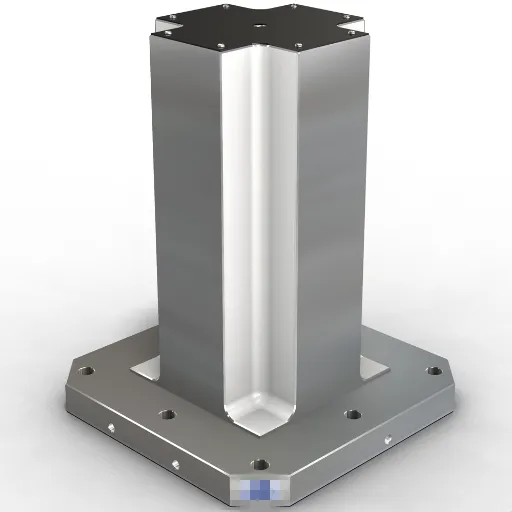
An aluminum CNC tombstone is a specialized fixture applied to engineering setups, in order to allow for increased speed and accuracy. These tombstones, designed with several mounting surfaces, enable an operator to fix several workpieces or fixtures simultaneously. Constructed from light, but strong aluminum, the tombstones offer rigidity at ease with handling when compared to their steel counterparts.
Recent searches support the contention that aluminum tombstones are highly favored fully in aerospace, automotive, and medical manufacturing industries for multipurpose nature and support of high-speed machining operations. With their sharp, lightweight design, these fixtures alone can go a long way in streamlining specific production workflows and, by extension, cutting production downtime, thus empowering manufacturers with greater levels of productivity.
Aluminum tombstones are a time-tested option capable of solving a large variety of machining problems and, as such, have become a crucial part and parcel of modern manufacturing requiring quick, efficient, and accurate processes.
Lately, if one were to correlate the data from a search engine, the queries about aluminum tombstones would reveal their importance in allowing manufacturers to improve their productivity with high-speed machining and well-established work flows. Fast setup and the ability to allow multi-sided machining in a single fixture really come to lowering the cost of high-level manufacturing challenges.
Their vast use in aerospace, automotive, and medical manufacturing is testimony to the fact that aluminum tombstones do indeed hold that center stage in precision and order to meet the stringent quality standards of the competitive market.
While cast-iron tombstones have been trusted tools in machining for many decades, their inherent characteristics greatly differ from modern alternatives such as aluminum and steel tombstones.
💡 Selection Tip: Usually, when compared to cast iron, the choice really depends on the manufacturing process needs such as speed, type of materials to be processed, as well as the degree of precision. In this regard, the newer aluminum and steel tombstones are greatly favored in high-speed machining, where agility and adaptability are the essence.
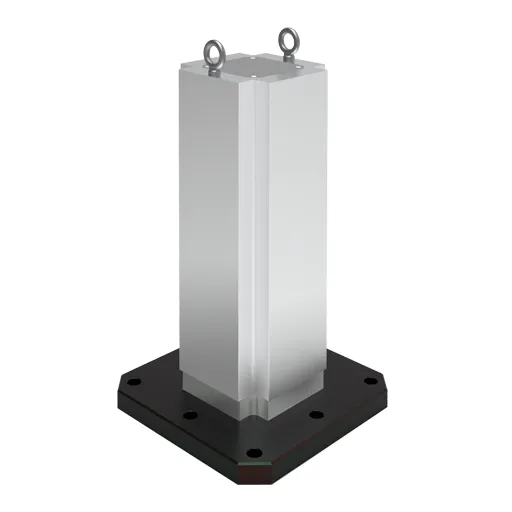
When weighing features such as weight and stability, aluminum CNC tombstones offer unsurpassed advantages. Aluminum being a light metal, makes setting up easy and reduces the strain on machinery when compared to the heavy cast iron or steel. This results in swifter changeovers and increased efficiency for high-speed manufacturing processes.
Easy setup, reduced machinery strain, and swift changeovers for increased efficiency.
Sufficient rigidity ensures precision machining without compromising quality.
Suitable for small-scale operations and large-scale production alike.
As recent data from search trends points out, manufacturers increasingly tend to go for aluminum on account of the balancing act that it forces between being lightweight on one hand and sturdy on the other; particularly so in industries that value agility and scalability.
Just another factor contributing to the aluminum CNC tombstone’s cost-effectiveness is that it delivers great service with a reasonable price tag attached. Search data shows a rising trend in aluminum as the material of choice across industries from aerospace, automotive, to precise engineering.
Being versatile comes with the ability of aluminum being an excellent material for advanced machining processes that require a high level of precision and efficiency. With advances in CNC machining and technology, manufacturers may go on to carry out very complex designs and exacting specifications without deleteriously affecting the structural integrity of the material.
Recent trends from search data show a growing industrial preference for aluminum where precision matters, such as aerospace components, automotive parts, and electronics. This demand speaks to aluminum’s outstanding machinability in addition to its cheapness and adaptability to various manufacturing needs.
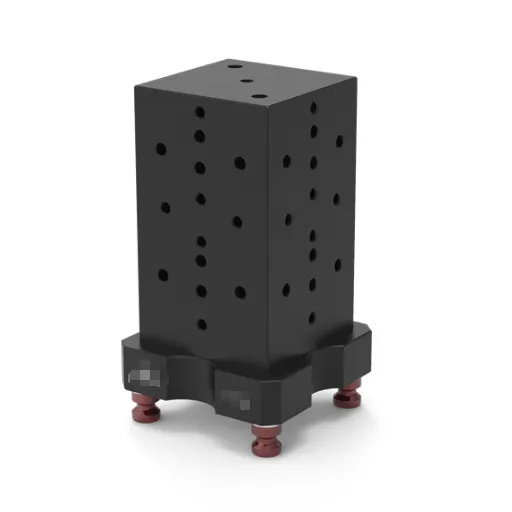
Horizontal machining centers are types of precision machines that were very innovative for versatility and efficiency. When combined with aluminum CNC tombstones, they offer sequential and simultaneous machining operations with complex precision, thus reinforcing industrial productivity.
1
2
3
4
Search trends present gradual growth in interest in this technology, highlighting HMCs’ versatility. The trend promotes the demanding nature of industries such as aerospace, automotive, and electronics in precision and short time. With HMCs combined with aluminum CNC tombstones, producers balance production and rigorous quality standards.
With modern machining tools, therefore, custom manufacturing can be carried forth quite differently. Integrated solutions composed of software, automation, and high-performing hardware allow for production processes that are scalable, customizable, and cost-effectively produced.
With all of these solutions in place, manufacturers can continue in the market that is renamed on a rapid basis. This way, they can meet out to all the evolution for speed and quality.
Modern machining tools are altering the application of vise and modular systems to custom manufacturing: greater precision, flexibility, and efficiency. With the help of CAD/CAM software and automated systems, manufacturers can now precisely design modular systems for very specialized production needs.
📊 Industry Trend: This raises interest-especially recently-in how these tools make modular setups adaptable with near-zero time for setup and virtually zero errors, according to the latest data. This in turn allows industries to design complex designs in smaller batch sizes without compromising on cost or time. Hence, this interaction of machining tools with vise and modular systems creates real opportunities stretches for scalable, customized manufacturing workflows.
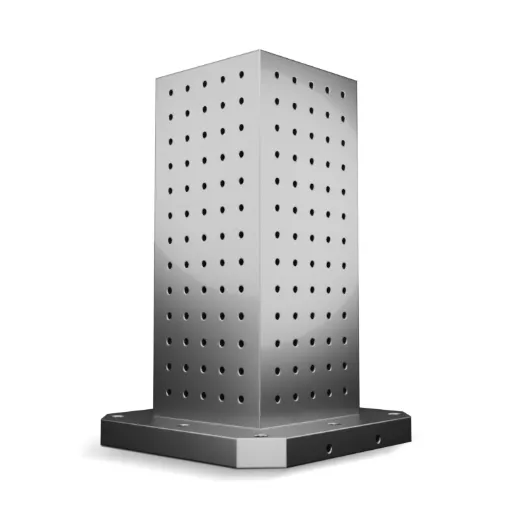
During the design of aluminum tombstones, very precise values are needed, accompanied by tight tolerances, to assure optimal performance in machining processes. Aluminum tombstones are usually built with standardized nominal sizes to fit commonly used machine tool configurations since custom dimensions are more of an operational need.
Recent trends are focusing on balancing design weight and strength, with aluminum-weight options being on demand for corrosion resistance and ease of handling. There are many questions pertaining to the tolerances for high precision machining, thereby highlighting the necessity of choosing tombstones with precisely engineered surfaces and mounting features to ensure their rigidity and the correct alignment of both give high repeatability and production efficiency for industries dealing with either intricate or small-batch fabrication.
The 400-mm tombstone configurations meet the wide and varied requirements of machining, whether standard or custom in nature. And the standard ones have industry-based dimensions and features so they can get integrated into the existing system with ease. Custom configurations give more freedom and flexibility to adapt the tombstones to the needs of each manufacturer, whether it be for unique part geometry, specialized methods of material handling, etc.
❓ Key Question: What does the custom tombstone solution buy? Custom tombstones are increasingly in demand due to tighter tolerances and unorthodox workflows as suggested by the recent trends and search engine data. Such solutions give manufacturers the opportunity to improve the precision level, operations, and overall production quality.
Custom tombstones are seamlessly integrated into CNC (Computer Numerical Control) machinery to facilitate production workflows and precision. These specialized fixtures are designed to secure more than one workpiece at a time, allowing the manufacturer to perform complex machining operations in just one machine setup.
✓ Bespoke Manufacturing Needs: Mold to specific requirements with minimal downtime
✓ Multi-Face Machining: Process multiple sides simultaneously
✓ Speed & Accuracy: Increased production rates with precision
✓ Industry Demands: Meets aerospace, automotive, and medical manufacturing standards
✓ Maximum CNC Utilization: Optimizes machinery capabilities to fullest extent
Now, with data collected from the search engine stating increased demand, the question arises—why are custom tombstones important for a CNC setup today? The answer is custom tombstones’ ability to mold to bespoke manufacturing needs with minimal downtime and no additional setup. This is why they occupy a very vital position in the utilization of CNC machineries to the fullest extent.
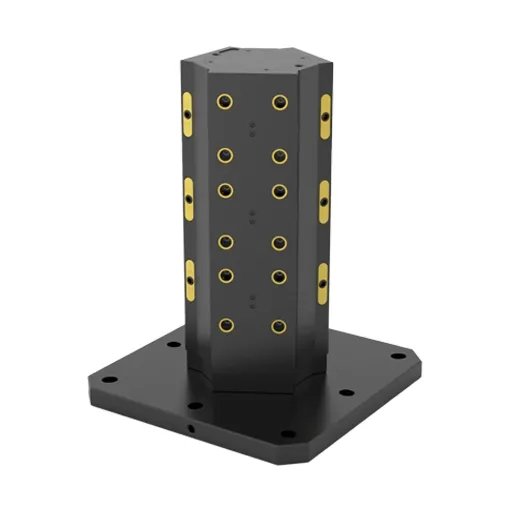
With new materials and coatings, contemporary aluminum CNC tombstone technology brings the dawn of a new era in performance and durability. New lightweight aluminum alloys have been developed with better strength-to-weight ratios to resist stress in high-speed machining without giving in structurally.
Anodization
Protective layer against wear and corrosion for extended lifespan
Ceramic-Based Finishes
Superior heat resistance and durability in extreme conditions
Lightweight Alloys
Enhanced strength-to-weight ratios for high-speed operations
Long-Term Performance
Reduced maintenance and production expenses through consistent operation
Rather than the traditional finishes of paint or powder coating, modern types of finishing-l ike anodization or ceramic coating- are more protective against wear, corrosion, and heat. This is because the tombstones thus stay functional for quite a bit longer and maintain their performance, which decreases maintenance costs and production costs. Similarly, the use of advanced materials and finishes in machinery construction takes CNC machining even closer to the absolute limits of precision and efficiency.
The evolution of automation and smart manufacturing helps in changing industries by increasing productivity and minimizing waste. Advanced robotics, AI, and machine learning form the crux of the revolution for real-time decision making and predictive maintenance in manufacturing operations.
The interest in Industry 4.0-related solutions has been steadily rising and corresponds to the global manufacturing digitalization drive. With the use of IoT-enabled devices, cloud computing, and similar technologies, companies are streamlining their operations and bringing more visibility into the ‘supply chain’ and lifting product performance in tangible terms. This movement signifies a great push toward the creation of manufacturing ecosystems that are adaptive and utterly efficient while being environmentally friendly.
Automation, AI-based optimization, and smart manufacturing system implantation- these are some modern advanced technologies that constitute the new paradigm of CNC tombstone manufacturing. Data from search engines correlate surge in interest in precision, efficiency, and sustainability, with manufacturers going down the path that brings together traditional expertise and cutting-edge innovation.
By coupling IoT monitoring solutions, manufacturers get real-time insight into machine performance, essentially cutting down downtime and optimizing productivity. A clear storyline unfolds heading from current CNC tombstone manufacturing into more intelligent, timely, and green forms, satisfying the contemporary industrial demands.

The choice of tools to be set with CNC tombstones should reject any compromise on efficiency and precision since the strong relationship between these two factors would otherwise affect the warping of productivity. Unslotted space planning of fixtures on the tombstone awaits him; unrestrained and disordered placement of multiple workpieces marginalizes the occasional possibility of machining one of those operations in a second; hence a large subtraction is produced in the setup time.
Strategic Fixture Planning
Arrange multiple workpieces to maximize machining efficiency and minimize setup time
Modular Fixturing Systems
Use adaptable systems for quick accommodation of different component shapes and sizes
Automated Tool Changers
Integration with robotic arms for high-speed loading and unloading of workpieces
CAM Software Simulation
Simulate toolpaths before actual runs to reduce errors and ensure precision
Automation seems to have emerged as a main subject taken into another direction in research related to the set-up of tools. Such automation not only makes the process quicker, but they all do aspire to make the production flow a bit smoother. It is the amalgamation of technological advances and means of planning that open up the vast possibilities for modern machining operations concerning CNC tombstones.
CNC tombstones require maintenance and care for longevity, collaborative maintenance, and imparting machining operation realization. With proper cleaning, chips, debris, and coolant residues need to be removed so that build-up does not interfere with accuracy.
According to recent revelations, among the biggest ways in which a CNC tombstone may be maintained for a longer period, acquirers include having a preventive maintenance schedule. One may also storage the tombstones while unused in dry and controlled environments to lessen moisture and environmental hazard, which, when coupled with good maintenance and usage, would assure manufacturer precision to run for years to come.
Depending on the situation, CNC tombstone operators may come across several irregularities that affect the final precision and productivity of the machine.
Problem: Poor calibration or wear over time causing misalignment
✓ Solution: Check alignment frequently with specialized tools and recalibrate when necessary
Problem: Damage from mishandling during excessively loaded transport
✓ Solution: Conform to recommended weight limits and transport using appropriate equipment
Problem: Accumulation in mounting holes and contact surfaces hindering performance
✓ Solution: Initiate a daily cleaning routine to prevent buildup
Problem: Various performance irregularities affecting precision
✓ Solution: Consider manufacturer guidelines and use diagnostic tools for accurate identification. Incorporate regular maintenance practices with real-time operational data
💡 Pro Tip: Incorporating regular maintenance practices with real-time operational data input ensures uninterrupted operations and minimizes large-scale unexpected outages between both the manufacturer and the operator.
Aluminum CNC tombstones are specialized workholding devices used in CNC machining, thus accelerating the machining process. It provides a flexible platform to hold several workpieces at the same time, thus increasing productivity. These lightweight tombstones are easy to handle and set on CNC machines, including those from Haas. The aluminum model stands as an excellent alternative to cast iron tombstones, especially when a flexible setup is required. The design may take on different clamps and accessories, making the 5-axis machine more efficient.
The right aluminum CNC tombstone must be contractualizing size, configuration, and compatibility with the CNC machine. Thus, if your metrology allows for a maximum pallet weight of five hundred millimeters, then the tombstone chosen must let this feature remain stable. A major factor is workholding, which gives solutions to tasks that can best be done on two- or four-side. Wherever possible, request the manufacturer to provide modular designs; this will allow the user to construct a custom tombstone out of a number of base plate and jaw configurations. Also, examine how custom is to be yours under your machining environment.
Modular aluminum tombstones have been designed with flexibility and adaptability in the field of CNC machining. Some of their features may include mounting different fixtures and accessories that can be easily swapped depending upon the job requirements. It is this kind of versatility that allows the machinist to maximize workholding capabilities without having to invest in several dedicated setups. On the other hand, when a wide range of fixtures is employed, space and resource optimization is more feasible on the machine. For this reason, manufacturers wanting to optimize process flows and minimize setup time often look at adopting modular tombstones.
Several considerations enter the picture when comparing aluminum tombstones with cast iron ones. Aluminum tombstones are lighter; hence, they are easier to handle and install onto CNC machinery. They offer flexibility and can be fitted with clamps and attachments for various machining tasks. On the contrary, cast iron tombstones offer durability and stability, yet they may lack some of the flexibility aluminum affords. Both materials are trustworthy; however, aluminum tombstones seem preferred more and more in high-speed machining occasions because they decrease the total weight resting on the machine, thus increasing machining efficacy.
Vises form a crucial aspect of any workholding device offered by aluminum CNC tombstones in that they should be placed in a way to grip the workpieces with adequate pressure for if any precision machining is done. Aluminum tombstones are quite flexible as they accept several types of vises to be mounted on them in such a way that space is well used and positioning is optimized. Aluminum allows almost any changes so that many vises may be mounted which can then machine very complex parts with different shapes and sizes. This is highly beneficial for the manufacturers who want quick and efficient work setups on their CNC machines.

Manufacturing processes are quite complex, and the choice of a production method is directly related
Learn More →
There are two major manufacturing methods for producing plastic prototypes that most people find useful
Learn More →
As a person involved or interested in the design and production of plastic components, it
Learn More →