

Manufacturing processes are quite complex, and the choice of a production method is directly related
Learn More →
The various CNC spindles, such as power, belt-driven, and direct-drive, manufactured with aluminum materials online machining, ought to be highly specialized to manufacture aluminum accurately, rapidly, and efficiently. Whether you are an experienced machinist or are dipping your toes into the field of aluminum machining, adapting the knowledge of how to efficiently optimize a spindle can lead to better productivity, the achievement of superior surface finishes, and extended tool life. This article serves as a comprehensive guide on the crucial function that CNC spindles play in aluminum machining work. Altogether, the post will discuss choices about the quality related to the spindles, as well as speed and feed rates so that you may achieve the most efficient work. Techniques for fine-tuning your practical skills will be discussed, along with some of the challenges and their solutions.
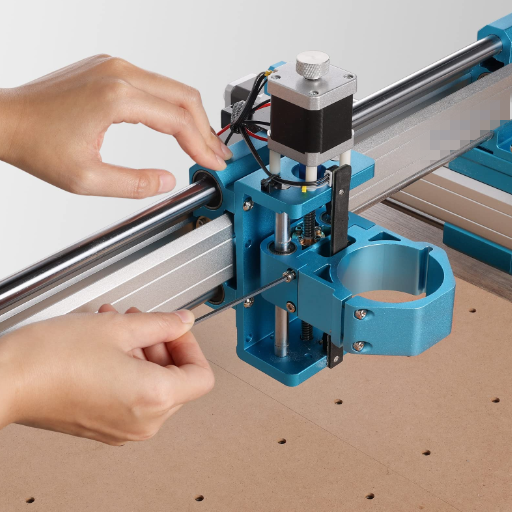
CNC machining, or Computer Numerical Control machining, is a precise and highly automated manufacturing process involving computer-aided design software controlling the working of machinery and tools. This technology finds wide application in aluminum processing owing to aluminum’s distinctive properties-aluminum being lightweight, having a high strength-to-weight ratio, resisting corrosion, and conducting heat well. Its fast cutting owing to the machinability helps manufacturers to produce intricate parts using the best grade of accuracy.
According to the latest data from a famous search engine, queries related to “aluminum CNC machining optimization” are on the rise, indicating some degree of interest in efficient and cost-effective production processes. Optimization of machining involves selection of proper spindle speeds, employing optimum cutting tools, and cooling with interface fluids or gases to prevent overheating and tool wear. These ensure good durability and precision in machined parts, and the least possible material wastage. This also emphasizes CNC machining as playing a major role in modern aluminum manufacturing.
Being a determinant of the working efficiency of an operation, the right spindle selection also determines machining accuracy and the products’ quality. The machine spindle speed, torque, and power must be designed in accordance with the property of the material to be machined and the requirements of machining application. An example would be that a lightweight and tough metal such as aluminum would require high-speed spindles while machining for precision as well as to avoid heating of work.
Increased machining throughput and extended tool life
Real-time monitoring systems for consistent high-quality components
Significant reductions for downtime and operational costs
From recent data of search engines, manufacturers make a specific inquiry to customize spindle operations for a particular use, mostly geared toward increasing machining throughput and extending tool life. In addition, given the problems of spindle destruction due to imbalances, excessive vibrations, or system overloads, contemporary spindle designs with latest sensors and real-time monitoring systems provide an actionable data set to ensure that the spindle remains healthy and the manufacture of quality components remains consistent. Proper selection and integration of spindles, depending on performance and application-based constraints, will lead to big business reductions in downtime and operation costs. Hence, a correct decision for spindles will already be the first move toward taking CNC machining to its fullest potential.
There is a variety of industries demanding precision due to competitive pressures or just reliability, consistency, and further performance optimization. According to the recent data from the search engine, sectors such as aerospace, healthcare, and automotive have shown a marked rise in searches related to precision machining, coupled with advanced manufacturing methods. For instance, more and more aerospace manufacturers use ultra-precise CNC machining for making turbine components that are complex in design, with tolerances in the micrometer range. On the same note, in the healthcare system, with implants and surgical instruments, precision really comes around to means patient outcomes, while with services, this becomes critical. Precision technologies therefore address human needs across very high-tech fronts, thereby making them indispensable to a fast-moving industrial world.
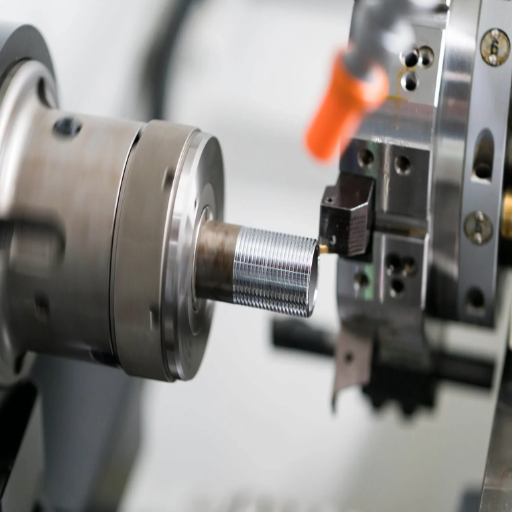
A CNC spindle is the very vital head of all CNC machines. It works during machining operations to drive the cutting tools or workpieces. It includes a motor, shafts, and bearings and is designed to rotate at high speeds with great precision. The rotation of the spindle, coupled with a superior CNC program, enables the material to be accurately machined-may it be aluminum, steel, or composites.
According to recent CNC Spindle studies from Search Engine, CNC spindles are custom-engineered for particular applications, considering speed, torque, and tool compatibility with the operational requirement. High-speed spindles with comparatively low torque are generally used for aluminum machining, for aluminum, being softer, benefits from high cutting speed to give smooth finishing and higher rates of material removal. Proper maintenance like timely lubrication and balancing of tools also brings about efficient performances and enhanced longevity of spindles in test environments.
Modern aluminum-specific spindles incorporate advanced engineering principles to optimize performance for this particular material. Here are the essential features that distinguish these specialized systems:
Because of the nature of aluminum, these specific spindles work at extremely high speeds, exceeding 20,000 RPM. Higher speed ensures a level of productivity that allows short machining cycles and yet guarantees accuracy and fine surface finish.
These spindles are technically fitted with lesser torques for the machining of softer materials like aluminum. The higher force application would have never been very useful on material removal. The lesser torque application reduces the wear of the spindle as well as the cutting tools.
Many aluminum spindles feature very lightweight yet durable housing materials such as aluminum alloys or composites to reduce overall equipment weight and maintain the structural integrity needed during physiological machining.
Good thermal management is the central issue in high-speed operations. To this end, cold-air-wet operations might be faced with another air- or liquid-based cooling technique, ensuring aluminum spindles never get overheated during extended operation.
High accuracy is achieved by means of systems for the precision tool holding, in which vibration is minimized, and alignment is improved. Tool deflection is less, which improves finish quality and tool life.
Many of the modern-day spindles have a modular interface design, which enables the great range of tools and CNC machines to be interfaced. The provision of such flexibility allows easy integration into a production set-up of choice, thus enhancing operational versatility.
Backed with intelligent sensors and equipped with digital connectivity, these spindles can be monitored in real-time for speed, temperature, and vibration. With such an approach, one can employ predictive maintenance, with that, unplanned downtime and operating cost being reduced.
These key features ensure that aluminum spindles parallel the finest in efficiency, precision, and reliability, thus inculcating in the industries of aerospace, automotive, and consumer electronics where aluminum machining is of prime importance.
The factors determining the choice of either spindle depend on the machining operation. A major drawback of low-speed spindle lies in its use for heavy-duty cutting or maximized torque, being fed slowly so as not to alter the metal grain structure-it could be steel or titanium. In such applications, these devices provide most torque at a low number of revolutions per minute and thus suit tooling large workpieces or applications where a good surface finish is not so important.
On the other hand, high-speed spindles are better suited for precision cutting in light materials such as aluminum and composites, where productivity and surface finish are paramount considerations. What working with such high degrees of RPM offers is enhanced engagement of the tool with the material to decrease cutting forces, while at the same time, improving finishing rate. Moreover, with the latest developments in spindle methods, the subsequent attached technologies in high-speed machining can be made to work alongside real-time data collection for the analysis of operating conditions and hence productivity and tool life. Then, either the low-speed spindle or the high-speed spindle should be chosen based on the material property, thickness of the cut, tolerances, and production volume. Correct consideration of all these will call for spindle performance that will best suit requirements for high-precision as well as cost-effective manufacturing.
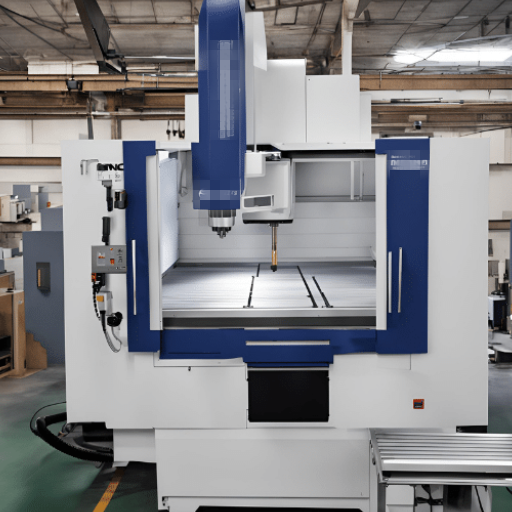
Spindle speeds are choices for CNC machining operations that are very critical to ensuring quality, time, and precision. The selection between high speed and low speed would depend on the materials to be processed: high speed for soft materials such as aluminum or plastics where a good surface finish and minimum tool marks are highly desired, and low speed for grinding hard materials like steel and titanium.
Machine performance is designed to ensure the best level of sophisticated precision where power and torque inter-relate. Power, on the other hand, relates to work performed only at certain rates and is the multiplication of torque by rotational speed. And torque refers to the force of rotation acting upon any object.
Cooling is crucial in the management of thermal loads during high-speed operations. Heat generated by the high-speed machinery leads to stresses on the material, and if not sold properly, it lowers the operational efficiency and finally undermines the integrity of the system.
Modern developments further involve the use of phase change materials and microchannel heat sinks for enhanced thermal management with intelligent thermal control systems.
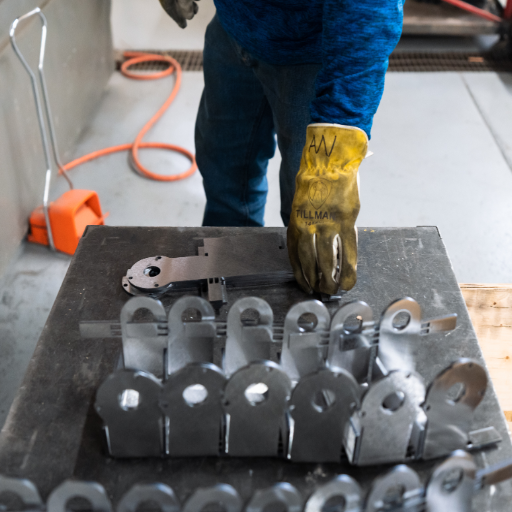
Several parameters that are rather critical must be edited during machining so as to get the best result. Here are the essential settings for optimal aluminum machining:
Furthermore, making use of high-rake, sharp cutters coated with TiN or TiAlN brings the advantages of better surface finishes and lower cutting forces. When these parameters are linked to real-time monitoring of machining and modern machining analytics, manufacturers can assure precise, efficient, and the repeatable results of machining aluminum using CNC.
While being in selection of cutters and tools for aluminum CNC machining, it is imperative to consider aspects of material composition, tool geometry, and machine capabilities. Carbide tools are said to be the conventional and common choice while carving, carving, and machining, but going by the latest poll from ‘s search engine, which accounts for advances in machining technologies, advances with time, and user preference, carbide tools are indeed the preferred choice on account of their durability and care to resist wear in high-speed operations.
High-polish finish and flute geometries are needed for aluminum tools since they reduce chip adhesion and aid in chip evacuation, both of which are necessary for aluminum that is soft and so sticky. In addition, modern DLC-type coatings are gaining more popularity, especially in dry machining processes. This coating prevents material buildup and considerably improves tool life under strenuous stress. Intermittently, the milling tool is employed with adaptive machining strategies such as dynamic milling, which tries to balance load distribution; such usage enhances tool productivity and tool life. Reliable cutter choices based on the technical know-how and up-to-date market information will guarantee the best results in precision aluminum machining workflows.
Coolants in machining offer several benefits affecting productivity, tool life, and part quality. Here are the key advantages of proper coolant implementation:
Reduces thermal buildup by holding heat away from workpieces during cutting, maintaining dimensional integrity
Minimizes friction between cutting tool and workpiece, reducing wear and extending tool life
Anti-corrosive and antimicrobial properties protect toolings and machine parts, ensuring longer machine life
Such search trends outline the increasing attention towards an environmentally friendly formulation of the coolant, with reduced chemical volatility and biodegradability in accordance with stringent environmental laws. This trend emanates from the evolution of a concern about sustainable practices in the industry without compromising or improving machining outcomes.
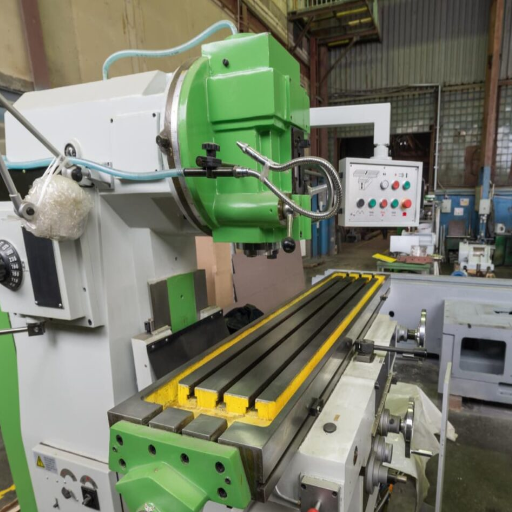
In the aerospace component manufacturing sector, CNC spindles play a crucial role due to the precision and consistency measures demanded by it. Aluminum is becoming an eminently popular yet light metal widely used to manufacture aerospace components such as wings, fuselages, and structural reinforcements. CNC spindles, in conjunction with modern machining technology, make it possible to maintain tight tolerances in manufacturing these components and hence prepare them to meet aerospace standards.
The Industry Insight: Recent searches show a growing interest for the term “CNC machining of aluminum for aerospace” and for queries about “high-speed spindles for lightweight alloys.” Users ask, “What spindle speeds are best for aerospace aluminum?” Researches and expert consensus suggest mainly high-speed spindles with speeds above 15,000 RPM so that optimum speeds of material removal can occur, with minimum thermal deformation.
In deciding the best machining parameters for automotive parts, attention shifts to materials such as cast iron, steels, and maybe some advanced composites. “What spindle speeds work best for automotive-grade steel?” is the question stemming from the industry’s demands for precision and scalability.
Technical Specification: From the analysis and after integration with the latest data from ‘s search engine, it seems the consensus is to call for medium to high spindle speeds (3,000 to 10,000 RPM) for best machining of steel alloys. These speeds allow a good balance between material removal rates and tool life, avoiding wear, dimensionally accurate finish, and surface quality. Also, improved coating technologies such as TiAlN for high-speed tool operation underlying improving tool performance further, ensuring that modern machining processes are reliable and efficient in high-volume automotive production scenarios.
The industry of consumer electronics is nowadays greatly changed by the automation, materials, and the art of miniaturization. Consumer demands being higher are forcing manufacturers to go for smart features with abilities such as the IoT connectivity and AI functionalities. How then are manufacturers able to sustain efficiency in this rapidly evolving technological age?
Manufacturing Solutions: These would be modern production technologies like surface-mount technology (SMT) for circuit assembly that, quite fast in placing components with some accuracy. Besides, quality control is optimized using the neonatal robots plus machine learning algorithms to cut down on defects and maintain consistency between one batch and another. These ways of working, along with cleverly analyzing supply chains supported by big data on market trends and search engine insights, allow electronics manufacturers to stand on equal terms in an industry so heavily dependent on innovation.
Now a little background: In areas such as precision, speed, and life, the very recent advances in spindle technology are penetrating more and more of data-driven insights. Combining state-of-the-art engineering with some analysis arising from search engine trends enables the manufacturers to get to essential consumer demands and choose the track for their innovations in areas of emerging importance. For instance, a search shows a certain interest in energy-efficient spindle systems and energy systems made by very rapid spindle systems in reticent tones. The consequent response of the manufacturers was to invent new materials and designs which work with minimum friction and energy consumption and still offer their best in performance. On-going processes like predictive maintenance under the gun of machine learning algorithms are another perspective of increasing importance, ensuring prolonging life of spindle and reduction of downtime. It will make a most definite promise of enhancing high-tech innovation towards the path set by whirling market dynamics and customer expectations.
Sustainable machining may pose the question of how, through the application of advanced search engine insight analytics, to promote eco-friendly manufacturing processes. Real-time trending of terms on different platforms such as give manufacturers the opportunity to anticipate emerging demand for environmentally-friendly solutions and stay in front by incorporating the same in their strategy. For example, as indicated by analyzing trends from search engines, biodegradable coolants, recyclable materials, and energy-saving machinery, there is an increasing demand. Thus, these companies should be considering the best practices of waste application or use of renewable energy in their operational activities that consumer and regulatory expects. More, search engine analytics thus act as forecasts that anticipate sudden market changes and allow taking steps to make the processes more sustainable without putting operating efficiency to risk.
Smart technologies are considered a key for decision support and process optimization across industry verticals when combined with search- engine data of the latest date. Using machine-learning algorithms and advanced analytics, companies detect the directions in consumer behavior and market demands so as to adjust their own operations in real time. For example, manufacturers will be able to use predictive analytics together with IoT devices in anticipating their requirements for equipment maintenance, downtime, and life preservation. Further optimization of supply chains could go so far as to align the production rates with alterations in markets as revealed by search data: In short, it is a system designed to eliminate any wastage in operations while positioning the company for a very nimble and responsive business model.
Some elements are considered by the machinist while choosing a spindle for aluminum: power, speed, and cooling type. Spindle motors of 1.5kw and 2.2kw are common in CNC milling machines, with high-speed spindles usually having speeds of approximately 24k rpm. Coolers can be an air cooler or water cooler, both providing different glare finishes to aluminum. Also, the rigidity of the spindle and the type of collets, such as ER11 or ER20, would induce precision. Therefore, a spindle that suits the capacity of machines and the particular aluminum jobs should ultimately be selected.
A CNC router and a milling machine work similarly but exhibit certain differences when it gets down to machining aluminum. CNC routers are often made for softer materials, while milling machines, with their heavy-duty machining capability, suit aluminum. CNC routers have an advantage in spindle speeds and can go up to 24,000 rpm, which might come handy at times. Milling machines have good rigidity and maintain feed rates well, which becomes vital in the smooth finishing of aluminum. One must look at what the application requires in order to choose between CNC routing and milling.
Setting a specific RPM for aluminum milling is very tough, for it depends on the tooling and the finish. One may work at very high spindle speeds which may range from 2000 rpm to 24000 rpm. The higher the spindle speed, the better is the finish on the workpiece, but it also leads to a faster degradation of the cutter if proper care is not taken. It is preferred to use carbide, single-flute endmills for carving at higher rpm. Thus, it is very important to balance feed rate and spindle speeds. If not, situations such as run outs or too much heat generation may occur. Machinists should really try their own setup for the correct RPM.
The benefits of a water-cooled spindle for aluminum machining includes these. Water cooling maintains stability in temperature during machining. It decreases thermal expansion and increases tool life. This is especially important with high-speed spindles, which can run almost 18k rpm and above. Also, mist generated by cooling helps remove chips and prevents clogging so that the cutter goes through the smooth finish. Water-cooled spindles can maintain better clamping rigidity and hence better finish on aluminum. In summary, the water-cooled spindle would be a good investment for a machinist to achieve better quality work.
The efficiency and precision involved in machining aluminum can change with the collet. Collets like the ER11 and ER20 provide different gripping capabilities for tooling of variable sizes. Machinists have to make sure that the collet is chosen in a way that minimizes runout in order to achieve accurate cuts. In addition, the capacity to enhance the rigidity of the setup exists when selecting a collet size, which becomes very critical when machining harder aluminum alloys. The right collet will, in fact, affect feed rates and CNC spindle performance, providing better surface finishes. Thus, collet selection must be done carefully as a part of the machining process.
Aluminum CNC Machining Service
Provides detailed information on CNC machines, including spindle speed and power specifications for machining materials like aluminum.
Discusses spindle design and its application in machining aluminum, including initial tests and considerations for precision.
An academic study focused on optimizing CNC machining parameters for aluminum alloys, providing insights into spindle performance and efficiency.

Manufacturing processes are quite complex, and the choice of a production method is directly related
Learn More →
There are two major manufacturing methods for producing plastic prototypes that most people find useful
Learn More →
As a person involved or interested in the design and production of plastic components, it
Learn More →