

Manufacturing processes are quite complex, and the choice of a production method is directly related
Learn More →
Two techniques of plastic parts machining that guarantee reliability and precision are CNC turning and CNC milling. Nevertheless, it is important to realize the significance of upholding the differences in their technologies for purposes of speeding up the assembly process without sacrificing the designs of parts or bonding plastic components unduly. Follow along as this article discusses in-depth the applicability of each of these CNC techniques, when one should be preferred over the other, the role that geometry or plastic properties of the part determines its choice and so on. Aimed at offering manufacturers, designers, engineers and whoever else is involved in production plastic processing guidance to make correct decisions and adopt best practices when machining plastic parts.
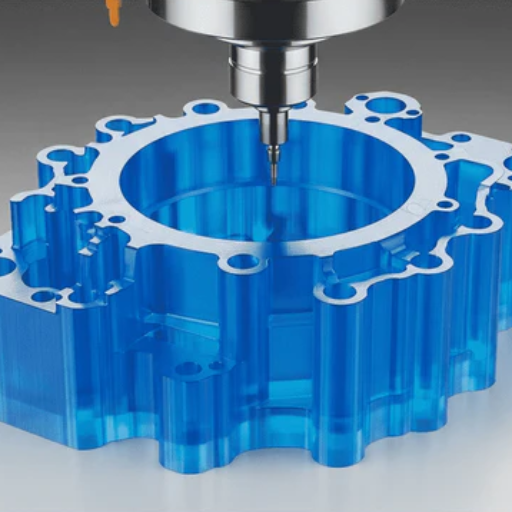
CNC plastic machining operations include using computer-controlled equipment to machine plastics into parts and components. It produces some of the best-in-class models and parts with excellent precision; moreover, this process can handle a host of polymers with relative ease and various geometrical complexities. Since they eliminate variation in every aspect of machining, CNC turning and milling assure improved conservation of the material, reduced cost of manufacturing due to minimization of human error, and enhanced process productivity.
CNC Plastic Turning is a special process for the cutting of plastic in which computer numerical control (CNC) machinery moves a plastic workpiece as the cutting tool removes material for the desired shape. CNC turning has been successfully employed for cylindrical or round shape components with accurate size control. Because of its ability to cut just about all plastic materials, including ABS, polycarbonate, PTFE, and nylon, CNC turning provides transportability for myriad applications. By the use of advanced CNC technology, excellent accuracy, reproducibility, and production efficiency are maintained, making it very useful for industries like automotive, medical equipment, aerospace, and consumer product industries. When combined with some of the modern technologies applied, the use of CNC turning enables very intricate fractions to get manufactured along with shorter lead times and very high quality controls.
The CNC plastic milling is a precision manufacturing technique that utilizes CNC drives to cut, carve, and press plastic materials with complicated contour designs and components. It is a technique in which a rotary cutter mills material from a solid block of plastic material as per a pre-programmed set of instructions. CNC plastic milling is a highly versatile process, and can work with all types of plastics, such as polycarbonate, acrylic, ABS, and HDPE, in making both functional prototypes and high-volume production parts.
The latest advancements in technology about CNC provide for high-precision and standard features compared to traditional plastic milling. Additionally, CNC plastic milling is extremely adaptable for producing 2D and 3D parts that require stringent tolerances. Manual industries look toward this technology for the fine production of toolings used in car companies, medicine or electronics. These items could include custom enclosures, finely machined connectors and cleanup geometrical shapes. CNC tactic and plastic mold milling techniques merge radical, state-of-the-art software with that of the equipment which allows for quite an enhancement of effectiveness and in turn, quality for integrative demand structure for manufacturing in modern times.
Machining holds a critical relevance to the best possible results in making. Precision, efficiency, and cost-effectiveness are indeed afforded, especially when one grapples with such taxing materials as plastics. Material types, desired tolerances, production volume, and design complexity, for instance, may become salient to contemplate in setting the best process. Thus, fine tolerances and very complicated designs can best be milled using CNC if plastic materials are considered more tight; while there are other methods available for very high-volume processing with injection molding processes. Selecting the best method not only ensures a better-quality product but also helps reduce waste and production time to make the best use of the project.

Turning centers work best with operations that require a round or domed workpiece, while milling centers possess limitations in terms of workpiece shapes required in operations.
| Parameter | CNC Turning | CNC Milling |
|---|---|---|
| Operation | Rotating workpiece | Rotating tool |
| Tool Motion | Fixed in place | Moves around |
| Workpiece | Rotates | Stationary |
| Use Case | Cylindrical parts | Complex shapes |
| Best For | Simple designs | Intricate designs |
| Tolerances | High for symmetry | High for precision |
| Speed | Faster for rounds | Slower but versatile |
| Material | Metals and plastics | Versatile materials |
| Volume | Medium to high | Low to medium |
| Setup Cost | Lower | Higher |
The mechanics of the CNC operation has the pivotal point of being the preference for the project, which is between CNC turning and CNC milling for working in plastics. It is generally in the rotation of the work-piece whilst material is being removed by the fixed cutting tool in CNC turning. This method is preferably used to machine cylindrical or symmetrical components, for example bushings, spacers, and rods. The precision and efficiency of this approach on round shapes, making it an excellent choice for medium to high-volume production of plastic components.
Whereas in CNC milling, a rotating cutting tool is used on a workpiece which is stationary. This allows one to make highly complex geometries and intricate detailing on non-cylindrical shapes. This method is most apt for any application in projects and particular working designs, tables, or components such as slots, pockets, and grooves that demand greater detail.
The final decision to choose between CNC turning or milling for plastics hinges upon the shapes, complexity, and volume of parts required. For simpler symmetrical parts, turning is generally quicker and more cost-effective. However, among the two, milling is the one that offers the ultimate benefit to make fine or intimate design concepts come to fruition.
Tooling tools for CNC turning and CNC milling in relation to plastics entail diving into applications and materials. For CNC turning, the cutting tools are more simple, focusing on an array of cutting tips for the rotational symmetry of the tool, including carbide or high-speed steel. They happen inside the dwelling plane to cut the steady side wall of the detail as it rotates.
CNC milling, on the other hand, is a very complex task necessitating a range of tooling, including end mills, ball nose cutters, and specialty bits for intricate cutting, or cutting paths allowing the processing of internal slots or external curves. In practice, such tools are coated or polished so as not to gaspingly snuggle the material or heat up due to its unlike behavior. Both demand precision tooling in order to produce a glossy finish without stressing the aforementioned materials; milling, however, requires a more extensive mold, perhaps even an array of specialized tools operating in otherwise semi-identical contexts.
CNC Turning and CNC Milling are two different processing types capable of creating highly specific parts:
Such a procedure is best chosen to manufacture cylindrical or circular parts. Such part types are busings, shafts, and hole thread extrusion. Precision in both size and finish findings is paramount to symmetry with known repeatability; where rotation is highly essential, this method is recommended.
The machining ability allows the milling machine flexibility to work on complex shapes and produce non-symmetrical parts. This process is implemented primarily in the manufacture of plastic components such as enclosures, brackets, or some mechanical parts requiring angular cuts and cavities.
Both processes are very precise and possess attractive end finishes; the context between them is determined by the design of the part and the performance nature of the products.

CNC turning is best for precision round parts types of objects as removal of material from the workpiece is done by a cutting tool mounted on a computer-controlled slide. It is mostly used for pieces like shafts, rings, and cylindrical housings that require roundness and resist loss of tolerance. This CNC turning process guarantees accuracy, repeatability, and productivity, so it is the most suitable solution for symmetrical pieces, depending on a flawless surface finish.
CNC turning of plastics requires due consideration of both the materials and the machine parameters to deliver the best results. Plastics have lower melting points and have less resistance to heat and stress than metals. Successful material management in CNC turning on plastics is attained when cutting speeds, feed rates, and tool pressures are consistently maintained in accordance with constraints of thermal damages, potential defects, or adverse outcomes. Sharp cutting edges and application of coolant prevent heat generation to ensure a clean and accurate cut.
CNC systems became friendly to some extent because of their modern offerings of swift results particularly when we see in plastics that have a soft texture. But this cutting speed best goes according to the plastic in use. To mention, the plastic that is harder by itself (polycarbonate) may require a bit slower cutting (versus polyethylene). Does it keep the piece within the machine-shops pay-tolerance, sometimes, or prevent the opportunity to expedite wear on the cutting tool. This technology works for shorter cycle times with a high quantity record and would, therefore, be seen as an appropriate solution for plastic turning in a variety of industries, promoting it as being able to mutate in usefulness.
CNC plastic turning is a cost-effective option primarily due to precision, efficiency, and reducing the amount of wasted material. Automation translates into direct cost savings in labor, while the sheer possibilities for repeatability offers the kind of consistency you can spread across large-scale industries. Besides, with further improvements in CNC production technology, the whole production time is getting reduced as an effect. It is an excellent economical way to develop industries like automotive, medical, and consumer products by effectively utilizing materials and manufacturing a scalable volume of products.
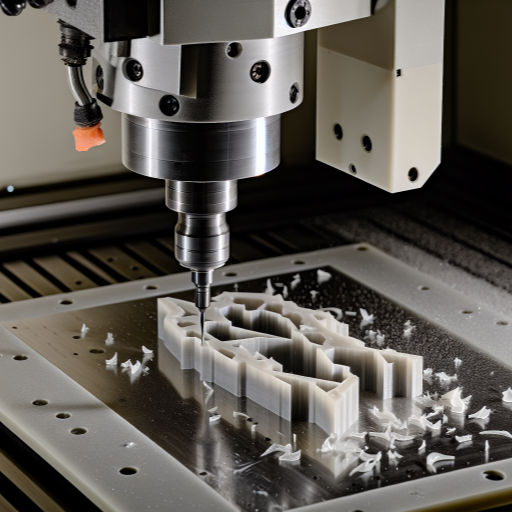
CNC plastic milling is ideal for manufacturing complex geometries and tight flat surfaces, often seen as edge-cut and useful for foundering processes, as they tend to be widely used by such applications where high accuracy and detailed designs are important. Utilizing multi-axis machinery, CNC milling can create complex shapes, contours, and custom features which many times would be impossible with other manufacturing methods. This ability is significantly important for sectors like aerospace, medical devices, and the electronic field where precision and repeatability are major requirements.
CNC milling requires the use of computer-aided design (CAD) software and works closely with electronic-aided manufacturing (CAM) system software. Both are used to develop various specific specifications for cutting paths. Cutting tool size, workpiece properties, and per minute speed are all factors that together determine the detail of finished products and the most exact possible dimensional accuracy. Modern CNC machines enhance their exact accuracy through the use of real-time monitoring and feedback mechanisms to ensure the quality of the components.
CNC plastic milling applications include a highly refined approach to material handling when compared to other methodologies, facilitating rapid processing through technological advancements and machine precision. CNC allows for high production rates because of material loading and unloading automation at optimal speeds, making the process less manual and increasingly productive. Controllers applying conditions such as feedrate, spindle speeds, and tool paths enable faster cycle times without sacrificing precision and quality. Compared to metals, lightweight plastics can permit higher cutting speed, thereby increasing processing efficiency. Those CNC systems, combining real-time monitoring and prediction analytics, allow rapid action should any unexpected issue or trouble come up while production is in process, keeping all operations intact with their levels maintained. The resulting combination of rapidity and careful product and detail management makes CNC plastic milling solutions the perfect choice for the most challenging and high-performance production environments.
CNC machining of plastic parts is both cost-effective and effective. This is largely due to the precise nature of this process that produces little to no waste through the use of subtractive manufacturing processes to produce precise parts. Additionally, plastics are generally less expensive and easier to work with compared to metals, which in turn reduces the cost of materials and the overall operating costs. CNC milling, with its automated systems, can be very fast in the implementation of production and runs with minimal human intervention, thus becoming an additional financial burden. Such advantages clearly explain why many pioneers opted for CNC milling as the manufacturing method of their choice to make high quality plastic products available at an available cost.
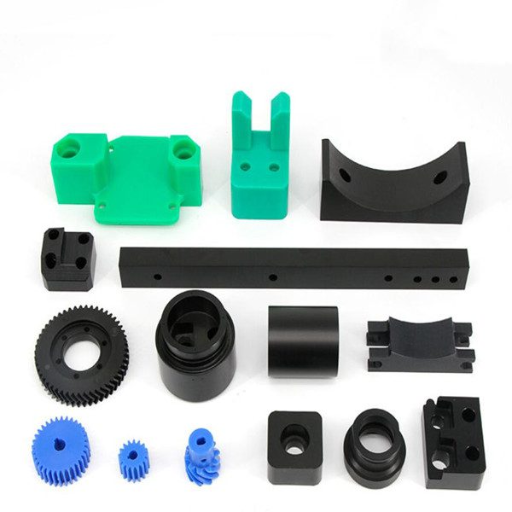
Achieve precise, high-quality results and simultaneously reduce common challenges faced with CNC machining plastic parts by following the best practices mentioned.
Under these guidelines, you will produce and achieve the highest of smooth surfaces and precise dimensions while avoiding a plethora of issues in CNC-machining plastics.
The debate about CNC turning vs. CNC milling concerning plastic parts should require a good understanding of the design requirements, material properties, and what production goals would be vital according to requirements. The CNC turning method is a good fit for cylindrical parts or round parts or similar parts or for any sands material that needs shape. It employs a driver to rotate the workpiece into the cutting tool.
The production of plastic parts should far excel in the making of bushings, shafts, and threaded plastic parts with a very high degree of accuracy at very high speed. CNC milling, on the other hand, is quite beneficial in the manufacturing of parts whose geometry is quite complex, such as those with flat surfaces, irregular surfaces, etc. Milling helps to fabricate pockets, contours-all means being extra helpful for the making of housings, brackets, and fittings. Milling could provide higher versatility in material handling methods in plastics along with increased holding precision.
Moreover, other factors such as the amount required, how complex the project is, would take place in the decision of which is the most appropriate choice. CNC turning is considered to be very good for producing small, round parts, especially when in large quantities and cost efficient. CNC milling, however, afforded the benefit of being more flexible in small quantities and intricate designs with an assurance toward higher precision possible.
In short, it all depends upon you. Depending on the geometry of your particular part and the specific technical capabilities of each process, and also the advice of your machining professional, you will be able to conclude which process would be suitable for your plastic parts project.
Plastics and Their Machining: A Review: A comprehensive review of machining techniques for plastic components, discussing their applications and precision requirements.
Machining of Fibre Reinforced Plastic Composite Materials: Explores the challenges and advancements in machining plastic composites, including comparisons of milling and turning processes.
A Computer-Aided Sustainable Modelling and Optimization Analysis of CNC Milling and Turning Processes: Provides insights into sustainable practices and optimization in CNC milling and turning, relevant to plastic part manufacturing.
CNC Machinery Industrial Parts and Tools Fitness Equipment Accessories Medical Tube Plastic Extrusion Machinery Industrial Part: Focuses on CNC machinery applications, including plastic part manufacturing and best practices.

Manufacturing processes are quite complex, and the choice of a production method is directly related
Learn More →
There are two major manufacturing methods for producing plastic prototypes that most people find useful
Learn More →
As a person involved or interested in the design and production of plastic components, it
Learn More →