

Manufacturing processes are quite complex, and the choice of a production method is directly related
Learn More →
Both businesses and hobbyists have greatly benefited from CNC routers since they enable precise cutting, engraving, and manufacturing. No matter your level of expertise, owning the right tools and accessories complements your CNC machine and is paramount to achieving precision. This guide aims to discuss and explain each component of a CNC router in terms of how it can improve the final outcome of your projects. We’ll walk you through the must-have accessories, including but not limited to software upgrades, advanced cutting tools, clamps, and comprehensive dust collection systems, which guarantee your machine operates at its best. After reading this article, you will be equipped with the knowledge necessary for making decisions toward optimizing and expanding the functionalities and potential of your CNC router.
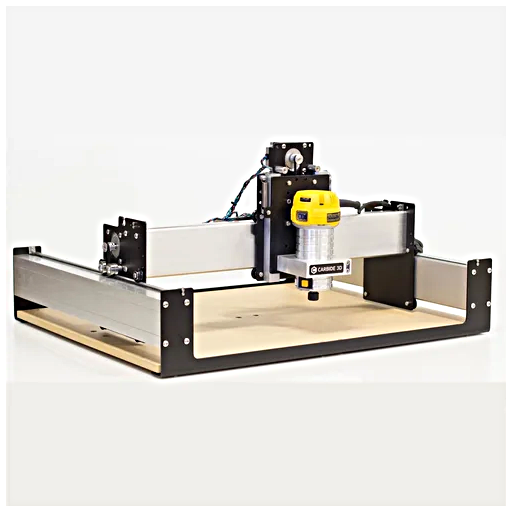
Every component of a CNC router is vital for its precision and efficiency. These essential components include:
These components are the most important parts, enabling any capable CNC router to execute various carving, cutting, and engraving actions with great precision.
Every CNC router part works together to optimize the operation and effectiveness of the router. The spindle, part of the motor, turns the cutting tool at a very high speed to either shape or engrave a given material. The provided instructions by CAD/CAM software are interpreted by the controller and translated into appropriate movements executed by the router. The frame that holds the machine mitigates vibrations and maintains balance as the linear drives move in the X, Y, and Z axes. The material to be machined should also be held in place, and the worktable ensures this. Such synchronization simplifies complex routines, so the CNC router has become essential in industries like woodworking and aerospace manufacturing.
One of the essential components for precision CNC routing is understanding its mechanics. Chief among them is the spindle that controls the cutting tool, drives it, and determines the speed and accuracy of each cut. Along with the spindle, the tool holder holds other tools as it firmly holds them. The controller performs a quintessential function as the CNC router’s brain that receives G-code commands and translates the code’s steps into physical movement. The router itself is moved linearly along its axes through high grade linear guides and ball screws which enable smooth motion while preventing friction and wear. CNC routers pull apart complex structures at varying speeds without losing efficiency because of the coordination enabled by these parts. Finally, the machine’s workspace is clean due to the efficient circulation of dust and debris outside of the machine through the dust extraction system, which keeps the machine in good working condition.
While choosing CNC router accessories, priority should be be given to the accessory’s performance, compatibility, and durability. Consider the particular demands of your projects first, for example, the materials used and the precision needed. Productivity and longevity can be achieved by choosing tools made from durable materials such as carbide. Additionally, vacuum tables for the stability of materials and dust extraction systems clean and protect the workspace.
Ensure that all other aspects are fully considered, such as the brand of every accessory, which should be compatible with the CNC router’s specifications and software. Advanced users should consider automatic tool changers and touch screen controllers for enhanced efficiency. Informed decisions that match your needs can be made based on reliable manufacturers, professional reviews, and customer feedback.
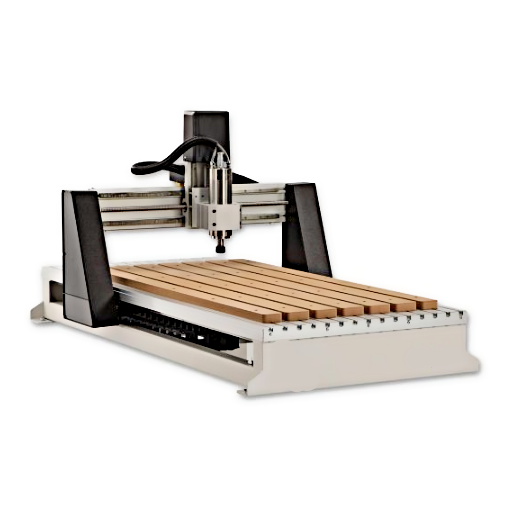
The list of tools provided is ideal for achieving accurate outcomes about a given machining project.
Proper selection of CNC routing tools is key to optimum accuracy and finishing. Below are some of the most fundamental tools used for cutting:
Choosing a cutting tool depends on the material used, the finish, and the project requirements. When the proper tools and programming are used, CNC routing precision and craftsmanship are unparalleled.
Safety and precision for the novice woodworker come with a good-quality router, bits, sawdust collection units, and jigs. It is also wise to own a multifunctional device.
| Tool/Accessory | Purpose | Key Feature |
|---|---|---|
|
Router |
Cutting/shaping |
Fixed/plunge base |
|
Router Bits |
Versatile cutting |
Various profiles |
|
Dust Hood |
Dust collection |
Clear visibility |
|
Jigs |
Precision cuts |
Circle/oval routing |
|
Collet Wrench |
Bit changes |
Quick-release |
|
Push Blocks |
Safety |
Non-slip grip |
|
Setup Bars |
Depth adjustment |
Accurate heights |
|
Extension Base |
Deep routing |
Added reach |
|
Guide Bushings |
Template routing |
Multiple sizes |
|
Router Table |
Stability |
Fixed routing |
Adding high-grade supplementary tools will aid in enabling precision, increased versatility, improved efficiency, and support optimized CNC work along with other advanced accessories. A true timesaver is an automatic tool changer (ATC) that streamlines the process of changing bits automatically, so no manual effort is needed. Another accessory that will help the expert is high-performance vacuum tables, which control the position of the workpiece, improving its stability during cutting or engraving. Furthermore, high precision collets and tool holders lead to less vibratory movement in the equipment and higher operational precision.
Rotary axes and laser additions become useful for experts wishing to achieve detailed engraving. These modular designs broaden CNC capabilities, allowing engraving into wood, metal, or leather. Investors focused on speeding up production or exploring new creative features should consider installing the additional equipment, as it will transform standard CNC devices into proper, professional-grade tools. Using advanced software with multi-axis machining allows these accessories to perform intricate designs like cylindrical objects or custom trophies, making them accessible for all to use.

A guide to ensure that the drive system of your CNC router is clean, lubricated, and free of dirt or other harmful substances that inhibit its performance. Furthermore, clean all the components so that the motion-associated tasks can be performed easily, debug any issues with the screw threads, and belts, add or remove tension from elements that are too tight, and perform an overall system check-up. Confirm that the CNC router’s servo or stepper motors are calibrated accurately and adequately. The controller software used in the CNC router should be configured to the latest version to eliminate unwanted slowdowns or bugs affecting the system’s smooth performance. When performed in a regular maintenance session, these steps ensure the desired outcome is achieved.
CNC axis drive mechanics performance has several interdependent factors that need to work in the precision and reliability of a workpiece. For one, the component quality, blend ball screws, linear guides, and timing belts, has a significant impact with backlash as well as the over efficiency of the system. Cleaning and proper lubrication of the moving parts are also vital for friction and wear minimization over time. Enclosures or air filtration systems are environmental considerations, such as temperature and dust, that can impact performance, which makes these systems essential in certain conditions. Moreover, mid motor tuning accuracy at various speeds and acceleration values also affects the smoothness and precision of axis movement. To achieve optimal and sustainable performance with an extended lifespan of the CNC axis drive systems, regular maintenance, quality components, proper system calibration, and torqueing the mod5 mounts requires discipline.
Stepper motors are affordable and perform well in precise low-speed operations, while servo motors have the edge in speed, torque, and versatility for more dynamic operations.
| Parameter | Stepper Motor | Servo Motor |
|---|---|---|
|
Control |
Open-loop |
Closed-loop |
|
Speed |
Low to moderate |
High |
|
Torque |
High at low speeds |
Consistent across the range |
|
Accuracy |
Moderate |
High |
|
Cost |
Lower |
Higher |
|
Feedback |
Not required |
Required |
|
Efficiency |
Lower |
Higher |
|
Applications |
3D printers, CNC |
Robotics, automation |
|
Complexity |
Simple |
Complex |
|
Noise |
Higher |
Lower |
When optimizing a CNC machine, improving its efficiency is arguably one of the most common concerns. After recent analysis, optimizing the rail systems, lead screws, and lubrication are a few key focus points that could yield results. There is significantly less friction about linear guides, making them outperform linear rail systems. Interchanging lead screws with ball screws can drastically improve precision as they tend to have much lower backlash and give smoother movement. In addition, proper lubrication maintenance is paramount in averting motion stiction and wear. Addressing these challenges and using high-quality components can enable CNC machine users to enhance their productivity and performance.
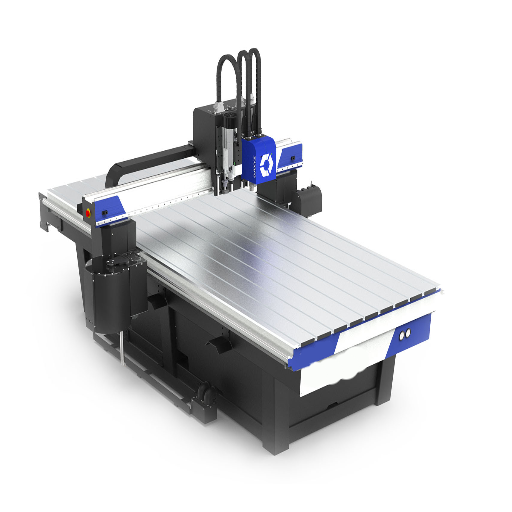
As part of regular machine care, remember to:
Remove Residual Cleaning Debris: Operate the router and clean surfaces after each use to prevent dust, debris, and grease from collecting on surfaces and machine internal components.
Moving Parts Monitoring: Regularly monitor components with relative motion, such as bearings, belts, and screws, for any relevant damage. Worn-out parts should be replaced immediately.
Lubrication: Apply the most appropriate lubricant to lower linear rails, lead screws and ball screws to promote low friction and free movement.
Tighten assemblages and connections: Routine checks ought to be done to renew and tighten bolts and screws that may have loosened over time due to machine vibration.
Calibrate: Calibrate the machine regularly to maintain accuracy and conformity with desired outcomes on cuts and designs.
Dust Protection: Shields that prevent free-flowing dust and moisture from covering external surfaces and shields that fit the electronics’ measurements are recommended.
With these simple yet effective maintenance tips, you can ensure your CNC router remains in good working condition while achieving quality, precision results, and enhanced longevity.
As we all know, the components of a CNC router should be taken care of to ensure that each section works to its best potential. Any malfunction would lead to inaccuracy and dime precision. With that said, here are some maintenance tips you may find helpful.
Combining all of these changes, along with less frequent checks, ensures that the CNC router works effectively and consistently to produce high-quality results.
Proper maintenance and care of machine components are non-negotiable to get the most out of the CNC router and guarantee longevity. All accessories require regular preventative maintenance and repair procedures, ensuring constant cleaning so that no part undergoes undue damage.
The CNC’s collets and tool holders should be cleaned with non-abrasive cleaners and soft brushes to ensure no dirt remains. Before rust starts forming, always ensure complete dryness. The same applies to the dust collection system, where all filters and clogs should be replaced and removed for adequate airflow.
Every CNC user knows precise results require time and effort. Still, if you ensure constant accuracy and care for all accessories, the results will pay dividends by reducing replacement costs, guaranteeing optimal results during all cycles, and reducing router downtime.
1. Design and Fabrication of 3-Axis Mini CNC Milling Machine
2. An optimization model of variable-size two-dimensional nesting with stacked sheets and usable leftovers for the CNC routing process
A: The spindle in CNC routers holds and rotates the milling cutter, which cuts through various materials like MDF and aluminum plate during the CNC milling process.
A: When selecting a clamp for your CNC router, consider the type of material you will be working with, the size of your workpieces, and how securely you need to hold them during the machining process.
A: A CNC controller is an essential component of CNC systems that interprets the computer-aided design (CAD) files and translates them into instructions for the CNC router machine, guiding the movements of the spindle and other parts.
A: A dust boot is an accessory that collects debris and dust generated during CNC milling. It is crucial for maintaining a clean work environment and ensuring the longevity of the CNC machinery by preventing dust buildup on the components.
A: The z-axis allows for vertical movement of the spindle, enabling precise depth control when cutting or milling. This is essential for achieving accurate results in various materials, especially during tool change operations.
A: A 3-axis CNC router operates on the x, y, and z axes, making it suitable for simpler tasks. A 5-axis CNC router adds two additional rotational axes, allowing for more complex machining operations on intricate workpieces.
A: T-slots on CNC router tables provide flexibility in mounting and securing workpieces. They allow for easy adjustment and repositioning of clamps and fixtures, vital for various machining tasks.
A: CNC routers can process various materials, including wood, MDF, plastics, and metals like aluminum. The choice of material depends on the capabilities of the specific CNC machinery and the type of milling cutter used.
A: Common accessories for CNC routers include dust boots, clamps, additional milling cutters, rotary attachments, and power supplies. These accessories enhance the functionality of the complete CNC router setup.
A: CAM software (Computer-Aided Manufacturing) creates tool paths and generates G-code from CAD designs. The CNC controller executes this G-code, enabling the CNC system to machine the desired part accurately.

Manufacturing processes are quite complex, and the choice of a production method is directly related
Learn More →
There are two major manufacturing methods for producing plastic prototypes that most people find useful
Learn More →
As a person involved or interested in the design and production of plastic components, it
Learn More →