Aluminum is the most important material and is the only one that has the least limitation and indeed the fastest one. The material has been synonymous with durability in the field of engineering and its precise applications that for years it stayed put as an unthinkable choice to produce but not to put in the tone, the extruded aluminum musical instruments made have truly changed the course of sound, design, and innovation. A stronghold of this change is the CNC aluminum guitar, a work of art that contains both technology and artistic skills. The article will talk about the way CNC aluminum guitars are taking over the market, by providing a lightweight playing experience without losing tone or quality, which can also give you a hint of the future sound and the blending of the creative and the technological that is changing the music business.
Introduction to CNC Aluminum Guitars
What is a CNC Aluminum Guitar?
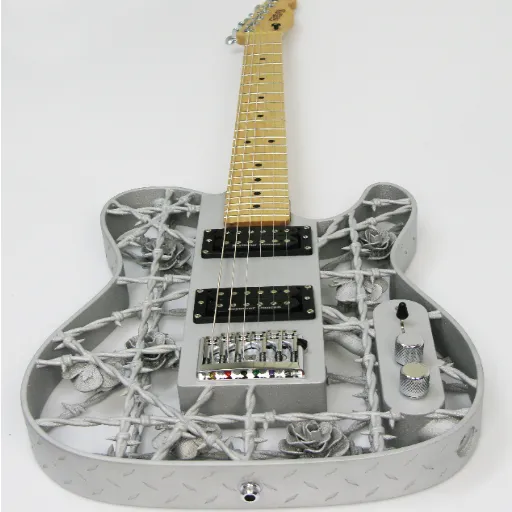
A CNC aluminum guitar is a new-school instrument that takes a huge step towards making the most of CNC (Computer Numerical Control) machining technology, which is the process of cutting, shaping and milling high-grade aluminum into super accurate and very small guitar parts. First of all, they take full advantage of the aluminum’s physical characteristics to create a really cool and beautiful instrument. The CNC technology has made it so easy to get the art and science of precision in the making of guitars, necks, and bodies. Thus, only the best standard guitars will ever be produced, and that will be all due to the strength and resistance to bending of the metal’s properties.
Moreover, the CNC aluminum guitars are amongst the most popular ones in the market due to their great resonance and sustain, which produce a distinctive tone that attracts artists beyond the conventional wooden models.
History of CNC Machining in Guitar Making
CNC (Computer Numerical Control) machining has changed the course for guitar manufacturers since it was first introduced in the late 20th century. The use of CNC machines started to be common in the making of guitars during the 1980s and 1990s when precision machining became affordable due to technology advances. Prior to the invention of CNC machines, luthiers and manufacturers used handcrafting or primitive tools, which were very labor-intensive and also introduced variations in the quality and consistency of the output. The transition to CNC technology made it possible to have exactness in cutting d, shaping, and engraving guitar components to the tune of 10 times and above so that the products also benefited from way higher reliability.
CNC machining is now a common practice for both innovative startups and established companies like Fender and Gibson that apply automation to produce instruments that meet the highest standards in the industry. The accuracy of CNC also guarantees that necks, fretboards, and inlays would be the same, thereby contributing to both the ease of playing and the beauty of the instruments. In addition, there is a recent development that combines CAD (Computer-Aided Design) software with CNC production, which allows for very quick prototyping and testing of different designs while still adhering to the strictness of precision and repeatability.
The newest data from the search section shows that musicians and guitar lovers become more aware of the benefits of CNC-made guitars regarding their uniformity and simplicity of customization. This trend indicates how CNC technology has harmonized the ideals of craftsmanship in the past with those of today’s and consequently produced instruments that are not only of the best quality but also of the most interesting kinds.
Advantages of Using Aluminum in Guitar Construction
Aluminum has gained the status of the prime material in the modern guitar making process by offering a range of significant advantages. To start with, the most important of all is the fact that aluminum has a very light weight which, together with the durability of the material, makes it perfect for the production of instruments that are not only easy to operate but also last a lifetime. In contrast, the aluminum guitars are much less liable to the damages brought by the fluctuations in the surrounding environmental factors like humidity and temperature, as well, thus, maintaining the stability and consistency in their performance throughout the lengthy lifespan.
The most recent data taken from the search by ‘s insights indicates that there is a keen interest in aluminum guitars mainly due to their superb tonal qualities. The material is responsible for the production of a sound that is bright and well-resonated with a peculiar tonal clarity that is pleasing to a vast number of musicians. The metal also allows for amazing advances in the design as well as the building and this, in turn, creates more avenues for customization and expression. Moreover, the sustainability factor of aluminum is that it offers the recyclable and eco-friendly option which corresponds with the aspiration of environmentally conscious consumers. The advantages highlighted thus far underline the reason that aluminum is slowly but surely being acknowledged as the new, revolutionary, and, thus, the preferred material in the guitar industry.
Components of CNC Aluminum Guitars
Aluminum Guitar Body
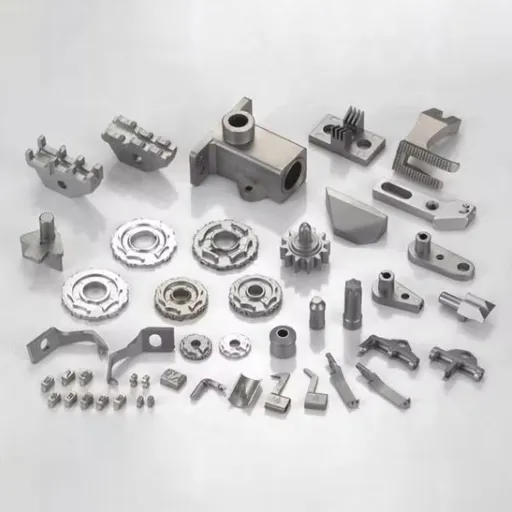
The aluminum guitar body is viewed as the main reason for the distinctiveness of the CNC aluminum guitars in relation to the wooden ones. According to the most recent data from the search engine, the most frequent query is whether the aluminum guitar bodies have different sound quality compared to the wood. The answer is determined by the acoustic properties of aluminum, which yield a tone that is bright, clear, and resonant with the longest sustain. Among the benefits of aluminum over wood is its being less affected by environmental factors such as moisture and temperature changes, thereby performance is always uniform. The qualities make the aluminum guitar bodies very appealing to musicians who want both durability and a certain tone character.
Aluminum Neck vs. Traditional Wood Neck
Comparing aluminum necks to traditional wood necks, the ultimate choice would be made by the musician’s likes and needs. Stability, resistance to climatic variations, etc. are some of the benefits provided by aluminum necks. Different from wood, where the changing humidity and temperature lead to warping and expansion, aluminum remains in a stable form, thereby offering accurate tuning and maintaining reliability through time. Furthermore, aluminum necks are recognized for their distinct tonal characteristics which are often termed as bright and articulate, thus gaining attention in both studio recordings as well as live performances.
The woods, however, are still the necks of choice for many guitarists because of their acoustic advantages and visual appeal. The various wood types each have different tonal characteristics, but they are all capable of ensuring a stable environment for the instrument, thus reducing the need of a frequent adjustment.
The choice of an aluminum neck or a wood neck simply depends on the player’s taste in style, the sound to be obtained, and their preference for a durable instrument or traditional aesthetics. Notably, the latest research observance suggests that the trend of aluminum necks is on the rise amongst the experimental and modern musicians who value innovativeness and the reliability of their instruments.
Brass Hardware and Its Impact on Sound
The brass hardware is the heart and soul of the string instruments in their tone shaping and overall performance. Since it is known for being heavy and having great resonance, manufacturers often choose brass for bridges, nuts, and saddles due to its ability to increase the sustain and provide a warm, rich tone. This material is a good conductor of vibrations hence it makes for a clearer and evenly distributed sound throughout the frequency range.
The recent search data reveals that more musicians are turning to brass hardware as a way to get their instruments sounding fuller and vintage-like, as evidenced by the keywords “how brass hardware affects guitar tone” and “best brass components for improved sustain,” which point to the same trend particularly with the players of jazz, blues, etc. who have a taste for tonal depth and clarity. Besides giving the sound quality a boost, the brass hardware also enhances the instrument with a bit of luxuriousness and durability, thus it becomes a choice that attracts both modern and traditional performers.
Ray Planet Aluminum Guitars: A Case Study
Overview of Ray Planet Models
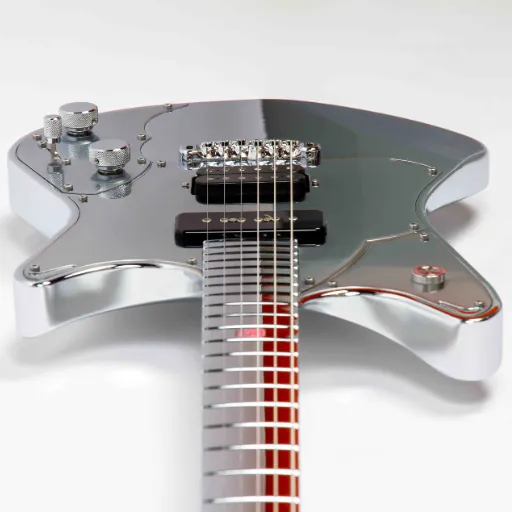
Ray Planet aluminum guitars have received a lot of attention because their design is not only practical, and cool, but also has a techie side to it. The search trends data from s indicates that excitement about “guitar made of aluminum advantages” and “guitar building materials for sure” is not just hype but rather strong models set in the market. The inventive Ray Planet designs have won the hearts of many because they are environmentally friendly, and produce great sound and durability.
One of the most burning questions is “Are the aluminum guitars that good and do they have better sound than the traditional wood models?” A consensus are made according to the reviews and customer reports that among the top brands, the aluminum guitars may come with some exceptions. Still, they are definitely pronounced with great power through the metal body, in fact, they have gotten so prosperous due to this transformation. So they produce nothing in terms of waves, rather the propagations are all harmonic thus leading to crisp, balanced and nice-sounding guitar everywhere. Plus, the trendiest way of producing demands on the net is this now letting one’s musical expression through modern materials that combine quality with the environment.
Unique Features of Ray Planet Aluminum Guitars
The music industry has to take notice of the fact that Ray Planet aluminum guitars have a combination of leading-edge designs along with innovative materials which makes them standout in the world of musical instruments. While their lightweight yet strong aluminum body lasts for years and can bear extreme conditions, this is absolutely the best possible choice for a consistent ion of tone as aluminum is not affected by the temperature or humidity altering its character, unlike the old woods.
All the way through the search engine of ‘s, it is clear that more and more musicians are after the instruments that give off an eco-friendly vibe but at the same time letting the user have top-quality. Ray Planet is right within this trend by being the one who guarantees pure and high-quality sound and at the same time gives eco-friendly manufacturing. And the searches also indicate for the guitars that the aesthetics is customizable, which is one of the strengths of Ray Planet, by giving modern and sleek designs with the choice of finishes that speak the slant of the current musicians.
Customer Reviews and Feedback
Customers have given Ray Planet constant praises for its sustainability and craftsmanship. A lot of the reviews talk about the remarkable guitars’, and the users comparing the feel and sound to that of the “classical” instruments. Gifts, also, such to say, have been overviewed by users not just “plain” but interesting and creative nest for the consumer to live through. Today’s consumers are, indeed, according to search data, very eco-friendly and desire to be unique, hence the increase in the popularity of searches for sustainable and customizable guitars, which a lot in fact have perfectly matched with the products of Ray Planet, thus proving that the brand measures up to the changing demands of musicians in the modern age.
The Sound Profile of CNC-Machined Aluminum Guitars
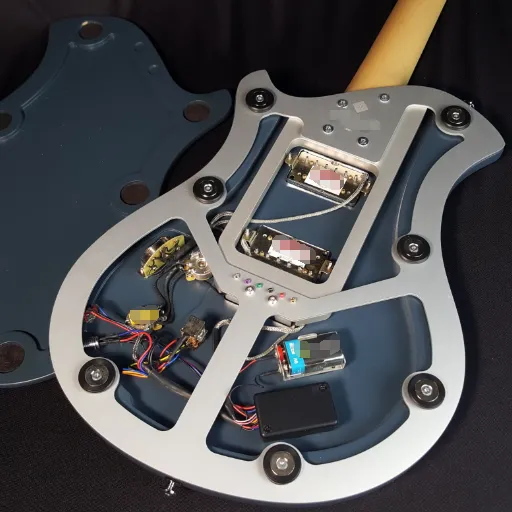
Sound Quality Comparison: Aluminum and Wood
Sound quality differences between aluminum and wood guitars have a noticeable impact on the areas of tone and resonance. Aluminum guitars, recognized often for their reliable and innovative manufacturing, produce a very clear and brilliant sound with excellent sustain. The metallic body adds up to the brightness of the harmonic overtones and hence provides these guitars with a contemporary and different tonal character. Normal wooden guitars, however, have the quality of being very warm and smooth, thus the wide tonal range is largely dependent on the type of wood being used, whether it is mahogany, spruce, or rosewood.
By integrating the most up-to-date information from search engine’s data mine, it is quite obvious that the musicians’ interest in the various characteristics of non-traditional material like aluminum is increasing. There are indications in the search trends of the growing interest in “aluminum guitar tone” and comparisons to wood, showing that there has been a change in the players’ view about production and aesthetics. This data indicates that wood remains the favorite material for most traditional guitar players, but at the same time, it is the aluminum guitars that are gradually winning the hearts of those musicians who desire something innovative, giving them the precision and quality that technology.
Effect of Lightweight Design on Playability
Aluminum guitars’ lightweight design has made them much easier to play, besides being an ergonomic and versatile option that can be used by musicians for a long time during performances or practice. They will not cause the same strain on the shoulder and back as heavier wooden guitars do, and thus the players can continue to have their back straight and focus on their technique. The latest search engine data shows that the terms “lightweight aluminum guitars” and “comfortable electric guitar options” are on an upward trend. This indicates that not only are the players considering the sound and looks of the instruments but also the comfort and usability as a priority. The modern player is not only looking for an instrument that they can play in different playing conditions but also one that gives them the best performance quality, and this is exactly what the balance of a lightweight body with precise craftsmanship does.
Tone Factors in Aluminum Guitars
The tone of aluminum guitars is subject to a number of main factors like the material’s density, the design of the instrument, and the coupling of other parts like pickups and strings. The principal factor is that of woods, where the aluminum’s higher density compared with that of the wood gives it unique advantages of sustain and brightness, making the overall tonal character more articulate than that of the wood. The quality of the work done by the luthiers in cutting and shaping the body and neck has a significant part in the end tone, as even small changes can greatly affect resonance and sound propagation. The current search trends from the data coming from the search engine indicates the trend of the musicians’ preferences of the tonal clarity together with the comfort of playing. This is a sign that there is a transition towards aluminum guitars that are very comfortable for long use, yet being able to deliver sound profiles with a wide range of tonal textures. This is the reason why the combining of these three factors keeps aluminum guitars in the picture for the modern players’ demands that have been defined by the high-quality performance and practicality.
Building Your Own CNC-Machined Aluminum Guitar
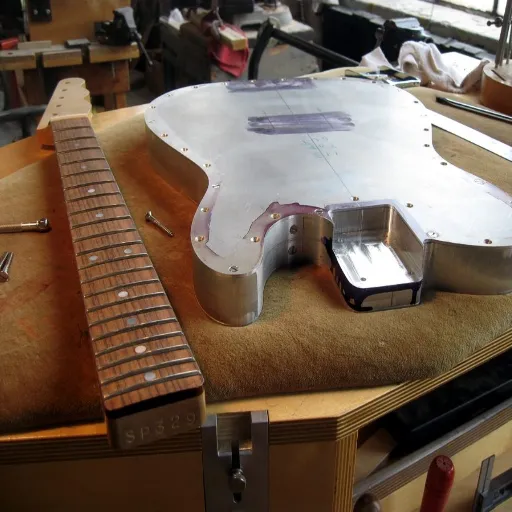
Essential Tools and Equipment Needed
In case you are to create your own CNC machined aluminum guitar, the possession of suitable tools and equipment is a matter of precision and success. Below is a list of the essentials:
- CNC Machine – A premium CNC machine is the core of this undertaking. It enables the accurate milling of aluminum parts to obtain the intended shape and dimensions.
- Aluminum Sheets or Blocks – Opt for aircraft-grade aluminum due to its combination of toughness and good sound properties, promising an instrument body that is both dependable and audible.
- Cutting Tools – Tools like end mills and machining bits that are specially made for aluminum are necessary for the production of clean cuts and smooth finishing.
- Design Software – CAD (Computer-Aided Design) software, for instance, Fusion 360 or SolidWorks, helps in producing the realistic and precise models and designs for the guitar.
- Measuring Instruments – Calipers and micrometers will be the guarantee that the measurements are of the same rigorous standards, thus preventing any issues with fit or sound quality in the final product.
- Drill Press – With this tool, the precision holes required for the installation of pickups, hardware, and the bridge mounts are easily made.
- Polishing Tools – Buffing wheels, polishing compounds, and sandpaper not only improve the surface finish for visual appeal and comfort but also make the process faster.
- Finish Coating Supplies – Anodizing equipment or spray coatings offer protection and aesthetics according to the desired look.
- Wiring Tools – soldering irons, wires, and electrical components should not be missed as they are very important in effectively installing pickups and electronics.
- Protective Gear – The use of safety goggles, gloves, and ear protection is unavoidable as they are meant to keep the operator safe during machining and assembly processes.
When these tools are combined with innovative design and craftsmanship, a one-of-a-kind aluminum guitar that fits your style and preferences can be created. Also, the latest trends and search interest indicate that finished guitars with sleek designs and ergonomic features are the most preferred among the players, so think of including these features in your build.
Step-by-Step Guide to CNC Machining
- Design Your Concept in CAD Software
The first step is to make a precise digital representation of your guitar using CAD (Computer-Aided Design) software. Make sure to include modernistic, ergonomic features in the design since these are among the most popular in the market as per the recent search trends. The most popular features are contoured body shapes and precision-engineered fretboards. - Export the Design into CAM Software
Go ahead and send your CAD file over to the CAM (Computer-Aided Manufacturing) software. This software will be the one to turn your design into a code that the machine can read, thereby making sure that the cuts and sculpting during the machining process are done accurately. - Prepare Your CNC Machine and Materials
Get ridiculously good quality aluminum for the body of the guitar and check that your CNC machine has the right calibration. People these days want guitars made of light yet strong materials, so consider the above-mentioned qualities in your choice. - Execute the CNC Machining Process
Put on the safety gear, and when it is time to place your material in the CNC machine, closely watch the mighty machine as it performs its magical carving and shaping of the guitar body. Employ meticulous methods to create sleek, crisp edges and pristine contours, which will be a great contribution to the instrument’s visual appeal. - Finish and Assemble
The machined parts go through polishing and refinishing processes that are done not only to improve their beauty but also to enhance the ergonomic aspects. Mount the neck, electronics, and strings, making sure that each piece is installed flawlessly. The increase in search interest for smooth, high-performance instruments underscores the need for careful craftsmanship in this stage.
Combining cutting-edge CNC machining processes with the latest design trends derived from search engine data, you can produce a one-of-a-kind aluminum guitar that satisfies both the functional and artistic requirement.
Common Challenges and How to Overcome Them
Alumnin guitar making process has among the challenges to find the perfect mixing of sound quality and durablity. Aluminum is a strong and looks great but its sound is a little bit sharper or brighter than that of wooden guitars. Although this might not be the scenario with every guitarist, still some of them may have a preference for the latter. To solve the issue one can start experimenting with the internal chambering techniques used inside the aluminum body which can mellow the sound and at the same time permit more resonance. The hype among the guitarists nowadays is that they want their instruments to be lightweight. By advanced CNC machining you will be able to remove the material in non-critical areas without compromising the integrity of the structure thus resulting in a lighter and more comfortable instrument. Moreover, if proper shielding and grounding are done right from the outset, it will really be an effective measure against the electronic interference that has been flagged as a concern for builders according to search data. These measures, combined with meticulous planning and analysis, can yield an instrument that is not only modernized but also surpasses the expectations in terms of quality.
Frequently Asked Questions
What is an aluminum guitar and how is it made?
An aluminum guitar is a guitar that mainly consists of aluminum which is usually noted for its unusual sound and longevity. Sometimes these guitars are called custom aluminum guitar models, just the opposite to the mass production technique, making it possible for perfection in the design. The best practice is to build with a one-piece CNC machined aluminum body, which gives everlasting stability and solid feel. The choice of quality aluminum alloy, for instance, 6061, furthers the instrument’s making through its tonal quality improvement and background noise reduction. Besides, the guitars have been often regarded as giving a different sound profile that is at one time both brilliant and resonant.
How does an aluminum electric guitar compare to traditional wooden guitars?
Electric guitars made of aluminum are in fact very different from wooden guitars in every aspect, whether it is style of construction or sound. The wood’s natural resonance is one of the main reasons for the sound of wood guitars, on the contrary, aluminum guitars are more focused in tone with less sustain which is a feature that is most adoptable for shredding and fast playing styles. The CNC process makes it possible to have the exact tolerances for fretboard radius and neck relief adjustments, hence the fretboards are literally giving the instruments the most playable trait. Moreover, aluminum guitars are not affected much by the changes in humidity and temperature which basically means that they will always deliver the same quality. Therefore, an aluminum electric guitar can undoubtedly be looked upon as a quality instrument for the musician who will use it in various places and still expect it to be reliable.
What are the benefits of using a CNC machined aluminum guitar neck?
The use of a CNC machined aluminum guitar neck gives several benefits when compared to the traditional wooden necks. First of all, the CNC machining is so precise that it gives exact dimensions which in turn contribute to a better playing experience and comfort especially in the fret area. Aluminum’s rigiditymerely works as a solid foundation hence reducing the frequent adjustments that are needed and ensuring that the tension is always the same. In addition, cast aluminum can be the choice of material which can make the neck considerably lighter without losing its strength making it easier to maneuver during the long performance. Reduced background noise and improved audio clarity are the reasons why guitarists benefit from the use of aluminum guitar necks which have become a popular choice in electric guitar design.
Are there specific guitar models known for their aluminum construction?
Indeed, there are some guitar models that are very popular for their aluminum construction, like, for example, the ones manufactured by the Electrical Guitar Company. Obviously, these models will have some uncommon features and use only top-notch components which will attract serious musicians. Ray Planet aluminum guitars are another case in point as they combine cutting-edge technologies with old-style craftsmanship. Moreover, a good number of these guitars come equipped with some exceptional features such as adjustable frets and personalized finishes, thus, allowing for individualization. Each model can cope with various playing styles, be it shredders’ fast-paced techniques or more melodic approaches.
Can aluminum guitars be used for different music genres?
Definitely! Aluminum guitars are instruments with wide-ranging applicability and can be used for every kind of music. Their unusual sound characteristics are the reason to talk about them being the perfect fits for the rock, metal, jazz and even blues genres. An aluminum electric guitar’s bright and cutting tone could be the very thing to help a guitarist get noticed in a group while at the same time providing the needed clarity for elaborate solos. Besides, the toughness of aluminum makes it possible for these guitars to last even with the most rigorous playing styles, thus they are perfect for road musicians. The fact that the guitar duos can go undefeated with the quality and performance they needed at any genre is not to be discounted when using aluminum guitars.