

Manufacturing processes are quite complex, and the choice of a production method is directly related
Learn More →
Aluminum maturing as a key ingredient in modern automotive application is building up strength in weight reduction, safety, and performance. Aluminum automotive parts and recent innovations in manufacturing are looked at in this article, focusing on manufacturing methods, applications that are installed, and benefits imparted to the industry. Whether it is for a green enthusiast or an automotive lover or engineer, this set endeavors to unveil the aluminum’s mighty transformation in lighting the future of transportation.
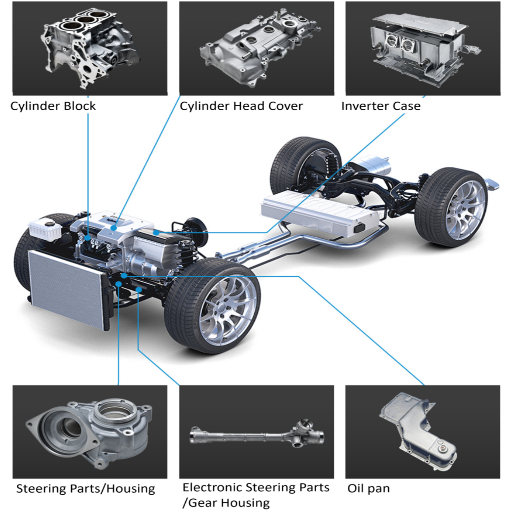
Aluminum combines a good number of properties, automotive engineers consider aluminum the preferred metal, enabling them to achieve key practical considerations, efficiency, and sustainability for the product. One of aluminum’s most important properties is that it offers a superior strength-to-weight ratio.
Aluminum is roughly one-third of the weight of steel; therefore, the weight reduction it imparts to a vehicle is quite significant for fuel economy on internal combustion engine vehicles or increasing range for electric vehicles.
By ensuring durability in the field, it reduces repair requirements and extends component life-two considerations that must be made seriously for structural parts and body panels.
Makes aluminum suitable for heat-exchange systems like radiators, condensers, and battery cooling systems in electric vehicles.
With concurrent evolution in manufacturing technologies, high-pressure die casting, and additive manufacturing, the aluminum market casts a wider net in producing intricate and high-performance parts. Market reports cited global automotive aluminum demand to increase at a CAGR of about 8%, fueled by higher lightweighting goals and emissions regulations.
Aluminum alloys have become one of the critical materials used in the production of modern vehicles due to the extraordinary properties that address both the challenges of performance and sustainability.
Studies show lightweight aluminum alloy components can improve vehicle fuel economy by about 5-7 percent for every 10 percent reduction in vehicle weight, making them indispensable in electric vehicles (EVs) where range extension takes precedence.
The comparison of aluminum against classical metals such as steel and iron brings to light some key considerations that favor aluminum in present-day industrial and automotive concerns.
While steel and iron may provide greater tensile strength under some conditions, aluminum alloy technology advancements such as those embodied in the 7xxx and 6xxx series alloys have considerably narrowed the gap. These alloys have much enhanced mechanical properties that would be almost equally applicable in demanding applications, without the disadvantages imposed by heavier metals.
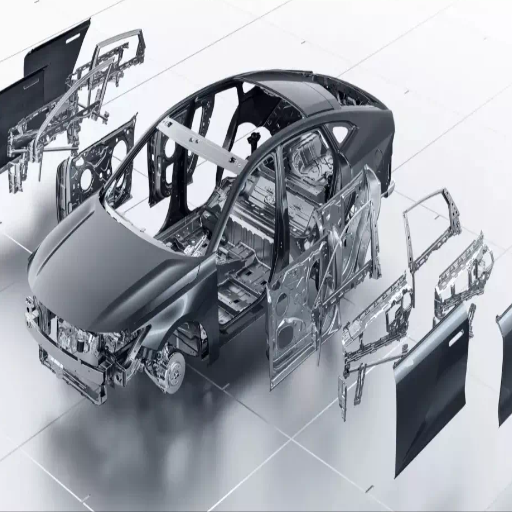
Together, these alloys offer a full range of performance traits in harmony with the ultimate goals of modern automotive engineering that work to downsize, increase energy efficiency, and optimize the safety of automobiles. Each series of aluminum is addressed to address various hurdles from the design perspective, thus, indicating that aluminum is an extremely adaptable and necessary material in aluminum production onto the automobile.
Indigenous aluminum solutions play the starring role in attending to the needs of concrete automotive applications regarding engineering problems. Taking into account innovations in alloy specifications and alloy processing, manufacturers can project and manufacture original components designed for better performance.
More high-strength 7xxx series alloys are being applied to chassis and frame structures because they provide an incredible strength-to-weight ratio, which maximizes the crash resistance of the vehicle while minimizing its overall weight.
5xxx and 6xxx series alloys are applied to exterior panels and body structures where being corrosion-resistant and malleable counts for optimal performance and aesthetics.
This, combined with the latest consumer demand-laden sustainability trends sourced from search engine analytics, makes it obvious that lightweight materials such as aluminum are at the forefront of energy efficiency concerns. Searches of ‘lightweight automotive materials’ and ‘sustainable vehicle solutions’ have seen sharp spikes, indicating the paradigm shifts underway to greener and more efficient technologies.
An acclaimed electric vehicle maker carried the implementation of aluminum alloys into structural components for its best-selling-model, an advanced one at that.
Aluminum alloys have been in the spotlight in the aerospace industry with their superior strength-to-weight ratios. An international aerospace company pursued construction of airplane fuselages using 7000 series aluminum.
The recent search trend supports a growing interest in terms such as “strong lightweight materials” and “aerospace-grade aluminum solutions.” This coincides with the increase in adoption by industries attempting to exploit high-performance and green alternatives. The above examples demonstrate that aluminum alloys lead the way in applications driving advances shaped by industry requirements and environmental aspirations to achieve scalability with efficiency and reduced environmental footprints.
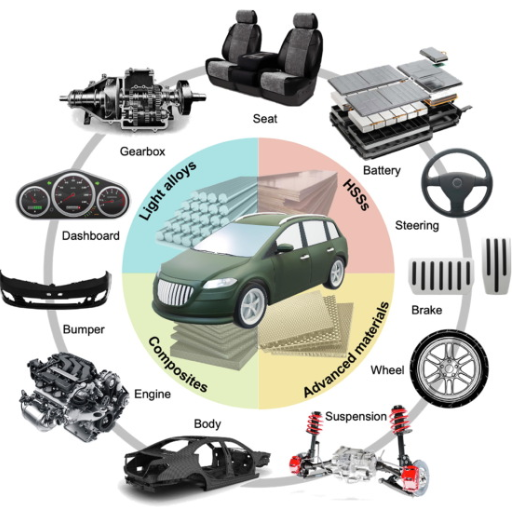
The whole idea of automotive lightweighting directly affects fuel efficiency through the reduction of the mass of the vehicle. Industry data and recent scientific research report that a 10% weight reduction would render an improvement in fuel efficiency of roughly 6% to 8% for internal combustion engine vehicles.
Fuel efficiency improvement per 10% weight reduction
Less energy is needed to overcome inertia and maintain momentum, especially during acceleration and braking processes.
Higher battery range achieved
Less energy is used to push a lighter car, directly translating to increased driving range per charge.
Recent search insights reveal increased interest in the terms “aluminum car parts” and “vehicle weight reduction materials,” indicating growing consumer and industry interest in embracing efficient and green technologies. This therefore shows that lightweighting complements fuel efficiency and is aligned with the wider shift toward sustainability and regulatory pressures for emission reductions.
The integration of aluminum into lightweighting systems presents a handful of challenges from technical and operational points of view that require consideration to maximize their utilization in manufacturing.
Machining and forming aluminum can be more difficult due to lower strength-to-weight ratio compared to steel – can deform or crack under various processes.
May pose problems in various environmental conditions unless proper surface treatment and coating are applied.
Increased raw-material cost for aluminum, coupled with energy-intensive extraction and refining processes.
Problems with material purity, contamination, and retention of mechanical properties after recycling.
Development of high-strength aluminum alloys has successfully alleviated deformation problems, providing better mechanical properties.
Precision casting and 3D printing contribute to better material usage and less waste on the cost-efficiency side.
Research into methods such as plasma electrolytic oxidation has dramatically alleviated corrosion risk.
Novel alloy compositions that tolerate impurities well maintain functionality as key strategies for sustainable development.
With further progress and industrial collaboration, lightweight aluminum components continuously evolve to be the simplest solution for performance, environmental conformity, and cost-effectiveness.
It is thus envisioned that the future development of lightweight automotive materials shall revolve around advanced materials science, fostering sustainability, and production cost efficiency.
According to recent statistics, the incorporation of machine learning and AI algorithms into material selection and performance prediction is also being prioritized by the industries, interjecting further innovation opportunities for the sector. The marriage between cutting-edge innovations and environmental conscious designs shall steer the upcoming development of lightweight automotive materials.
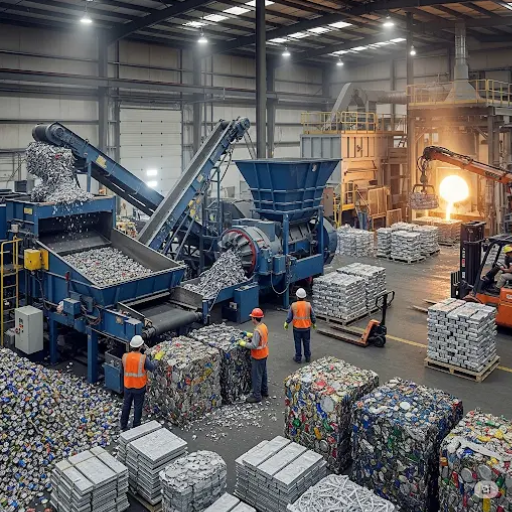
Recycling is of utmost importance in mitigating the environmental impact of an automotive sector that deals with resource depletion and waste disposal methods. Contemporary studies have suggested that recycling aluminum can use up to 95% less energy than producing primary aluminum, thus making it one of the most energy-efficient processes.
Less energy than primary aluminum production
Less energy used means fewer greenhouse gas emissions into the atmosphere, a major step in combating climate change.
Vehicles manufactured worldwide annually
Recycling end-of-life vehicles becomes crucial to promote less landfilling while retrieving raw materials.
The use of systems like laser-induced breakdown spectroscopy (LIBS) and eddy current separators for the sorting process now ensures greater purity and yields of recovered materials.
These emerging technologies work together with the principles of a circular economy for sustainability in automotive production, creating a closed-loop system wherein scrap from old cars finds its way into the manufacture of new vehicles.
Managing aluminum components from an end-of-life (EOL) perspective holds a strategic position in the quest for sustainable manufacturing operations. This high degree of recyclability, with up to 95% energy saved compared to the primary production of aluminum, makes aluminum an ideal element for the circular economy.
Systematic gathering of end-of-life aluminum components
AI-based sorting systems and spectral imaging methods
Shredding, sorting, and smelting for material recovery
Major advances in machine learning and AI-empowered sorting systems are still being concocted and worked on that make aluminum recycling a much more efficient process. Technological advances such as spectral imaging or robotic sorting are all capable of separating aluminum alloys with much more recovery rate and purity.
Strong tracking systems based on blockchain technology are currently being put into operation to ensure traceability along the entire recycling chain to ensure compliance with environmental policies such as the EU Circular Economy Action Plan.
Aluminum recycling ranks amongst one of the world’s most efficient and sustainable industrial processes.
Of all aluminum ever produced remains in use due to infinite recyclability without quality degradation
Recycled aluminum makes up about one-third of the worldwide aluminum supply
Less energy required compared to producing aluminum from raw materials
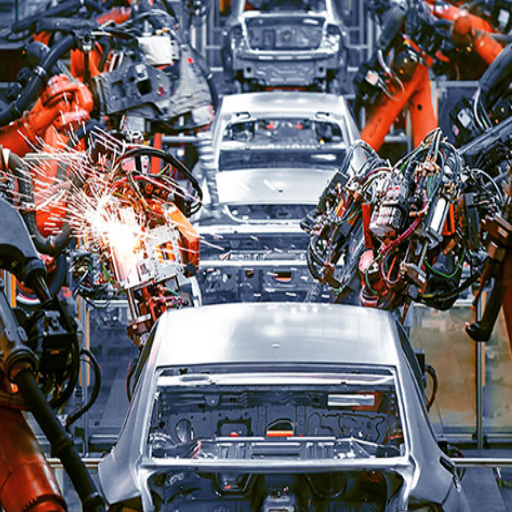
Machining aluminum components for automotive applications demands high precision, accuracy, and efficiency to remain within or above industry standards. Some commonly used techniques include CNC machining, offering extraordinarily high precision and repeatability through its automated process.
Manufacturers have started embracing hybrid machining processes increasingly in the last few years, mixing additive and subtractive manufacturing processes, for hopefully unprecedented precision and design flexibility. These novel methods bring about greater precision and hence, lower costs and energy consumption than conventional machining methods.
The forefront in aluminum casting and forming sees ever more integration with machine learning and AI technologies. Recent casting techniques, including vacuum-assisted HPDC, now employ AI-powered simulations to optimize the mold design and predict potential defects before actual production.
From search engine trends data, it appears that interest has gravely increased in sustainable aluminum casting processes, highlighting the growth in industry focus on environmentally friendly solutions.
To ensure high quality in the manufacturing of aluminum parts, a variety of techniques must be combined, such as advanced technology, rigorous testing procedures, and systemic monitoring systems.
Recent insights show great curiosity about Industry 4.0 technology in search trends, especially IoT-enabled quality management systems in aluminum production.
This latter support system will ensure sensors and analytics for deep real-time data on performance and quality parameters; predictive maintenance will reduce downtime. The technology, coupled with a robust quality control setup, would ensure the quality stamp that aluminum parts enjoy today in the tough competitive markets.
The following authoritative academic and research sources were referenced in the preparation of this comprehensive guide:
Aluminum CNC Machining Service
Aluminum-Fly Ash Metal Matrix Composites for Automotive Applications
This academic paper explores the use of aluminum-fly ash composites in automotive applications, focusing on innovative casting techniques.
Hybrid Process for Shaping Aluminum Auto Parts
This research highlights a hybrid manufacturing process that uses electricity to shape aluminum parts, improving efficiency and reducing material tearing.
New Aluminum Alloy for Automotive Supply Chain
ORNL introduces RidgeAlloy, a new aluminum alloy made from recycled materials, designed to enhance strength and ductility for automotive applications.

Manufacturing processes are quite complex, and the choice of a production method is directly related
Learn More →
There are two major manufacturing methods for producing plastic prototypes that most people find useful
Learn More →
As a person involved or interested in the design and production of plastic components, it
Learn More →