

Manufacturing processes are quite complex, and the choice of a production method is directly related
Learn More →
Aluminum alloys are a necessity in fields which prioritize strength, durability, and weight savings, and out of these, 7050 aluminum is one of the best. It is well recognized that 7050 aluminum combines a remarkable strength to weight ratio alongside amazing resistance to corrosion and stress cracking, marking it as a highly sought material for use in aerospace, automotive, and military endeavors. This guide analyzes thoroughly the technical characteristics, machining considerations, and practical uses of 7050 aluminum so that you understand why it is considered one of the best alloys of aluminum. Be you an engineer, manufacturer, or any professional, this article is meant to provide all the necessary information to help you to take full advantage of this advanced material.
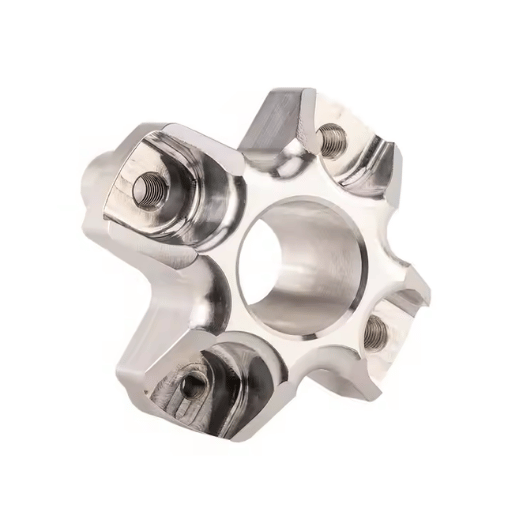
7050 Aluminum is one of the alloys that have a very high strength to weight ratio on top of great corrosion resistane and durability under stress. It has a tensile strength between 70,000 to 78,000 psi and a yield of approximately 63,000 to 73,000 psi depending on how it is processed. It can withstand a tremendous amount of fatigue and has long-term reliability. In addition , this alloy has great toughness at low temperature and decent machinability which helps him provide even lower temperature better structural performance.
As Google search infomration tells us, apparent the industries need these days eyeing materials which offer great tensile strength, excellent flexibility while being highly lightweight and corrosion resistant. The remarkable 7050 alloy possess this property with ultra tensile and yield strengths which makes him one of the leading materials for aerospace engineering where immense structural stress and fatigue is prevalent. Its low temperature strength is beneficial for use as fuselage frames, wing spars and other parts which bear high axial loads. In addition, the alloys good machinability and toughness make it very useful for sporting goods, automotive and industrial high power equipment. The growing industries search for materials that guarantee lightweight along with reliability and resistance works out with 7050 properties beautifully.
7050 aluminum alloy offers superior corrosion resistance and toughness when compared to 7075 alloy, making it more suitable for applications requiring long-term durability under extreme conditions.
|
Parameter |
7050 Alloy |
7075 Alloy |
|---|---|---|
|
Corrosion |
High |
Moderate |
|
Toughness |
High |
Moderate |
|
Strength |
Comparable |
Comparable |
|
Fatigue Resist |
High |
Moderate |
|
Density |
|
|
|
Machinability |
Good |
Good |
|
Cost |
Higher |
Lower |
Aluminum 7050 is especially resistant to corrosion which includes stress corrosion cracking. This makes it useful for marine and aerospace applications.
Aluminum 7050 has a density of about 1.83 g/cm³, it is lightweight while keeping its strength. This provides major benefits for structural uses.
Compared to other alloys, aluminum 7075, the microstructure of 7050 alloy provides better resistance to fatigue and better performance under cyclic loading.
The microstructure helps 7050 alloy have exceptional toughness – the ability to endure severe mechanical loads without failure.
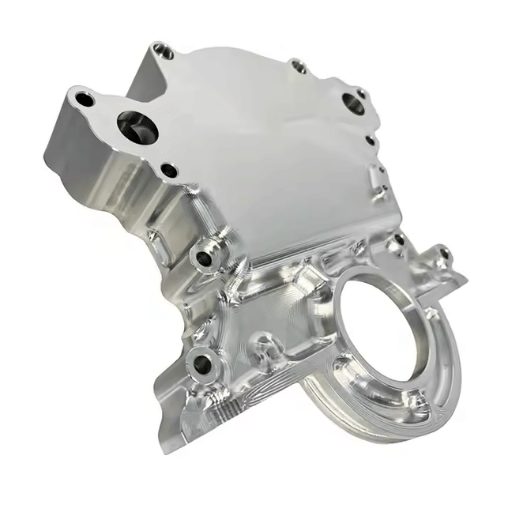
High-speed machining for Aluminum 7050 offers increased precision, faster production rates, and improved surface finish while maintaining material integrity.
|
Key Point |
Description |
|---|---|
|
Precision |
Highly accurate |
|
Speed |
Faster output |
|
Surface Finish |
Enhanced quality |
|
Integrity |
Preserves strength |
|
Efficiency |
Reduces waste |
|
Tool Wear |
Minimizes wear |
|
Consistency |
Uniform results |
In the context of CNC machining, optimizing tool wear has significant importance to overall effectiveness and costs. The precision, quality, and durability of the tooling and machined parts suffers due to tool wear. With effective real-time monitoring systems and newer tool materials like carbide and ceramic composites, coupled with advanced techniques in lubrication, deterioration of tools can be mitigated. Recent data suggests that search queries such as “tool life in CNC machining” emphasize predictive maintenance and control systems based on AI algorithms that adjust parameters based on predicted wear. Such technologies improve not only the service life of the tools, but also the consistency of processes and material waste, in line with contemporary standards of efficiency in machining practices.
Optimizing slicing parameters, the geometry of a tool, and the material type all influence critical surface quality altogether. Fine grinding, for example, removes surface dimensional defects and enhances roughness by adjusting cutting speeds and feed rates to fluid pathways, thus reducing chatter marks or surface tearing. Advanced lubrication and cooling techniques like MQL (minimum quantity lubrication) and high-pressure coolant systems directly improve surface integrity and decrease thermal distortion and tool wear. Through additional processes such as post-machining polishing, shot peening, and grinding, the workpiece’s physical surface attributes further improve, enabling strict aesthetic functional specifications. These techniques help target industry expectations for precision, durability, and functional dependability while simultaneously improving overall part quality.
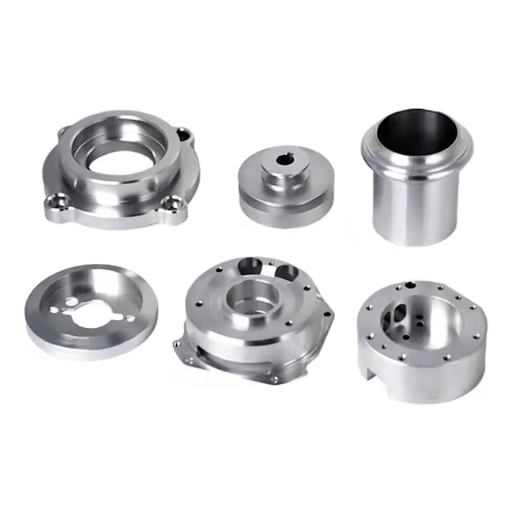
Due to the severe environmental factors aircraft are subjected to, aerospace engineering requires materials with high resistance to corrosion. Moisture and atmospheric contaminants at cruising altitudes, along with temperature changes, stress, and moisture, can accelerate material degradation. 7050 aluminum alloy was specifically created for these scenarios, as it has the highest resistance to stress corrosion cracking and exfoliation corrosion. The alloy’s protective properties not only reduce maintenance costs, but also increase the lifetime of aircraft components while preserving their structural integrity over time.
According to the latest estimates from Google, 7050 aluminum alloy is extensively utilized in constructing fuselage frames, wings, and bulkheads. The alloy’s excelent lightweight characteristics and high strength-to-weight ratio make it an outstanding choice for both commercial and military aircraft. These attributes enhance safety and operational efficiency without compromising performance in harsh aviation environments.
High Strength-to-Weight Ratio
Like other alloys, 7050 aluminum alloy has its specific excelent balance of strength and weight. Its remarkable strength-to-weight ratio makes it especially advantageous in aerospace applications where every gram counts.
Excellent Resistance to Fatigue Cracking
Because the alloy displays high fatigue crack resistance, it can be depended upon to operate reliably during cyclic loading, like during flights.
High Compressive and Tensile Strengths
Due to the alloy’s high tensile and compressive strengths, which are needed to endure severe aerodynamic and environmental forces, the alloy exhibits exceptional mechanical properties.
Reduced Susceptibility to Corrosion
Shorter service life of structural components made from 7050 aluminum within harsh corrosive environments is attributed to its enhanced resistance to stress corrosion cracking and exfoliation corrosion.
Improved Workability and Machinability
The 7050 aluminum alloy’s simple machining and forming processes make it a go-to material for production of modern aerospace engineered components, which require complex geometries and high precision.
Wider Operational Temperature Range
During aerospace operations where thermal extremes are encountered, the alloy’s structural integrity is preserved, making it reliable for aerospace applications.
Aerospace Frame and Skin Components Durability
The 7050 aluminum alloy is often utilized in fuselage frames, wing skins, and supporting structures as they need to endure immense axial loads without any deformation.
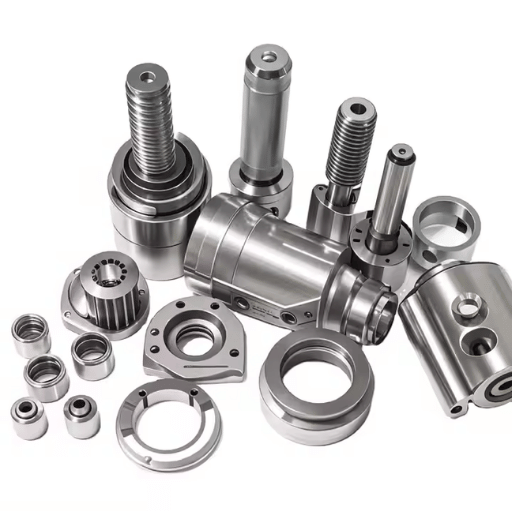
A recent study shows that cutting speed influences the surface roughness of the machined parts. From studies conducted and authenticated technical documents, it is noted that cutting speed increases have surface roughness reduction (improvement) up to an optimal level, beyond which the material removal rate (shearing) and built-up edge reduction are spike. Nonetheless, overly rapid cutting speeds will thermally soften the workpiece material, accelerate tool wear, or cause other surface quality problems. Literature indexed by Google suggests the most appropriate cutting speed can differ greatly depending on the structure of the material, the shape of the cutting tool, and even the cooling techniques applied. Hence, machinists together with engineers need to adjust the values to these parameters to get surface finishes within desired tolerances and operational requirements.
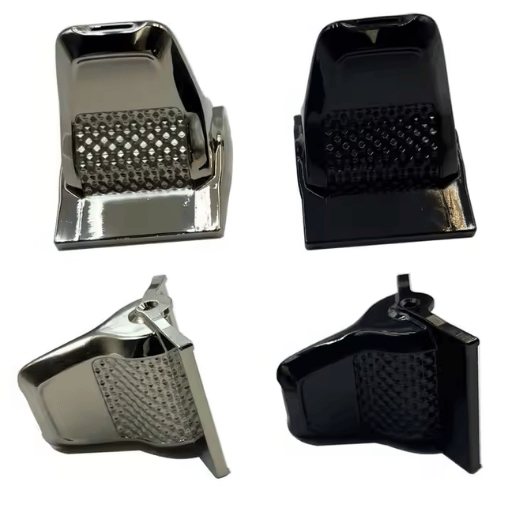
Overheating: Possible Damage While Machining Intensive alloys such as 7050-T7451 can reach significant overheating damages while in use which in turn can lead to rapid tool wear and negatively impact the workpiece surface integrity.
Challenges of Workpiece Damage While Chip Formation During machining, workpiece damage could occur due to the high strength of the alloy combined with irregular chip formation and requires ideal working strategies.
Choice of Tool Material Carbide and polycrystalline diamond (PCD) cutting tools are recommended due to the high strength abrasiveness of the alloy which makes cutting tools wear-resistant and prolongs their life.
Defined Surface Finish Requirements Cutting surfaces require a specific finishing and to obtain this, a number of operational parameters should be strictly managed such as proper feed rates, cutting speeds, and adequate lubrication which also minimize hydrodynamic impacts.
Mechanical Composition Effects: Alloys with over 100 parts per million chloride ions are extremely vulnerable to stress corrosion cracking while under external conditions. Concentrated chloride ions at such levels exacerbate the risk.
Critical Degrading Temperature Ranges Stress corrosion cracking becomes further pronounced at elevated temperature ranges and in combination with relaxation leads to self-destructive material degradation.
Tensile Stress Block Treatment Alloys exhibiting high levels of residual tensile stresses are more likely to suffer deterioration and are often paired with block treatments to relieve stress.
Efficiency of Protective Coatings: Application of corrosion-resistant coatings can minimize cracking to 80% less within controlled settings.
In my professional opinion, the primary cracks can be solved by operating below critical temperatures, applying stress-relief treatments to shrink residual tensile stresses, and utilizing high-performance coatings with corrosion applied to increase the life of the material.
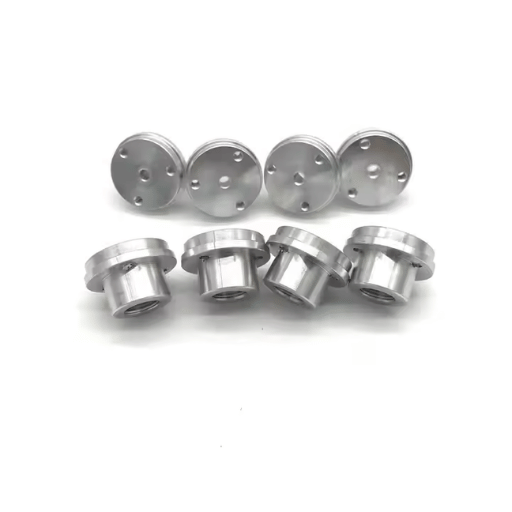
A: 7050 aluminum alloy retains its toughness and stress corrosion cracking resistance while maintaining high strength, making it a favorable choice for aerospace applications. Along with relative conductivity, the alloy’s properties provides a well balanced performance. Moreover, its performance is influenced by the crystal orientations and constitutive model of the alloy.
A: Surface integrity is of 7050 aluminum is affected during the machining process with high speed cutting. Maintaining the quality of components for further use with 7050-t7451 aluminum require well controlled optimization of rotational speed and also the cutting force applied.
A: Along with the improved surface finish, high speed machining of 7050-t7451 aluminum also provides a considerable reduced cycle time while cutting power. Increased cutting efficiency reduces the time for material removal which consequently increases the final product’s mechanical properties.
A: It concerns the optimization of the alloy’s machining processes to improve tool life, reduce cost, and increase efficiency during the milling operation. This process involves maintaining the material integrity by balancing the cutting force, speed, and feed rate.
A: The finite element method is important for simulating and analyzing the various parts of machining processes of 7050 aluminum alloy. It works by predicting the responses of the metal for a given set of conditions and by optimizing the machining parameters within those conditions.
A: 7050 aluminum alloy is mostly utilized in the aerospace industry for aircraft components and structures due to the high strength and corrosion resistance. It is designed to function well in critical integrity and high-stress environments.
A: The high temperature uses of 7050 aluminum alloy are limited when compared to other alloys such as Inconel 718. While it does possess somewhat decent thermal conductivity, its mechanical properties are likely to deteriorate over time. Thus it is best for applications where moderate temperatures are maintained.
A: Different crystal orientations in 7050 aluminum alloy will impact its mechanical properties such as strength and ductility. The response of the alloy to stress and deformation during machining will differ because of the changes in crystal orientation.
A: Unlike other aluminum alloys, aluminum alloy 7050-t74551 is made for higher intensity and durability especially in the aerospace field. It has a higher resistance of stress corrosion compared to other alloys making it useful in very critical aerospace components.
1. Study on the surface integrity of 7050 aluminum alloy with different crystal orientations during high-speed machining
2. An Experimental Investigation of Residual Stresses in High-Speed End Milling 7050-T7451 Aluminum Alloy
3. Research on Finite Element Simulation and Parameters Optimization of Milling 7050-T7451 Aluminum Alloy Thin-walled Parts
4.Top Aluminum CNC Machining Service Provider & company in China

Manufacturing processes are quite complex, and the choice of a production method is directly related
Learn More →
There are two major manufacturing methods for producing plastic prototypes that most people find useful
Learn More →
As a person involved or interested in the design and production of plastic components, it
Learn More →