

Manufacturing processes are quite complex, and the choice of a production method is directly related
Learn More →
Modern manufacturing is based on precision and reliability, and CNC Turned Parts manufacturers play a central role in the execution of both. With a range of industries, including aerospace, medical, automotive, and industrial applications, custom CNC turning services deliver unmatched precision and flexibility, making them ideal for even the most demanding requirements. In this blog post, we delve into the world of CNC-machined parts, examining how these precisely manufactured components are revolutionizing industries and why selecting the proper manufacturer is crucial for achieving business success. Learn why precision CNC turning services are the cornerstones of any project while also learning how such services assure flawless execution from designs to finished custom parts.
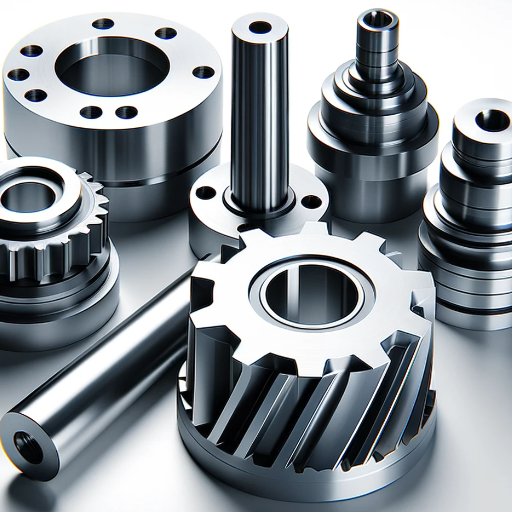
Being one of the most precise manufacturing processes, CNC turning utilizes lathes controlled by computers to carry out different machining operations by rotating the materials to be manufactured against the cutting tools. Such a method has been widely used in industries such as automotive, aerospace, medical, and electronics due to its capability to produce accurate, repeatable parts that generate minimal scrap. With CNC becoming an efficient and dependable process for creating high-quality parts, this method must be employed for parts that must meet stringent performance and safety standards.
The CNC-turned-parts manufacturing sector has undergone constant evolution with the advent of technological progress and automation. According to the latest industry insights, AI-integrated CNC machining and IoT-enabled machinery are transforming production processes, offering a higher degree of precision and faster turnaround times. Searches on Google indicate an increasing interest in sustainable manufacturing, which seeks eco-friendly materials and energy-efficient processes to reduce carbon footprints. Additionally, the growing reliance on CNC machining in critical industries, such as healthcare and aerospace, reveals its crucial importance as a support system for high-stakes applications where precision and reliability cannot be compromised. These trends concoct the constant modernization and strategic approach of CNC-turned-parts manufacturing, propelling both innovation and sustainability.
The global CNC-turned-parts market is experiencing steady growth due to increased demand for precision parts in the aerospace, automotive, and healthcare industries, among others. Recent reports state that the market is forecasted to grow at a CAGR of 6.5% in the coming five years.
Manufacturers have started using advanced materials such as titanium and carbon-fiber composites, which calls for the application of modern CNC machining techniques. This shift is driving innovations in tooling and machining processes.
Companies are embracing greener methods by optimizing material use, thereby minimizing waste and reducing energy consumption through energy-efficient manufacturing operations. The trend goes along with global sustainability objectives and regulations.
Outsourcing CNC machining of parts is a cost-saving measure, primarily for organizations based in high-cost regions. Reports indicate that outsourcing can save approximately 30-40% of manufacturing costs, provided that quality and precision are maintained.
Outsourcing provides companies with the opportunity to leverage the expertise of dedicated manufacturing organizations that possess advanced infrastructure and skilled personnel, thereby ensuring the production of highly productive and high-quality components, particularly for complex or specialized applications.
When aiming to identify the target audience, companies must first examine trends and then analyze data insights. Consumers seeking outsourced manufacturing services are primarily divided into two broad categories. The first category includes SMEs, offering cost-effective solutions to increase production capacity without requiring massive capital investments. The second category comprises larger companies aiming to enhance the efficiency of their operations and acquire expert knowledge that will give them a competitive edge in highly sought-after sectors such as technology, pharmaceuticals, and automotive. By better understanding these distinct third-party needs, businesses can tailor their product offerings and messaging accordingly, thereby increasing engagement and achieving their strategic objectives.

CNC-turned parts manufacturing is a system of computer numerical control machining designed to produce accurate and consistent components from metallic, plastic, composite, or other materials. A rotating workpiece is machined using cutting tools with software that is preprogrammed with specific instructions to ensure excellent tolerance and repeatability. Due to its efficiency and ability to form complex geometries with minimal waste, this process is widely regarded as applicable by an experienced workforce across various industrial fields. CNC machining is the ideal choice for high-volume production or custom parts that require tight tolerances.
In identifying the subtractive processes, the CNC turning machine separates material from the workpiece as the piece rotates during the cutting process. The basic components of a CNC lathe are the spindle, chuck, turret, and control panel. The spindle holds and rotates the workpiece, and the turret carries numerous cutting tools that can be automatically changed as per requirement. High precision is required in CNC turning, which is achieved through computerized controls that manage the creation of the tool path and control the speed and feed rate in each cut, thereby providing consistency and accuracy.
In line with current industry data trends, CNC turning continues to evolve as an interface between advanced software and innovative manufacturing practices. Recent trends indicate an increasing use of CNC machines, driven by AI optimizations and real-time monitoring, to enhance speed, minimize errors, and increase overall productivity. CNC turning finds increased application in machining difficult materials, such as super alloys and composites, which opens up new avenues in aerospace, medical, and automotive applications. With these innovations, CNC maintains recent industry demands while assuring a reduction in production lead time and costs.
Since CNC turning ensures precision, efficiency, and versatility, it has revolutionized manufacturing processes across various industries. One can explore its working in these key sectors:
CNC turning is used for manufacturing complex parts with precision engineering, such as engine parts, gears, and brake rotors. CNC machines are an excellent option for manufacturing these components with tolerances up to ±0.01 mm. The CNC turning also finds application in manufacturing lightweight and high-performance parts, which have become critical with the rise of electric vehicles.
CNC turning finds application in manufacturing aerospace components, such as turbine blades, landing gear, and structural parts, that require high strength and precision. The technology ensures adherence to tight tolerances essential for safety and performance, and it is especially valued for the CNC turning of superalloys, such as titanium and Inconel, which are the cornerstones of aerospace engineering.
Heavy machinery utilizes CNC turning to manufacture parts such as shafts, rollers, and bearings, which require durability to withstand high operational loads. This helps to provide indelible and reliable machinery for construction, mining, and agricultural industries.
The medical field utilizes CNC turning for the manufacture of surgical instruments, orthopedic implants, and specific dental components. CNC turning ensures smooth finishes and precise measurements that are paramount for life-saving instruments and devices, offering customized solutions for patients.
CNC turning is also utilized in the electronics industry for the manufacture of small and intricate parts, such as housings, connectors, and cooling devices, with great precision. This accommodates the increasing demands for miniaturization in consumer electronics and wearable tech.
Thus, these applications demonstrate the industrial prowess of CNC turning, enhancing in-house quality, productivity, and innovation.
Precision CNC turning can work with an extensive range of materials, thus giving versatility to adapt to diverse industrial needs. Bodies are composed of metals and engineering plastics; some of these materials include aluminum, stainless steel, titanium, and brass. Plastics used may consist of PEEK, Delrin, and Nylon. Specific properties such as strength, conductivity, temperature resistance, and weight determine the selection of material for the part. For example, titanium is widely used in aerospace due to its excellent strength-to-weight ratio, and aluminum is commonly used in the electronics field because it provides thermal conductivity and is easily shaped.
Regarding specifications, CNC turning can now achieve tolerances of ±0.005 mm for extreme accuracy, even on the most intricate designs. The surface finish can then be selected, depending on whether it is for function, aesthetics, or another purpose, ranging from a very smooth polished finish to a somewhat abrasive texture. Furthermore, by employing CNC technology, more complex geometries with undercuts and threading can be produced. These material property specifications and technical specifications, in turn, enable manufacturers to meet the quality requirements applied in the automotive, medical device, and aerospace industries.

Some critical factors unique to a manufacturer must be looked at:
By following these criteria, a solid foundation for a productive working relationship with the manufacturer is established.
CNC turning is a manufacturing process that utilizes high-tech machines to produce parts with high precision and accuracy. This procedure uses modern lathes and turning centers that provide multi-axis capabilities, live tooling, and automatic tool changers. Modern CNC turning equipment is capable of machining a wide range of materials, including metal, plastic, and composite, for both production and promotional machinery, offering unmatched flexibility.
In terms of capabilities, CNC turning machines possess significant technical capabilities. Very tight tolerances, often in microns, can be maintained, guaranteeing consistency and precision throughout large production runs. Additionally, they can face complex geometries and fine details that are difficult, if not impossible, to do manually. CNC turning can also be performed in rapid prototyping or full production mode, depending on the specific needs of the aerospace, medical, and automotive industries.
Incorporating new technologies, such as AI-driven programming and IoT-enabled systems, will enable manufacturers to track real-time machine performance and drive efficiency in their production processes. This reduces downtime and improves precision while cutting down turnaround times. The pairing of modern equipment with the latest software extends the capabilities of CNC turning and meets the stringent demands of modern manufacturing.
When choosing the material for CNC turning-type processes, it is essential to consider that it should always be compatible with the design’s intended function and performance. Sometimes, the materials used are aluminum, stainless steel, brass, and titanium, as they suit various needs and are machineable. Knowledge of advanced properties, such as hardness, tensile strength, and thermal stability, among others, is essential for achieving optimal results. When combined with real-time data analytics, this material knowledge empowers manufacturers to predict machining behavior for each material and make machining decisions tailored to each specific material. This integration, in turn, reduces waste and wear on tools while providing high-quality, repeatable parts for various industries, including aerospace and medical devices.
These days, precision and tolerance play a paramount role in manufacturing, as all components must adhere to specific specifications or dimensions while maintaining their functionality and reliability. Tolerance refers to the permitted deviation from a specification or dimension, while precision pertains to the capability of committee members to agree on the prescribed dimensions consensually. Advanced techniques are being combined with real-time data analytics to complete these tasks with greater structure, such as CNC machining and additive manufacturing. Industries and domains, such as aerospace and medical devices, require these tools and processes to be truly cutting-edge to achieve tolerances of ±0.001 inches or less. Through the continuous advancement of metrology and machine-learning algorithms, the slightest deviation is tolerated to maintain quality and performance standards.

Working according to the recognized standards ensures that products perform reliably and can be produced across industries. Certification, such as ISO 9001, provides a framework for a quality management system, emphasizing customer satisfaction, continual improvement, and meeting regulatory requirements. However, somewhat specialized sectors, such as medical devices or aerospace, require stringent safety and performance standards to be met through certifications like ISO 13485 and AS9100. Thus, the standards improve operations on the one hand and, on the other, instill trust in clients or stakeholders, as product realization is subject to a quality commitment.
ISO standards and manufacturing certifications serve as fundamental criteria for ensuring quality, reliability, and safety in the production of precision-turned parts. With manufacturing extending globally, it is vital to maintain consistency and meet customer expectations by adhering to standards, such as ISO 9001, for quality management. While the AS9100 certification is specific to the aerospace industry, ISO 13485 indicates that a manufacturer is capable of meeting stringent safety and performance-focused requirements for medical devices.
ISO certifications highly influence purchasing decisions and supplier credibility across industries. Companies holding accredited certifications have a competitive edge in the market, as they demonstrate a commitment to high-quality manufacturing standards, effective risk management, and adherence to international norms. Being rigidly specified, ISO-certified precision-turned parts can be used in applications such as automotive, aerospace, or health care, guaranteeing functional and safety standards. By adopting ISO standards, which are globally accepted, manufacturers gain credibility, improve operational efficiency, and maintain a competitive edge in a highly competitive and high-demand market.
Quality control in CNC manufacturing is a complex process that involves intricate steps aimed at ensuring each manufactured part meets the specified requirements and tolerances. These processes impart such precision, wastage, and reliability multiplied manifold. The six principal steps consist of:
With the advent of AI and machine learning, the CNC industry is shifting toward predictive maintenance and adaptive manufacturing in quality control. The early detection of defects through automation and real-time analytics is a crucial factor in increasing production efficiency and producing defect-free products, as is well understood. By decluttering these tasks and leveraging digital tools to their full advantage, CNC manufacturers can respond to market demand while maintaining the highest industry standards.
Inspection and checking are crucial in ensuring that parts manufactured through CNC machines maintain the highest quality standards. Currently, advanced technologies, combined with advanced inspection methods, utilize several modern non-destructive testing (NDT) methods, including laser scanning and automated optical inspection (AOI) stations, to perform quality control checks. Real-time analytical data integration of these inspection technologies enables manufacturers to detect microscopic defects, provide dimensional measurements, and verify material properties with a level of efficiency never previously achieved. Utilization of a broad spectrum of automation tools across the predictive algorithm spectrum ensures the minimization of human intervention, maximizing repeatability and reliability. Besides providing superior-quality parts, this particular approach further ensures compliance with the specified industrial standards and customer requirements.

When determining cost factors and pricing models in manufacturing, the considerations primarily include material costs, labor, production efficiency, and overhead expenses. Material costs are mainly determined by the type and availability of raw materials used in the production process. Labor costs depend on the skill level, prevailing wages in the workforce, and the location of the project. Production efficiency, when enhanced through automation and workflow optimization, significantly reduces the cost per unit. Overheads such as facility upkeep and energy consumption constitute the cost component. To stay competitive, manufacturers strategize regarding economies of scale and dynamic pricing compatible with demand and supply scenarios. These factors should remain comprehensible to operations, ensuring they remain sustainable and competitive in pricing.
In brief, domestic manufacturing ensures faster shipping, ethical practices, and a more effective communication channel. Conversely, manufacturing overseas offers lower costs, bulkier production capacity, and access to global markets but with longer lead times, higher shipping costs, and potential quality issues.
|
Parameter |
Domestic |
Overseas |
|---|---|---|
|
Cost |
Higher |
Lower |
|
Shipping |
Faster, cheaper |
Slower, expensive |
|
Standards |
Ethical, regulated |
Varies, less strict |
|
Capacity |
Limited |
Larger |
|
Lead Time |
Shorter |
Longer |
|
Flexibility |
High |
Moderate |
|
Quality Control |
Easier |
Challenging |
|
MOQ (Orders) |
Low feasible |
High required |
|
Communication |
Streamlined |
Complex |
|
Tariffs |
None |
Applicable |
Volume-based pricing is crucial in CNC turning operations, as the price per piece decreases with an increase in production volume. This is because fixed expenses, such as machine setup and programming charges, are allocated over a large number of parts as the production volume increases. In conjunction with the revised statistics, it has been observed that buyers across various industries are increasingly drawn to low-cost solutions that align with their volume requirements. For lower volumes, manufacturers may offer discounted pricing or charge separately for customization costs, whereas high-volume production experiences less material waste and better machine cycle times.
Answering the question of the best ways to employ these strategies involves implementing advanced planning tools, data analytics, and market intelligence. There is an increasing interest in predictive technologies and software solutions that can forecast demand and adjust pricing models in real time. Manufacturers that apply such tools will be well-positioned to accommodate the changing needs of clients while remaining profitable. Ultimately, volume-based pricing with a data-driven approach ensures competitiveness in the CNC turning industry.
In any manufacturing setting for parts production, hidden costs and budget considerations must be addressed promptly at the level that impacts profit. Core areas include material waste, unplanned downtime, and labor inefficiency. Sometimes, the costs incurred for quality control, tooling replacement, and maintenance can be substantial if not correctly managed. Using data analytics and taking a proactive approach to planning, I aim to prevent hidden costs, ensuring projects and work stay on track.
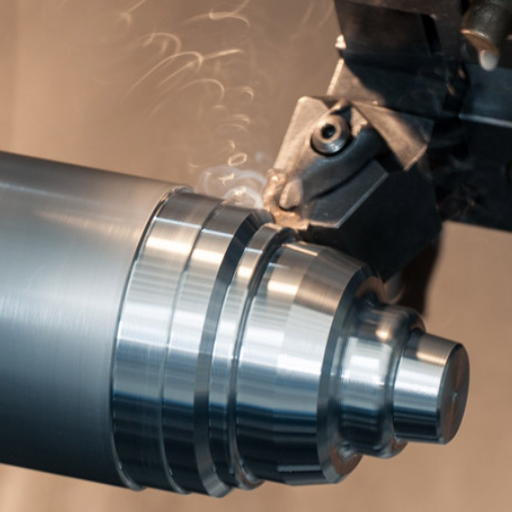
Emerging technologies, such as artificial intelligence (AI) and automation, are at the forefront of significant improvements in manufacturing and production. While AI is computing large datasets to achieve efficiencies in decision-making, automation minimizes labor costs and speeds up repetitive tasks. These advancements, combined with new-age methods such as additive manufacturing and 3D printing, enable the creation of speedy prototypes and highly customized products. Cloud computing and IoT also transform operations by enabling real-time monitoring and better connectivity among systems. Companies that adopt these innovations can enhance productivity while reducing waste and navigating the fast-evolving markets.
The advent of CNC technology has completely revolutionized the precision turning industry. The advanced multi-axis CNC-type machines are leaders, programmed to perform complex tasks such as milling, drilling, and turning in a single setup, thereby significantly reducing production time. Additionally, automation systems integrated with CNC, along with robotics, also promote lights-out manufacturing processes that retain continuous and efficient operations.
In addition, artificial intelligence and machine learning are disenchanting precision turning. Using these, you can predict maintenance, adjust the feed rate, and control quality in real time, thereby reducing errors and improving efficiency. Moreover, high-speed machining and ultra-fine micro-machining techniques are further enhancing the outputs to achieve levels of precision that are simply incomparable.
The integration of IoT further enables CNC machines to become highly connected, providing instant updates, diagnostics, and process monitoring from any location. These new technologies, when adopted by businesses, enable the manufacture of components with highly accurate tolerances within a reduced lead time and at a lower cost, allowing businesses to remain competitive in this fast-paced industrial environment.
Process automation and digitization have enabled manufacturers to achieve streamlined operations, increased efficiency, and reduced errors. Harnessing advanced AI, the Internet of Things (IoT), and machine learning technologies, manufacturers optimize production workflows for significant cost savings. By doing so, automation enables a reduced dependency on manual labor for repetitive tasks, allowing human work to be redirected toward intensive problem-solving.
Combined with real-time data analytics and cloud-based systems, these technologies enable predictive maintenance, enhanced supply chain visibility, and accurate demand forecasting. Businesses embracing automation and digitization become highly scalable, with increased product quality and a shortened time-to-market. The overall developments enable them to lead to profitable businesses while establishing companies as innovation frontrunners in a fiercely competitive industrial landscape.
The CNC turning industry, in contrast, can expect exemplary growth due to the rapid automation and Industry 4.0 implementations. The years have recorded a growth in related search queries for “smart manufacturing,” “CNC automation,” and “precision machining,” indicating increasing relevance and demand in the sector. Companies employing state-of-the-art technologies, which include AI-enabled tools, IoT integrations, and advanced robotics, garner better efficiency, reduced downtime, and improved product accuracy.
Additionally, sustainability is gaining more attention, with upward trends observed in search queries for “eco-friendly CNC processes” and “green manufacturing initiatives.” This further implies that firms are pursuing operational excellence while concurrently working towards globally accepted environmental goals to stay competitive. By synthesizing technological innovation with sustainability, the CNC turning industry can create a more productive and responsible future.
A: CNC-turned parts are components that are created through the CNC turning process, where a rotating workpiece is shaped by cutting tools. This process is ideal for producing cylindrical and complex geometries with high precision, making it suitable for various industrial applications.
A: The CNC turning process involves the use of a lathe machine where material is removed from a rotating workpiece. The CNC machine is programmed using CAD software to dictate the movements and operations of the cutting tools, enabling the production of intricate and precise turned components.
A: CNC machining services offer numerous advantages, including high precision, repeatability, and the ability to produce complex parts with tight tolerances. Additionally, CNC machines can work with a wide range of materials, including metals and plastics, enabling a diverse array of applications across industries such as aerospace and automotive.
A: Yes, as a precision-turned parts manufacturer, we specialize in producing custom-turned parts tailored to specific requirements. Our advanced CNC turning capabilities enable us to create unique designs and specifications for various applications, ensuring high quality and precision in every component.
A: CNC-turned components can be manufactured from a variety of materials, including metals such as aluminum, brass, and stainless steel, as well as plastics. The choice of material depends on the application’s requirements, including strength, weight, and corrosion resistance.
A: CNC turning primarily involves the rotation of the workpiece to shape it using cutting tools, while CNC milling consists of moving the cutting tools against a stationary workpiece. Both processes are forms of subtractive manufacturing but are suitable for different types of geometries and applications.
A: Precision in CNC machining is ensured through the use of high-quality CNC machines, skilled operators, and meticulous programming. The use of CAD software allows for precise modeling, while regular maintenance of machines and adherence to strict tolerances during production further enhance accuracy.
A: Industries such as automotive, aerospace, and machinery greatly benefit from precision CNC-turned parts. These sectors require high-quality, reliable components that can withstand rigorous conditions and perform optimally, making CNC an essential manufacturing process for their needs.
A: Rapid prototyping in CNC machining refers to the quick fabrication of a physical part or assembly using computer-aided design (CAD) data. This process enables the rapid creation of custom prototypes, allowing engineers and designers to test and refine their designs before mass production, thereby saving time and resources.

Manufacturing processes are quite complex, and the choice of a production method is directly related
Learn More →
There are two major manufacturing methods for producing plastic prototypes that most people find useful
Learn More →
As a person involved or interested in the design and production of plastic components, it
Learn More →