

Manufacturing processes are quite complex, and the choice of a production method is directly related
Learn More →
When it comes to trucking, uncompromising strength and precision go hand-in-hand. The desire for excellent, dependable parts has never been so intense: this is where Precision CNC Truck Parts becomes relevant. Using enhanced Computer Numerical Control (CNC) machining techniques, manufacturers are changing how they approach the design and construction of crucial truck components. This article considers the main benefits of precision CNC parts, how they improve vehicle performance and longevity, and why they represent the future for trucking professionals. So, fleet managers, owner operators, or someone into technological advances in the automotive industry, sit back and learn how truck parts are manufactured in the 21st century.
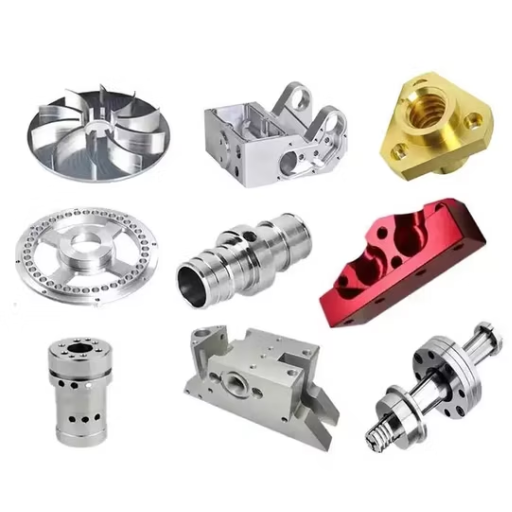
CNC truck parts are those elements manufactured on a computer-aided scale, hence the whole meaning of Computer Numerical Control (CNC) machining techniques. Technologies such as turning, drilling, built-up welding, and CNC milling with software and heavy programming transform the raw material, for instance, plastic or even metal, into a high-precision and quality mechanical assembly that is very reliable. These units are well finished and made with a particular degree of exactness because they are vital in the truck industry.
Accurate CNC machining can produce exact specifications, ensuring that parts fit in the final truck. Such precision enhances the practicality and sturdiness of trucks and does not lead to machinery breakdown.
CNC truck parts are beautiful due to the good materials they are made of. They are also designed to be resilient. This feature is essential in their sustainability as it minimizes component failures and replacements on several occasions.
In the CNC technology line, every truck part is manufactured with the same measures and quality, ensuring much harmonization. In such a situation, consistency is essential for tracking devices to perform their obligations while on the truck.
The cost of CNC truck parts, which can be high in the beginning, is very profitable in the long term since replacement requirements are less frequent owing to their long life. This makes this particularly of interest to the fleet users’ constituents when it comes to operational expenses management over the years.
Mankind can shape almost anything, and computer-aided technology is often accurate to the extent of providing a template for the most obscure and odd service or product requirement. This advantage gives credence to the claim that the truck parts will fit the given purposes where there is production in need of a different nature.
The use of CNC machining technology is widespread in the production of engines. The tight tolerances required and the need for specific properties to perform at their absolute best, in engine parts such as the cylinder heads, piston, and crankshaft, is made possible using cnc machining. Metal structures require the best design backing them up; nowadays, with CNC milling technology, it has become almost an easy task.
Hyundai gearboxes comprise various intricate components, such as pinions and gears. By employing cnc milling and turning in the assembly process of these components, the manufacturers can deliver the correct wall thickness for the accurate weight of the item.
Suspension Technology components such as control arms, brackets, and bushings are ideally made of high strength and accuracy. The quality of the bars had to be high, and it could be guaranteed by CNC turning or milling the ends of the bars for higher performance and longer terminal life.
Certain brake components, such as the brake calipers and the brake rotors, are very important since the brake system is rather simple. The significance of the control accuracy in an automotive vehicle’s brakes in high-motion applications may make it necessary for the components in question to be manufactured through CNC machining.
This is one of the key uses of CNC machining in automobile part development. It allows for the quick manufacture of components for customizing and enhancing the automobile’s design.
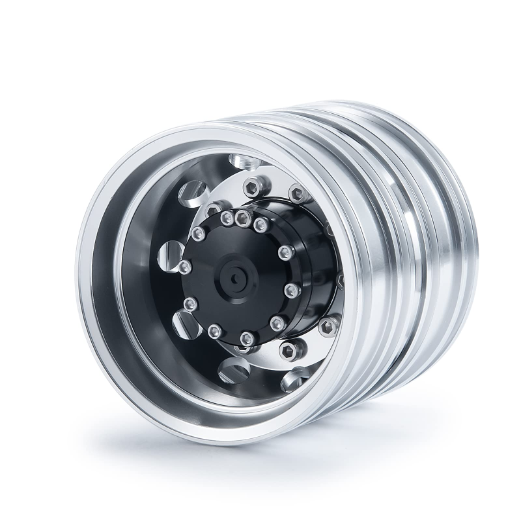
CNC truck parts are produced through a computer-guided machinery process requiring precise and high-quality focusing of every part. A diagram of such parts is first sketched using aids like CAD (computer-aided design), which is later changed into a symbolically represented graphic for the CNC machine. All in all, a CNC machining process involves cutting, drilling, and shaping of basic materials such as metals and plastics. These tools that work under the same or similar principles are, however, controlled by a program; thus, their movements are all able to be in the same range of levels of accuracy, since all they produce are durable parts of trucks, which need to meet specified performance and safety standards at all times.
Manufacturing using CNC machinery combines high precision engineering and automation, which enables the production of intricate details quickly. First, the finished CAD design is changed to a machine language equivalent (G-Code) understood by the CNC machine. This code provides rigorous instructions on the location and speed of mobile cutting tools. In such a setup, tools execute these operations, carefully processing a material to remove layers of material so that its dimensions are maintained. Such a method of operation not only enables reducing waste but also ensures repeatability, making it a focal point in today’s manufacturing sector.**
Equally, accuracy in manufacturing is also a very important factor in most industries as it guarantees uniformity and efficiency of the manufacturer’s components or products, especially in manufacturing industries. With proper precision micro machined component design, every through hole and boss fitting minor sub-assembly can be done systematically, improving product quality and decreasing the likelihood of the equipment failing. In the case of the aerospace and automobile industries, a minute error can cause a serious safety risk or inefficiency. Recent technological developments, such as CNC machining and automated quality control systems, have greatly improved the output level in terms of perfection in any industry. Now, it is possible to achieve the standards of exact perfection with high accuracy. This control minimizes the use and customers’ desire tolerances. It even enhances service provision, and more significantly, there is always minimal downtime to carry out repairs, so the customers receive it very well.
In today’s world, various tools, such as end mills, face mills, drills, reamers, boring bars, inserts, and taps, are employed in the CNC milling and turning processes.
|
Tool Type |
Description |
|---|---|
|
End Mills |
Cutting profiles |
|
Face Mills |
Surface cutting |
|
Drills |
Hole creation |
|
Reamers |
Hole finishing |
|
Boring Bars |
Internal holes |
|
Inserts |
Cutting edges |
|
Taps |
Thread cutting |
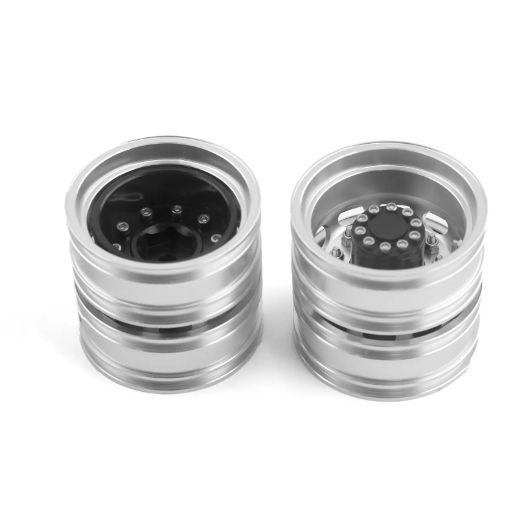
When finding the most appropriate CNC truck parts supplier, it is better to concentrate on the manufacturers of such products who have a history of producing good quality and precise parts without considering the costs at all. Look for companies that carry out CNC machining operations for truck parts and have certifications like ISO 9001, demonstrating that they meet tight quality requirements. Online companies that serve as directories, including ThomasNet and IndustryNet, could help by suggesting other reputable suppliers in your vicinity. These may as well be recommendations from other business players or customer evaluations from genuine sources that can link you to suppliers most likely to be experts in their field. Always ensure that the supplier presents straightforward communication, competitive prices, and timely and guaranteed delivery.
In reviewing the supplier’s reliability, it is essential to analyze the factors influencing current provider performance, not forgetting to also embrace the digital age, particularly through tools like Google search. It’s better to start by searching for all the information about the supplier on Social Media, including customer reviews, ratings, and even case studies. Also, check if the supplier has a decent, updated website that shows the company’s activities and the company’s LinkedIn profile. Moreover, one should be attentive to warning signs, such as long open unresolved cases, acidic social media reviews. More comprehensive and industry-appropriate work can be obtained by applying the power of Google’s advanced search tools and standard search techniques to illuminate the issue of evaluating the reliability and reputation of the supplier.
Quality components from a CNC part supplier shall be the first priority in terms of the best quality materials available. A rough cut of the market demands nothing less. Unless part precision is taken into account, the finished pieces will not do when a lot more production is assumed.
In addition to the said prices, good distributors shall be able to catalog various CNC parts from multiple industries without restrictions. It is a good practice that all the components can be purchased from a single trusted supplier, making it economically advisable.
Delivery has to match production schedules. The On-time delivery of spares by the Cnc parts distributor is a function of reliability; hence, disruptions can be minimized.
This is about the correct way of doing things in both the terms of the customers and the suppliers. Reasonable and reliable price has to be offered by the suppliers of the goods and / or services. This covers many elements, from quotas to their format, from letters in answers to silent ones, from being told on the telephone to missing days.
Excellent suppliers are always prepared to offer wide-ranging support services—they are not average in any way. These should extend to communication, technical issues or guidance, assistance after the sales services, and many others, so that customers can be served satisfactorily.
OEM versus Aftermarket components can be assessed based on the quality of the products, the cost of purchase, compatibility, availability, warranty, and the reputation of the trusted specialist in the market.
|
Key Point |
OEM Parts |
Aftermarket Parts |
|---|---|---|
|
Quality |
Manufacturer-certified |
Varies by brand |
|
Cost |
Higher |
Generally lower |
|
Compatibility |
Perfect fit |
May require adjustments |
|
Availability |
Limited to dealers |
Widely available |
|
Warranty |
Usually covered |
Depends on the brand |
|
Reputation |
Trusted manufacturer |
Quality varies |
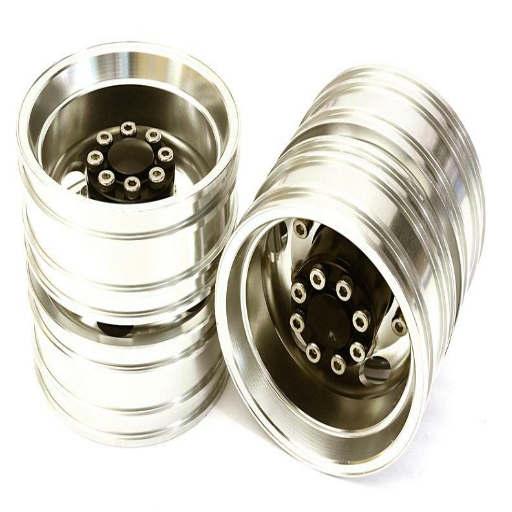
With the help of CNC machinists, truck part manufacturers can fabricate even the most complex components with a CNC machine set up. Primarily, CNC machines generate intricate and complex components with close tolerances from raw materials like metal and some plastics. CNC machining helps to render sophisticated shape structures that require further finishing and facilitates this intricate work. Simply put, curtain masters are required to check technical drawings, fill materials into the machines, and monitor the whole production. Checks shall be made promptly upon completion of work to establish that the specifications are met. Their technical know-how makes it possible for them to achieve uniformity in quality consistently. This means that utmost accuracy and speed is achieved in the engineering process of manufacturing, which is vital in truck parts that one makes, which are strong and last longer, QOU117.
CNC Machine Engineers have several technical capabilities that they can use to enhance the effectiveness of their work. Some of this extra knowledge is as follows:
Well-adapted to Machines: The effective use of new machines in manufacturing is possible only when proper attendant improvements in the manufacturing technology are accompanied by the latest versions of the machines. This pertains to the availability of such tools like 5axis machining or CNC systems for automated productions.
CNC machinist is a profession whose relevance is progressively causing an increase in the workforce. This is according to projected information in the United States statistical department that says the need for machinists, including other modern work, will increase within 12 years. The information further goes on to add that there is a figure of 7% growth in the CNC machinist field. The reason this happens or what impact it causes many people to conclude is that they use advanced manufacturing equipment. In addition, the median income for a CNC machinist for the years 2023 is approximately $47730, where most advanced members of the society can earn up to $60,000 and more even beyond that when depends on how advanced they are.
With the introduction of advanced technologies such as AI, system integration is becoming increasingly relevant as technology advances. This will also be very helpful for CNC machinists, who will be equipped with such skills and will be in high demand in the production of advanced products. By acquiring and improving such skills, CNC machine professionals will find it easier to climb the career ladder in the world of the new trends in manufacturing.
Construction of machine parts involves achieving the intended sizes and shapes of the machine parts within acceptable ranges of deviation, particularly the functions, capacities, and trust of the machine in use. Construction of machine parts auditing loses its stand with indefinite geometrical dimensions, specifically for fulfilling the design requirements and being used with other parts, especially in a system.
Current competitive industries, such as space, automotive, and medical equipment, often require the adjustment of components upon assembly. This, in turn, requires more strict tolerances to remove any interference that may arise when assembled, in addition to utmost precision.
In the aerospace industry, for instance, the limit of the acceptable level of tolerance is very slim, as it can even go up to ±0.0001 inches. The medical instrument field is even more demanding and precise because these instruments have to match a biological body that functions effectively and is biologically compatible. Using such materials in producing a medical instrument and failing to keep within these restrictions makes the device liable to failure, eventually hampering its work or, worse still, causing disastrous results in critical areas.
According to estimates, the consumption of precision machining services is expected to increase significantly, reaching 100 billion globally by 2030. Such an increase is largely caused by the necessity for well-fitting spare parts that can be accurately machined and conform to a number of tolerance considerations. For machinists and manufacturers, it is crucial to acquire sophisticated measurement tools, including coordinate measuring machines (CMMs) and laser scanning probe systems, to ensure compliance with these very tight specifications.
The implementation of tight tolerances not only increases the service life of a designed product, reducing breakdowns, but it also reduces the amount of waste in the industry, speeding up the manufacturing process.
One of the innovative enhancements in CNC machining is hybrid machining, also known as additive and subtractive manufacturing. Hybrid manufacturing significantly promotes traditional engineering methods closer to manufacturing 3D printing additive processes. This means that specific geometrical designs cannot be achieved without 3D printing and CNC machines being used in that order. Also, up to a second level of machining, enhancement of the milling process is possible, resulting in machining in more than one plane simultaneously, making it very effective in production. Even though it increases the resistance of the forces to act at an angle, the accuracy of the work improves, and production time will also decrease.
A third, lesser-known approach uses robotization and AI to deal with automation to the max. Apart from real-time digital design, operation, and optimization of a machine with CNC, AI software is capable of much more. Tool-path optimization, real-time prediction of machine maintenance needs, and digital inspection are just a few features that the present AI-infused machining centers utilize. It is evident why such developments have changed the CNC machining sector and redefined machining.
2. Effect of One- and Two-Stage Shear Cutting on the Fatigue Strength of Truck Frame Parts
A: Precision CNC machining refers to using computer-controlled machines to manufacture high-quality automotive parts with tight tolerances. This method is commonly used to create custom car parts and truck components, ensuring that each part meets specific design requirements.
A: Custom CNC machining offers several benefits for truck spare parts, including the ability to produce complex parts with high precision, reduce material waste, and achieve faster production times. Additionally, it allows manufacturers to create tailored solutions that meet the unique needs of the truck and bus industry.
A: CNC milling machining is a specific type of CNC machining that uses rotating cutting tools to remove material from a workpiece. Unlike turning processes that shape materials by rotating the workpiece, milling machines can create a wider variety of shapes and features, making it ideal for producing precision metal parts for automotive applications.
A: Common materials used in CNC machining for car parts include aluminum, steel, and various plastics. Machining aluminum is particularly popular due to its lightweight and corrosion-resistant properties, making it suitable for different automotive applications.
A: The parts process in CNC machining services typically involves several steps: design and prototyping, material selection, CNC programming, machining, finishing, and quality control. Each step ensures that the final machined parts meet the required specifications and performance standards.
A: Precision CNC machining plays a critical role in the truck and bus industry by ensuring that components such as engine parts and chassis elements are manufactured to exact specifications. This precision is essential for the’ safety, performance, and reliability of heavy trucks and buses.
A: OEM CNC services provide original equipment manufacturers with high-quality, custom parts that meet their specific requirements. These services help streamline production processes and ensure that components fit perfectly within vehicles’ overall design, enhancing auto parts’ performance and longevity.
A: Various types of CNC machinery fabricate auto parts, including CNC milling machines, lathes, and routers. Each type of machine serves different purposes, allowing manufacturers to create a wide range of precision parts for trucks and cars.
A: When selecting a CNC machining service for your automotive project, consider factors such as the service provider’s experience with machining aluminum and other materials, capabilities for producing complex parts, quality control measures, and commitment to meeting deadlines. Additionally, inquire about their expertise in custom precision and the specific needs of the truck and bus industry.

Manufacturing processes are quite complex, and the choice of a production method is directly related
Learn More →
There are two major manufacturing methods for producing plastic prototypes that most people find useful
Learn More →
As a person involved or interested in the design and production of plastic components, it
Learn More →