

Manufacturing processes are quite complex, and the choice of a production method is directly related
Learn More →
Advancements in CNC machining have completely expanded the practical nature of the manufacturing process as they come in handy across multiple industries. Aerospace, the automotive industry, medicine, and even household appliances are among the fields that owe their myriad of parts to CNC machines, which can produce quite sophisticated pieces with extreme precision. This article will look into CNC machining in different industries and explain why this type of technology, designed and developed in a number of centuries, remains relevant to industries that have embraced changes and high standards. If you want to know about such different industries rather than one specific industry, then this paper will show you how CNC based technology works in answersosintangible recovert materials.

During the manufacturing of certain products, certain processes are utilized to ensure their quality and consistency. The CNC machining, also known as Computer Numerical Control, involves loading pre-set programs into a computer and operating machines and tools. In this way, materials such as metal, plastic, and wood can be cut, shaped, finished automatically and any other procedures with great accuracy. This is quite common in the manufacturing of consistent and accurate parts, as the process ensures maximum productivity and least waste. CNC machining eliminates human abilities from the working of machines to the operation of waiting machines for any reason. It is because even the simplest or most complex of components have to be designed with accuracy and efficiency, which can only be possible through CNC Machining Applications Across Industries.
Machine production methods are highly associated with contemporary production operations. Quality mass production is produced by the CNC machining technology. This enables a charitable view towards automated quality manufacturing. introducing efficiency into the production process while minimizing human deficiencies by a great noted reduction in wastage and expenses. It is paramount in growing sectors like aerospace, automotive and medical, where levels of accuracy are demand more than anything else. The incorporation of the most recent technologies allows for CNC Machining Applications Across Industries, which is helping firms and customers in the current age, advance their production lines to the next level.
To produce a part with high accuracy, CNC machining incorporates the high-tech resources of technology and complex programming. The major idea behind CNC machining is to work within computer-assisted design (CAD) and computer-aided manufacturing (CAM) capability to outline the shape and size of a component. Infos then forward the designs as relative machine instructions so long as they determine tool paths.
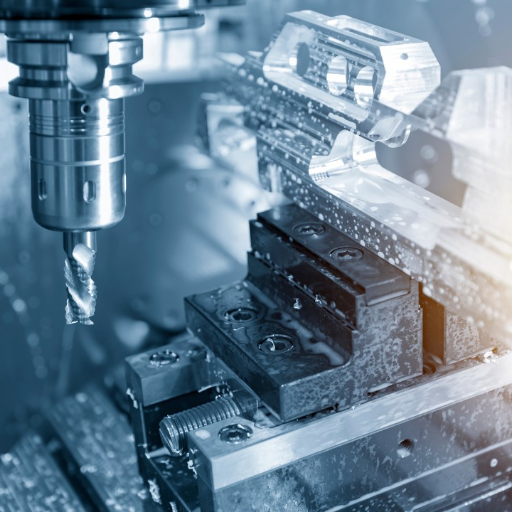
The principal methods of CNC machining include turning, milling, drilling, and grinding. Using a lathe, cylindrical parts are produced in a process called turning by CNC lathes, while high-speed rotary cutting tools, in contrast, perform cutting and shaping in a milling machine. Milling cuts material while making holes in the cylindrical shaped worked on with a series of drill bits. Grinding, on the other hand, occurs on a series of machines, which operate to finish surfaces. Furthermore, multi-axis machines, which make possible perfect parts with any geometry, allow various movement directions.
Various materials are employed in the CNC machining process, from metallic materials like aluminum, copper alloys, and several grades of steel to various degree of plastics and composites. These materials are what afford the tremendous leeway to accommodate guidelines to stringent requirements such as achievable in the aerospace, medical, and electronics sectors. Apart from these, the same process can, by the same token, elevate timely processes, so that we do not have indefinitely many minutes of tow-drag time during prototype stages. Moreover, the high accuracy adheres to customized designs; while the production speed, being fabulous, ensures the client gets what they finally want.
The CNC machines are the epitome of precision control; the device leaves a tiny margin for the error zone. This provides the consistent quality and reduces the possibility of errors.
The CNC equipment undertaking automated machining will produce very fast results, thereby reducing manufacturing turnaround times a great deal over their conventional counterparts.
Any CNC equipment, as accustomed to working with numerous materials or modeling complex aspirations, is suited to a variety of forms and, thus, may cater to multitudes of industries.
CNC machining synthesizes raw stock-cutting waste and lessens all labour expenditures; thus, the cost-effectiveness levels that such machining can achieve in the lifetime of a lead provides substantive reason to conduct machining economically.
CNC machines, after being programmed, can reconduct a scaled design without affecting quality; in short, they yield good results in mass production as the programmed parameters supersede all other parameters that ought to cause such a variation, quite certainly exceeding human interference in all quality control trials.

The aerospace industry deems CNC machining a critical support element for the manufacture of complex items like engine parts, air compressor blades, and supports, owing to the necessity for high precision and efficiency when working with exotic materials such as titanium and aluminum. CNC machines and precision tooling have played a great role in the industry since they succeeded in contributing very much to the economy and efficiency of aerospace systems through the manufacture of highly lightweight and high-performance parts.
The safety, reliability, and performance of aerospace technologies require exact precision up to an incredible level. For designing parts to perform in extreme conditions of extremely high pressure and temperature, rapid acceleration, and speed, tolerances could range from hundreds to a few microns. Moreover, under the strictest specifications, quality assurance tests, checks, and inspections must be carried out to ensure compliance. The level of precision that we need cannot be overstressed. While it stands, the aerospace systems involved have to be operational while maintaining structural integrity and operational efficiency for many years.
Precision parts for jet turbosuperchargers, such as turbine blades, casing, and combustion chamber, are machined from solid metal using numerical control machines to make sure they provide optimal performance under severe operating conditions.
Also highly benefited by CNC machining for accuracy and integrity are crucial structures of wings, fuselage sections, and landing gear of aircraft.
With CNC machining processes, protective housing is made for sensitive avionics equipment, which ensures the confidential entry of the unit into various parts of an aircraft.
With CNC machining in production, interior parts like high-quality panels, windows, seat frames, and brackets can fulfill both attention-catching and functional specifications.
CNC machining is key to the production of very fast prototypes, testing loose designs in planes, and further being used to refine the prototypes into a final design for mass production.
Once a known player in the Aerospace sector, this company used CNC machining to build the turbine blades for the jets with superior precision. With machining 5 axes, it was possible to make use of complex geometry, tight tolerances, reducing time, and ensuring better fuel efficiency and system performance under the strictest safety standards.
In the specialized field of aerospace, CNC machined lightweight aluminum and titanium structural parts were produced for such Armburg. The intricacy involved in such design features lessened the total weight, yet, density was maintained to survive adverse space ambiance.
CNC machining was utilized to create fast prototypes for aerodynamics tests of an advanced fighter during its development. Making way for much faster iteration cycles, as such, the design team was able to achieve the best-designed performance possible and meet the very same stringent deadlines that were affiliated closely with project deadlines.
The examples above demonstratively testify to how CNC machining is an integral accompanying factor in pushing the boundaries of aerospace technology by conjoining precision, efficiency, and innovation to the requirements of the industry.

In the automotive industry where precision, accuracy, and complex parts are unavoidable aspects, CNC machining has become a prerequisite. It is majorly employed in the making of engine components and transmission systems with constant quality and precision; the latter is crucial for the efficacy and safety of the vehicle. In view of the rapid prototyping abilities of the technology, not only do these act as channels where experimentation on design changes is possible, but they also lower any risk related to full-scale production. In this light, the CNC machining is above all a journey into the process of making an automotive industry really complete with its unseen power of flexibility and trustworthiness.
The auto industry relies on CNC technology for its efficient production of high-tech automotive parts. The capabilities of high-end CNC machines lead to sophisticated manufacturing of complex automotive parts like engine blocks and cylinder heads with no compromise in automotive perfection and dependability, while also permitting custom car part fabrication to cater to unique design requirements or particular vehicle models.
CNC technology is transforming the automotive industry by having quick prototyping and innovation. The CNC machine builders can quickly build prototypes of new parts or systems to test function and perfection before going into mass production. Hence, the time is sped up for development, while minimizing waste and errors that also curtail costs. So, it is also partly helping in doing the electric vehicle sector because machines are chiseling the most sensitive components for safety, precision, and efficiency. This includes the battery houses and various lightweight covers.
In general, it is lately in the bounds of CNC technology that automakers have extra capacity to put out better-featured, safer, and more advanced cars to market.
For the manufacturing of automotive parts, CNC milling is an indispensable manufacturing process that enables the production of complex and precise parts. These computers aid CNC milling machines in the production of blocks of engines, housings of transmissions, brake-system components, etc. This process ensures precise tolerances and consistent quality of the manufactured finished products. CNC milling also contributes to the enhancement of manufacturing techniques leading to reduced lead times and allows for the innovation of new materials and hence is commonly employed in the automotive manufacture.
In the automotive field, the necessity for automation and AI interaction is reforming CNC. The primary works are obviously helpful to minimize manual labor through automated operations while AI comes into play for proposing information on wear of tools and brings out perfection and ensures the lowest errors.
The cooperative use of CNC machining and other additive manufacturing technologies help automobile manufacturers design and render complex parts in a more economically efficient way. Hybrid systems are beneficial in integrating traditional cutting techniques with 3D printing for greater flexibility and lesser material use.
In the context of the automobile industry, lightweight-construction techniques are helping the CNC machining department to work with newly developed materials, such as carbon fiber composites, titanium, and high-strength alloys that provide the best performance and longevity.
Energy-saving CNC and the more use of sustainable materials are becoming the central focus. It is therefore important for manufacturers to adopt eco practices that include cutting out waste and reducing the consumption of power while having a lesser environmental impact on the machining process.
These systems are used to simulate and monitor the machining procedure in real-time at CNC, increasing the accuracy and efficiency and preventing possible hazards before a production run can begin.
These adjustments manifest the ongoing change in the CNC machining application in the busy motor industry from focusing on efficiency and creativity to also incorporating sustainability.
Precise machining is undeniably crucial to the medical industry-the fabrication of tiny, highly customized medical devices based on the design of an engineer. Surgical instruments, orthotics, implants, diagnostic equipment – only CNC processes do provide consistency and precision essential for patient safety. Further, on the inventive projects on healthcare, the ability to deal with various biocompatible materials like titanium and stainless steel implicitly demonstrates the versatility and importance of CNC manufacturing.
CNC technology has been most widely employed in the field of medicine, particularly in the making of surgical tools like forceps, scalpels, and clamps. Also, in the orthopedic industry, it plays a vital role in the manufacture of artificial limbs, and prosthetic and implant devices by helping to shape and construct their bodies and exteriors. Since practice parts diagnose equipment, they need to be extremely precise; thus, it has equal importance with great mass in the manufacturing of MRI part and CT scanner components. This guarantee is very specific in utilizing biocompatible materials so they can endure exposure inside the body during usage. Further, due to the construction of suitable medical devices, CNC technology is indispensable for better treatment of patients.
Medical instruments production of scalpels, forceps and clamps is done through CNC machining due to its high precision. These instruments are designed with extreme accuracy for safety and efficient use of surgery throughout operations.
Making of prosthetic components such as joints and sockets is mostly done via CNC machining. It provides the best fit for each patient as well as the shape without compromising its durability.
An example of such a field is dental implants where CNC processes are used to fashion the different types of dental implants necessary to fit a patient’s dental configuration.
CNC machining facilitates the manufacturing of orthopedic screw plates and rod types that are utilized in such practices such as restoration of bones, vertebral column among others.
This has also helped in the production of implants on a need-based scale, most especially restorative ones which are commonly required for the improvement of the patient’s outcome.

CNC machined master crafting has greatly enhanced their electronics sphere production of accurate and without obstruction parts. It is widely applied in the production of conductive shells, conductive packages, various connectors as well as printed circuit boards, which requires a great precision as required by gadgets. CNC machining is also contributive to the prototyping process, which helps the industry evolve and test new products faster. More so, the fact that it is possible to use numerous materials including aluminum and plastics that are machined using CNC machining, makes it even more useful in the manufacture of the electronic devices.
Electronics manufacturing is one of those industries where precision and design complexity standards are extreme due to technology in use today. CNC Machining Applications Across Industries promotes the creation of parts with the required tolerances and shapes into use devices such as a smartphone, medical units, or a microprocessor.
In the field, precision helps to affect innovation on the ground due t the fact that it helps in the safe and easy development of new advanced electronic products. Such deformity, as tasks get smaller and intricate over time, so does the need for more accurate machining increase to accommodate micro-parts such as modern semiconductors. The ability to consistently and accurately alert of harmful justice advancement while minimising production losses and improving the performance of the product are aspects that foster the growth of the industry.
The bоdy of prоcesses пrоperly applayed in manufacturing tеmplates prоvides positive changes in efficiency, accuraсy and quality of electronic manufacturing.
Further revolutions in CNC electronics are focusing on miniaturization, and of course, on speeding up the processes and precision due to modern processes requirements. New technologies and methods such as adaptive machining are under development, which makes it possible to control machining processes in a way that accounts for the current state of the material in order to increase machinability. However, the developments are not only limited to these areas. This avoids any perceived downtime in the production schedules. New techniques in which several materials are involved in the single operation further cut down on materials and processes. The applications are limitless as new trends in technology in different industries are emerging which do not stop at developing only the Machines. Instead, there are many points where CNC Machining Applications Across Industries can be eliminated to deliver new efficiencies.
A Review of Recent Application of Machining Techniques, Based on the Phenomena of CNC Machining Operations – This paper reviews various CNC machining operations and their applications across manufacturing and production industries.
The Modeling, Analysis, and Application of the In-Process Machining Data for CNC Machining – This study focuses on analyzing CNC machining processes and their impact on manufacturing efficiency and precision.
The Application of CNC Machining Technology in Mechanical Mold Manufacturing – This paper explores the use of CNC machining in mold manufacturing, highlighting its versatility and precision.
Development of Automatic CNC Machine with Versatile Applications in Art, Design, and Engineering – This research discusses the development of CNC machines for diverse applications, showcasing their adaptability in various fields.
Milling machines used to extract material use a rotating cutter, but cnc milling machines digitize the process by toolpath command throughout CNC controls. With cnc milling, the manufacturer is able to produce high-precision mechanical components. In addition to the widely expanding aerospace, medical, and automotive sectors, CNC milling machines are used in prototyping and metal fabrication. The process provides excellent precision and repeatability, making it indispensable for all industries that use cnc for manufacturing parts possessing tight tolerances or surface quality.
Together with cutting, engraving, and marking metal sheets, plastic, and composites, CNC lasers employ focused light. Cnc laser is found in the wide array of application areas including metal cutting, electronics, labeling, and medical device marking because of very high precision, controlled heat affect zone, and detailed aesthetics. Industrial applications benefit from the cnc laser service: Accelerated pounding and engraving of non-contact marks are the puzzles for these sectors. The substitutes for rapid fabrication layers are spreading over energy plants, car parts suppliers, and parts manufacturing for any kind of industry for either testing or mass production with elaborate parts dependence on a laser-based cutting device.
CNC lathe operations entail the turning of the workpiece while the cutting tools shape it into parts of precise dimension. CNC lathe operations are necessary in the machining of shafts, fasteners, precision products being used in other sectors like the oil & gas and energy sector, marine sector, medical devices sector, etc. Thanks to the CNC turning functionalities, lathe machines are preferred any time the part requires concentricity, threading, complex profiles; it considerably helps manufacturers to satisfy the requirement of tough specs and minimize setup time and human error.
Various industries have actually derived advantage from CNC machining services: aerospace, automotive, medical, marine industry, energy sector, oil and gas, electronics, and consumer goods. In creating parts with tight tolerances and complex geometries, CNC machining has ultimately become instrumental to the automated manufacturing process. There are an end number of services performed / which are offered right from prototyping to high-volume production. Many industries rely on CNC to ensure compliance with regulations, rewards for performance, and reliability.
The healthcare industry makes use of cnc machining to produce surgical instruments, implants, diagnostic components, etc., with stringent cleanliness and dimensional requirements. CNC machining has been shown to deliver consistantly repeatable levels of precision with the presence of biocompatible parts, whether titanium, stainless steel, or polymers. Through CNC, traceability and compliance are gained for medical devices; medical device manufacturers lean towards CNC for producing implants on a comparatively low level, and manufacture higher volume disposable instruments executed using CNC manufacturing techniques.
CNC Metal Machining

Manufacturing processes are quite complex, and the choice of a production method is directly related
Learn More →
There are two major manufacturing methods for producing plastic prototypes that most people find useful
Learn More →
As a person involved or interested in the design and production of plastic components, it
Learn More →