

Manufacturing processes are quite complex, and the choice of a production method is directly related
Learn More →
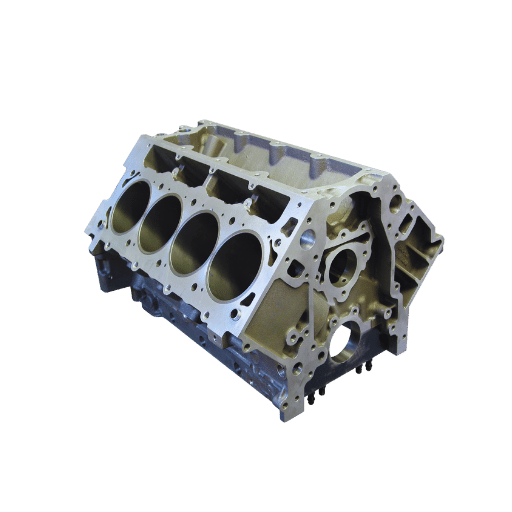
The cnc aluminum engine block constitutes an important part of present-day car engineering, and it is based on Computer Numerical Control (CNC) machining technology. This part is made from high-strength, lightweight but still solid aluminum, which is much lighter than typical cast iron but has better thermal conduction properties. Such a unit does not weigh much, so it contributes to the more efficient performance of the engine. The use of CNC technology assures a great level of detailing and finishing of the engine block through the tools operated by the computer. Any models can be produced with high precision, thereby improving the functioning of engines and reducing the level of instability or incompatibility with advanced models.
A manufacturing process called cnc, which stands for Computer Numerical Control, involves the use of computer programs to operate machinery and tools, hence eliminating the need for manual intervention in moving the components of the machine to perform specific tasks. This makes the process of developing parts and components very accurate for the operator. CNC Machining has many applications in different sectors because it is practical.
Aluminum blocks have always maintained a significantly lighter profile when compared to cast-iron blocks, and this itself is a factor helping improve fuel efficiency and vehicle performance.
Aluminum has very high thermal conductivity that helps dissipate the heat from engines, keeping the engine temperature controlled and preventing overheating.
The natural resistance to oxidation and corrosion gives this metal an advantage in life extension and durability for the engine blocks.
Since aluminum is softer, it is easier to machine compared to steel, such that even intricate shapes and designs can be machined with great accuracy.
Since aluminum can be recycled indefinitely without losing its properties, it is an environmentally friendly option for manufacturing engine blocks, in alignment with sustainability efforts of the automotive industry.
Precision plays a primary role in manufacturing when it comes to the functionality, reliability, and efficiency of all engineered components. Accuracy in production helps eliminate various errors, wastage of materials, and improves the performance of products. This is very crucial, such as in the automotive and aerospace industries, where slight deviation may lead to low levels of safety or operations. There is also a cost aspect, which comes in handy because precision helps in improving the flow process, thus avoiding incidents of rework or damage that might have been incurred.
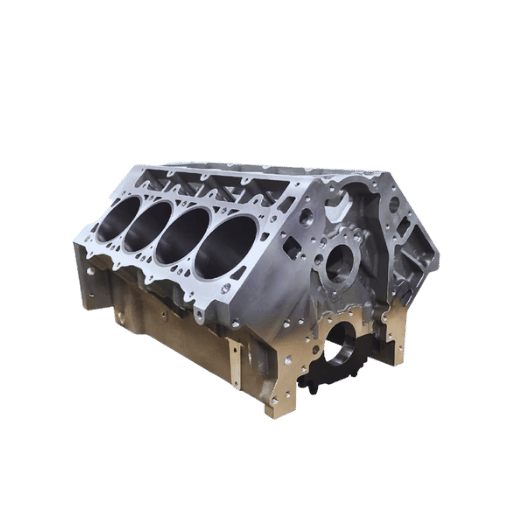
In the context of aluminum engine blocks manufacturing, these factors can be translated as producing parts that are both precise and accurate, within tolerance, engineered, and produced. In the case of CNC (Computer Numerical Control) machinery, these machines use the principle of programming the entire procedure of cutting out a certain piece, without any deviations, in order to achieve the best possible topography of the surface. Such active and passive measures provide a dramatic decrease in faults and an increase in the strength and performance of the finished structural engine blocks. Precision in machining implies reduction of resources, such as resources and length of time for the machining costs, and proper utilization of the allocated material.
Lightweight:
Corrosion Resistance:
High Strength-to-Weight Ratio:
Good Thermal and Electrical Conductivity:
Recyclability:
Aluminium production and processing contribute in a great way to efficiency and reduction of waste, which are important for CNC aluminum engine blocks. This is attributed to the low-weight properties of aluminum, which translates to less energy used during transportation, resulting in reduced fuel cost, especially in the automotive and aerospace sectors. However, the recycling capability of aluminium facilitates the endless reuse of scrap with only 5% of the energy needed for its virgin production, thus reducing industrial waste. For these reasons, aluminium is one of the materials with the highest efficiency and sustainability in whatever field one applies it.
Aluminum is a very durable material in severe environmental conditions, particularly because it possesses a high strength-to-weight ratio, has resistance to corrosion and extreme forces, which may lead to deformity of the structure. This is because it has an external surface layer, which is naturally formed oxide of the metal that prevents the metal from getting corroded or degraded by the environment. It is, therefore, a suitable material for use in engineering works in buildings, watercraft, and aircraft where the main cycle is iron sleeves. Moreover, different aluminum alloys may be used to introduce some ideal adjustments for the purpose of efficient and prolonged use. For this reason, aluminum has become an integral component in various high-performance and diverse scopes of work.

The CNC aluminum engine block is light, versatile, and effective at getting rid of excessive heat. Cast iron engine blocks, on the contrary, are heavy, long-lasting, and are most effective in conditions where engines run at very high power or they get overused. With drag racers, however, it’s always options concerning cast iron engine blocks that are more popular to use.
Composites offer many advantages over aluminum, such as low weight, flexibility, non-corrosivity, and increased resistance to tension, while aluminum possesses advantageous properties like ductility, good thermal conductivity, and the ability to be easily disentangled and modified.
Traditional casting is effective for many larger volume, non-flat structures with lower unit cost, but cnc machining is best for precision, flexibility, and small runs.

A CNC aluminum engine block was fabricated and highly popularized by one racing engine company to lower the weight while still maintaining adequate strength. Enhanced performance with this improvement since the engine’s power increased without increasing the weight of the vehicle, making it faster on acceleration and better handling on racing tracks.
The manufacturer in this case employed cnc machining and managed to find unmatched precision in the manufacture of parts. This was possible due to the ability to work with larger tolerances, and heat dissipation was also enhanced, meaning more fuel consumption was reduced, and engines used for extreme conditions became more reliable.
The introduction of CNC aluminum blocks enabled the flexibility of customizing engine designs in accordance with specific demands by racing teams. The manufacturer issued bespoke solutions to the engine variations, thus making them flexible and bestowing the competitive teams with enhanced performances.
CNC aluminum components have greatly furthered the field of aeronautics as they boast high precision and great mechanical properties. This allows the creation of components that are both light and strong, which plays an important role in the aircraft design and efficiency. CNC machining is the process of removing excess material from a workpiece to meet the required specifications and achievable accuracy. For example, parts like fuselage sections, wings, and nacelles have inherently very tight tolerances. It is well known that aluminum is very strong and light, and it does not oxidize, among other reasons, making it perfect for the aeronautics sector. In this paper, we shall explore how these advantages of machining technology, as well as aluminum, are being used in the design of more efficient and higher-performing aircraft.
CNC aluminum engine blocks find extensive use in building lightweight, high-energy engines and in the field of fuel efficiency and emission control.
These engine blocks serve as modalities to tender lightweight components that are essential for aircraft performance and reliability.
Aluminum engine blocks under high precision CNC manufacture constitute powerful and efficient engines desired in all situations of competitive racing.
CNC aluminum engine blocks work very well to resist corrosion and remain durable for marine engines working under harsh environments.
These engine blocks find usage in the area of industrial machinery, with a view toward imparting highly robust and efficient engine performance under heavy operating conditions.
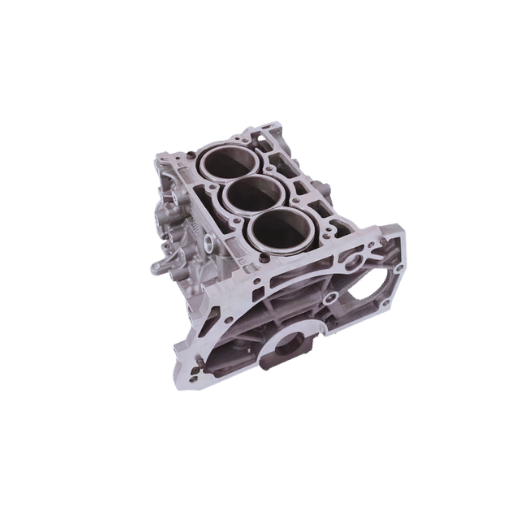
The cnc aluminum engine block presents various machining constraints related to the material used. While aluminum is quite light and conductive, its melting point is low, and thus high-speed machining can cause the workpiece to distort or expand intensely. In addition, the softness of the material tends to wear out the tool quickly and cause material to build up on the edges of the tool. It is very important to guarantee that the alloy composition of aluminum remains stable because otherwise it causes consideration of structural integrity or perhaps wrong calculations during machining. This calls for some specialized tools, and cutting parameters and materials also have to be well controlled to achieve the desired performance or maintain the useful life.
Cost is a vital factor for many companies making cnc aluminum engine blocks. This is because production cost depends on several factors, such as the cost of raw materials, tooling costs, and above all, the cost of production efficiency. Here, the addition of appropriate alloying elements helps reduce faults and improve the machining efficiency, such as better feeding and allocation of allowances per turn. The limitation of wastage as well as rework is achieved in this way. In addition to that, the use as well as the development of precision tools and ensuring proper maintenance of the machines is another aspect of improving performance by prolonging the serviceability of tools. Simplifying the process of manufacturing and the use of energy in the production is of significant need to maintain the quality of production as well as the total costs.
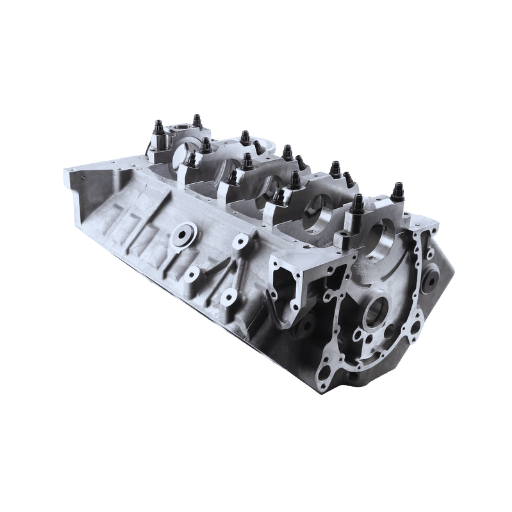
The development of AI and automation processes in corresponding machines is impacting the CNC machining industry positively with regard to enhancing precision, efficiency, and consistency, among other aspects of the process. This facilitates faster production, almost without the involvement of a person, and helps decrease mistakes caused by human factors. AI, in turn, enhances these machines by optimizing tool paths, predictive maintenance, and advanced data analysis in control of quality. The combination of both disciplines greatly reduces downtime, cuts down costs, and increases the work throughput considerably, allowing for making changes and improvements on the go. The application of AI-enhanced systems is very advantageous in the performance of such activities to ensure that all CNC machining tasks for cnc aluminum engine block and heads maintain precision and accuracy.
Aluminum sustainability in producing it is targeted at reducing negative consequences on the environment while maintaining the output. To this end, today, the strategies that have been most developed include a greater emphasis on recycling of aluminum, which consumes only 5 percent of the energy used in the primary processes themselves, and the use of greener energy sources like hydropower, where emissions are much less. In addition, new technologies, including new and more effective methods of smelting as well as garbage, less resource-intensive and less emitting technology, have been developed. All of these actions help in carrying out the modern approach of satisfying the needs of the world’s aluminum.
All recent technologies in CNC (Computer Numerical Control) have brought about the culmination of precision, efficiency, and versatility in the manufacturing processes. The primary ones were:
The AI is used for tracking machining operations, their protection against faults and downtime in real time.
The design scope has been further extended, allowing complex geometries to be manufactured in fewer setups.
This also produced an enhanced toolpath optimization and a high-speed machining method, thus reducing the production time while keeping accuracy.
With IoT connectivity, CNC technology is better with predictive maintenance and operational insight, making it more efficient and adaptive to modern industrial demand.
A: This is a computer-driven machine that makes parts of the machine accurately. CNC aluminum engine block is made using such technology and the part is always made of aluminum alloy as can be found in most high-performance.
A: CNC machining improves the efficiency of engine builders by making it easy to cut accurately precise shapes and sizes, thereby improving quality while minimizing the use of resources. The built-in automation in this process often reduces production time and, hence, is most appropriate for high-performance engineers.
A: One would want to make use of billet engine blocks as opposed to cast aluminium engine blocks since they have better structural properties, are lighter, and dissipate heat faster. For these reasons, they are preferred in these applications where there is high engine pressure and temperatures.
A: The cylinder bore is of significance since it contributes to engine size, hence influencing the power and torque produced. A wide cylinder bore will lead to an increased capacity of the engine, whereby more air and fuel will be able to get into the engine, allowing it to perform better.
A: The aluminum block has a water jacket that has been incorporated alongside, to allow the flow of coolant around ηthe engine to remove the excess heat from the engine parts. This is important in helping the engine to run at such conditions where the optimal temperatures are maintained; otherwise, failure and breakdown will occur because of the temperature, which will cause the engine to overheat.
A: The cylinder heads are, for the most part, where the combustion chamber and, as such, the valves and lifters are found. These have a significant influence on the airflow and the effective working of the engine. Good cylinder heads will increase the performance of the engine by burning more fuel efficiently, thereby increasing the power, i.e., the horsepower gained.
A: To satisfy the demand for producing engine components with dimensional accuracy, the method of Al die casting is used, as it molds into complex shapes with a high surface finish. Consequently, this process minimizes machining operations as well as costs and volume of thin-walled structures.
A: 6061 and 7075 aluminum are the most common materials used for machining an engine block with a CNC machine. This is due to the fact that they are lightweight and very strong. They are used so commonly because they help to maximize functionality and usability, as well as prevent overheating.
A: In most cases, engine builders would rely on a supplier who is known to be well-reputed for their work, and trustworthy enough to be able to produce their desired quality. That is, it is good to depend on and form a solid relationship with a good, competent supplier because good quality components for the engines can always be expected.
A: When finishing a cylinder’s bore, a particular abrasive tool is employed to smooth the surface of the bore accurately to the designated size. This is important in the alignment of the piston, which is tasked with ensuring the optimal performance and durability of the engine. In particular, this process in done in a cnc aluminum engine block.
Automotive Engine/Block & Cylinder Head Machining – SamTech.edu
Congressional Staffers Observe ACE CNC Machining – BusinessDefense.gov
Machining of Aluminum and Aluminum Alloys – NIST

Manufacturing processes are quite complex, and the choice of a production method is directly related
Learn More →
There are two major manufacturing methods for producing plastic prototypes that most people find useful
Learn More →
As a person involved or interested in the design and production of plastic components, it
Learn More →