

Manufacturing processes are quite complex, and the choice of a production method is directly related
Learn More →
In high-performance engineering for automotive, aerospace, and other critical sectors, precision custom CNC billet parts have emerged as the precision machining revolution due to unmatched accuracy, durability, and customization. In this post, we will look into the advanced CNC machining world: from the billet material advantages to the precise methods of bringing innovative designs to life. From enhancing performance to ensuring reliability, custom CNC billet parts redefined performance limits. Learn more in this article.
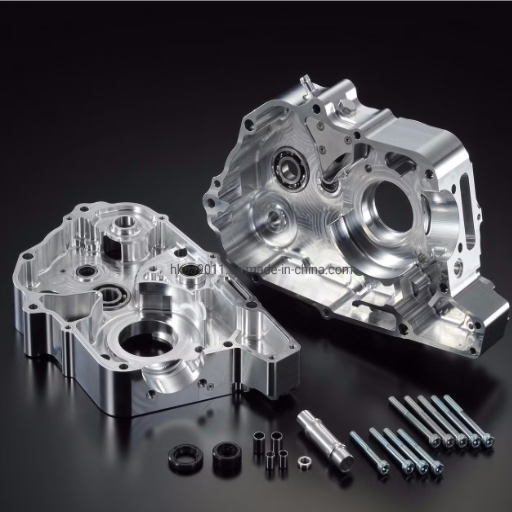
CNC Machining billet aluminum parts start with a solid aluminum block (billet) cut and shaped to the client’s specification by a computer-controlled design tool. Initially, the machine follows a 3D digital model, allowing movement-based guidance. Cutting tools positioned at high speeds methodically extract material from the billet to create complex shapes and intricate details that exhibit maximum precision. Consistent high standards are maintained in accuracy, tolerances, and quality finishing. These factors make it the ideal machining choice for reliable and durable components across various industries.
Due to its precision, versatility, and production efficiency, CNC machining is automated, which reduces the need for human interaction and errors. This increases the quality of the product and eliminates inconsistent standards. Furthermore, CNC machining automation enhances CNC machine versatility, enabling them to work with various materials such as metals, plastics, and composites. CNC machining is essential for industries like aerospace and medical devices with high standards of dependability, as it can create parts with close tolerances. Another benefit of CNC machining is scalability and the ease of transitioning from prototyping to mass production.
Precision and accuracy are critical concepts in CNC machining and modern manufacturing processes. Precision refers to the capability of a method to reproduce the exact measurement or outcome. At the same time, accuracy describes the degree of conformity of the machined part to the design outline, shape, or size. With the help of modern technology and computer programming, CNC machines can achieve tolerances of up to a fraction of a millimeter, guaranteeing exceptional results. This level of control is crucial to the aerospace, automotive, and medical manufacturing industries because even the slightest deviations can have dire consequences.
CNC machines for machining billet include CNC mills, lathes, routers, plasma cutters, and 5-axis machines.
|
Machine Type |
Material |
Precision |
Axes |
Speed |
Use Case |
|---|---|---|---|---|---|
|
CNC Mill |
Metal |
High |
3-5 |
Moderate |
Complex shapes |
|
CNC Lathe |
Metal |
High |
2-3 |
High |
Rotational cuts |
|
CNC Router |
Soft/Metal |
Moderate |
3-5 |
High |
Prototypes |
|
Plasma Cutter |
Metal |
Low |
2 |
Very High |
Heavy cuts |
|
5-Axis CNC |
Metal |
Very High |
5 |
Moderate |
Intricate parts |
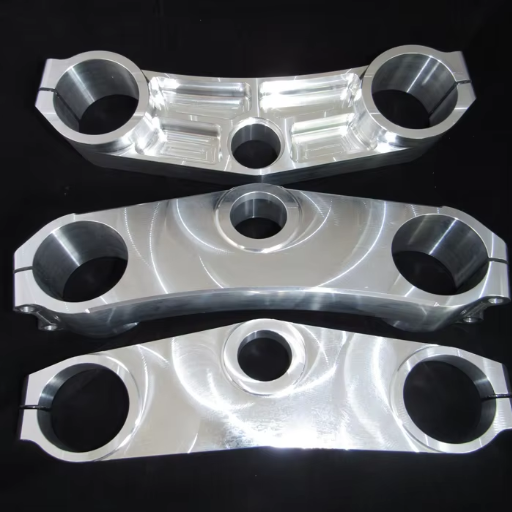
Custom CNC Machining Services have a few critical advantages listed below:
These benefits make custom CNC machining services indispensable for achieving high-quality and reliable results across all industries.
The comparison of OEMs brings forth both CNC machining’s advantages and disadvantages. CNC machining’s advantages surpass its disadvantages precisely due to its unmatched precision and versatility. Allowing for ease of use with metals, plastics, composites, and more. Prototypes and excellent components further exemplify the incredible functionality and reliability. The great multi-purpose and customization help many specialized needs. Autodesk master cam and other sorts of software shall ensure exact specification, enhanced functionality, and reliability of the parts and components used in critical components.
Manufacturers create intricate designs with minute details that involve advanced CNC machining and great customizations that require precision. Standards below the best guarantee the part won’t be CNC machined with excellence, and using advanced technologies optimally achieves accuracy and precision. Consistency across production runs and ease of use help lower the spindle speeds, leading to a reduction in error, material wastage, and resulting in an improved overall efficiency. Succeeding with high baselines set by demanding requirements and repurposed custom components within aerospace, automotive industries, alongside other medical devices, is easy with custom bullet parts
CNC turning is exceptionally cost-effective for projects with complex designs or requiring small production runs. Low-cost manual labor is practically eliminated with the automation of CNC machines, so production costs are reduced. Additionally, the material waste during machining is minimized as CNC machines accurately cut and form materials. Although the setup costs may be greater than conventional methods, the precision, speed, and repeatability of CNC machines make them more economical in the long run. Industries that use these technologies experience reduced lead times, lower defect rates, and enhanced flexibility for quick changeover to prototype or custom orders, which gives CNC machining a favorable standing in modern production processes.

These approaches enhance billet aluminum machining efficiency while preserving tool life. The end results are accurate.
Making accurate, tangible results a reality requires strategically choosing a material and its strength, durability, and machineability—the three critical criteria. Considering the example given, aluminum is a very light and easily machinable metal, whereas stainless steel has much greater strength but is more difficult to machine.
The spindle speed and feed rate greatly influence tool wear, as does the surface finish. The aluminum example again works perfectly, as softer metals require higher speeds of rotary motion, while harder metals such as titanium require much slower speeds and only in a linear motion mixed with the rotating motion, specimen grade, of course.
If the modular tool holders of the machining centers are directly milled for titanium, with indexed sharpening and cutting blades, the high detail and efficiency required will be obtainable. That also serves as an excellent investment in a carbide or coated solid tool, as they prove to be wear-resistant.
Spindles must be calibrated CPM with a 2.5D inspection microscope to be aligned, moving part precision verified, not tools. If any tool is misaligned, and the position or machining control goes down along with sharpened blades, the dimensional accuracy of final parts is lost.
Incutting the workpieces on high-speed trimming solves the problem of excessive temperature of the material and the tool, along with most of the thermal expansion. Cools, as well as monitoring, tremendously prevent expansion and its associated issues.
Anodizing and surface treatments range from anodizing and polishing to blasting, tumbling, and electroplating.
|
Treatment |
Purpose |
Material |
Finish |
Durability |
Cost |
|---|---|---|---|---|---|
|
Anodizing |
Corrosion resistance |
Aluminum |
Matte/Gloss |
High |
Medium |
|
Polishing |
Smoothness |
Metals |
Glossy |
Medium |
Low |
|
Blasting |
Surface prep |
Metals |
Matte |
Medium |
Low |
|
Tumbling |
Deburring |
Metals |
Matte/Gloss |
Medium |
Low |
|
Electroplating |
Aesthetic |
Metals |
Metallic |
High |
High |

CNC billet parts are popular in industries that need high precision, custom designs, and durability, such as automotive manufacturing of engine components and suspension systems, aerospace parts critical for civilian and military use, and precision medical devices. Due to their strength and exacting tolerances, CNC billet components are also used in industrial machinery, sporting equipment, and many other technologies. These parts are highly sought after because they are helpful in many different industries.
Components from CNC billet materials increase the vehicle’s reliability, durability, and efficiency. Moreover, these parts are made from high-grade aluminum or steel, known for their strength-to-weight ratio. Strength and weight become especially important for applications like turbochargers. Aside from turbochargers, CNC components enable the precision and customization necessary for engine blocks and gear systems. Concerning motorsports, bulk custom builds for speed enhancements utilize these components because of their ability to increase horsepower, decrease weight, and improve aerodynamics. Another observation based on search trends indicates that more drivers are looking for a CNC component that balances longevity and performance, which means a clear trend in demand for CNC manufacturing.
Due to their accuracy, dependability, and productivity, CNC-machined components are instrumental in various industries. Similarly, Google’s search data CNC technology is widely accepted in the aerospace, automotive, medical, and electronics sectors. To illustrate, the aerospace sector depends on CNC parts for complex turbines like blades, housings, and structural airframe parts, which require precise tolerances. Also, the medical field employs CNC machining for manufacturing surgical instruments, orthopedic implants, and dental parts, which shows increasing demand for customized bio-compatible devices.
When examining “Why are CNC machined components so extensively adopted in the industry?”, the data answers this question with two reasons: unparalleled replication precision and the fact that these components can be made from different materials such as metals, plastics, and composites. There is also an apparent spike in searches for custom CNC components and precision machining benefits, suggesting that companies are adopting CNC solutions to enhance productivity without compromising quality. They are also responsive to the changes in demand for innovation, workflow automation, scalability, and modularity, which makes them critical in the current industrial environment.
A: CNC billet aluminum parts are components manufactured using Computer Numerical Control (CNC) machining from solid aluminum blocks, known as billets. This process allows for high precision and creating complex shapes that meet specific design requirements.
A: CNC machining involves using computer-controlled machines to automate the manufacturing process, leading to higher precision and consistency. Traditional machining often relies on manual operation, which can result in variations in quality and accuracy.
A: Yes, as a custom billet aluminum parts manufacturer, we specialize in creating customized parts tailored to our clients’ specifications, including unique designs for components like valve covers and intake manifolds.
A: CNC machining of aluminum alloy can produce a wide range of products, including high-performance spare parts, motorcycle parts, and various metal and plastic components designed for specific applications.
A: Billet aluminum is known for its high strength-to-weight ratio, excellent machinability, and corrosion resistance. These properties make it ideal for high-performance applications like racing or custom automotive builds.
A: Our machine shop is equipped with advanced CNC milling and turning capabilities, allowing us to manufacture precision CNC parts, including machined aluminum components, with high accuracy and efficiency.
A: The CNC machining process utilizes computerized controls to guide the cutting tools, ensuring each part is machined to specifications. This results in consistent dimensions and surface finishes across all produced parts.
A: Custom billet aluminum parts are commonly required in industries such as automotive, aerospace, marine, and consumer electronics, where high performance, durability, and precision are critical.
A: You can request a quote by contacting our sales team through our website and providing details about your project, including specifications, quantities, and any custom design requirements you may have.

Manufacturing processes are quite complex, and the choice of a production method is directly related
Learn More →
There are two major manufacturing methods for producing plastic prototypes that most people find useful
Learn More →
As a person involved or interested in the design and production of plastic components, it
Learn More →