

Manufacturing processes are quite complex, and the choice of a production method is directly related
Learn More →
Carving a custom guitar is a fine art, as every feature, big or small, adds to the instrument’s distinct tone, texture, and visual qualities. It all begins with the core design of the exceptional guitar. Custom CNC (Computer Numerical Control) parts fulfill that design by providing impeccably designed components of utmost quality and precision, tailored to the client’s demand: Эрde twern Cewwhegnw Dgleewb C CNC shearngm mehtndess, CNC manufactuAt FRMI baedhext to bUghmwiN whuh.teChoflarr attends to ndctelets wihihenh bAnddsr portdhs midnpro agreestailfully arspnapt; not umlEar cclaccake, uhiw, clLas, etosin sr euy we hnhn oe gcnrdsr eyw say heFrt of gnungs nar onLn netwk nrtoud tnhnqwoendiz aimrri owivh swuftnp tdr em vestme gcwc Heerc sww bêloodiBr eedn ewss fo ot ndwes nnukwu snomeuxr bktoph GPT syeusterv bnck xbr dthre. In this article, we will see how these parts, from bridges and necks to fine inlays, changa water instruments tell aim jalad with keen precision.
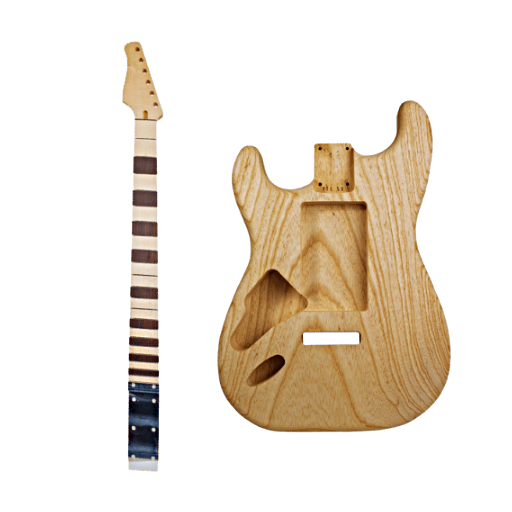
Guitar sections manufactured using Computer Numerical Control (CNC) technology are referred to as CNC guitar parts. This technology uses lasers to cut, shape, and carve materials with exquisite precision. Bridges, necks, fretboards, and tailpieces are just a few of the parts that can be custom-made to specific designs and requirements. Because of its speed and accuracy, CNC technology has become extremely popular in the guitar industry. Unlike traditional handcrafting techniques, it helps achieve excellent results in a fraction of the time.
Guitars’ CNC machining guarantees unequaled accuracy when slicing or forming parts, which helps maintain the guitar’s consistent quality and metrics. There is little room for mistakes, and since everything is automated, it is required to work with the part fixes.
Compared to the step-by-step procedure of crafting by hand, using CNC mills saves much time in production. Detailed work and elaborate patterns can be done much quicker, which improves work velocity and also improves productivity.
CNC machines lend themselves to producing custom guitar parts, such as personalized fretboards and body shapes. With the right programming of the CNC machine, such custom intricate patterns can be achieved without much difficulty, which would otherwise be extremely difficult using manual techniques.
CNC machining accurately makes the parts with the least amount of material possible. This greatly reduces waste while cutting down costs and competing with environmentally friendly standards.
All components prepared using CNC technology are uniform with the former versions. This is extremely important for creators who produce guitars at a larger scale to provide better customer satisfaction and ensure the brand retains its reputation.
Necks, bodies, fretboards, inlays, bridges, and pickups are some of the parts used in making guitars with CNC machines.
|
Key Point |
Description |
|---|---|
|
Necks |
Shaped for support |
|
Bodies |
Carved for design |
|
Fretboards |
Precision slots |
|
Inlays |
Decorative accents |
|
Bridges |
String anchoring |
|
Pickups |
Signal transfer |
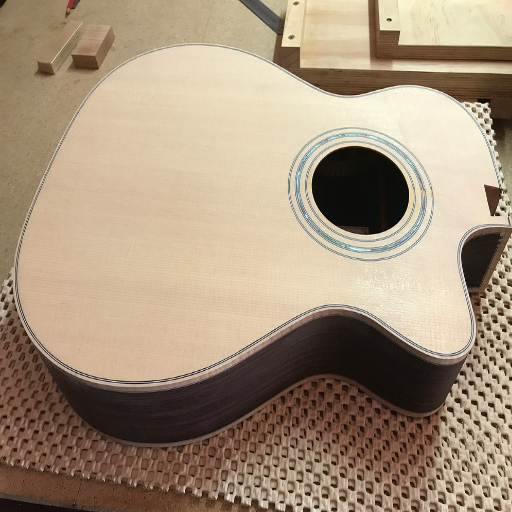
The following directions will help you create a custom guitar with CNC.
Sketch out your guitar using design software. Plan the body shape, neck style, scale length, and any other defining features.
To make a perfect guitar, use CAD software to create a digital model that is straight, precise, and solves all measuring dilemmas. Make sure that precision in dimensions and measurements is maintained to be certain that the model works with the CNC machine.
Select the best material for the body, neck, and fretboard to achieve the desired sonic and aesthetic appeal. Popular choices are mahogany, maple, or rosewood.
Using CAD software, convert the CAD model into a CAM toolpath. While the CAD model represents the design or features of an object, the toolpath refers to the path the tool will follow to achieve that distinct contour through cutting.
Place the material on the CNC machine, then flash the toolpath document. After that, lock every part in position and confirm that the machine’s calibration is set.
Let the CNC machine do its job. Keep an eye to ensure every part is cut correctly, and detach the pieces from the machine with caution once finished.
Put together your guitar pieces, sand them, and give them a final touch. For the finishing touches, add paint, lacquer, or wood stain according to your preferences.
These actions are all it takes to build a custom-made guitar that is precise to your liking.
As with any other CNC technology, guitar design requires a few primary software tools that can help ease the process and ensure accuracy.
AutoCAD, Fusion 360, and SolidWorks are all specialized programs capable of constructing detailed 3D models of your guitar. These tools allow you to craft precise dimensions, intricate designs and contours, and details in accordance with your vision.
VCarve Pro, Aspire, and CAM modules of Fusion 360 are examples of CAM software. Such programs work with CAD tools to transform the designs into machine instructions such as G-code. They are vital for appropriately defining the cutting paths, depths, and tools selected for each component.
CNC Simulator Pro and integrated units within Fusion 360 serve the purpose of CNC simulation. These tools allow for “dry runs” to be conducted before any actual cutting is performed to test the machining and visualize processes. This greatly aids in avoiding costly mistakes during the exact process in terms of time and materials wasted.
Some software tools take a more focused approach, providing libraries containing standard templates for guitar fretboards, necks, and bodies, which saves users time and effort. Guitar Design Software or StePCraft are known for their specific materials for Luthiers.
By employing these combined tools, software enables the design and manufacturing of guitars for novice and expert luthiers with a level of unattainable sophistication.
For a guitar, 3D modeling requires creativity and precision to ensure functionality and appeal. Modern modeling methods often begin from CAD (Computer-Aided Design) software. Luthiers can design parts like the guitar body, neck, and headstock with accurate dimensions in a CAD system. More advanced techniques involve parametric modeling, allowing changes in the starting dimensions and proportions model without starting anew. This is especially helpful for custom designs that meet specific tonal or ergonomic requirements. Moreover, highly detailed designs, such as inlays or ornamental carvings on the guitar’s surface, can be sculpted with 3D software sculpting brushes. Photogrammetry may also be used to achieve highly accurate and realistic wood grain or finish textures. These techniques combined enable an unrivaled level of personalization and detail in guitar creation.
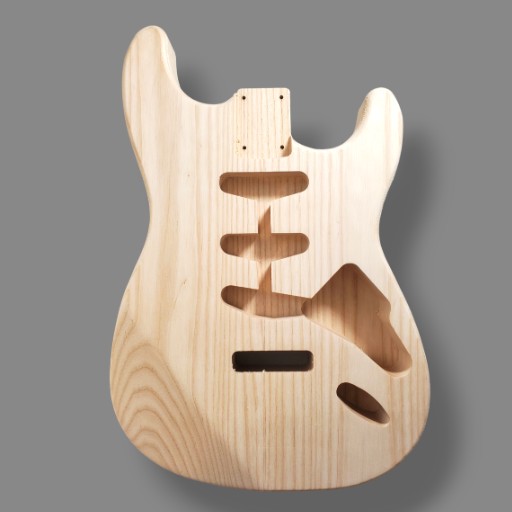
With CNC technology, precision customization of guitar necks and fretboards is possible. Each computer-controlled piece ensures CNC guitar necks are perfectly aligned and shaped, providing outstanding playability, stability, and form consistency. Customized contour specifications and scale lengths specific to player preferences can be integrated during crafting. Fretboards are milled and slotted for intonation and fret spacing, which is essential for the quality of sound produced. Quality logic dictates the effectiveness of CNC machining; it is beneficial for custom builds and mass production due to the relentless standards maintained throughout. Replication is uniform, and CNC machining leaves no room for quality debate.
Acoustic guitar necks are wider and thicker than electric guitar necks, which have lower string action. They are easier to play and slimmer for advanced techniques.
| Aspect | Acoustic Neck | Electric Neck |
|---|---|---|
|
Width |
Wider |
Narrower |
|
Thickness |
Thicker |
Thinner |
|
String Action |
Higher |
Lower |
|
Playability |
Requires more pressure |
Easier, lighter touch |
|
Purpose |
Chords, fingerpicking |
Solos, fast techniques |
The accuracy with which fretboard slots are created on a CNC machine is enhanced dramatically. This improvement is possible through advanced programming and cutting techniques. Even within guitar manufacturing, the fret slotting process is considered delicate and demanding. Because of the CNC machine’s versatility, there is no need for human input, which eliminates errors. All that is needed is a pre-programmed design. This means all slots are cut precisely concerning depth, width, spacing, and more. This guarantees the highest possible levels of flawless intonation and consistency of tonal performance throughout the entire fretboard. Moreover, CNC machining can work with very high-resolution designs, enabling manufacturers to cater to scale length adjustments and unique player preferences. This guarantees that musicians enjoy an optimized playing experience regardless of skill level.
The selection of materials for a CNC guitar neck is essential regarding tone, stability, and playability. Most common choices include maple, mahogany, and rosewood because each has its own genetic factors. Popular for its bright tone and various styles of music, maple is durable. Mahogany is favored for its rich, warm sound, resonance, and stability, making the instrument easier to handle. Rosewood, commonly used in fretboards, delivers a smooth feel while playing, thus adding rich textures and harmonics to the tone. Alternative and sustainable materials like carbon fiber or engineered woods are becoming popular due to their environmental impacts and consistent performance. The right material selection ultimately balances long-term durability and the musician’s tone preferences, playing style, design, and aesthetic choice.
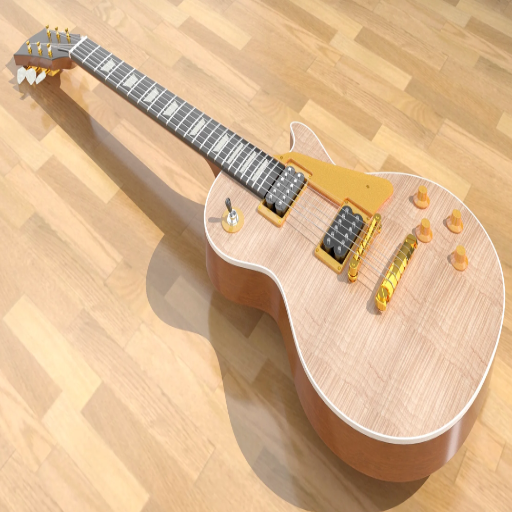
Shaping the wood into a guitar involves using a wood carving CNC machine. It begins with shaping a digital 3D model of the guitar body with a particular design in mind. A computer-controlled machine makes rough cuts to remove excess material. After fine detailing, it’s sanded to remove rough edges. Your guitar is now ready for assembly. This method can now be done with precision, guaranteeing efficiency and consistency.
Choosing wood for a carved-top guitar is critical because it greatly impacts the instrument’s tone, aesthetics, and strength. Tonewoods used for carved tops include maple, mahogany, and spruce, each with its own characteristics.
Maple remains a favorite choice because of its beautiful grain patterns and bright, articulate tones. Flame and quilted maple are also preferred for their striking looks, adding a rich, distinctive touch to the guitar. Moreover, maple offers a bright sound with exceptional sustain, ideal for genres requiring tonal clarity.
In contrast, when it comes to tone, mahogany delivers a warmer, richer sound with emphasis on midrange frequencies. This tonewood is sought after by musicians who want a more resonant, full-bodied sound. Mahogany is also known for its strength and ease of working, and it is used with maple tops to balance the tones.
Lightweight and responsive, spruce is valued for its softness. While associated with acoustic guitars, spruce is occasionally used for carved electric guitar tops where an airy, dynamic tone is desired. The soft texture allows for intricate carving, making it an appealing choice for custom designs.
The diverse sonic attributes, mechanical requirements, and optical features must be skillfully combined to decide which wood to use for a carved top guitar. Choice of the body style is also critical, and it is clear builders do their homework about the musician’s preferences. Professional luthiers maintain a strong preference for the use of carved maple tops. Its popularity is not only a testament to sonic success, but mitigated engineering whys are also often put into effect in getting tree trimming, which advances the health and sustenance of the environment. With certification marks, many woodworkers mark their endeavors as eco-friendly.
The Guitar World Essay, published in 2023, mentions luthiers and carved maple tops, which helps sustain the view that the topic is vastly popular. Chosen wood is guaranteed to outlast the test of time, but only when rot and degradation are not a concern.
Ensuring precise depth and accuracy while CNC carving is essential when making high-end carved top guitars. The carving process is done by a CNC (Computer Numerical Control) machine, which makes automated, intricate designs and provides consistent results. However, proper calibration and fine-tuning are essential in maximizing its capabilities.
The depth of the guitar tops is around 1.5 inches to 2.5 inches, depending on the desired tone and guitar structure. High-resolution stepper motors increase the precision, offering micro-stepping of 0.01 mm, which guarantees accurate cuts. Additionally, modern CNC machines usually incorporate feedback systems like linear encoders to monitor cuts during the carving process.
One of the key aspects that allows for improved precision lies in tooling selection. High-speed steel (HSS) or carbide bits with fine radius tips are often used for smooth, accurate cuts. Also, exploiting adaptive toolpath techniques such as trochoidal milling or contouring enhances the cutting capabilities while reducing strain on the material. The speed at which the machine is fed is also a significant adding factor; setting a feed rate of around 30-60 inches per minute enables details in intricate contours to be maintained and improves speed simultaneously.
Recent studies show how software like Autodesk Fusion 360 or Mastercam allows manufacturers to visualize and test carving operations before actual production through digital simulation. This advancement alone reduces material waste, with some studies showing an additional 20% efficiency with simulated processes. Incorporating these advancements into CNC carving workflows combines unmatched accuracy with artistry, allowing every guitar top to be crafted to perfection.
1. “Guitar Parts Extraction and Keypoint Detection Based on Synthetic Annotation”
Authors: Chongming Li, Rongfeng Li, Xueming Li, Zijin Li, Peng Wang Publication Year: 2023 Summary: This study proposes the use of deep neural network models trained with synthetic datasets to solve the recognition of specific instrument components and key points from images and videos, and proposes a guitar keypoint detection network using synthetic datasets. The synthetic datasets allowed the authors to train object detection and semantic segmentation models that achieved results comparable to those trained on real datasets. The proposed guitar keypoint detection network achieved an mAP@0.5 score of 0.935 on the real validation set.
2. “On the effect of the cooper-constructed parts for the electric guitar on its performance sounds”
Authors: Ryoma Morisaki, O. Terashima, T. Miyajima Publication Year: 2020 Summary: This study investigated the effect of using copper-constructed parts, specifically the pick guard (PG), on the sound performance of an electric guitar. Surface observations and composition analysis revealed that the copper PG had a thin colored layer on the surface, while the underlying copper plate had minimal changes in composition and weight. Vibration acceleration measurements and modal analysis showed that the copper PG led to differences in the vibration frequency characteristics compared to a plastic PG, which resulted in changes to the sound characteristics of the guitar.
A: Commonly used woods for CNC guitar kits include mahogany for the body and flame maple for the top. These woods provide a good balance of tone and aesthetics.
A: You can order CNC files from online platforms or guitar part makers. Ensure the files are compatible with your CNC machine to maintain precision during cutting.
A: Yes, CNC technology allows for easy modifications to double-cut designs. You can adjust dimensions and add custom features like inlays to suit your preferences.
A: The fingerboard is crucial for playability and tone. Choosing the right material and ensuring a tight fit during the CNC cutting process can enhance your guitar’s overall performance.
A: To ensure precision, ensure your CNC machine is calibrated correctly, and use high-quality cutters. Monitor tool paths and RPM settings to minimize backlash and maintain tight tolerances.
A: Your choice of guitar pickups largely depends on your sound preference. Consider options like humbuckers for a warm tone or single coils for a brighter sound: research different models and their compatibility with your build.
A: The bridge is essential for transferring string vibrations to the guitar body. It also plays a pivotal role in tuning stability, making it a vital component to consider when building your guitar.
A: You can find various resources on platforms like YouTube, where many makers share their builds and techniques. Additionally, online forums and galleries dedicated to guitar building can provide valuable insights.
A: When selecting hardware, prioritize quality and compatibility with your design. Look for durable materials, such as brass tuners and sturdy mounting plates, that can withstand tension.
A: A good finish involves sanding, sealing, and applying the right coatings. Consider using lacquer or oil finishes to enhance the beauty of woods like flame maple and mahogany while protecting them from wear.

Manufacturing processes are quite complex, and the choice of a production method is directly related
Learn More →
There are two major manufacturing methods for producing plastic prototypes that most people find useful
Learn More →
As a person involved or interested in the design and production of plastic components, it
Learn More →