

Manufacturing processes are quite complex, and the choice of a production method is directly related
Learn More →
Bismuth is an exceptional metal noted for its distinctive features and uses in the periodic table. However, one of its most astonishing features is its remarkably low melting point, making it practically valuable for several scientific and industrial applications. Nevertheless, bismuth’s comparatively low toxicity relative to other heavy metals gives it many intriguing properties—including its striking iridescent luster. This post will analyze the science behind bismuth’s low melting point and uncover the factors that lead to this property’s impact across numerous domains. Whether you are professionally engaged or simply interested in the industry, materials science, or the wonders of chemistry, this article will delve deeply into why scientists and engineers continue to be fascinated by bismuth.
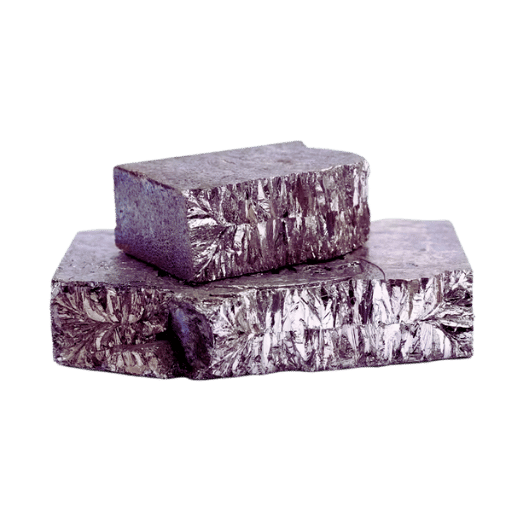
Bismuth is a brittle crystalline metal with a silvery-white color, frequently demonstrating a pinkish tint due to superficial oxidation. Its bismuth’s properties make it favorable for use in solders and fusible alloys as it has a notably low melting point of 271.5 °C (520.7 °F). Heaviest among the stable elements, bismuth is the safest and non-toxic metal, allowing it to substitute lead in various applications. Furthermore, bismuth is also relatively safe as it possesses low thermal and electrical current conductivity compared to other metals. Due to these reasons, as well as to its aesthetic appeal, bismuth is prized in medicine, cosmetics, and electronics.
Bismuth is in Group 15 and Period 6 of the periodic table. He is considered a post-transition metal and has the atomic number 83. This position places him underneath antimony and shares comparable antimony-like properties with other elements in the nitrogen family. Bismuth’s motley atomic mass and its peculiar traits set it apart.
Bismuth is regarded as a heavy metal due to its high atomic mass and density. With an atomic number of 83, it is one of the most weighty elements in nature. Its density and mass are roughly 9.78 grams per cubic centimeter, which is very close to the bounds associated with heavy metals. Its metallic characteristics and solid state also support its classification at room temperature.
Because of its unusual properties, bismuth has a wide range of applications. For example, bismuth subsalicylate, which helps treat gastrointestinal disorders, utilizes bismuth in its formulation. Moreover, bismuth is used in low-melting alloys for safety devices such as fire sprinklers. Other applications of bismuth include non-lead ammunition, cosmetic-grade bismuth, and pigments. Because of its low toxicity and unique properties, bismuth is very useful across different fields.

Bismuth exhibits a relatively low melting point due to its unique crystal structure and atomic bonding. Unlike most metals, bismuth possesses a rhombohedral lattice structure with a lower packing density. This arrangement weakens bonds between atoms, resulting in lower energy needed to change from solid to liquid phase. Further, bismuth’s atomic mass and electronic configuration lower the energy required to disrupt structural bonds, compounding its low melting point. All these properties make bismuth unique compared to other low melting point metals.
For laboratory testing, the melting point of bismuth in Fahrenheit is determined by measuring the temperature of a pure bismuth sample as it is incrementally heated. The sample is analyzed using high-precision instruments such as digital thermometers or thermocouples, which accurately measure the bismuth sample’s temperature during heating. Bismuth changes state from solid to liquid at 271.5°C, translating to 520.7°F. The difference between the Celsius and Fahrenheit scales is determined using the equation °F = °C × 9/5 + 32. If the equipment used for measurement is well calibrated, the readings will be accurate because impurities, inconsistent heating, or other factors may alter the temperature observed. Such precision is essential in metallurgy and product design, where the low melting bismuth is helpful.
As one of the metals with the “lowest” melting points, bismuth (Bi), with a melting point of 520.7 Fahrenheit (271.5 Celsius), has a distinctive position. Its relatively lower melting point sets it apart from other metals. That said, some metals have lower melting points and exist in liquid state at room temperature, like bismuth, and are gold for specialized uses.
Each of the metals above has distinct physical properties, considering their low melting points, which enable some specific industrial, research, or even scientific applications. Some of their properties offer better advantages for selecting materials in different engineering and technology fields.

Low-melting alloys, or fusible alloys, are metal alloys with melting points ranging from 183°C to 361°F. Usually composed of Bismuth, Lead, Tin, Indium, and Cadmium, these alloys are created within exact specifications to achieve desired thermal characteristics. The application range is broad due to the alloys’ capability to withstand melting damage and isolate the environment from potential harm.
An example of low melting alloy is Wood Metal, which contains Bismuth (50%) and Lead (26.7%), Tin (13.3%), and Cadmium (10%) and has a melting point of approximately 70°C or 158°F. Field’s Metal is another example of a less environmentally harmful substitute, as it does not contain Lead or Cadmium. Field’s Metal has a melting point of 62°C or 144°F. The low melting point of these materials allows their extensive use in safety devices, mold making, and, most importantly, electronics.
Low-melting alloys benefit prototypes greatly because they are easy to melt and remold, leading to material savings. They are also used in thermal fuses, soldering, and other heat-sensitive devices. Low-melting alloys serve as triggers that react to high fire temperatures in fire sprinkler systems and release water, showcasing their exceptional multifunctionality.
These alloys’ exact thermal conductivity values and expansion are highly suitable for critical use cases. Their constant melting characteristics are valuable in medicine, aerospace, and manufacturing, as researchers and industry practitioners depend heavily on their reliable performance. A comprehensive understanding of the technical details about low-melting alloys allows professionals to tailor materials for specific applications, improving the efficiency of multidisciplinary engineering frameworks.
Contemporary soldering relies heavily on bismuth alloys primarily due to their unique properties, like low melting points and environmental benefits. The alloys are a substitute for lead-based solders as they are much more aligned with sustainability and regulatory frameworks that seek to exclude toxic materials from electronics manufacturing. The addition of bismuth improves solders’ performance by providing excellent wetting ability that increases solder joint reliability, even in challenging assemblies where failures are more common.
Bismuth solders melt in a range of 95°C to 200°C, which makes them appropriate for delicate temperature-sensitive equipment like microelectronics, PCBs, and certain medical devices. For example, eutectic bismuth-tin alloys BiSn possess a melting point of 138°C, which lowers the possibility of damaging sensitive components during the soldering process termed thermal management.
One significant benefit of solders with bismuth alloys is their ability to minimize voids in solder joints, enhancing a solder bond’s overall strength and electrical conductivity. Other research emphasizes bismuth’s ease of incorporation with other metals like silver and indium, thus enabling precise tailoring of solders for specific manufacturing and performance criteria. The customized alloys portray high creep resistance, making them usable in high-reliability areas like aerospace and automotive electronics.
In summary, bismuth alloys help maintain the regulatory criteria within soldering and the long-term accuracy and resilience of intricate electronic components in devices with more demanding requirements.
Within fusible alloy applications, bismuth contributes significantly by reducing the melting temperature, allowing bismuth-containing alloys to perform in more temperature-sensitive roles. It guarantees an exact temperature control, which makes these alloys ideal for components in safety devices like fire sprinkler systems and thermal fuses. Also, bismuth is non-toxic and environmentally safe, making it a better alternative to lead alloys according to health and safety standards.
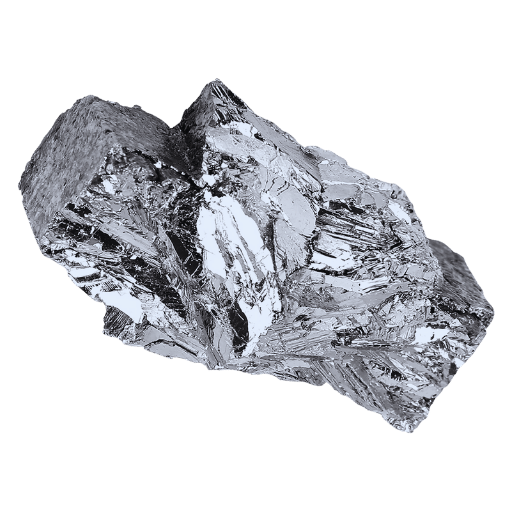
Bismuth isotopes are variations of a bismuth element with the same number of protons but different numbers of neutrons. The most remarkable and widely used isotope of bismuth is bismuth-209 (Bi-209), regarded as the only stable isotope of that element. Bi-209 is believed to have been entirely stable; however, sensitive measurement techniques have uncovered that it undergoes alpha decay with an extraordinarily long half-life of roughly 1.9 × 10¹⁹ amidst years greater than the universe’s age. For all practical intents and purposes, it is stable.
In addition, bismuth isotopes such as Bi-210 have artificial radiation, which is useful in nuclear chemistry and medical science. For example, Bismuth-210 is a predecessor in the polonium-210 decay chain, famous for emitting alpha particles. Research on these isotopes contributes to the deep understanding needed in nuclear medicine, which is focused on treating diseases and understanding the formation of heavier elements in astrophysical processes.
Information from nuclear studies shows that bismuth isotopes have low neutron capture cross sections, which can be detrimental in some reactors and protective shields, where their stability prevents unnecessary reactions. However, due to its unique physical and radioactive properties, bismuth continues to advance many branches of science and industry.
Bismuth’s application in nuclear research is predominantly associated with its strong stability and low neutron capture cross-section. These factors make bismuth ideal in coolant reactor systems and certain shielding activities. Furthermore, bismuth is also used in research studies involving spallation reactions, where it acts as a target material for producing isotopes rich in neutrons. All these features make bismuth very effective in advancing nuclear technologies.
Bismuth oxychloride is essential because of its distinctive chemical and optical properties. It is extensively employed in cosmetics and personal care products because of its capability to provide a pearlescent effect, improving the appearance of formulations like powders, eyeshadows, and foundations. Furthermore, it demonstrates remarkable stability, non-toxicity, and a good range of ingredient compatibilities, making it a popular choice in the beauty and skincare industries. It is also safe and eco-friendly, showcasing its value in various applications.

When it comes in contact with air, bismuth undergoes slow oxidation. This chemical reaction creates a luminescent carbonate layer on its surface. Some oxidation is still possible, but bismuth granules have increased stability and longevity. Thus, bismuth is helpful in long-term projects and can be used across many industries.
As bismuth undergoes oxidation, it is clear that an oxide film formed on the surface interacts with light. This light interference leads to the display of many colors, typically achieved with blue, purple, and green tones. The coloration intricacies further depend on the thickness of the oxide film, as it is not uniform across the entire surface. This qualitatively explains why oxidized bismuth has that striking iridescent color.
A: Bismuth is unique among metals due to its man-made brittle quality and a low melting point of 271.5°C (520.7°F), which allows it to be used in low-melting alloys. Its crystal formation has an iridescent luster, and its uniqueness is enhanced by its being the heaviest nonradioactive element in the periodic table.
A: Compared to many other metals, Bismuth has a significantly lower melting point. This feature is beneficial in creating fire detection and safety devices because it can be used in low-melting alloys.
A: He is used in various fields such as cosmetics, pigments, and pharmaceuticals with bismuth subsalicylate. At the same time, it can also be used as an alloying constituent for lead-free solders, bismuth telluride in the production of thermoelectric devices, and some components in nuclear reactors as safety systems.
A: Bismuth is usually refined by electrorefining and pyrometallurgical methods. August extracts pure bismuth metal from its ores, removes nonmetals, and produces ingots for refined industrial use.
A: Bismuth crystals are often iridescent because of the beautiful thin oxide layer that is formed due to bismuth being exposed to air. This oxide layer quickly interferes with light and produces beautiful rainbow-like colors observed on bismuth crystals.
A: Bismuth is distinguished due to its brittle, low thermal conductivity, and high diamagnetic properties. Furthermore, it is also known for forming intricate, geometric crystals with a relatively lower boiling point than other metals in the same group of the periodic table.
A: Bismuth and lead have some things in common, such as being classified as heavy metals, but bismuth is stronger. It is non-toxic and non-radioactive, therefore safer to use in some applications. Moreover, bismuth has a lower melting point and is used in some lead-free alloys to substitute lead, which is beneficial for the environment and health.
A: Bismuth oxide is used in many areas, such as a glass and ceramics specialty and pigment catalyst. Because of its unique physical properties, it plays an important role in the manufacture of semiconductors and optical materials.
A: Bismuth is important in low-melting alloys, which are incorporated into various safety devices like fire sprinklers and fuses. Bismuth’s low melting point is advantageous, as these alloys must melt rapidly when subjected to heat to enable safety systems that work instantly.
1. Ab Initio Melting Curve Of Body-Centered Cubic Bismuth
2. Overview and Perspectives of Low-Melting-Point Metals In Biomedical Uses
3. Research on developing metal microneedle array electrode energy sources for ECG detection employs low melting point Bi–In–Sn alloys.

Manufacturing processes are quite complex, and the choice of a production method is directly related
Learn More →
There are two major manufacturing methods for producing plastic prototypes that most people find useful
Learn More →
As a person involved or interested in the design and production of plastic components, it
Learn More →