

Manufacturing processes are quite complex, and the choice of a production method is directly related
Learn More →
Calibration among machine shops and engineers practicing in various fields. Including automotive fabrication, precision mechanical contrivance, or even architectural fabrication activities involves significant material processing on a block of aluminium alloy 6063 due to its excellent machinability, corrosion resistance and versatility. With reliable insights, practical tips, and well-established methods at hand combining its unique property during heating, use of lubrication and cutting, finishing tool processes, this guide will equip appropriate techniques for Aluminium 6063 in order to master high-quality work.

Aluminium 6063 is widely selected for machining practices because of its good strength to weight ratio, resistance to corrosion, and fabrication friendliness. It is often called an architectural alloy because of its application for delicate designs that require contours and profiles that are challenging to achieve. In addition, it is easy to work on because of its low density and high machinability. More importantly, 6063 can achieve smooth surface finishes which is important for structural and architectural applications. Further, Aluminium 6063 has good anodizing response which improves protection and beauty. Because of these features, it can be relied upon in industry applications.
As resource and development updates indicate, 6063 aluminum retains its popularity in many sectors owing to its strength with formability. Its newer use in the construction industry, especially for windows, doors, and curtain walls as architectural frameworks, is a testament to its versatility. Moreover, its anodized corrosion resistance softens its utilization as an aesthetic addition for structures built indoors and outdoors. Also, in the transportation sector, its 6063 aluminum lightweight properties aid vehicular and airplane fuel efficiency, which aligns with globally prioritized sustainable market goals. In achieving performance and environmental benchmarks, 6063 shows its continued importance and adaptive nature in modern engineering applications.
6061 aluminum is stronger and more versatile, while 6063 aluminum is more formable with superior surface finish and anodizing capabilities.
|
Parameter |
6061 |
6063 |
|---|---|---|
|
Strength |
High |
Moderate |
|
Formability |
Moderate |
High |
|
Corrosion |
Good |
Excellent |
|
Surface Finish |
Moderate |
Smooth |
|
Anodizing |
Decent |
Excellent |
|
Applications |
Structural |
Architectural |
|
Weldability |
Good |
Good |
The functions of 6063 aluminum are expanding due to its outstanding corrosion resistance, particularly for applications that require long-term exposure to weather conditions. There has been increasing interest in its use for architectural and marine applications. 6063 aluminum’s ability to undergo oxidation and corrosion in harsh environments such as saltwater or humid conditions makes it ideal for these applications. 6063 aluminum is commonly used for producing window frames, door frames, exterior facades and irrigation pipes. In industries that prioritize functionality in addition to material endurance, 6063 aluminum is a preferred metal due to achieving excellent surface finish and being corrosion resistant.
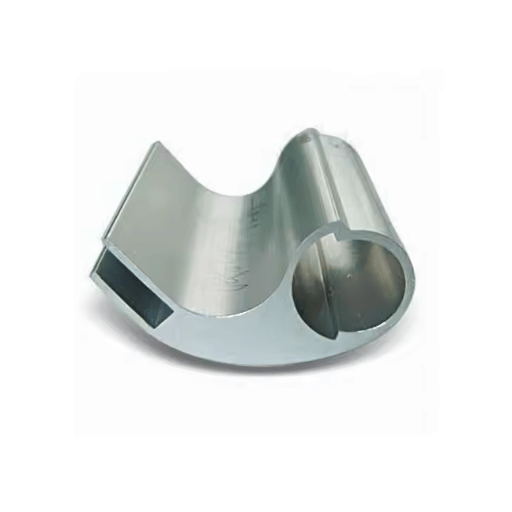
Don’t worry about Your Outline or Structure for CNC Surface Finishing and All Types of Milling Topics
For Increased Precision: Parts specification down to 5 microns is possible with cnc machining which holds precise tolerances of ±0.005.
For Enhanced Appearance 6063 aluminum aesthetic characteristics are maintained with less after treatment required due to cnc machining processes achieving surface finishes as fine as 16μin.
For Cutting Efficiency: Specialized tools with speed regulators take advantage of the soft but tough nature of 6063 aluminum whilereducing material deformation during production.
Minimized Waste: Advanced programming reduces margin material minimizing excess resource use and thus costs while providing sustainable solutions for machining operations.
Material removal rate (MMR) is one of the fundamental structural factors in production which directly influences productivity and effeciency of the operation. Ealier Research found that propulsion speed, feedrate, and depth of cut are part of the MRR Balance. Factors such as 6063 aluminum and CNC programs with strategic toolpath ensure optimum material removal without surface damage.
Google search trends show that specialists are searching for ways to maximize MRR while keeping precision and wear on tools to a minimum. Moreover, recent advancements in tooling technologies, such as coated carbide tools and high-speed steel cutters, serve this purpose as they allow for higher speeds and lower thermal stress during machining. As a result, manufacturers can achieve quicker response times and lower overall manufacturing costs. Achieving Precision with the Right RPM and Depth of Cut

Aeronautical uses are affected by thermal properties since they dictate how materials respond to extreme temperature fluctuations, thereby affecting expansion, contraction, stress resistance, and operational reliability in demanding conditions.

Manageable Heat Input: Using the correct heat input while welding helps prevent the possibility of cracks forming in the heat affected zone (HAZ) while promoting even joint strength.
Selection Of Filler Material: Selecting the correct filler alloy such as 4045 or 5356 will enhance joint integrity and improve the corrosion resistance of the joint.
Weld Preparations: Surface cleaning of oxides and contaminates should be done to improve overally weld quality and reduce defects for the aluminum welds.
Thermal Treatments After Welding: Heat treatments after welding like annealing can recover the materials properties and relax residual stresses thus helping restore the properties of the materials.
Aluminum 6063 is commonly utilized in applications such as window frames, door frames, curtain walls, and store fixtures due to its excellent corrosion resistance, structural strength, and ease of fabrication.
|
Key Point |
Details |
|---|---|
|
Strength |
Moderate strength suitable for framing applications. |
|
Corrosion |
Excellent resistance to natural weathering. |
|
Formability |
High malleability enabling intricate designs. |
|
Aesthetics |
Smooth finish ideal for architectural features. |
|
Versatility |
Used in both structural and non-structural contexts. |
|
Weldability |
Easily welded for complex assemblies. |
|
Thermal Prop. |
Effective heat management in commercial structures. |
|
Lightweight |
Reduces load-bearing requirements in designs. |
|
Durability |
Withstands prolonged exposure to environmental conditions. |

The 6063-T6 tempering process significantly enhances the hardness and tensile strength of machined parts by refining the alloy’s microstructure. Through controlled heat treatment and aging, this process optimizes the material’s mechanical properties, ensuring reliability and performance in demanding applications.
A: The advantages of aluminum 6063 include its corrosion resistance, workable weldability, formability, and machining capabilities. It is a medium strength heat treatable alloy and its extrusion properties are remarkable. In structural application it is employed in high sheathed complex shaped sections and offers a good strength to weight ratio.
A: In terms of machinability both aluminum 6063 and aluminum 6061 have good rates but aluminum 6063 is considered to have better surface finish capabilities. While 6061 is often used in applications where higher strength is required, it is also slightly stronger than aluminum 6063.
A: The secondary alloy elements in aluminum 6063 are categorized as magnesium and silicon. These assist in improving mechanical strength which enhance the suitability of aluminum for extrusion and machining processes.
A: When considering where to use aluminum 6063, aerospace components can be manufactured from it particularly where parts require good weldability, corrosion resistance, and the ability to form into complex shapes. For aerospace applications that involve high stress situations, stronger alloys such as aluminum 7075 are most preferred.
A: The physical attributes that enhance the machinability of aluminum 6063 include its moderate strength, ability to dissipate heat, and thermal conductivity. These qualities aid in reducing tool wear and improving the efficiency of cutting.
A: The heat treatment processes have an influence on the mechanical characteristics of aluminum 6063 components, such as their strength and hardness which impact machinability, positively or negatively. Workable aluminum 6063 heat treated alloys may demand changes in the machining tools employed due to changes in feed rate.
A: Aluminum 6063 is favorable from the standpoint of structural components because of its fair economy in weldability, resistance to corrosion, ease of extrusion into complex cross-sections and shape profiles, and even heterogeneous shapes. Its moderate strength combined with favorable strength-to-weight ratios makes it an asset in numerous structural applications.
A: The wearing of tools can have severe consequences while machining Aluminum 6063 in terms of quality of surface finish and the geometric precision in dimensional features. Selecting machining tools and controlling cutting parameters, especially the cutting speed and feed rate, can reduce tool wear allowing for better machining results.
A: Achieving precision when working with aluminum 6063 necessitates the use of well-maintained cutting tools, proper feed rates, and implementation of thorough methods like Taguchi process optimization. These methods will mitigate tool wear as well as improve the quality of the machined metal parts.
1. Experimental investigation on surface roughness of aluminum alloy 6063 machining with minimum quantity lubricant
Citation: (Imthiyas et al., 2023)
2. Effect of Feed rate on Material Removal Rate, Surface Roughness and Machining Time of Aluminum Alloy 6063 in CNC Turning
Citation: (Senthilkumar et al., 2022)
3. Multiple Response Optimization of machining parameters on turning of AA 6063 T6 aluminum alloy which established on Taguchi L9 orthogonal array coupled with Grey relational analysis
Citation: (Kiran et al., 2021)
4.Top Aluminum CNC Machining Service Provider & company in China

Manufacturing processes are quite complex, and the choice of a production method is directly related
Learn More →
There are two major manufacturing methods for producing plastic prototypes that most people find useful
Learn More →
As a person involved or interested in the design and production of plastic components, it
Learn More →