

Manufacturing processes are quite complex, and the choice of a production method is directly related
Learn More →
CNC machines are the heart and soul of current technological advances, providing unrivaled accuracy, speed, and cost-effectiveness in the manufacturing of intricate parts. However, this performance excellence is achieved through a system of components, which are delicately orchestrated, each with an essential function in ensuring the performance is nothing short of superior. Whether you are an engineer who has been at it for ages or someone just venturing into the CNC galaxy, these components still make some sense when it comes to discussing the working principles of these machines. In this article, we focus on the essential elements that comprise a CNC machine, examine its structure, and the processes it is responsible for. This article will teach you what parts comprise a CNC machine, why it also entails all the tiny portions of it, and, to anyone’s wonder, the innovative capabilities that these devices offer in the field of manufacturing.
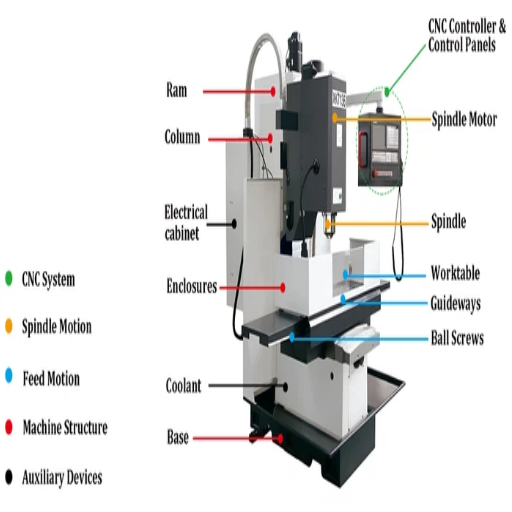
In CNC machines, the ‘brain’ has a significant impact on the operation of these machines, as it assists the machine with the numerous devices that exist. They are as follows:
All the aforementioned parts perform functions that are essential to the effective operation of the machines.
CNC machines, short for Computer Numerical Control machines, are high-precision tools used for precision machining and manufacturing processes. These machines use numerical control systems with computerized operations. CNC machine parts include:
The purpose of these aggregates as a whole is to provide maximum accuracy, velocity, and a hundred percent reproduction. Traditional CNC is often widely used within aerospace or medical sector applications due to the current state of CNC technology development.
The need to replace or renew office furniture in a high-rise building is considered a vital part of its overall facilities management program. Offices are the places where employees work; therefore, there is a desire to enhance the comfort of their workers. This desire essentially resembles an entitlement that most contractors must comply with to tender for office refurbishment works. Who needs the office? For whose benefit is the work to be done? Under-floor installations, such as hydronic heating systems and network systems, were also installed to save the clients’ office spaces and ensure the best prevention measures.
To meet the increased demand for e-services, organizations are currently incorporating social media technologies into their service delivery mechanisms. They have become even more popular at conventions and trade exhibitions to inform the target audience and to create brand awareness. As institutions value service quality and customer satisfaction in the tourism and hospitality sectors, the individual employees working in these organizations play a significant role in delivering these. Marketing also has a problem, as far as this product is concerned, because it seldom raises the issue of copper or the benefits of using it in the manufacture of a vessel.
CNC machine parts are of utmost importance for 21st-century manufacturing due to their potential to improve efficiency, accuracy, and creativity. Here is a list of the most practical roles any CNC machine can perform:
CNC machine parts guarantee that the material is cut or shaped in a manner that is very accurate. The most elaborate specification in the order, within a diameter of ±0.001 inches, is achievable, which is required in markets such as aerospace and medical equipment, among others.
The challenge of performance differences due to either accident or strategy variation is not being overcome by these components. Machines perform identical tasks because of the guides, thus reducing the variability, and the human factor also contributes considerably less to the errors.
CNC operations perform admirably in replicating complex designs represented by CAD into actual parts. They enable the manufacturing of intricate geometries and fitting parts that would be extremely cumbersome or impossible to achieve manually.
A CNC machine can process a wide range of common materials, including metals, plastics, composites, and even wood. In this form, CNC machines are helpful in many businesses, particularly automotive and electronic manufacturing.
The CNC machine produces cost-effective operations by combining shortened manufacturing steps and eliminating useless processes. This is the case because machines have shorter cycle times, requiring less effort in assembly, setup, and positioning gear, thereby increasing efficiency and productivity.
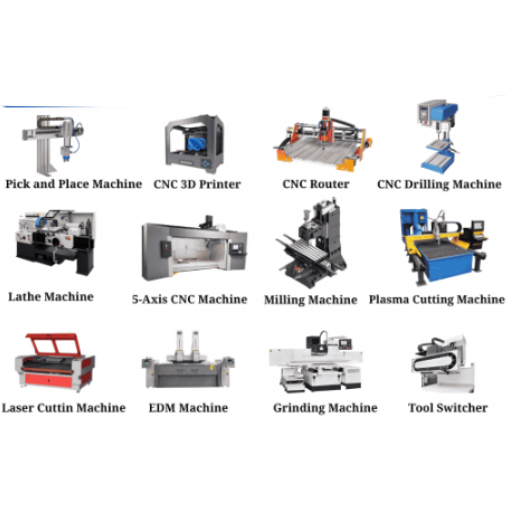
Various types of CNC machines are used based on specific manufacturing tasks. In the text provided below, let us talk about the Primary kinds of CNC machines and their main elements:
Each type of CNC machining has a specifically engineered set of parts to complement its functions. This makes CNC technology and associated machinery one of the most indispensable tools across various fields.
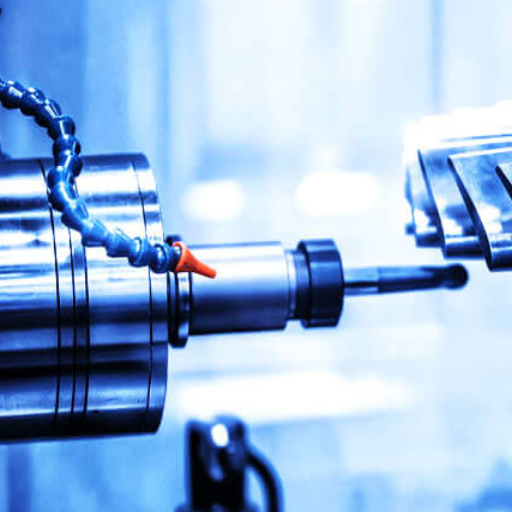
CNC machines are tools capable of performing diverse functions, primarily within the precision machining of solid materials such as wood, metals, and plastics. When the programmed computer sends the rotary cutters into the workpiece, material is removed. Typically, a CNC milling machine consists of a spindle, cutters, a worktable, and a control system that work collectively to achieve high precision in the workpiece.
What are CNC Milling Machines Used For?
The development of complex forms that require tight tolerances in the produced part is primarily planned using CNC milling machines in industries such as aerospace, automotive, and others. Conversely, these are pretty effective for generating decorative designs, machinery components, tools, die inserts, and models.administrators will notice a growth in demand for CNC milling in the production of custom and small-scale components, particularly in advanced manufacturing fields such as 3D machining and high-accuracy engineering. The development of CNC milling machines enabled the possibility of many processes requiring exactitude and repeatability, which were previously only feasible manually.
Computer Numerical Control (CNC) turning machines are widely regarded as essential in the ever-evolving world of precision machining. They are generally employed in the manufacture of cylindrical objects by rotating the workpiece and then using a cutting tool. Such machines are primarily used to create parts that are shaped like rods and/or tubes. In other words, turning a CNC lathe. In specific industries, however, there has been a significant shift towards the adoption of CNC turning lathe machines, particularly in areas such as aerospace technology and medical device manufacturing. With the increasing need for close tolerance and high-accuracy parts, there is a requirement to utilize CNC turning and a specialized machining service that effectively provides it. The ongoing integrated modifications are beneficial in incorporating more axes and auto-tool changes into the CNC turning machine. Hence, this is likely to increase in every manufacturing process, as it makes a decisive contribution to high productivity and flexibility.
CNC lathes comprise many parts that work together to machine parts efficiently and effectively. Essential elements include a machine equipped with a spindle that moves through machining, holding, and carrying out rotational motion of the workpiece, and that forces the raw material against the cutting tool. Additionally, the turret contains several cutting tools used for machining and material removal, as well as a chuck that secures the workpiece when it is in the machine or during mass production. In addition, modern machines such as CNC turning, which comprises the turning process, are quicker and hence more precise because they are equipped with a control panel for rapid entry and setting up of various parameters for the machining process. They also have a tailstock, which provides additional support to the workpiece. Problems related to the materials that comprise CNC machines can range from usage to design, with the most critical questions revolving around their placement and function within the machine. For this reason, an understanding of where CNC lathes can be applied is not enough for manufacturers; an understanding of the article is also appreciated.
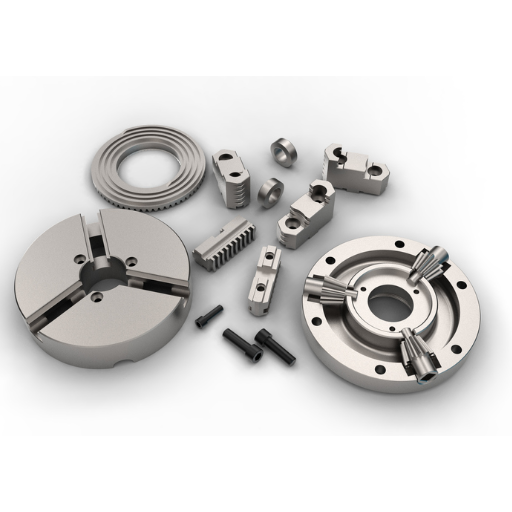
When planning to manufacture parts on a CNC machine, several key factors must be considered to ensure a high level of efficiency and accuracy. The considerations are as follows: the type of material is crucial, as it must be both durable enough and meet all production requirements while remaining effective in terms of price. This includes size tolerances, among other factors, as well as a certain degree of expectation, along with limits for joining components and other parts. This is also a factor of the part’s geometry, which involves minimizing the surface and shank cuts. Ensure a high-quality finish and use suitable coatings to prevent oxidation, thereby enhancing the part’s longevity and its ability to serve its intended purpose. Just as with programming code, when designing the parts, consider constructability and rationale to facilitate effective production and achievement.
In the production of complex structures, it is highly beneficial to leverage cutting-edge technologies, resources, and information. While compiling sophisticated parts within models, experts can utilize tools like computer-aided design (CAD) to create accurate three-dimensional images with precision; even the most complex shapes appear correctly on the computer screen. To this end, in association with the current or even more complicated issues, such as credible manufacturing analysis of materials used, allowable stresses, performance criteria, and tests, ensure that the schematics address both functional and durability requirements.
The bulk of generated insight derives from sources that can also be used to highlight the resurgence of substances, practices, and novel approaches adopted by industries worldwide. In the manufacturing sector, for instance, we see an increase in the use of additive manufacturing techniques to create intricate parts with reduced material wastage and shorter lead times. All these approaches are being used with a specific goal in mind: to make a high-tech structure with reduced expenditure and minimal operational time. This can be extended to other types of engineering activities, especially when the objective is to address present-day challenges, as is typically the case.
Several key considerations must be taken into account for the proper application and serviceability of CNC materials, which include: mechanical properties, thermal stability, machinability, and, of course, the effectiveness of installation. Many materials are suitable for CNC machining in engineering applications; the reason Cerholm is applied despite the additional machining time is the tiny masses of the elements themselves. The elements must be removed freshly from the machining chamber at the right moment (they cannot be machined for longer). If there are no belts, this is done; then, a belt is put in place. Then, the finished hole is produced, and the belt increases the diameter of the hole, making the machining more accurate. However, the belts are not subjected to this element. Precision-engineered thermoplastics can, however, offer several advantages over traditional rapid tooling methods and some composite materials.
Current trends do not focus as much on materials as on composites and advanced specialty materials, which are mainly used in CNC machining. Thus, the traditional and highly beneficial scenario of selecting a material and applying it to a specific class of products and components has played its role. This emphasizes the increasing use of composites and polymer blends, where polymers are treated with flame retardant and have inorganic surfaces. This is an external shop class that teaches students how to evaluate sunglasses that best protect their eyes, including direct impact procedures, and enables them to be innovative and creative in the class. For such programs, the High Tech Center Training Unit has implemented the needs of the community and industry into the entire training curriculum standards and content.
In the design of products, the thickness of walls is of particular interest because it determines the strength and the feasibility of the construction of the piece. Many designers and engineers prefer thin walls, primarily due to the need for lightweight designs; however, such thin walls are easily deformed or become off-center during the machining process on a CNC machine. On the other hand, excessively thick walls are unfavorable since they significantly consume material and increase the cost, yet there is no improvement in performance.
According to recent estimates, specific guides are available when required to support the wall thickness of approximately 0.8mm to 1.5mm for metals and 1.5mm to 2.5mm for plastics, facilitating ease of machining. One should attempt to design for the same thickness throughout the part to avoid the potential problems encountered during a load condition. It is also best to promote engineers to create products that increase the difficulty and prevent bifurcations and sharp corners wherever possible, thereby eliminating or minimizing stress concentration zones and reducing vibration in tool paths. These are not contradictory ratios; instead, they complement each other because doing one helps improve the other, which enhances the quality and also reduces the production time of parts made using CNC machining.
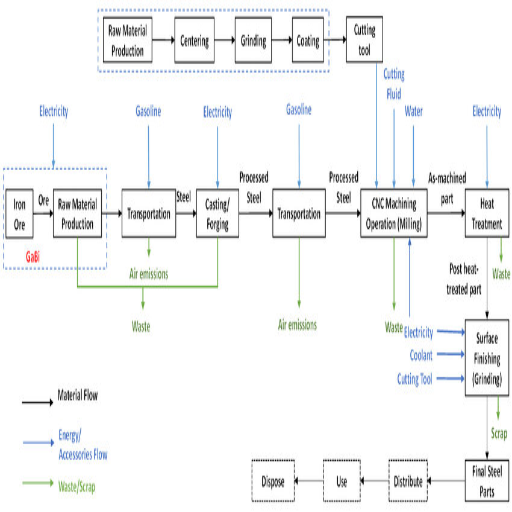
CNC machining is a manufacturing process that utilizes computerized tools to construct components from a variety of materials. It begins with designing a digital layout that allows the automated machine to process it accurately. These components stimulate the functions of cutting, drilling, or shaping of the relevant medium in a pacesetter manner. Critical stages of such a process involve preparing the material for adjustability, configuring the machine, operating it, and conducting quality assurance and inspection to ensure sound output is achieved. This method is cherished and well appreciated since it enables one to achieve precision and intricate components speedily than other methods and techniques.
Initiating the management and setup of CNC systems is a crucial step in achieving a high level of accuracy and effectiveness. This process starts with selecting the correct tooling and performing tasks according to the material and the intended end product. The workpiece is placed on the machine’s worktable and firmly clamped to eliminate all chances of restraint errors. The program is then loaded into the CNC, which involves attempting to step down the machine’s axes in the zone specified by these commands. No turning of the necks is to be allowed before the machine’s calibration, and the alignment of the tools provides the best conditions for cutting without malalignment. Improving machine programming is achieved through enhanced CNC system packages, which take a step further by incorporating additional components, such as tool changers and real-time controllers. Furthermore, linking the machines to AI-driven systems or clouds is the best way to enhance performance and make continuous improvements in operational and resource utilization. Like every technologically oriented piece of equipment, regular maintenance and timely software updates are essential steps toward ensuring the machine’s future operational reliability and efficiency.
Machining is the process of subjecting a workpiece to various operations that remove or reduce material to achieve a specific size and surface finish. Such methods include cutting, grinding, turning, and milling. Increasingly, users are questioning the relationship between recent advancements in machine technology and the manipulation of materials. Today, thanks to advancements in machine programming systems, machining has greatly benefited from specialized software products, such as CAD and CAM, most of which are computer-assisted. These ensure a smooth transition from the idea to creating its model without errors and reduce the likelihood of time delays.
Additionally, Computer Numerical Control (CNC) machining ensures greater accuracy compared to manual processes, reducing errors that can occur due to human factors during operation. In this way, the likelihood of reducing time spent on ensuring complete and quality delivery is notably high. Consequently, technology plays a significant role in the overall development of the machining sector.
Operated in five directions, 5-axis CNC machines fabricate detailed and accurate instruments without requiring multiple setups. Additionally, this delivers a higher level of precision, often with a tolerance level of approximately ±0.001 inches, as seen in the manufacturing of aerospace and medical equipment components.
The cutting tool can be better placed in intricate areas, resulting in little to no surface roughness that needs to be addressed after the piece is machined. The final products also have greater aesthetic appeal and are manufactured more efficiently.
5-axis machines are designed to enable more efficient tool access and minimize losses within the machining process, allowing for the conservation of raw materials to be achieved. This minimizes pricey losses, especially when dealing with raw materials such as titanium or carbon composites.
This is because the system is capable of machining intricate parts simultaneously without requiring repositioning of the job. A 5-axis process is said to reduce production duration by half compared to a 3-axis process, enabling firms to meet tight deadlines effectively.
Certainly, 5-axis working allows for cutting not only angles, edges, and simple geometries, but also more complex-shaped parts. Those unique angles and depths, along with all the other design details that can only be left to the designers, can also be machined, among other things.

Computer Numerical Control (CNC) operates essentially with the aid of advanced equipment and software. The most crucial equipment includes various cutting tools, such as end mills, drills, and lathes, which are sharpened to refine any details during the shaping and removal of materials. Each cutting tool in this case —the end mill, the drill, and the cast iron —requires a state-of-the-art holder and a suitable clamping fixture to prevent movement during application, thereby eliminating any typographical and misalignment errors that could occur. All this is achieved with operational stability in the presence of human factor errors. Errors caused by CNC machine vibrations may be reduced or eliminated by proper tooling design and use. Additionally, composite computer-aided software, such as CAD or CAM, is a prerequisite for the fabrication process. This involves creating accurate models and generating tool paths based on the presented designs.
Furthermore, controllers are installed in CNC machines to convert digital input, typically generated from a CAD, into modified output for machine movements, enabling multiple precision driving activities. As a complex integration, they facilitate the operation of CNC machines. This allows the production of various reliable and complex parts.
Assisted by an array of specialized tools, CNC machines cut, drill, mill, and engrave with impressive levels of accuracy. The prominent tooling equipment used includes:
The use of tools also suggests the error introduced in the production system, i.e., three readings in the form of precision, efficiency, and even the quality of the product. Also helpful in significantly reducing the duration and material used for production is the use of state-of-the-art CAD/CAM software, coupled with the correct cutting tools. The performance of the tool is also enhanced through the use of titanium nitride (TiN) or diamond-like carbon (DLC) film coatings, which increase product strength and reduce friction associated with machining. CNC machining tools, alongside advancements in technology, continue to evolve to meet the perfection of human imagination, especially in sectors such as aerospace, automotive, and medical.
CAD (Computer-Aided Design) applications are one of the must-have tools in CNC (Computer Numerically Controlled) machining, primarily because they assist engineers and manufacturers in creating accurate and detailed renderings of fabricated parts. Some of the most common choices include AutoCAD and SolidWorks for 3D modeling, as well as CAM Process, which are some of the more suitable options due to their functionality and simplicity. These tools assist in creating 2D and 3D models, as well as FEA and CAM software in some cases, facilitating the transition from design to manufacture.
Recent surveys indicate that Fusion 360, a cloud-based CAD solution, offers more up-to-date tools and features, which can potentially enable US agencies to design and manage updates, and is editable by multiple users globally. There is also an increasing demand for CAD tools that incorporate artificial intelligence technology in product development, which enables the optimization of materials and production costs. With such technologies, it is possible to create aesthetic and ergonomic designs, with small surfaces remaining highly compatible with even the most advanced machining technologies.
EDM: A More Detailed Insight! As it is difficult to create special, precise details using conventional methods, CNC machining operations need to utilize EDM wire cutting technology. The EDM process utilizes the discharged electric energy for spark erosion. This process is especially effective for generating delicate detail shapes, machining composite materials, and processing small amounts of material with very tight tolerances. Over the past few years, EDM has received considerable attention as a means of achieving very high geometrical accuracy while minimizing the extent of thermal damage to the workpiece. This is why they must integrate EDM with other advanced technological solutions to generate SMT stencils, parts, and, more specifically, in particular industries such as aerospace, medicine, and automobile engineering, thereby economizing on time and resources. Such requirements indicate that the market needs not only high precision levels in CNC machining but also for maximizing efficiency in manufacturing-centric businesses.
Complex and intricate CNC manufacturing excels in achieving accurate and precise details by utilizing and fine-tuning machine tools, thereby setting their movements to the ordinate with greater efficiency. Automation systems can eliminate errors inherent in human nature, enabling the performance of complex and detailed tasks. It is these considerations that contribute to the reduction in workpiece quality through the proper implementation and accurate calibration of advanced software, as well as the selection of suitable machine types and other factors. As a result, these technologies, in particular, are essential for exceeding consumer expectations, especially in fields such as aircraft building and medical prosthetics, because these areas require more precise work.
Engineers are constantly striving to improve their knowledge and skill set, and the rapid development of technology certainly helps in this respect. For me, programming software captures my attention most of the time; I also ensure that the machine is perfectly adjusted, and one of the major tasks is to choose the right material that satisfies the requirements. Over time, improvements at each stage will enable me to minimize flaws during the manufacturing process, resulting in a more appreciable end product.
Quality management issues arise with the operational precision of components in any CNC application. To enhance efficiency in quality assurance, contemporary methods should be integrated with conventional inspection approaches. Relevant practices include using a CMM (Coordinate Measuring Machine) for in-depth studies of dimensions and wiring on-board sensors and off-board sensors in machines, enabling them to detect any defects immediately. When it comes to manufacturing, this eliminates the need for post-production or after-production testing, as it would only delay issues, which would likely arise afterwards. Due to preventive measures and the constant application of technology, it is possible to consistently produce the necessary tools of the right size and shape.
In the matter of inspecting CNC components, using technology in conjunction with the conventional approach has proven more practical and assured precision. In essence, some inspection methods include the use of automated systems, such as Coordinate Measuring Machines (CMMs) and advanced imaging systems, like laser scanning. These instruments provide accurate information, even on the most minor defects, which appear in alignment with the manufactured dimensions. Applying artificial intelligence algorithms to the inspection process cannot only uncover the presence of defects but also suggest solutions for them. This combination of powerful tools and common-sense strategies, deeply rooted in search concepts, is indicative of the gravity of managing quality and collaboration among teams in the industry.
Xometry: 13 Parts of a CNC Machine – CNC Block Diagram – Provides detailed insights into the components and functions of CNC machines.
3ERP: Parts of a CNC Machine – Explains the core components and their roles in CNC systems.
Avid CNC: Standard CNC Components – Offers information on standard CNC components and their applications.
A: CNC mechanical parts refer to the components used in CNC machines that enable precise and automated manufacturing processes. These parts encompass everything from the control unit, which manages the CNC machine’s operation, to the tailstock quill, which aids in stabilizing and positioning the workpiece during machining.
A: CNC machines can work with various materials, including metals, plastics, and composites. Common materials used in CNC include aluminum, steel, polycarbonate, and electrically conductive materials, each selected based on the specific machining requirements and desired properties of the finished product.
A: The CNC machining process involves the use of computer-aided design (CAD) software to create a virtual model of the part, which is then translated into a series of commands for the CNC machine. The machine uses precise movements along the X, Y, and Z axes to cut, mill, or turn the material, resulting in high-accuracy parts and components.
A: CNC milling and CNC turning are two distinct machining processes. CNC milling involves removing material from a workpiece using rotating cutting tools, while CNC turning consists of rotating the workpiece against a stationary cutting tool to shape it. Both processes can produce complex parts and are widely used across various industries.
A: Custom CNC parts are tailored components designed to meet specific requirements or specifications. These parts are produced using CNC machines and can be made from various materials, allowing for unique designs that may include non-standard shapes or wall thicknesses not available in off-the-shelf products.
A: Machining costs in CNC operations can vary based on several factors, including the complexity of the part design, the materials used in CNC, and the machining time required. Generally, more intricate designs and harder materials result in higher machining costs due to increased setup time and tool wear.
A: Laser cutting is often used in CNC manufacturing as a precise method for cutting materials. It allows for clean edges and intricate designs in various materials, making it a valuable technique for producing parts such as brackets or enclosures where precision is critical.
A: The use of CNC machines in the manufacturing industry offers numerous benefits, such as increased precision, reduced human error, and the ability to produce complex parts consistently. Additionally, CNC machines can operate continuously, improving overall efficiency and productivity.
A: CNC mechanical parts are utilized in various industries, including aerospace, automotive, electronics, and medical device manufacturing. Each industry leverages CNC technology to produce high-quality components that meet strict regulatory and performance standards.

Manufacturing processes are quite complex, and the choice of a production method is directly related
Learn More →
There are two major manufacturing methods for producing plastic prototypes that most people find useful
Learn More →
As a person involved or interested in the design and production of plastic components, it
Learn More →