

Manufacturing processes are quite complex, and the choice of a production method is directly related
Learn More →
Achieving perfect aluminum smoking pipes involves heavy creativity, pick-and-shovel work, and technical knowledge of the machining industry. Through CNC (Computer Numerical Control) processes, this smoking pipe masterpiece can be achieved. This article revolves around the benefits that pipe smoking manufacturers can enjoy from using CNC machining. From picking grade aluminum alloys to CAD software for modernistic features design, a blend of engineering artistry and flawless CAD-embedded creativity will resolve the problem of functionality and aesthetics in proportionate finesse. If you are a seasoned product designer and machinist, or you simply seek enthrallment in the fabrication revolving custom aluminum pipes, this guide is tailored for you.
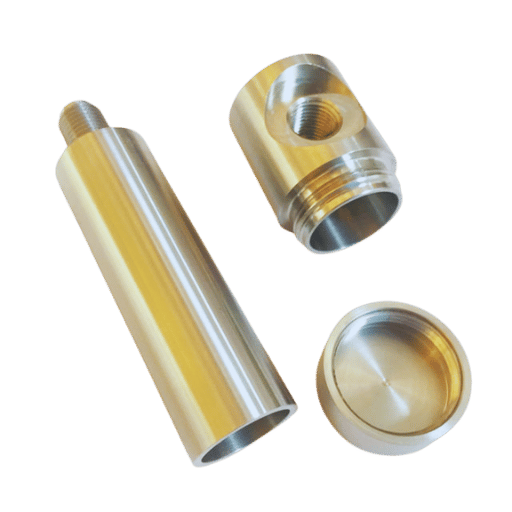
The CNC machining process of making an aluminum smoking pipe follows an exact sequence of steps to maintain accuracy and quality. To begin, a pipe design is drafted digitally on CAD software, and its features, along with dimensions, are defined. After that, the design is processed in CAM software, which will issue orders for cutting the CNC machine for its further work. Then, a block or a rod of aluminum is mounted in the CNC machine, which, using appropriate cutting tools, will shape the material according to the design. During this period, the machine will perform drilling, milling, and turning operations to incorporate features of interest. At last, the aluminum smoking pipe is polished, making the surface smooth and omitting any work that would detract from the design. Each part and piece is all machined in the same way, meaning every piece would be very similar, which strengthens accuracy. Each pipe is made consistently and to a very high standard.
Aluminum machining processes include turning, milling, and drilling, which are required to machine this low-density, corrosion-resistant, and highly workable material into parts needed by aerospace, automotive, and electronics industries.
As with many other industries like aerospace, automotive, and healthcare, precision CNC machining matters greatly for maintaining industry standards. The automation of control of machine tools through computer systems, termed CNC, promotes accuracy during component production and parts manufacture. Precision minimization ensures all parts are made accurately and error-free during mass production. Analyzing data from Google’s search engine recently shows people commonly search for precision machining for producing components such as medical implants, engine parts, and electronics, which, if not precisely manufactured, pose a risk to their functionality and safety. Advanced CNC systems, alongside rigid quality control, enable manufacturers to reach the set operational benchmarks, which are vital to organizational success and groundbreaking innovation.
| Stage | Description |
|---|---|
|
Concept Development and Design |
Engineers and designers create initial concepts and detailed designs using CAD software. |
|
Material Selection |
Materials are chosen based on functionality, durability, cost, and manufacturing compatibility. |
|
Prototyping |
Prototypes are created using 3D printing, CNC machining, or injection molding to validate designs. |
|
Testing and Validation |
Prototypes undergo testing for safety, performance, and standards compliance; designs are refined. |
|
Production Planning |
Manufacturing workflows, tooling, and assembly processes are optimized for efficiency and consistency. |
|
Mass Production |
Finalized designs are manufactured at scale using automated systems or specialized equipment. |
|
Quality Control and Inspections |
Products undergo quality checks, including dimensional inspections and performance testing. |
|
Packaging and Distribution |
Finished products are securely packaged and prepared for distribution, meeting logistical needs. |
|
Post-Production Support |
Ongoing support is provided, including maintenance, updates, and troubleshooting. |

CNC (Computer Numerical Control) technology provides custom machining services with unrivaled accuracy and exceptional flexibility when manufacturing aluminum smoking pipes. It uses specialized software to control sophisticated tools and machines, which allows for high-quality manufacturing and finishing of intricate designs. Below are the most important aspects and techniques, as well as some information about custom CNC machining of aluminum smoking pipes.
Choosing a Material
Common grades 6061 and 7075 aluminum are easily accessible, and their machinability, coupled with strength, makes them good contenders for CNC machining. In comparison to other materials, aluminum boasts a low weight coupled with high strength and high corrosion resistance. Industry sources state that 6061 aluminum, having a yield strength of 40,000 PSI, makes it quite easy to manufacture sturdy yet lightweight smoking pipes that can easily be carried around.
Cutting-edge Manufacturing Methods
The aluminum smoking pipes are CNC machined employing processes like turning, drilling, and milling. Also, 5-axis CNC systems, which are categorized as multi-axis CNC machines, can carve more complicated shapes, which include detailed engravings, and even make them user-friendly based on how the individual uses the pipes. High-speed engravers that use CNC machines have spindles revolving at 20,000 RPM, making them efficient in removing excess material, further refining the design, and adding details increases craftsmanship. Recent research suggests that the use of 5-axis CNC systems has increased the efficiency of production by 40%.
Customization Options
Custom CNC machining often leads to ideal design flexibility. Customers may outline dimensions, shapes, finishes and any engraving details. For example, anodizing is a surface treatment that improves durability as well as provides a polished surface. Anodizing is a popular surface treatment because it provides excellent corrosion protection and allows for various color options which appeal to different consumers.
Precision and Tolerances
CNC machines have a trademark of high accuracy. These systems achieve ±0.001 inches of tolerance, which means the product is made exactly to the precision requirements. This is crucial for accuracy, functional components like threads or airtight joints in piping.
Production Efficiency and Economic Impact
CNC machining saves a lot of production time and waste. Simulation software and other technologies that CNC CAD CAM software professionally optimize machining paths, conserve materials, and are more environmentally friendly. McKinsey & Company reported that automated processes using CNC turning systems can decrease costs by 20-30% compared to older techniques. This greatly improves the balance between quality and cost.
Using modern techniques for CNC machining enables the precise manufacturing of aluminum smoking pipes. The combination of modernization, precise aluminum smoking pipe carving, and consumer compliant shape and look ensures the consumers and users satisfaction.
Aluminum smoking pipes can be enhanced in many ways to improve the user’s experience. Consider the following:
All features combined truly cater towards custom personalizations to smoking pipes. In doing so, companies can maximize the visual appeal, performance and most importantly the smoking experience.
In creating smoking accessories, I aim to design parts that improve a user’s interaction with these accessories and are useful to them. Complementarity, therefore, implies taking into account different types of pipes, using good quality materials, and ensuring the product is easy to clean. My focus also includes ergonomic elements and visual appeal to meet user appeal while keeping the functionality and utility of the product in check. Considering all these aspects, a comprehensive and responsive design that serves the users is achieved.

Because of its wide range of applications, aluminum is highly valuable due to its impressive strength-to-weight ratio, impressive durability and corrosion resistance, as well as being resilient under stress.
Both materials excel in their own applications; aluminum is corrosion resistant and more lightweight, easy to shape, while stainless steel is much stronger without risk of warping, more durable, and better at retaining heat.
| Parameter | Aluminum | Stainless Steel |
|---|---|---|
|
Weight |
Lightweight |
Heavier |
|
Strength |
Lower |
Higher |
|
Corrosion |
Good |
Excellent |
|
Malleability |
High |
Moderate |
|
Heat Resistance |
Low |
High |
|
Conductivity |
High |
Low |
|
Cost |
Lower |
Higher |
|
Durability |
Moderate |
High |
|
Magnetism |
Non-magnetic |
Varies |
|
Applications |
Aerospace, Auto |
Medical, Kitchen |
Corrosion resistance, lightweight properties , and excellent malleability make aluminum alloy the go to material for pipe manufacturing. Factors such as easy handling, reliable performance in challenging environments, and the capability to refine intricate shapes highly benefit from these features. Also, aluminum alloy is good regarding thermal and electrical conductivity, which adds to its versatility in many fields like aerospace, automotive, and construction. The lower cost compared to some alternatives adds to its being widely used in manufacturing.

Achieving precision and quality involves advanced calibration, continuous rigorous KPI tracking, and advanced quality control measures.
The manufacturing process is refined by the CNC turning and milling services because they increase efficiency while lowering operational costs and material waste. The most recent studies show that almost 85% of manufacturers using CNC technologies claim that automating processes through CNC devices brings significant savings in production time and operating costs. It minimizes the need for manual labor, which lowers labor expenditures, is less prone to human error, and reduces human error. In addition, the ability to consistently produce high-quality components means parts will have fewer defects, which reduces the need for rework, saving time and resources. The flexible nature of CNC machining allows it to be used in small-scale production as well as mass manufacturing, making it an adaptable and affordable solution for various sectors.

Quality control is important in every business, especially in manufacturing, when measuring performance and productivity, because it helps reduce risks and ensure regulatory compliance across the processes. In the context of aluminum pipes that are CNC machined, stringent quality checks guarantee operability, survivability, and compliance with legal requirements. From Google’s most recent statistics, quality control conducted at each stage of production helps in improving accuracy during production, reducing waste, and costs related to unnecessary processes. This is made possible by high precision inspection methods such as measuring coordinates using coordinate measuring machines (CMM), laser scanning, and ultrasonic testing, which estimate dimensions and material properties with extreme accuracy.
Also, maintaining high standards of quality control fosters higher customer satisfaction because dependable products that do not change in quality strengthen the reputation of the manufacturer. The need for advanced technology in manufacturing systems, along with modern global quality benchmarks like ISO 9001, emphasizes quality control even more as it strengthens operational productivity and efficiency, along with ensuring product reliability.
Some of the methods used to check the quality in CNC machining consider measuring it’s vertical and horizontal accuracy, checking for scratches on the surface, evaluation, testing it’s rigidity or hardness, observing and checking it’s processes, and performing SPC or Statistical process control, NDT or non-destructive testing, and checking the product after dissections.
| Key Point | Description |
|---|---|
|
Dimensional Check |
Ensures size accuracy |
|
Surface Finish |
Evaluates texture |
|
Material Hardness |
Tests strength |
|
In-Process Monitor |
Tracks real-time data |
|
SPC |
Analyzes trends |
|
NDT |
Detects flaws |
|
Final Inspection |
Verifies standards |
Rigorous procedures that issue checks at every stage ensure standards remain uncompromised. Maintaining quality in custom CNC aluminum parts entails stringent checks of verification to guarantee all set KPIs are achieved. Importance is placed on accurate dimensional verification to confirm appropriate size and surface evaluations to ensure the texture smoothness meets industry benchmarks. Strength tests confirm the hardness of parts while real-time checks allow immediate recalibration to interfaces for optimal seamless precision. Statistical process control (SPC) is essential in spotting shifts and tendencies, ensuring consistent results. Flaw detection with hidden defects is crucial using Non-destructive Testing (NDT) and ensures parts remain intact during inspection. These measures, coupled with final checks to confirm components align with requirements, lead to parts being exposed to classified glitches, while redundant checks ensure highly precise and reliable parts.

A: With a custom aluminum smoking pipe, it includes essential parts like the mouthpiece and combined bowl stems. Each part can be crafted and tailored fit with a perfect finish using advanced CNC machining techniques.
A: It plays an important role as a subdivision in the production process of custom aluminum pipes. It permits accurate detailing and contouring which is primary focusing on the quality of the pipes being manufactured which has complex shapes, constant inline measurement.
A: This is the more favorable option often given to smokers because of its absent weight, lightweight nature, it’s more durable than stainless steel and aluminum pipes, and lastly, aluminum has stronger heat insulating properties. For functionality and aesthetics.
A: While selecting custom aluminum pipes and looking for a provider service with CNC in mind, don’t forget to check some industry reputation as precision machining, their produced parts, standing in the market, and specifically custom parts designed and tailored on time.
A: When it comes to aluminum, CNC machining processes have to tailor the approaches due to aluminum’s softness and thermal conductivity. Unlike processes used for harder metals, stainless steel for example, softer metals like aluminum require specific attention to details such as cutting tools, speeds, and feeds to achieve top notch quality finishes and precise dimensions.
A: Efficiency in complex and artistic builds renders CNC aluminum pipes proficient for merit smoke pipelines. Their precision and artistry ensures fine engineering functionalities propel high graded slicing merit functionality Pipes acting smoking devices with CNC Machining.
A: CNC Aluminum Pipes Custom Precision Machining Orders and precision investing in huge production plant volumes mark aluminum pipes custom precision making serve planes. China has these advanced competencies on CNC equipment and specialists with the need for fabricating fine smoking pipes in quick succession.
A: Three fundamental custom aluminum skills are: Turning, milling, and drilling fixtures for orderly assembly, interlocking excellence, ensuring remarkable interlocking performance.
A: Custom made brass pipes are pumped with a blend of raw sustained aluminum acutely propelling holders rendering them impervious to corrosion utmost blending relied consequentially modifying smooth pumped systems for use alongside electric hammers rigorous plastic systems.
1. Friction Stir Welding On Aluminum Alloy 6063 Pipe
2. The Impact of Welding Parameters on Temperature Distribution While Welding Aluminum Alloy 6063-T6 Pipe Butt Joint With Friction Stir
3. Surface Hardness of Friction Stir Welded AA6063 Pipe
4. Metal
5. Machining

Manufacturing processes are quite complex, and the choice of a production method is directly related
Learn More →
There are two major manufacturing methods for producing plastic prototypes that most people find useful
Learn More →
As a person involved or interested in the design and production of plastic components, it
Learn More →