

Manufacturing processes are quite complex, and the choice of a production method is directly related
Learn More →
Polyoxymethylene (POM), also called acetal or Delrin, is an engineering thermoplastic valued for its high strength, low friction, and rigid dimensional stability. It is used across automotive, electronics, healthcare, and consumer-goods manufacturing. This guide covers POM’s core properties, its most common industrial applications, and the practical advantages it offers over competing polymers. For specific CNC processing parameters and tooling recommendations, refer to our complete POM machining guide.
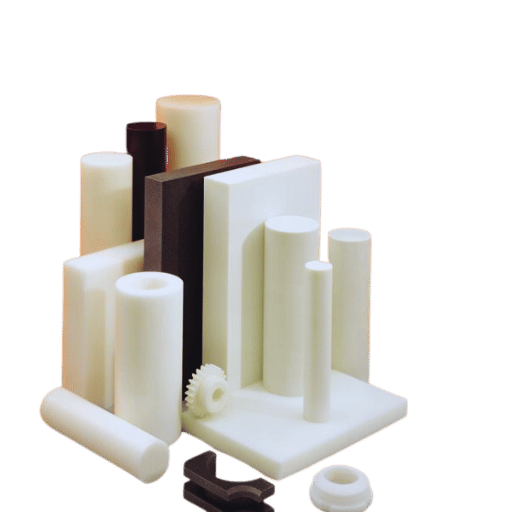
This material is a high-performance thermoplastic that is referred to as acetal or polyacetal and has a wide range of applications from industrial to consumer products. This polymer is well known for its high strength, stiffness, and low friction which makes it suitable for the manufacture of precision components like gears, bearings, and fasteners. Furthermore, PolyoxymethylenePOM also has excellent resistance against abrasion, solvents, moisture, and other elements which lends to its durability in hostile environments. Coupled strength, easy machinability, and cost-effectiveness give him a leading role in manufacturing parts for automobile, electronic, and general plastic goods. These features and advantages enable POM to produce products that are significantly reliable and efficient in use.
Polymers of formaldehyde are called polyoxymethylene (POM) which qualifies as a high-performance engineered thermoplastic by reason of its exceptional tensile and thermal properties. Due to its composition, which is majorly crystalline, POM has extraordinary dimensional stability and rigidity. Some specific characteristics include relatively high tensile strength, a melting point of 175°C (347°F), and low water absorption of around 60-70 MPa which guarantees precision engineering applications that have a high degree of tolerances.
Additionally, POM is characterized by excellent wear resistance and a low friction coefficient which enable parts undergoing repetitive motions, be it Gears, Conveyor belt parts, or bushings, to withstand relatively high degrees of temperatures while preserving their mechanical properties. Because POM is also an excellent insulator, it is easy to use in the electrical components of devices as a housing and insulator, therefore making it a preferred polymer material.
Development of the compounding technologies has enhanced the POM’s usability POM by adding fillers like glass fibers or mineral reinforcements which increases the impact strength and stiffness while expanding its application in automotive manufacturing, medical devices, and industrial machinery. It’s also commonly used for components in the fuel system, door locks, and window guides in the automotive industry because of its lightweight and low friction. Also due to its resistance to petrol and oils.
In the aim of ensuring environmental safety, a good number of manufacturers have also committed themselves to recycling POM with the aim of minimizing waste and enhancing sustainability. Doing this guarantees that the material still remains a green alternative in contemporary applications without compromising effectiveness.
POM plastic is a highly adaptable material that can be used in different fields due to its being unique. In the medical field, it is used for making fine parts such as insulin pens, surgical tools, and inhalers, owing to its biocompatibility and sturdiness. In the POM applied electronics industry, it is used for manufacturing connectors and housings due to its good insulation and structural strength. In addition, it is also used on a larger scale in the consumer goods industry for items such as zippers, gears, and parts for appliances ranging from microwaves to washing machines because of its strength and performance. Such diversity in application makes POM an essential plastic for a broad range of engineering and manufacturing purposes.
POM or Polyoxymethylene has earned worldwide recognition for specific engineering modifications. Its mechanical properties make it the material of choice in numerous sectors. The following characteristics of POM are listed in further detail along with the corresponding data which supports its importance:
Superior Strength and Rigidity
Minimal Friction and Resistance to Wear
Dimensional Strength
Resistance to Chemicals
Ability to Withhold Temperature
Electrical Insulation
Amendability of Composition
Creep Relaxation
These properties give POM a reputation as an engineering plastic preferred by practitioners and specialists in the fields of automotive, electronic, medical, and other consumer businesses. Its versatility, alongside measurable performance indicators, guarantees its usability in traditional as well as new manufacturing industries.
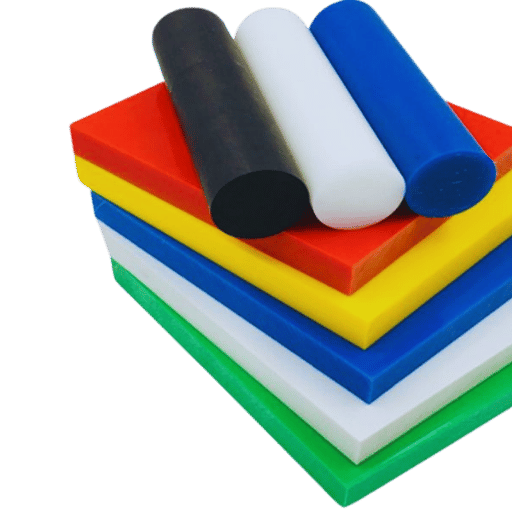
The process of shaping POM parts with an optimal level of precision is greatly assisted via CNC machining. This process consistently meets set requirements and provides dimensional accuracy through the precise automated removal of material from POM stock. Like other fields such as electronics, CNC machining works great with automobile industries due to its ability to produce complex geometries with high tolerances. Moreover, because POM is easy to machine, the smooth finish and performance of the final components are guaranteed, greatly supporting the notion that CNC machining is one of the best methods for producing desired high-quality POM parts.
High Dimensional Stability
Excellent Machinability
Mechanical Strength and Durability
Low Moisture Absorption
Chemical Resistance
Ability to Achieve Smooth Surface Finishes
Weight Efficiency
These advantages work hand in hand which proves POM’s importance in precision machining allowing manufacturers to produce effective high-performance components in challenging industrial environments while ensuring reliability.
Gears and Bearings
Bushings and Washers
Valve Components
Medical Device Components
Automotive Fuel System Component Parts
Electrical Insulators POM Applications
These many uses demonstrate how POM is vastly important across industries. In addition, continuous improvements in CNC technology are facilitating even lower machining tolerances, leading to greater use of POM in new and conventional markets.

POM plastic exhibits outstanding mechanical characteristics which makes it a frequent choice in the automotive sector. It has high strength and elastic modulus which provides durability and reliability to components under mechanical load. The excellent tribological properties of the material reduce friction and increase the life of various moving parts like gears and bearings. Moreover, POM has low moisture absorption which maintains the dimensional stability of the material in high-humidity regions. All these properties, together with the ability to sustain multiple cycles of mechanical stress, make POM a perfect selection for harsh automotive conditions.
POM is used in automotive components because of its usefulness in dealing with friction and wear in components. The low friction coefficient ensures the operation of mechanical parts within the dynamic boundary conditions. This property is quite beneficial in the use of door lock systems, window lifters, and fuel pumps whose durability and performance are essential.
One of the most important aspects of POM is its unique Tribological performance. Research suggests POM’s wear resistance can surpass other engineering plastics such as nylon under repetitive flexural movements, and high-contact pressure environments. For example, some studies have shown that POM components experience as much as 50% less wear than traditional materials in sliding applications. Its performance over a range of temperatures from -40°C to 140°C makes it reliable in many climates.
More so, technological development in the field of material engineering has permitted the modification of POM through the addition of glass-fiber reinforcements and custom-formulated lubricants. These supplements help further reduce abrasive wear rates and increase performance parameters even more. The automobile industry has relied more and more on POM, which is less expensive, more environmentally friendly, and still satisfies tough requirements such as ISO 9001 and IATF 16949.
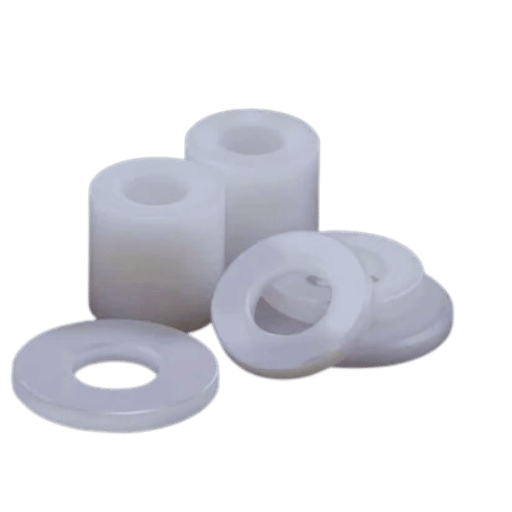
For various electrical details, POM is particularly suited due to the substance’s electrical insulation properties. As an electric insulator, POM prevents cases of short circuits and breakdowns within devices and equipment to maintain the safety and operational efficiency of a system. In addition, POM maintains impressive dimensional stability that allows connectors, sensor housings, and numerous other precision components to remain intact and operational under harsh conditions. This combination of structural reliability and insulation makes POM one of the most favorable materials in electronics fabrication.
Given the polyoxymethylene (POM), its stability and durability are uniquely a great asset making it perfect for electronic parts that function under stress conditions. Its exceptional mechanical strength and wear resistance make it easy for parts such as gears, housings and switches to endure cycles of intense friction without failure. POM also performs well in a remarkable range of temperatures varying from -40°C to 120°C, so its properties are cubapart for batteries or other devices with extreme thermal dynamics.
POM, on the other hand, absorbs little moisture and is highly resistant to chemicals so relatively, it will not face degradation in humid places or with the aid of solvents or industrial chemicals. The material’s reliable long-term creep resistance further strengthens his point as POM retains reliability on structural integrity with applied mechanical forces over extended periods of time.
POM already mentioned does perform exceptionally well during load and is capable of millions of cycles making it perfect for actuator systems and even connectors while suffering from little to no wear overcoming these key issues reinforces the drastic need for POM in electronic devices which requires durability, precision, and consistent performance.
Gears and Actuators
Connectors and Housings
Switch And Keypad Components
Printer and Scanner Components
Components of Wearable Devices
Battery Systems and Modules
Smart Device Mechanisms
These technologies testify to the POM’s unique development and the self-sufficiency of the consumers since it is a measure of performance reliability and experience for modern consumer electronic devices. According to analytical data, the average lifetime estimates in the industry evaluations is around 10 million cycles of use, which clearly shows the self-sufficiency of POM-based parts in high-demanding applications.

POM is perceived positively in terms of safety and biocompatibility for the fabrication of medical devices. It is low in toxicity, chemically resistant, and possesses considerable resistance to various sterilization techniques like autoclaving and chemical treatments. These attributes allow polymer construction of handles for surgical instruments, catheter fittings, and parts of implantable devices. Moreover, its high wear resistance and mechanical stability guarantee performance in medical devices even in critical applications where it is subjected to high regulatory scrutiny for patient safety and reliability.
In addition to chemical and thermal factors, the stability of POM enables new applications in medical devices, which have to be used in extremely challenging conditions. POM, for instance, has a wide range of operational temperatures, and excellent resilience to sterilization inhibitors like acids and disinfectants. These enable POM to withstand repeated sterilization procedures that are essential in hygiene maintenance in healthcare.
Furthermore, POM components are capable of withstanding high-temperature conditions like autoclave sterilization cycles that are dangerous for most other materials. POM deform under temperatures around 175°C -180°C, thus heaving high tolerate for hyperreal sterilization and maintaining their structural integrity. Empirical results demonstrate that POM-based devices are thermally stable and maintain their structural properties for extreme temperatures above 120°C. This allows tools and equipment that are used for diagnosis and surgery to have such equipment with high precision of measured strength.
In addition, the unique thermal and chemical properties of POM make it highly resistant to structural damage while improving the device’s life while being used in harsh environments. Competence on the level of protection attested by ISO 10993 and 11135 proves that the materials used can endure chemical and thermal manipulation without being damaged which is a requirement for safety regulations such as biocompatibility and sterilization. The use of these types of materials increases the safety, efficiency, and life span of contemporary medical devices.
A: POM, or Polyoxymethylene, is a widely applicable engineering plastic characterized by high stiffness, low friction, and good dimensional stability. This material is usually opaque white, structural, and moldable. In addition, it can be machined with a CNC and can be injected into a mold. POM has an exceptionally unique set of characteristics that enable its effectiveness in applications that require high durability and wear resistance, as well as high precision.
A: POM-engineered parts are popularly present in the automotive industry, consumer electronics, and in medical POM is often used in pillars for gear components and bearings and also to fabricate small, precise parts of industrial electronics. Furthermore, POM can also be applied in the food industry for food contact applications, due to its safety and durability. In medicine, POM serves as a construction material for medical tools and devices, thus dominating this field of engineering.
A: POM is suitable for the fabrication of gear components because of its low frictional features, high stiffness, and excellent wear resistance. All these features ensure that POM gears can perform well without substantial negative impacts on the equipment. The material undergoes stress without losing its shape, and it has an extended service time. Moreover, since the material can be molded or machined with a high degree of accuracy, intricate gear shapes can be fabricated for use in different machines.
A: All POM grades differ in features and are designed for specific purposes. Some grades are weak in mechanical properties but strong in wear resistance, high chemical tackle strength, or food-safe features. All of these factors make the selection of POM grade critical to the specific needs of the application What is the operating temperature, all chemicals the plastic is expected to encounter, and regulations to comply with specifications? This diversity of POM grades enables engineers to look for the most appropriate version for their personal project targets.
A: The answer is yes, some types of POM are approved for applications with direct contact with food. The materials that are rated POM for food usage are manufactured to satisfy and be safe to use in food processing equipment, kitchen appliances, and packaging materials. Furthermore, POM’s properties of chemical resistance, easy-to-clean surfaces, and long-lasting characteristics make it a perfect fit for the food industry components that are highly manipulated and need to be cleaned and sterilized a lot.
A: Because of the inherent qualities of POM, bearings made from it have a number of advantages. The low friction that the material possesses makes it the ideal choice for bearing applications, therefore, increasing the life of moving parts in the system. These bearings also offer good chemical resistance, low moisture absorption, and excellent dimensional stability. Many applications exist where metal bearings would be too heavy or corroded, so POM bearings are great for industries.
A: POM is mainly processed via molding which provides the intricate shapes with great accuracy. Additionally, it can be specifically machined on a CNC for low-volume pieces. Many machine design methods are employed for the POM components which incorporate the material properties, therefore, creating it into POM parts is complex. Both methods such as injection molding and CNC engineering provide the manufacturing techniques for accurate POM components which enables the producers to select the optimal technique depending on the POM part difficulty and volume of extraction.
A: Even though POM is a strongly built material that has a long life span thus reducing wastes, it is crucial to state that POM does not have high applications when it comes to recycling let alone be utilized as a raw material for other plastics, but there are adjustments that have been proposed that enhance the production of POM while making it environmentally friendly. Before starting a project that would include the use of POM, it is important to keep in mind the new ways of recycling and the discussion with the suppliers in regard to materials at the end of use to improve the environmental quality of the project.

Manufacturing processes are quite complex, and the choice of a production method is directly related
Learn More →
There are two major manufacturing methods for producing plastic prototypes that most people find useful
Learn More →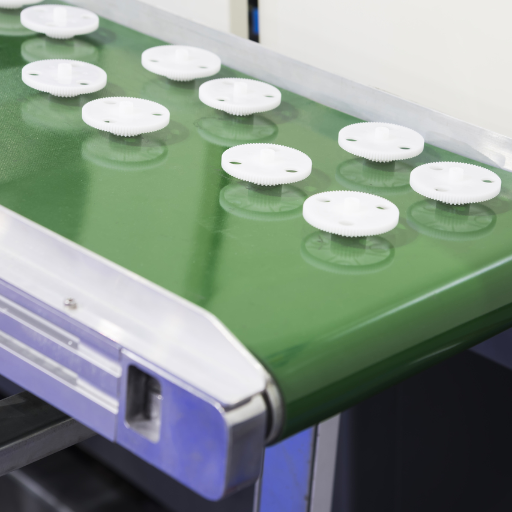
As a person involved or interested in the design and production of plastic components, it
Learn More →